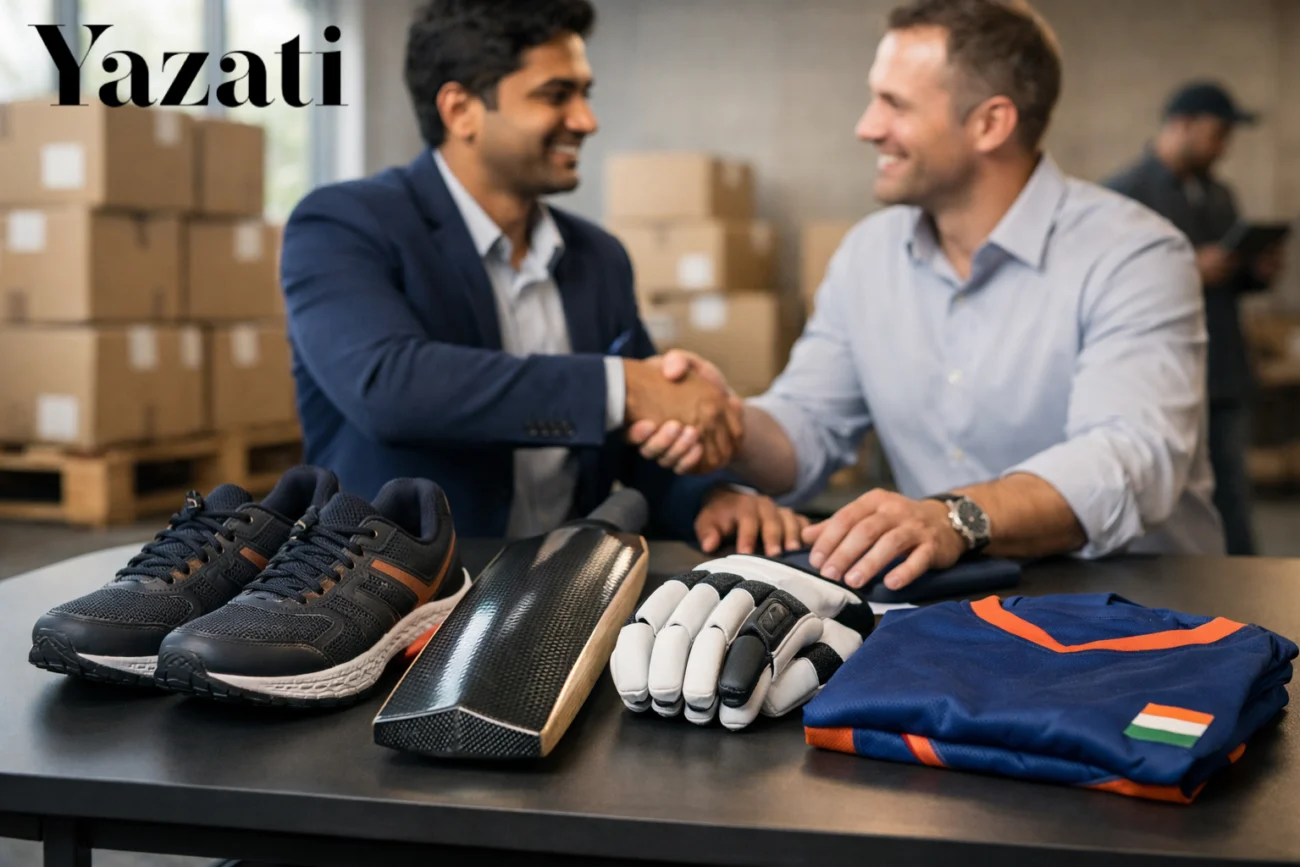
Introduction to Why Indian-Made Sports Gear Is Winning Global Contracts
Why Indian-Made Sports Gear Is Winning Global Contracts has become one of the most discussed topics in international trade circles. Over the last decade, India has transformed from a regional supplier into a global powerhouse in sports equipment manufacturing. From cricket bats and footballs to fitness equipment and athletic wear, Indian products are now competing with – and often outperforming – established global brands.
So, what’s driving this impressive growth? Is it cost? Quality? Government backing? Or something more strategic?
The answer is a combination of multiple powerful factors working together. India has leveraged its skilled labor, technological advancements, and manufacturing efficiency to create sports gear that meets international standards while remaining competitively priced.
In this article, we’ll explore the key reasons why Indian manufacturers are securing major global contracts and reshaping the sports goods industry.
The Evolution of India’s Sports Manufacturing Industry
India’s sports goods industry didn’t rise overnight. It evolved gradually, building on decades of craftsmanship and industrial learning.
Early Beginnings and Traditional Craftsmanship
India has long been known for handcrafted sports goods, especially cricket bats made from premium willow. Cities like Jalandhar and Meerut became manufacturing hubs decades ago. Local artisans developed refined techniques passed down through generations, ensuring consistent quality and performance.
This deep-rooted craftsmanship laid the foundation for today’s export success.
Industrial Expansion and Export Growth
In the early 2000s, modernization changed everything. Factories adopted mechanized production lines, quality testing labs, and global compliance systems. Export-focused strategies began taking shape, allowing Indian-made sports gear to enter markets in Europe, North America, Australia, and Africa.
The transformation from small workshops to industrial-scale exporters marked a turning point.
Competitive Pricing Without Compromising Quality
One of the biggest reasons Why Indian-Made Sports Gear Is Winning Global Contracts is its unmatched value proposition.
Cost-Efficient Production Systems
India benefits from relatively lower labor and operational costs compared to Western nations. However, lower cost does not mean lower quality. Instead, manufacturers use optimized processes and skilled labor to maintain high standards while reducing expenses.
This creates a win-win situation for global buyers.
Economies of Scale
Large production volumes allow manufacturers to reduce per-unit costs significantly. When international brands place bulk orders, Indian factories can scale production quickly without sacrificing quality.
This ability to deliver both affordability and consistency makes India highly attractive to global buyers.
Superior Craftsmanship and Technical Innovation
Affordability alone doesn’t win contracts—quality does.
Skilled Workforce Advantage
India has a vast pool of trained workers experienced in stitching, molding, woodwork, and advanced sports gear assembly. Many workers specialize in specific product categories, ensuring precision and durability.
This human expertise remains one of India’s strongest competitive advantages.
Integration of Modern Technology
Today’s Indian manufacturers use:
- Computer-aided design (CAD)
- Automated cutting systems
- Performance testing labs
- Impact resistance technology
By blending traditional skills with modern innovation, Indian-made sports gear achieves international performance benchmarks.
Government Support and Export Incentives
Government initiatives have played a major role in boosting exports.
Make in India Initiative
The Make in India campaign encouraged domestic manufacturing and foreign investment. Sports equipment manufacturing benefited from policy reforms, simplified regulations, and improved infrastructure.
Production-Linked Incentive (PLI) Schemes
The Production-Linked Incentive programs reward manufacturers for increasing output and exports. These incentives motivate companies to invest in better technology, workforce training, and expansion.
Such policies have strengthened India’s global competitiveness.
Global Compliance and Quality Certifications
Winning international contracts requires meeting strict global standards.
Meeting International Standards
Indian manufacturers now comply with:
- ISO certifications
- European safety standards
- International sports federation specifications
This compliance ensures products are safe, durable, and tournament-ready.
Ethical Manufacturing Practices
Many global brands prioritize ethical sourcing. Indian factories increasingly adopt fair labor policies, safe working conditions, and transparent supply chains.
This builds trust—an essential factor in long-term contracts.
Customization and OEM Capabilities
Customization is another major reason Why Indian-Made Sports Gear Is Winning Global Contracts.
Private Label Manufacturing
Indian manufacturers often produce sports gear for global brands under private labels. This allows international companies to offer high-quality products without maintaining their own factories.
Fast Turnaround and Flexible Production
Indian suppliers are known for flexibility. Whether it’s design adjustments, packaging changes, or product modifications, manufacturers respond quickly to client needs.
Speed plus customization equals competitive advantage.
Strong Supply Chain and Raw Material Access
A reliable supply chain strengthens India’s position.
Domestic Raw Material Availability
India produces:
- High-quality leather
- Rubber
- Textiles
- Wood for bats
Access to local raw materials reduces dependency on imports and stabilizes pricing.
Efficient Logistics Networks
Improved ports, highways, and freight systems have enhanced export efficiency. Faster shipping times make Indian suppliers more dependable.
Strategic Partnerships With Global Brands
Indian companies increasingly collaborate with international sports brands, leagues, and distributors. These partnerships create long-term contracts and recurring business opportunities.
Such collaborations enhance credibility and global visibility.
Rising Demand for Cricket, Football, and Fitness Equipment
The global sports industry is expanding rapidly. Cricket is gaining popularity beyond traditional markets, football remains dominant worldwide, and home fitness equipment demand has surged post-pandemic.
Indian manufacturers supply equipment across all these categories, positioning themselves perfectly for rising global demand.
Sustainability and Eco-Friendly Manufacturing Trends
Sustainability matters more than ever. Indian factories are adopting:
- Recycled materials
- Energy-efficient machinery
- Reduced water usage
- Eco-friendly packaging
These efforts align with global environmental expectations and strengthen brand reputation.
Challenges Faced by Indian Manufacturers
Despite strong growth, challenges remain:
- Competition from other Asian countries
- Fluctuating raw material costs
- Currency volatility
- Trade regulations
However, continued innovation and government backing help mitigate these risks.
Future Outlook of Indian Sports Gear Exports
The future looks promising. With digital marketing, e-commerce expansion, and improved global branding, Indian-made sports gear is set to capture even larger market shares.
Investments in research and development will likely lead to smarter, lighter, and more durable equipment. As trust grows, more global contracts will follow.
Frequently Asked Questions (FAQs)
1. Why Indian-Made Sports Gear Is Winning Global Contracts?
Because it combines competitive pricing, high quality, customization, government support, and global compliance standards.
2. Which sports equipment is most exported from India?
Cricket bats, footballs, boxing gear, fitness equipment, and protective gear are among the top exports.
3. Is Indian sports gear internationally certified?
Yes, many manufacturers meet ISO and international sports federation standards.
4. Are Indian manufacturers capable of bulk production?
Absolutely. Large-scale factories can handle high-volume global orders efficiently.
5. Is Indian sports gear affordable compared to Western brands?
Yes, it typically offers better pricing while maintaining comparable quality.
6. What is the future of Indian sports exports?
The outlook is highly positive due to growing global demand and continued innovation.
Conclusion: The Bright Future Ahead
Why Indian-Made Sports Gear Is Winning Global Contracts is no longer a mystery. It’s a story of strategic growth, skilled craftsmanship, smart government policies, and global adaptability. India has positioned itself as a reliable, innovative, and cost-effective supplier in the sports goods industry.
With continued investment in technology, sustainability, and global partnerships, Indian manufacturers are set to dominate even more markets in the years ahead.
The momentum is real. The growth is measurable. And the global sports industry is taking notice.
✨ Discover Global Sourcing Excellence with Netyex ✨
Netyex is your trusted B2B sourcing partner, connecting international buyers with India’s finest manufacturers and curated product lines—from handicrafts and home décor to kitchenware, textiles, hospitality essentials, and more. With verified suppliers and end-to-end support, we make global procurement seamless, reliable, and efficient.
👉 Elevate your sourcing experience—explore Netyex today.
📦 Bulk orders & customisation | 🌍 Worldwide delivery | 🤝 Trusted by global buyers
Visit Netyex to source premium Indian products with confidence.