Introduction to Indian Rug Production
The global textile market is vast, but few industries blend tradition, craftsmanship, and social responsibility quite like India’s rug sector. When we ask, Why Indian Rug Production Supports Ethical Employment, the answer lies in a powerful mix of heritage, regulation, and human dignity.
India has been weaving rugs for centuries. From royal courts to modern homes across Europe, North America, and Asia, Indian rugs are admired for their beauty and durability. But behind every intricate knot is a skilled artisan whose livelihood depends on this craft.
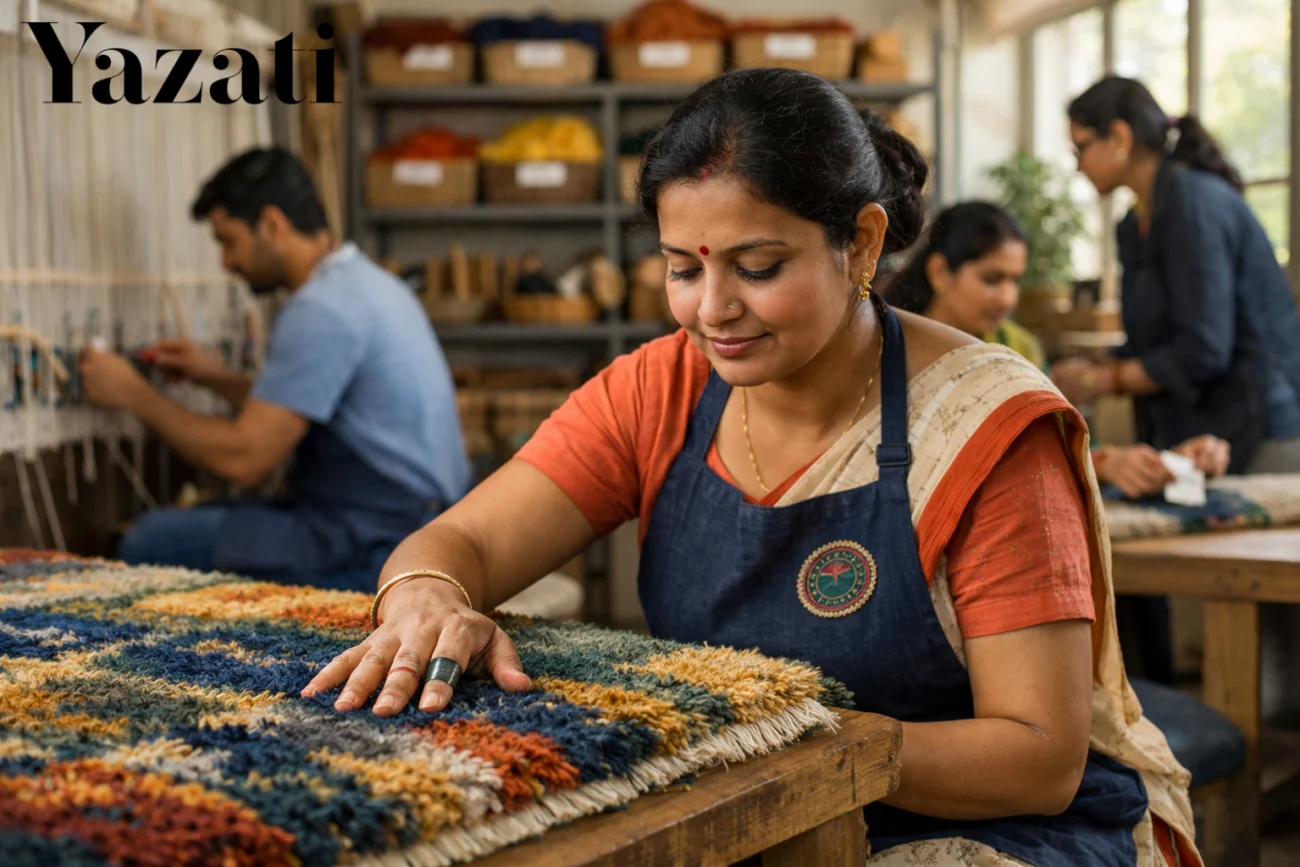
Unlike many mass-produced industries, rug production in India remains largely handmade. This labor-intensive process naturally creates employment opportunities—especially in rural areas where job options can be limited. Instead of relying on automation, the industry prioritizes skilled craftsmanship, ensuring sustainable employment for millions.
Today, ethical employment isn’t just a buzzword. It’s a responsibility. And India’s rug industry is stepping up in remarkable ways.
The Cultural Legacy of Indian Rug Weaving
Indian rug weaving dates back to the Mughal era. Over time, different regions developed unique patterns, weaving styles, and dyeing methods. These traditions are not just artistic expressions—they are economic lifelines.
Hand-Knotted vs Hand-Tufted Techniques
Hand-knotted rugs are the gold standard of craftsmanship. Each knot is tied individually, sometimes taking months to complete a single rug. This method demands precision and patience, providing consistent employment for skilled workers.
Hand-tufted rugs, while faster to produce, still require manual effort. Artisans use handheld tools to create patterns, ensuring detailed finishing.
Both techniques prioritize human involvement over machine efficiency. And that’s important. When labor is valued, workers are respected.
Generational Skill Transfer
In many villages, weaving is a family tradition. Children grow up watching parents and grandparents weave. As adults, they continue the craft with pride.
This generational transfer ensures job continuity and preserves cultural heritage. It also prevents unemployment cycles that can devastate rural communities.
Ethical Employment in the Indian Rug Industry
Ethical employment means more than simply providing jobs. It includes fair wages, safe working conditions, and respect for workers’ rights.
Many Indian rug manufacturers now follow structured employment models. Workers receive documented contracts, regulated hours, and wage protections.
Regulated Workshops
Modern rug production centers are monitored and audited regularly. Workshops must meet safety guidelines, including proper ventilation, lighting, and ergonomic seating.
These measures reduce workplace injuries and promote healthier environments.
Worker Benefits and Social Security
Increasingly, artisans receive access to:
- Health insurance
- Pension contributions
- Paid leave
- Skill development training
Such benefits create financial stability. Workers are not just laborers—they are valued contributors to a global industry.
Why Indian Rug Production Supports Ethical Employment in Rural Areas
Rural India faces challenges like limited infrastructure and fewer industrial opportunities. Rug production fills this gap beautifully.
Weaving units are often set up within villages. This eliminates migration to overcrowded cities and keeps families together.
Women Empowerment Through Weaving
Women form a significant portion of the rug workforce. For many, weaving provides their first independent income.
With financial independence comes:
- Improved household nutrition
- Better access to education for children
- Increased decision-making power within families
Empowered women uplift entire communities. It’s a ripple effect that spreads hope.
Supporting Marginalized Communities
The industry actively hires individuals from underprivileged backgrounds, including scheduled castes and tribal communities.
By providing skill-based employment, rug production helps bridge social and economic divides.
Child Labor Eradication Efforts
In the past, the textile industry worldwide faced criticism over child labor. India’s rug sector has taken strong steps to eliminate this issue.
Strict monitoring systems now ensure that workers meet minimum age requirements. Surprise inspections and community awareness programs reinforce compliance.
Certification Programs
Independent certification bodies conduct audits and provide labels verifying ethical practices. These certifications reassure global buyers that products are made responsibly.
Transparency builds trust. And trust builds sustainable markets.
Fair Trade and Global Standards
Many Indian rug exporters comply with international labor standards. They align operations with global ethical guidelines to meet buyer expectations.
Transparent Supply Chains
Technology now allows better tracking of production processes. From raw wool sourcing to final shipment, supply chains are becoming more transparent.
This visibility ensures that every stage respects ethical labor practices.
Sustainable and Eco-Friendly Production
Ethical employment is closely tied to environmental responsibility.
Indian rug producers often use:
- Natural dyes
- Hand-spun wool
- Minimal electricity
Handmade production significantly lowers carbon emissions compared to machine-based manufacturing.
Environmental Responsibility
Eco-friendly processes protect both workers and the planet. Reduced chemical exposure means healthier artisans. Lower emissions mean a cleaner environment.
It’s a win-win situation.
Economic Impact on Local Communities
When artisans earn steady incomes, local economies flourish.
Money flows into:
- Small shops
- Schools
- Healthcare facilities
- Infrastructure improvements
This multiplier effect strengthens entire regions.
Communities become self-sufficient rather than dependent on external aid.
Challenges and Ongoing Improvements
No industry is perfect. Wage disparities, rural logistics, and global competition remain challenges.
However, the Indian rug sector continues to evolve. Increased digitization, improved compliance systems, and stronger export regulations are pushing the industry forward.
Continuous improvement is key to maintaining ethical credibility.
Consumer Responsibility and Ethical Buying
Consumers play a vital role in supporting ethical employment.
Before purchasing a rug, buyers should:
- Ask about production methods
- Verify certifications
- Choose handmade over mass-produced
Every ethical purchase sends a message: fair labor matters.
When demand shifts toward responsible products, industries respond positively.
Frequently Asked Questions (FAQs)
1. Is Indian rug production truly ethical today?
Yes. Many manufacturers follow strict labor laws, provide fair wages, and comply with international ethical standards.
2. How does rug weaving benefit rural families?
It provides stable income, reduces migration to cities, and supports community development.
3. Are women significantly involved in rug production?
Absolutely. Women form a large part of the workforce and gain financial independence through weaving.
4. What measures prevent child labor in the industry?
Regular audits, age verification processes, and certification programs ensure compliance with child labor laws.
5. Are handmade rugs better for the environment?
Yes. Handmade rugs use less energy and often rely on natural dyes, reducing environmental impact.
6. How can consumers support ethical rug production?
By purchasing from certified manufacturers and prioritizing handmade rugs.
7. Does ethical production increase rug prices?
Ethically made rugs may cost slightly more, but they reflect fair wages and sustainable practices—making them a responsible investment.
Conclusion
The question Why Indian Rug Production Supports Ethical Employment is answered through culture, commitment, and community impact.
Indian rug weaving is not just about creating beautiful home décor. It’s about sustaining livelihoods, empowering women, protecting children, and preserving centuries-old craftsmanship.
Ethical employment in this sector goes beyond compliance—it embodies respect for human dignity. From rural villages to international markets, the ripple effects are undeniable.
As consumers become more conscious, industries are encouraged to raise their standards. India’s rug production stands as a powerful example of how tradition and ethics can work hand in hand.
In a world increasingly driven by automation, this industry reminds us of something profound: when we value human skill, we uplift human lives.
✨ Discover Global Sourcing Excellence with Netyex ✨
Netyex is your trusted B2B sourcing partner, connecting international buyers with India’s finest manufacturers and curated product lines—from handicrafts and home décor to kitchenware, textiles, hospitality essentials, and more. With verified suppliers and end-to-end support, we make global procurement seamless, reliable, and efficient.
👉 Elevate your sourcing experience—explore Netyex today.
📦 Bulk orders & customisation | 🌍 Worldwide delivery | 🤝 Trusted by global buyers
Visit Netyex to source premium Indian products with confidence.