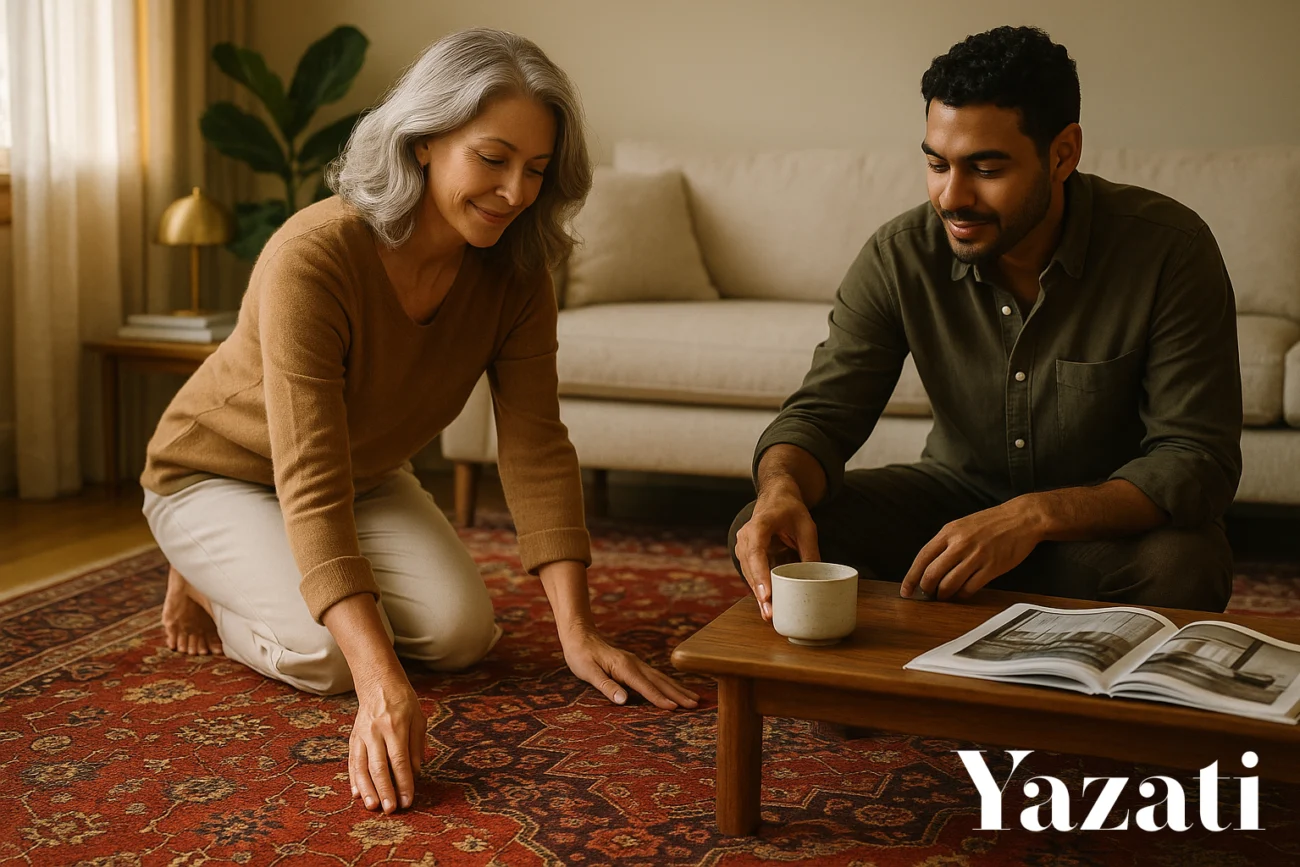
Introduction: The Rise of Indian Rugs in Modern Western Interiors
In recent years, Indian rugs have found their way into the heart of Western luxury homes, reshaping how designers and homeowners define opulence. No longer just floor coverings, these masterpieces of craftsmanship are now seen as statements of art, heritage, and sustainable sophistication. From penthouse apartments in New York to countryside villas in France, Indian rugs are transforming interiors with their vivid colors, intricate patterns, and handwoven charm.
A Brief History of Indian Rug Making
The story of Indian rug making dates back centuries, tracing its origins to the Mughal Empire in the 16th century. Emperor Akbar famously invited Persian weavers to India, leading to the creation of an entirely new textile tradition. Over time, Indian artisans merged Persian influences with indigenous designs, giving rise to a unique style characterized by floral motifs, geometric borders, and rich natural dyes.
Traditional Weaving Techniques and Their Cultural Significance
Each region in India — from Kashmir to Rajasthan — developed its distinct weaving method. For instance, Kashmiri carpets are known for their silk threads and fine knot counts, while Jaipur rugs often feature bold, geometric motifs. Every thread tells a story of local culture, mythology, and artistry passed down through generations.
The Timeless Appeal of Indian Rugs
Handcrafted Elegance and Artisan Expertise
What makes Indian rugs stand out is their human touch. Unlike machine-made rugs, each piece is the result of hundreds of hours of meticulous hand-weaving. The result? Textures that feel alive, with subtle variations that make every rug a one-of-a-kind creation.
Fusion of Heritage and Modern Design Trends
Indian rug makers have seamlessly adapted to contemporary tastes without losing their heritage. Today, you can find traditional motifs reimagined in minimalist palettes—ivory, beige, and muted golds—that suit Western interiors while maintaining an exotic charm.
Color Palettes and Symbolism in Indian Rugs
Colors in Indian rugs are never random. Red often symbolizes energy and warmth, blue represents spirituality, and gold signifies prosperity. These hues bring not just visual appeal but also emotional depth to a living space.
Why Western Homeowners Are Turning to Indian Rugs
The Desire for Authentic, Handcrafted Luxury
In an age of mass production, discerning homeowners crave authenticity. Indian rugs embody that desire, offering luxury with soul—each piece made by skilled artisans using age-old techniques.
Sustainability and Ethical Sourcing in Rug Production
Many Western consumers now prioritize sustainable home décor. Indian rug cooperatives focus on eco-friendly dyes, natural fibers, and fair trade practices, aligning perfectly with the modern ethos of responsible luxury.
The Influence of Global Interior Design Trends
Global design icons like Joanna Gaines and Kelly Wearstler have incorporated Indian rugs into their collections. Their influence has made these rugs synonymous with bohemian elegance and cross-cultural sophistication.
Indian Rugs as a Statement of Sustainable Luxury
Natural Fibers and Eco-Friendly Dyes
Indian rugs are typically woven with wool, silk, or cotton, dyed using plant-based pigments. This not only reduces environmental impact but also ensures richer, longer-lasting colors.
Fair Trade Practices Supporting Local Communities
The resurgence of Indian rugs has empowered thousands of rural artisans. Many workshops follow fair trade policies, ensuring artisans receive fair wages and work in ethical conditions — turning every rug purchase into an act of social good.
How Indian Rugs Elevate Western Home Décor
Creating Warmth and Texture in Minimalist Spaces
In minimalist Western homes, an Indian rug adds a layer of warmth and character that neutral décor often lacks. The intricate patterns create visual depth, grounding the space with cultural richness.
The Role of Indian Rugs in Layered Design Aesthetics
Designers now use Indian rugs to create “layered” interiors—mixing textures, tones, and materials. A silk rug under a glass coffee table, for instance, can balance modern and traditional elements beautifully.
Blending Eastern Artistry with Western Architecture
From modern lofts to Victorian estates, Indian rugs blend effortlessly with architectural styles. Their timeless beauty transcends borders, symbolizing the harmony between East and West.
Investment Value: Why Indian Rugs Appreciate Over Time
The Craftsmanship Behind Long-Lasting Quality
A well-crafted Indian rug can last generations. Made with high-knot density and durable materials, it not only enhances the space but also becomes a family heirloom over time.
Rarity and the Collector’s Appeal
Limited-edition weaves and region-specific designs have made Indian rugs highly sought after among collectors. Their value often appreciates, especially for rare, hand-signed pieces.
Choosing the Perfect Indian Rug for Your Home
Understanding Patterns and Regional Styles
Each region tells its own story:
- Agra Rugs – Persian-inspired florals
- Dhurries – Lightweight, reversible cotton rugs
- Kashmir Rugs – Intricate silk designs
- Jaipur Rugs – Bold geometric weaves
Sizing, Placement, and Care Tips for Longevity
- Choose rug size according to room scale
- Rotate annually to ensure even wear
- Avoid direct sunlight for silk rugs
- Regular vacuuming helps preserve texture
Where to Buy Authentic Indian Rugs Online
Trusted Sources and Certification to Look For
Look for sellers with “GoodWeave” or “Craftmark” certifications, which guarantee authenticity and ethical production.
Avoiding Common Pitfalls When Shopping Abroad
Beware of synthetic reproductions. Always check for hand-knotted details on the underside and verify the country of origin.
Frequently Asked Questions (FAQs)
Q1: Are Indian rugs durable for high-traffic areas?
Yes, especially wool and cotton rugs, which are naturally resistant to wear and stains.
Q2: Do Indian rugs require professional cleaning?
Occasionally, yes. Annual professional cleaning helps maintain color vibrancy and fabric integrity.
Q3: How can I identify an authentic Indian rug?
Check for uneven knots, hand-dyed color variations, and certification marks like GoodWeave.
Q4: Are Indian rugs sustainable?
Most are made from eco-friendly materials and crafted under fair trade standards.
Q5: What styles of Indian rugs suit Western décor best?
Neutral-toned Jaipur and Agra rugs complement modern and minimalist spaces beautifully.
Q6: Why are Indian rugs considered a luxury item?
Their handcrafted quality, cultural depth, and scarcity make them symbols of refined taste and luxury.
Conclusion: The Timeless Luxury of Indian Craftsmanship
Indian rugs are far more than décor pieces—they are living expressions of culture, craftsmanship, and sustainability. As Western homeowners increasingly embrace authenticity and heritage, these rugs stand as a testament to India’s artistic legacy redefining global luxury.
✨ Discover Global Sourcing Excellence with Netyex ✨
Netyex is your trusted B2B sourcing partner, connecting international buyers with India’s finest manufacturers and curated product lines—from handicrafts and home décor to kitchenware, textiles, hospitality essentials, and more. With verified suppliers and end-to-end support, we make global procurement seamless, reliable, and efficient.
👉 Elevate your sourcing experience—explore Netyex today.
📦 Bulk orders & customisation | 🌍 Worldwide delivery | 🤝 Trusted by global buyers
Visit Netyex to source premium Indian products with confidence.