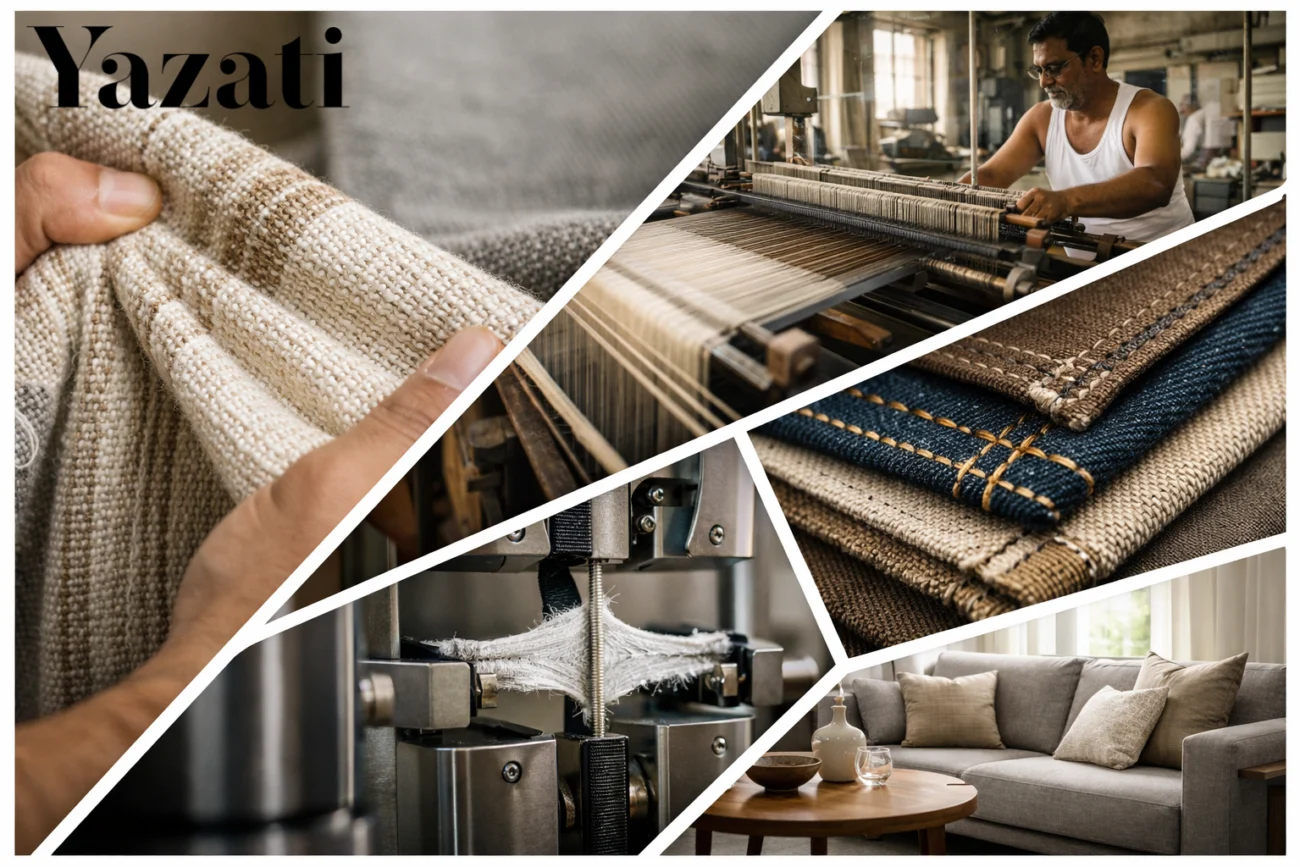
A Rich Textile Heritage Built on Expertise
India’s textile history spans thousands of years. Traditional weaving communities have passed down techniques across generations. This deep-rooted knowledge creates a strong foundation for quality production.
Experience Meets Modern Technology
Today, India combines:
- Traditional weaving expertise
- Modern textile machinery
- Advanced testing laboratories
- Global export compliance standards
This blend of old-world craftsmanship and modern precision enhances product durability.
When experience meets innovation, quality naturally improves.
High-Quality Natural Fiber Production
One of the biggest reasons Why Indian Textiles Offer Better Durability for Global Buyers lies in the raw materials.
India is one of the largest producers of:
- Cotton
- Jute
- Silk
- Wool
- Linen blends
Strong Fiber Foundations
Durability begins at the fiber level. Indian cotton, for example, is known for:
- Long staple length
- High tensile strength
- Better thread formation
- Strong yarn consistency
Longer fibers create stronger threads, which produce more durable fabrics.
Advanced Spinning and Weaving Techniques
Fiber strength alone isn’t enough. The spinning and weaving process determines final fabric performance.
Precision Yarn Spinning
Indian textile mills use:
- Ring spinning technology
- Compact spinning systems
- Open-end spinning machines
These methods produce uniform yarn thickness and reduce weak points.
Tight Weaving for Added Strength
Dense weaving techniques improve:
- Tear resistance
- Shape retention
- Load-bearing capacity
- Longevity under stress
For products like bags and upholstery, tight weaving makes a significant difference.
Rigorous Quality Control Standards
Durability is not accidental—it’s tested.
Common Fabric Tests Conducted
Indian manufacturers perform:
- Tensile strength testing
- Tear resistance evaluation
- Abrasion resistance testing
- Colorfastness checks
- Shrinkage testing
Each batch undergoes inspection before export.
This ensures that textiles maintain their quality even after repeated use and washing.
Strong Dyeing and Finishing Processes
Color fading and fabric weakening often occur due to poor finishing techniques.
Indian textile producers use advanced dyeing processes that:
- Improve color retention
- Reduce chemical damage
- Enhance water resistance
- Strengthen fiber bonding
Proper finishing prevents premature wear and tear.
Adaptability for Heavy-Duty Applications
Indian textiles are widely used in:
- Backpacks and travel bags
- Industrial uniforms
- Outdoor furniture
- Protective garments
- Upholstery fabrics
These applications demand durability.
Manufacturers design fabrics specifically for:
- High load-bearing capacity
- Weather resistance
- Extended outdoor exposure
- Heavy daily use
This practical focus ensures global buyers receive long-lasting products.
Blended Fabric Innovation
Durability also improves through smart blending.
Popular Blended Textiles Include
- Cotton-polyester blends
- Linen-cotton mixes
- Recycled fiber blends
- Nylon-reinforced fabrics
Blending enhances:
- Strength
- Flexibility
- Wrinkle resistance
- Moisture control
Innovation in blending techniques adds to India’s durability advantage.
Compliance with Global Standards
Global buyers require compliance with international regulations.
Indian textile manufacturers often follow:
- ISO quality systems
- Chemical safety standards
- Export quality guidelines
- Environmental compliance norms
Meeting these standards ensures durability isn’t compromised during manufacturing.
Compliance builds trust and repeat business.
Climate-Resilient Fiber Properties
India’s diverse climate conditions influence fiber resilience.
Cotton grown in varied environments often develops:
- Better adaptability
- Enhanced moisture resistance
- Improved natural strength
This natural resilience translates into durable final products.
Cost-Effective Without Compromising Strength
Durability doesn’t have to mean high cost.
Indian textile producers benefit from:
- Local raw material availability
- Skilled labor
- Efficient production systems
- Economies of scale
This allows manufacturers to offer strong textiles at competitive prices.
Global buyers receive excellent value without sacrificing quality.
Sustainability and Long-Term Performance
Durable textiles are inherently sustainable. The longer a product lasts, the less frequently it needs replacement.
Indian producers increasingly focus on:
- Organic farming practices
- Eco-friendly dyes
- Waste reduction
- Renewable energy usage
Durable and sustainable go hand in hand.
Comparison: Indian Textiles vs. Generic Alternatives
| Factor | Indian Textiles | Generic Low-Cost Alternatives |
|---|---|---|
| Fiber Strength | High | Variable |
| Weaving Density | Tight & consistent | Often loose |
| Testing Standards | Strict | Limited |
| Longevity | Long-lasting | Shorter lifespan |
| Customization | Flexible | Limited |
This consistency is why international buyers repeatedly choose Indian textiles.
Why Global Buyers Prefer Indian Textile Durability
Buyers choose Indian textiles because they:
- Reduce product returns
- Improve brand reputation
- Enhance customer satisfaction
- Support long-term usage
- Offer reliable performance
Durability translates directly into profitability.
The Future of Durable Indian Textiles
The textile industry in India continues to evolve.
Future trends include:
- Smart textiles
- Water-resistant innovations
- Anti-microbial finishes
- Recycled high-strength fibers
- Advanced fabric engineering
Innovation ensures durability standards continue to improve.
Frequently Asked Questions (FAQs)
1. Why Indian Textiles Offer Better Durability for Global Buyers compared to others?
Because of strong natural fibers, advanced weaving techniques, strict testing, and skilled craftsmanship.
2. Are Indian textiles suitable for heavy-duty products?
Yes, they are widely used for bags, uniforms, upholstery, and outdoor gear.
3. Do Indian textile manufacturers conduct quality tests?
Yes, including tensile strength, tear resistance, and colorfastness testing.
4. Are blended fabrics from India durable?
Absolutely. Blending enhances strength, flexibility, and longevity.
5. Is durability linked to sustainability?
Yes, longer-lasting textiles reduce waste and environmental impact.
6. Are Indian textiles cost-effective?
Yes, they offer strong durability at competitive pricing.
Conclusion
Understanding Why Indian Textiles Offer Better Durability for Global Buyers reveals a powerful combination of strong raw materials, advanced manufacturing techniques, strict quality control, and deep-rooted expertise. India’s textile industry doesn’t just produce fabric—it produces reliability.
For global brands seeking long-lasting materials that withstand daily wear and tear, Indian textiles provide a trusted solution. Their durability enhances product value, strengthens customer trust, and supports sustainable consumption.
In a market where quality defines success, Indian textiles continue to stand strong—literally and figuratively.
✨ Discover Global Sourcing Excellence with Netyex ✨
Netyex is your trusted B2B sourcing partner, connecting international buyers with India’s finest manufacturers and curated product lines—from handicrafts and home décor to kitchenware, textiles, hospitality essentials, and more. With verified suppliers and end-to-end support, we make global procurement seamless, reliable, and efficient.
👉 Elevate your sourcing experience—explore Netyex today.
📦 Bulk orders & customisation | 🌍 Worldwide delivery | 🤝 Trusted by global buyers
Visit Netyex to source premium Indian products with confidence.