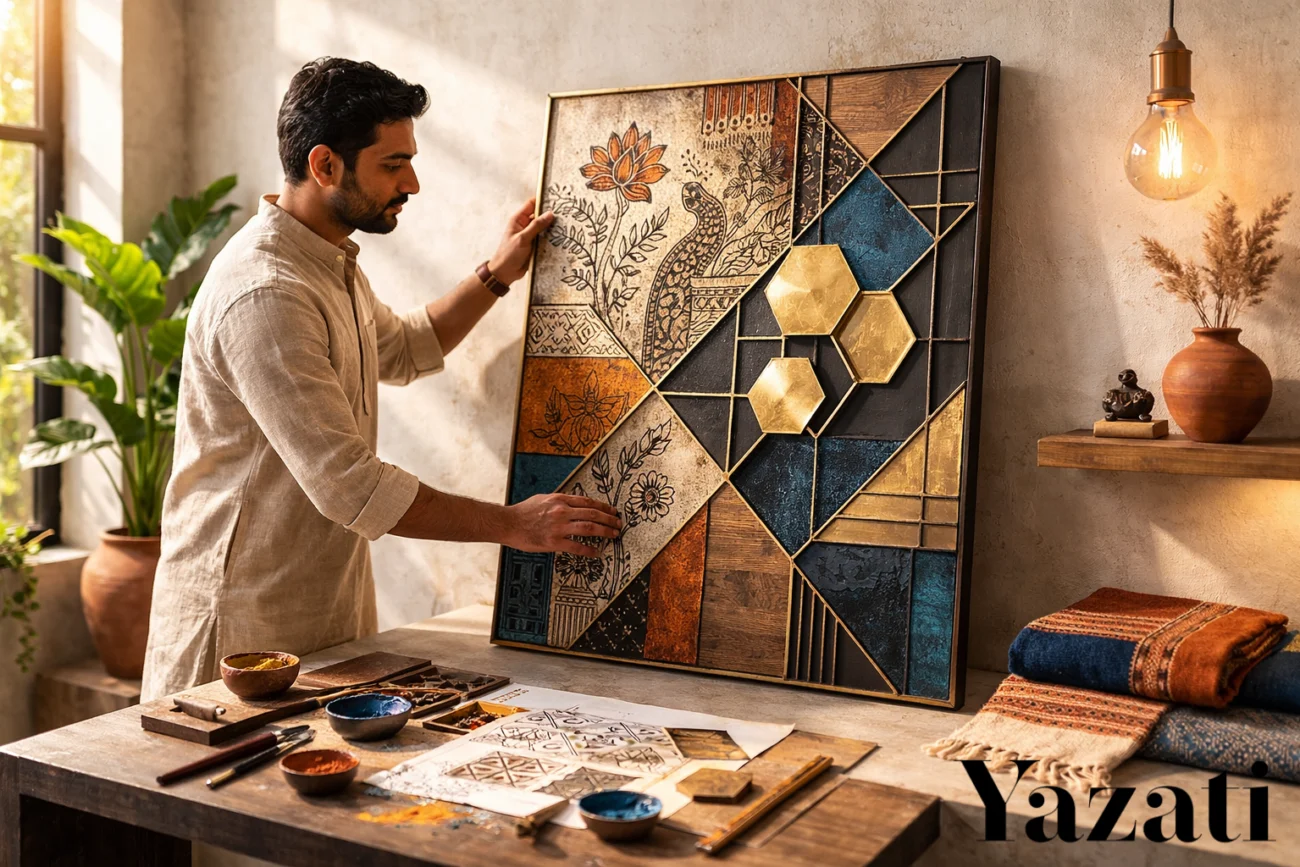
Introduction to Indian Wall Décor
Why Indian Wall Décor Combines Cultural Art and Modern Geometry is a question that opens the door to centuries of creativity, craftsmanship, and cultural depth. Indian wall décor is not just about decoration; it’s about storytelling, symbolism, and identity. Over time, it has evolved beautifully, blending traditional art forms with sleek geometric patterns that fit modern homes.
Today’s interiors demand balance. Homeowners want cultural richness but also clean lines and structured design. Indian wall décor answers that call perfectly. It respects tradition while embracing modern minimalism. The result? A stunning fusion that feels both rooted and refreshing.
Let’s explore how this artistic harmony came to life and why it continues to captivate designers and homeowners alike.
The Historical Roots of Indian Wall Art
Ancient Temple Murals and Palace Frescoes
Indian wall art dates back thousands of years. Ancient temples and royal palaces were decorated with elaborate murals that depicted spiritual stories, divine figures, and cosmic patterns. These artworks were not random; they followed precise mathematical proportions and sacred geometry.
Symmetry was essential. Artists used grids and calculated spacing to ensure harmony. Even in ancient times, geometry played a quiet yet powerful role in artistic creation.
Folk Art Traditions Across Regions
India’s villages gave birth to diverse folk art forms. Each region developed its own style, reflecting local culture and beliefs. These artworks often featured repeating motifs, circular patterns, and structured layouts.
Folk artists relied on balance and proportion. Even when designs appeared freehand, they followed a natural geometric rhythm. This hidden structure is one reason Indian art adapts so well to modern geometric design today.
The Cultural Symbolism in Indian Wall Décor
Spiritual Motifs and Sacred Geometry
Indian culture places deep importance on symbols. Sacred diagrams, lotus patterns, and mandala-like designs are rooted in spiritual philosophy. These designs are geometric at their core.
Circles represent wholeness. Squares symbolize stability. Triangles indicate energy. These forms are not just shapes; they carry meaning. When used in wall décor, they connect the physical space to deeper cultural ideas.
This is one of the strongest answers to Why Indian Wall Décor Combines Cultural Art and Modern Geometry—geometry has always been embedded in cultural symbolism.
Nature, Animals, and Mythological Themes
Peacocks, elephants, trees, and mythological figures frequently appear in traditional wall art. Even these detailed illustrations often follow geometric frameworks. Backgrounds use repetitive borders, patterned grids, or symmetrical placement.
The structure beneath the storytelling ensures visual harmony. That structural discipline aligns perfectly with contemporary geometric trends.
Understanding Modern Geometry in Interior Design
Minimalism and Clean Lines
Modern interiors emphasize simplicity. Straight lines, sharp angles, and uncluttered layouts define today’s design language. Geometric wall décor fits effortlessly into this aesthetic.
Unlike overly ornate decorations, geometric art feels intentional and structured. It provides visual interest without overwhelming a space.
Geometric Symmetry and Balance
Symmetry creates calm. Our eyes naturally seek balance, and geometric designs provide that satisfaction. Modern design celebrates repetition, patterns, and precision—qualities that traditional Indian art has always embraced.
So when cultural art merges with geometric form, the result feels both timeless and trendy.
Why Indian Wall Décor Combines Cultural Art and Modern Geometry So Seamlessly
Shared Emphasis on Symmetry
Both traditional Indian art and modern geometry rely heavily on symmetry. Whether it’s a temple carving or a contemporary laser-cut panel, balanced proportions remain key.
This shared foundation makes the fusion feel natural rather than forced.
Storytelling Through Patterns
Indian art tells stories through patterns. Borders, mandalas, floral arrangements, and symbolic diagrams create narratives without words. Modern geometric art also communicates through repetition and shape relationships.
When combined, these two approaches enhance each other. The cultural layer adds depth, while geometry adds structure.
The Evolution of Artistic Expression
Design evolves with time. Artists and craftsmen experiment with new materials and technologies. Traditional motifs are simplified into clean lines. Intricate patterns are reimagined in minimal forms.
This evolution explains Why Indian Wall Décor Combines Cultural Art and Modern Geometry so effortlessly—it’s a natural progression, not a sudden change.
Materials That Bridge Tradition and Modernity
Wood, Metal, and Handcrafted Elements
Traditional Indian wall décor often uses carved wood and hand-beaten metal. These materials bring warmth and authenticity. Carvings frequently feature repetitive patterns that align with geometric symmetry.
Handcrafted details add character, making each piece unique.
Laser-Cut Panels and Contemporary Finishes
Modern manufacturing techniques allow for precise geometric cuts. Designers now create intricate patterns using laser technology. The patterns often draw inspiration from traditional motifs but are executed with contemporary precision.
Metallic finishes, matte textures, and neutral tones give these pieces a modern edge while preserving cultural identity.
Color Psychology in Indian Wall Décor
Traditional Earthy Tones
Traditional designs use deep reds, saffron, indigo, and earthy browns. These colors reflect nature and spirituality. They create warmth and emotional richness.
Neutral Modern Palettes
Modern interiors favor whites, greys, and muted tones. When traditional patterns are recreated in neutral shades, they appear contemporary without losing their cultural roots.
This clever color adaptation is another reason Why Indian Wall Décor Combines Cultural Art and Modern Geometry successfully—it adapts to modern tastes without abandoning heritage.
The Role of Craftsmanship in Blending Styles
Craftsmanship remains at the heart of Indian wall décor. Skilled artisans understand proportion, repetition, and alignment. Their expertise ensures that even detailed cultural motifs align with geometric precision.
Modern designers collaborate with traditional craftsmen to create fusion pieces. This partnership preserves heritage while embracing innovation.
Popular Forms of Indian Geometric Wall Art Today
Some trending styles include:
- Mandala-inspired metal panels
- Wooden lattice screens with geometric carvings
- Abstract reinterpretations of traditional motifs
- Layered wall installations combining symmetry and symbolism
- Minimalist framed cultural patterns
These designs reflect a perfect blend of tradition and modern geometry.
How Homeowners Can Style This Fusion Look
To incorporate this style at home:
- Choose one statement wall piece as a focal point.
- Pair intricate patterns with simple furniture.
- Use neutral walls to highlight detailed art.
- Combine textures like wood and metal for depth.
- Keep surrounding décor minimal to let the artwork shine.
Balance is key. Too many elements can overwhelm the space. A thoughtful approach creates harmony.
Benefits of Combining Cultural Art with Modern Geometry
This fusion offers multiple advantages:
- Preserves cultural identity
- Enhances visual balance
- Adds meaningful storytelling to interiors
- Appeals to both traditional and contemporary tastes
- Increases aesthetic versatility
It bridges generations. Elders appreciate the cultural symbolism, while younger homeowners enjoy the modern design appeal.
Frequently Asked Questions
1. Why is geometry important in Indian wall décor?
Geometry has always been part of traditional art through sacred diagrams and symmetrical patterns. It represents balance and harmony.
2. Can Indian wall décor suit modern apartments?
Absolutely. Simplified patterns and neutral color palettes make it ideal for contemporary spaces.
3. What materials are best for this style?
Wood and metal are popular choices. They provide durability and allow intricate geometric detailing.
4. Is this style expensive?
Costs vary. Handcrafted pieces may cost more, but machine-cut designs offer budget-friendly options.
5. How do I prevent the design from looking too traditional?
Pair detailed wall art with modern furniture and minimal accessories for balance.
6. Does this fusion work in small spaces?
Yes. Geometric designs can make small rooms feel structured and organized, especially when used as a single accent piece.
Conclusion: A Living Design Legacy
Why Indian Wall Décor Combines Cultural Art and Modern Geometry is no mystery once we understand its roots. Geometry has always been part of Indian artistic traditions, hidden within spiritual diagrams, temple carvings, and folk patterns. Modern design simply highlights and refines what already existed.
This fusion is powerful because it respects the past while embracing the present. It honors symbolism, craftsmanship, and storytelling while aligning with clean lines and structured aesthetics.
In a world that constantly changes, this style stands firm. It proves that tradition and modernity are not opposites—they are partners. And together, they create spaces that feel meaningful, balanced, and beautifully timeless.
✨ Discover Global Sourcing Excellence with Netyex ✨
Netyex is your trusted B2B sourcing partner, connecting international buyers with India’s finest manufacturers and curated product lines—from handicrafts and home décor to kitchenware, textiles, hospitality essentials, and more. With verified suppliers and end-to-end support, we make global procurement seamless, reliable, and efficient.
👉 Elevate your sourcing experience—explore Netyex today.
📦 Bulk orders & customisation | 🌍 Worldwide delivery | 🤝 Trusted by global buyers
Visit Netyex to source premium Indian products with confidence.