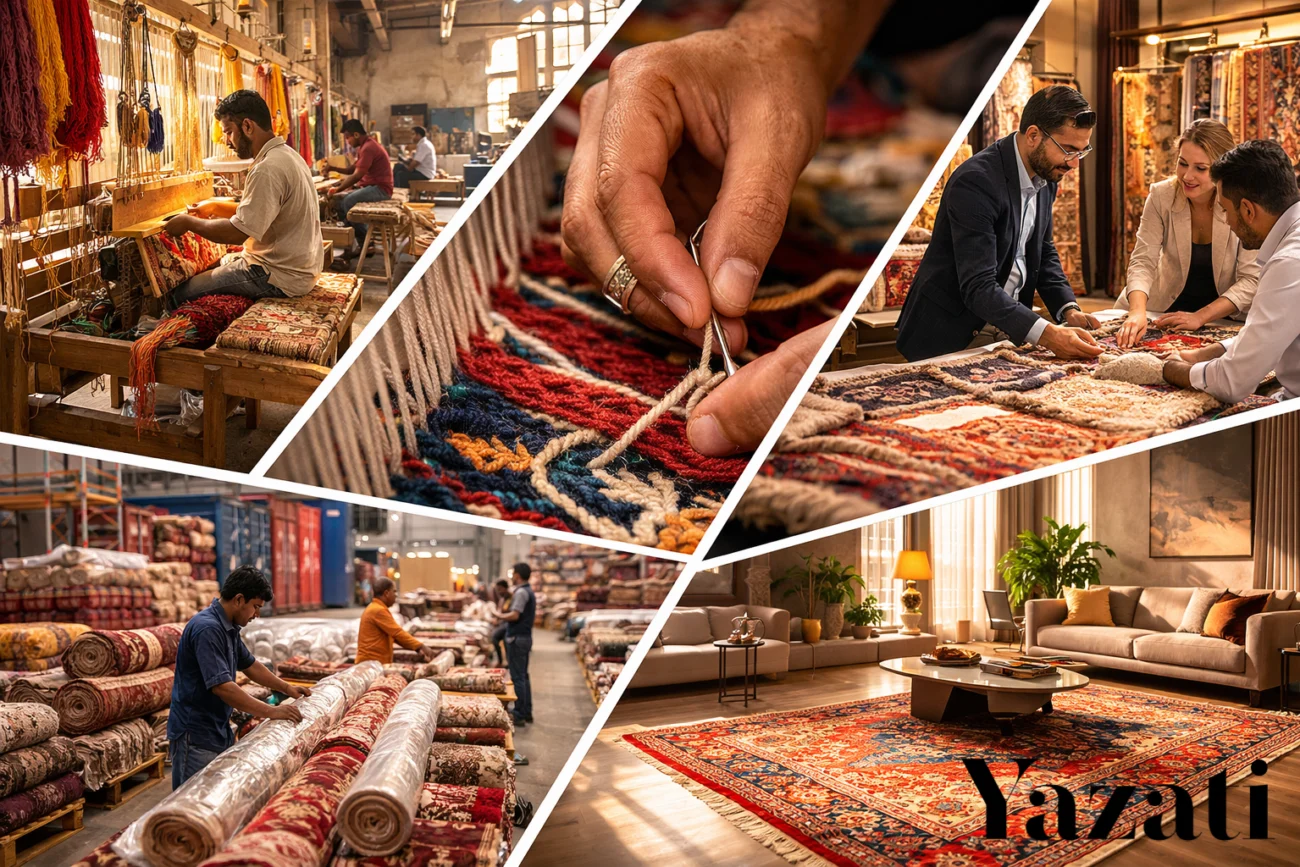
Introduction: The Global Appeal of India’s Carpet Belt
India’s Carpet Belt has earned a powerful reputation in the global home décor and flooring industry. Stretching primarily across regions of Uttar Pradesh such as Bhadohi, Mirzapur, and Varanasi, this area is often called the “Carpet City of India.” For global buyers seeking high-quality handmade carpets, this region represents an unmatched sourcing destination.
Over the years, India has become one of the largest exporters of handmade carpets in the world. International retailers, wholesalers, interior designers, and hospitality brands regularly source carpets from this region due to its superior craftsmanship, variety, and competitive pricing.
What makes India’s Carpet Belt truly special is the combination of centuries-old weaving traditions and modern export infrastructure. Skilled artisans continue to produce carpets using techniques that have been passed down through generations, while manufacturers use modern quality control and logistics systems to meet international demand.
For global buyers, this means access to authentic handmade products, customizable designs, reliable supply chains, and exceptional value. In short, India’s Carpet Belt is not just a production hub—it is a strategic sourcing goldmine.
The Historical Legacy of India’s Carpet Industry
India’s carpet weaving tradition dates back several centuries. The craft flourished during the Mughal era when Persian artisans introduced intricate weaving techniques to India. Over time, local artisans blended Persian methods with Indian artistic traditions, creating a unique style that is now globally recognized.
The cities within India’s Carpet Belt became specialized centers for carpet production. Families dedicated generations to mastering the craft, ensuring that skills such as knotting, dyeing, and pattern creation were preserved and refined.
Today, many workshops still follow traditional techniques such as hand-knotting and hand-tufting. These methods require patience, precision, and years of training. A single handmade carpet can take weeks or even months to complete, depending on its size and complexity.
This long heritage is one of the key reasons global buyers trust carpets produced in this region. When they purchase from India’s Carpet Belt, they are investing in products rooted in history and artistry.
Superior Craftsmanship and Skilled Artisans
One of the strongest advantages of India’s Carpet Belt is its highly skilled workforce. Thousands of artisans specialize in different stages of carpet production, from spinning yarn to finishing the final product.
Generational Knowledge
Many weavers learn the craft from their parents and grandparents. This generational knowledge ensures that traditional techniques remain alive while continuously evolving with modern design trends.
Precision and Detail
Handmade carpets require incredible attention to detail. Skilled artisans can tie thousands of knots per day while maintaining pattern accuracy and symmetry. This level of precision is extremely difficult to replicate with machines.
Artistic Creativity
Indian carpet artisans are not just workers; they are artists. They interpret complex designs, color palettes, and motifs with remarkable skill. As a result, buyers receive carpets that are not only functional but also visually stunning.
For global buyers looking for authentic handmade products, the craftsmanship found in India’s Carpet Belt is unmatched.
Competitive Pricing with Exceptional Value
Price competitiveness is another major reason global buyers are drawn to India’s Carpet Belt.
Despite the high level of craftsmanship involved, carpets produced in this region remain relatively affordable compared to products from many other countries. Several factors contribute to this advantage.
Efficient Production Ecosystem
The carpet belt has developed a highly efficient production ecosystem. Raw materials, dyeing units, weaving centers, and finishing facilities are all located within close proximity. This reduces transportation costs and speeds up production.
Skilled Labor Availability
Because carpet weaving is a traditional occupation in the region, there is a steady supply of skilled labor. This allows manufacturers to maintain consistent production levels without dramatically increasing costs.
Strong Export Networks
Indian exporters have built strong international distribution channels. Efficient logistics and export systems help keep costs manageable while ensuring timely delivery.
For buyers, this means they can source premium handmade carpets at competitive prices, creating strong profit margins in international markets.
Wide Variety of Designs and Styles
Another reason India’s Carpet Belt is a goldmine for global buyers is the sheer diversity of carpet styles available.
Manufacturers in this region produce carpets that cater to a wide range of global tastes and interior design trends.
Traditional Designs
Many carpets feature classic motifs inspired by Persian and Mughal art. These include floral patterns, medallions, and intricate borders that appeal to customers who appreciate timeless elegance.
Contemporary Patterns
Modern consumers often prefer minimalist or abstract designs. Indian manufacturers have adapted to these trends by producing contemporary carpets with geometric shapes, neutral colors, and innovative textures.
Custom Designs
One of the biggest advantages for global buyers is the ability to request custom designs. Manufacturers frequently collaborate with international clients to develop unique patterns, sizes, and color combinations.
This flexibility allows buyers to create exclusive collections tailored to specific markets.
Diverse Materials and Sustainable Options
India’s Carpet Belt offers carpets made from a wide range of materials, making it easier for buyers to match different price points and customer preferences.
Natural Fibers
Common natural materials include:
- Wool
- Cotton
- Silk
- Jute
These materials are valued for their durability, softness, and natural appearance.
Eco-Friendly Choices
Sustainability has become a major factor in global purchasing decisions. Many manufacturers in India now offer eco-friendly carpets made from recycled materials or natural fibers that are biodegradable.
Blended Materials
Some carpets combine natural and synthetic fibers to achieve the perfect balance between durability, affordability, and aesthetics.
This diversity allows global buyers to offer a broad product range in their markets.
Strong Export Infrastructure
India’s Carpet Belt has developed a highly organized export system that supports international trade.
Manufacturers and exporters understand global standards, quality requirements, and shipping procedures. This ensures that buyers receive products that meet international expectations.
Quality Control
Most exporters follow strict quality control processes. Carpets are inspected for weaving consistency, color accuracy, and finishing before shipment.
Global Compliance
Many manufacturers comply with international certification standards related to quality, environmental responsibility, and ethical labor practices.
Efficient Logistics
Exporters have strong partnerships with logistics providers, ensuring smooth shipping processes to markets across North America, Europe, the Middle East, and Asia.
For global buyers, this reliability reduces risks and simplifies sourcing.
Customization and Private Label Opportunities
Private labeling is an important opportunity for retailers and wholesalers. India’s Carpet Belt offers excellent flexibility for buyers who want to develop their own branded product lines.
Manufacturers can produce carpets with specific:
- Sizes
- Colors
- Patterns
- Materials
- Packaging styles
This allows buyers to create unique collections that stand out in competitive retail environments.
Customization also helps interior designers and hospitality brands source carpets that perfectly match specific design projects.
Growing Demand in Global Markets
The demand for handmade and artisanal home décor products has been steadily increasing worldwide. Consumers today appreciate products that tell a story and showcase authentic craftsmanship.
Handmade carpets from India fit perfectly into this trend.
Rising Interest in Sustainable Products
Many buyers prefer natural and handmade products over mass-produced alternatives. Handmade carpets often have lower environmental impact and longer lifespans.
Luxury Interior Design Trends
High-end interior designers frequently use handmade carpets to add warmth, texture, and character to living spaces.
Expanding E-Commerce Market
Online marketplaces have made it easier for retailers to reach global customers. This has increased the demand for unique handmade carpets that stand out in digital catalogs.
As a result, global buyers continue to see strong growth potential when sourcing from India’s Carpet Belt.
Government Support for the Carpet Industry
The Indian government has also played a significant role in promoting the carpet industry. Various initiatives support artisans, exporters, and manufacturers.
These initiatives include:
- Skill development programs for weavers
- Export promotion schemes
- Financial support for small manufacturers
- International trade exhibitions
Such programs help strengthen the industry and maintain India’s reputation as a leading carpet exporter.
For global buyers, this government support contributes to a stable and reliable sourcing environment.
Challenges and Opportunities in the Industry
While India’s Carpet Belt offers many advantages, the industry also faces certain challenges.
Skilled Labor Shortage
Younger generations sometimes prefer different career paths, which can reduce the number of new artisans entering the trade.
Competition from Machine-Made Carpets
Machine-made carpets are often cheaper and faster to produce, creating competition in some market segments.
However, these challenges also create opportunities.
Handmade carpets offer authenticity, durability, and artistry that machine products cannot replicate. As consumers increasingly value craftsmanship, the demand for handmade carpets is expected to remain strong.
Why Global Buyers Continue Choosing India
There are several key reasons why international buyers consistently return to India’s Carpet Belt.
- Exceptional handmade craftsmanship
- Competitive pricing and strong margins
- Diverse design options
- Flexible customization capabilities
- Reliable export infrastructure
- Long tradition of carpet weaving
Together, these factors create a powerful value proposition for buyers across the world.
Frequently Asked Questions
Why is India famous for carpets?
India is famous for carpets because of its centuries-old weaving traditions, skilled artisans, and diverse design styles. Handmade carpets from India are known for their quality and artistic detail.
Where is India’s Carpet Belt located?
India’s Carpet Belt is primarily located in the northern state of Uttar Pradesh, particularly in cities such as Bhadohi, Mirzapur, and Varanasi.
What types of carpets are produced in India’s Carpet Belt?
The region produces a wide variety of carpets, including hand-knotted, hand-tufted, flatweave, and hand-woven carpets made from materials such as wool, silk, cotton, and jute.
Are Indian carpets good quality?
Yes, Indian carpets are widely recognized for their high quality, durability, and intricate designs. Handmade carpets often last for decades with proper care.
Can global buyers order custom carpets from India?
Yes, many manufacturers in India’s Carpet Belt offer customization options. Buyers can request specific designs, colors, sizes, and materials to match their market needs.
Why are handmade carpets valuable?
Handmade carpets require skilled craftsmanship and significant time to produce. Their artistic designs, durability, and uniqueness make them highly valued in global markets.
Conclusion
India’s Carpet Belt stands as one of the world’s most important centers for handmade carpet production. With its rich history, skilled artisans, competitive pricing, and wide design variety, it continues to attract global buyers looking for quality and authenticity.
For retailers, wholesalers, and interior designers, sourcing from this region offers access to unique handcrafted products that combine tradition with modern design trends.
As global demand for handmade and sustainable products continues to grow, India’s Carpet Belt is likely to remain a key destination for buyers seeking exceptional carpets and long-term sourcing partnerships.
✨ Discover Global Sourcing Excellence with Netyex ✨
Netyex is your trusted B2B sourcing partner, connecting international buyers with India’s finest manufacturers and curated product lines—from handicrafts and home décor to kitchenware, textiles, hospitality essentials, and more. With verified suppliers and end-to-end support, we make global procurement seamless, reliable, and efficient.
👉 Elevate your sourcing experience—explore Netyex today.
📦 Bulk orders & customisation | 🌍 Worldwide delivery | 🤝 Trusted by global buyers
Visit Netyex to source premium Indian products with confidence.