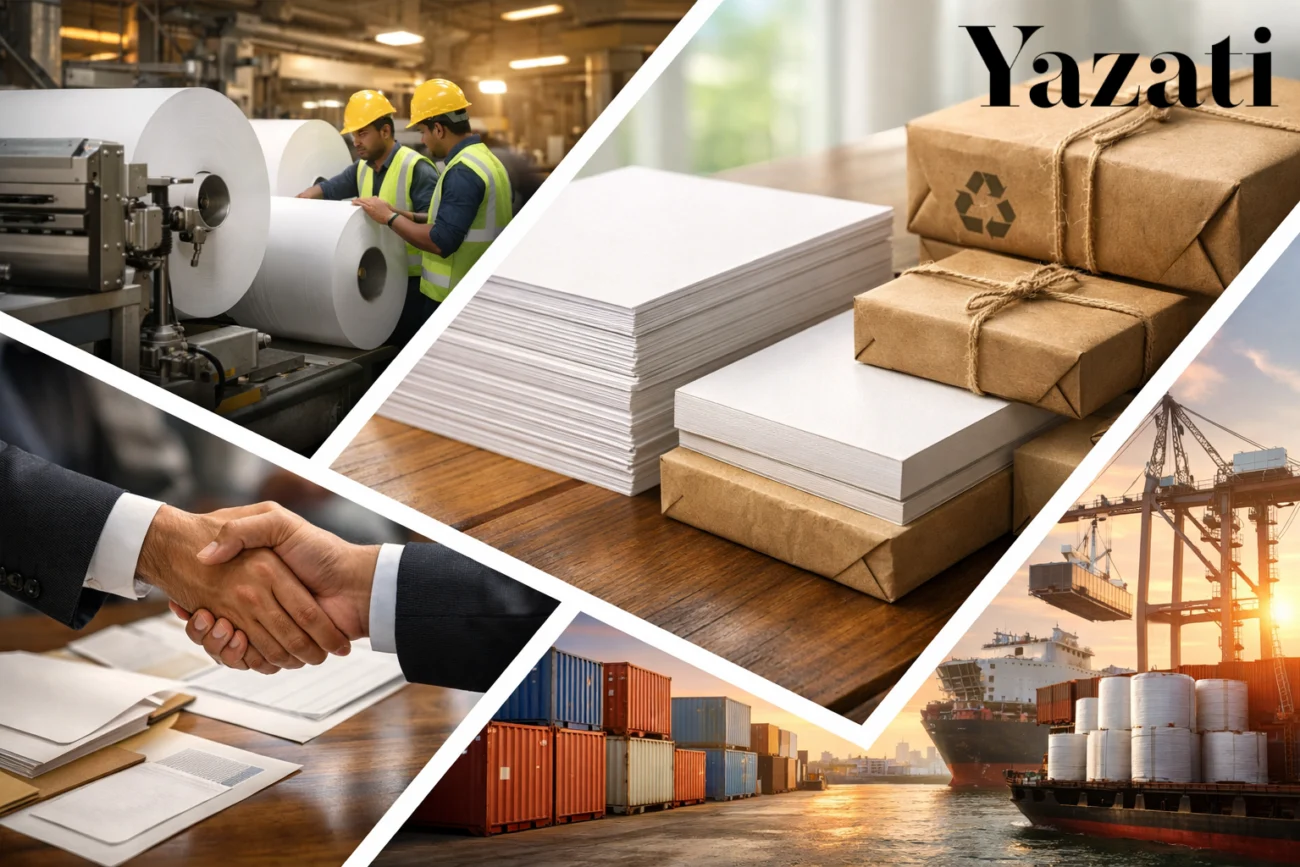
Introduction to India’s Paper Export Industry
India’s paper sector has long been an important part of the country’s manufacturing economy. However, in recent years—and especially after 2026—the industry has experienced a noticeable surge in exports. Many analysts now believe that Why India’s Paper Export Industry Is Growing Post-2026 is a question that reflects a broader transformation in global trade patterns and manufacturing capabilities.
India produces a wide variety of paper products including writing paper, packaging board, kraft paper, tissue paper, and specialty paper. As global demand shifts toward sustainable and cost-effective materials, Indian manufacturers have begun capturing a larger share of international markets.
This growth is not accidental. It is supported by government policies, technological innovation, rising global demand for packaging materials, and the country’s competitive manufacturing ecosystem. These factors together have positioned India as an emerging leader in global paper exports.
Understanding this trend requires examining the historical development of the industry and the economic role paper exports play in India today.
Historical Overview of India’s Paper Manufacturing Sector
India’s paper industry dates back more than a century. The first modern paper mill was established during the colonial period in the early 19th century. Over time, the industry evolved from small-scale operations to a large industrial sector with hundreds of mills across the country.
Initially, production was focused primarily on domestic consumption, particularly for education, printing, and packaging. As literacy rates increased and industries expanded, the demand for paper products grew rapidly.
However, export activity remained relatively modest for many years. The industry faced challenges such as outdated machinery, limited raw materials, and global competition. During the last two decades, significant investments in technology and production efficiency helped transform the sector.
By the mid-2020s, India had begun exporting larger volumes of paper products, particularly packaging materials. This laid the foundation for the post-2026 export boom.
Importance of Paper Exports in India’s Economy
Paper exports contribute significantly to India’s manufacturing and trade economy. The industry supports millions of jobs across manufacturing, logistics, forestry, recycling, and distribution networks.
Export growth benefits the economy in several ways:
- Foreign exchange earnings
- Industrial employment
- Expansion of manufacturing infrastructure
- Support for small and medium enterprises
Additionally, the paper industry connects with many other sectors such as agriculture, education, e-commerce, and packaging. As exports increase, the entire supply chain—from raw material suppliers to shipping companies—experiences economic growth.
Global Demand Driving India’s Paper Export Industry
One of the biggest reasons Why India’s Paper Export Industry Is Growing Post-2026 is the rapid increase in global demand for paper-based packaging and sustainable materials.
Increasing Packaging Needs Worldwide
The global packaging market has expanded dramatically in recent years. Businesses across industries require packaging solutions for products ranging from food and electronics to pharmaceuticals and consumer goods.
Paper-based packaging has become especially popular because it is lightweight, recyclable, and relatively inexpensive.
Developing economies in Asia, Africa, and the Middle East are experiencing fast growth in consumer markets. This has created a large demand for packaging materials, and Indian manufacturers are well positioned to supply these products.
Rise of E-commerce and Corrugated Packaging
The explosive growth of e-commerce is one of the biggest drivers of paper demand worldwide. Online retailers ship billions of packages each year, most of which require corrugated cardboard boxes.
Corrugated packaging is primarily made from kraft paper and paperboard. Indian mills have expanded production capacity for these materials, enabling them to export large quantities to international markets.
As global online retail continues to expand, demand for packaging paper is expected to rise even further.
Sustainable Alternatives to Plastic
Environmental awareness is reshaping industries around the world. Governments and consumers are increasingly concerned about plastic pollution, leading to stricter regulations and bans on single-use plastics.
Paper products are widely seen as an environmentally friendly alternative. Many companies are replacing plastic packaging with paper-based solutions such as paper bags, molded pulp packaging, and biodegradable containers.
This shift has significantly boosted demand for paper exports from countries capable of producing sustainable packaging materials.
Key Factors Behind the Growth Post-2026
Several structural changes in India’s manufacturing ecosystem have accelerated export growth after 2026.
Government Policies Supporting Paper Export Industry
Government initiatives play a crucial role in strengthening India’s export capacity. Over the past decade, policymakers have introduced several programs aimed at improving manufacturing competitiveness.
These include:
- Export promotion schemes
- Infrastructure development projects
- Tax incentives for manufacturing industries
- Policies encouraging sustainable production
Such initiatives have helped reduce production costs and improve export logistics.
Export Incentives and Trade Agreements
India has also expanded its network of trade agreements with several countries and regions. These agreements reduce tariffs and make Indian paper products more competitive in global markets.
Export incentives encourage companies to invest in larger production facilities and advanced machinery. As a result, many paper mills have expanded their export capabilities.
Technological Advancements in Paper Manufacturing
Modern paper manufacturing technology has dramatically improved efficiency and product quality. Many Indian mills have upgraded their machinery to meet international standards.
Automation, digital monitoring systems, and energy-efficient equipment have allowed manufacturers to increase production while reducing waste.
Automation and Modern Production Techniques
Advanced technologies have transformed the way paper is produced. Automated production lines improve precision and consistency, ensuring that exported paper products meet strict quality requirements.
These technologies also reduce labor costs and energy consumption, giving Indian manufacturers a competitive advantage in global markets.
Raw Material Availability in India
India has access to diverse sources of raw materials used in paper production. These include:
- Agricultural residues such as bagasse and wheat straw
- Recycled paper
- Wood pulp from plantations
The use of agricultural waste materials is particularly beneficial because it reduces environmental impact while providing cost-effective raw materials.
Role of Sustainability in Export Expansion
Environmental sustainability has become one of the defining trends in the global paper industry.
Eco-friendly Paper Production
Modern consumers expect products to be environmentally responsible. Paper manufacturers in India are increasingly adopting eco-friendly production methods such as:
- Energy-efficient machinery
- Reduced water consumption
- Cleaner chemical processes
These improvements help companies meet international environmental standards, which is essential for exporting to many countries.
Recycling and Circular Economy in Paper Manufacturing
Recycling plays a central role in sustainable paper production. Waste paper can be reprocessed into new paper products multiple times, reducing the need for fresh raw materials.
India has developed a strong recycling ecosystem, with many industries collecting and processing waste paper. This circular approach not only protects natural resources but also lowers production costs.
Major Export Markets for Indian Paper
The expansion of India’s paper exports is closely linked to the growth of international markets.
Growth in Asian and Middle Eastern Markets
Countries in Asia and the Middle East are major importers of Indian paper products. Rapid economic development in these regions has increased demand for packaging, printing paper, and tissue products.
Indian exporters benefit from geographic proximity and well-established trade routes with these markets.
Opportunities in European Markets
European countries are also showing interest in sustainable packaging materials. Indian paper manufacturers that comply with environmental certifications can access these high-value markets.
Although competition is intense, India’s cost advantages and improving quality standards make it an attractive supplier.
Competitive Advantages of Indian Paper Manufacturers
Cost-effective Production
One of the biggest strengths of India’s paper industry is its relatively low production cost. Several factors contribute to this advantage:
- Affordable labor
- Locally available raw materials
- Efficient supply chains
These factors allow Indian manufacturers to offer competitive prices in global markets.
Skilled Workforce and Industrial Capacity
India has a large pool of skilled workers and engineers experienced in manufacturing and industrial processes. Many companies also collaborate with research institutions to improve product quality and efficiency.
This combination of expertise and industrial capacity supports large-scale production for export markets.
Challenges Facing India’s Paper Export Industry
Despite its rapid growth, the industry still faces several challenges.
Environmental Regulations
Paper manufacturing can be resource-intensive, requiring water, energy, and chemicals. Governments worldwide are introducing stricter environmental regulations to reduce industrial pollution.
Manufacturers must invest in cleaner technologies and waste management systems to remain competitive.
Competition from Global Producers
India competes with major paper-exporting countries such as China, Indonesia, and Brazil. These countries also have large manufacturing capacities and established export networks.
To maintain growth, Indian companies must continue improving efficiency, quality, and sustainability.
Future Outlook for India’s Paper Export Industry
Expected Export Growth Trends
Industry experts predict that India’s paper exports will continue growing over the next decade. Several trends support this outlook:
- Increasing global demand for sustainable packaging
- Expansion of e-commerce markets
- Continued industrial investment
As global supply chains diversify, many companies are looking for reliable manufacturing partners outside traditional production hubs. India is well positioned to meet this demand.
Investment Opportunities
Investors are showing increasing interest in India’s paper sector. Opportunities exist in areas such as:
- Advanced paper manufacturing technology
- Recycling infrastructure
- Sustainable packaging innovation
These investments could further strengthen India’s position as a major exporter.
Frequently Asked Questions
1. Why is India’s paper export industry growing after 2026?
Growth is driven by rising global demand for sustainable packaging, government support, improved manufacturing technology, and increased production capacity.
2. What types of paper products does India export?
India exports packaging paper, kraft paper, paperboard, tissue paper, specialty paper, and writing and printing paper.
3. Which countries import paper from India?
Major export destinations include countries in Asia, the Middle East, Africa, and parts of Europe.
4. How does sustainability affect the paper export market?
Sustainability increases demand for recyclable and biodegradable packaging, making paper products more attractive than plastic alternatives.
5. What challenges does India’s paper industry face?
Key challenges include environmental regulations, raw material supply issues, and competition from other major exporting countries.
6. Will India become a global leader in paper exports?
If current growth trends continue and manufacturers adopt sustainable practices, India has strong potential to become one of the leading global paper exporters.
Conclusion
The rapid expansion of India’s paper export sector is the result of multiple interconnected trends. From rising global demand for sustainable packaging to supportive government policies and technological advancements, the industry is undergoing a significant transformation.
Understanding Why India’s Paper Export Industry Is Growing Post-2026 requires recognizing the role of sustainability, innovation, and global trade dynamics. Indian manufacturers are increasingly capable of meeting international quality standards while maintaining competitive pricing.
Although challenges remain, the future of the industry appears promising. With continued investment, modernization, and environmental responsibility, India’s paper sector is likely to strengthen its position in the global export market over the coming decade.
✨ Discover Global Sourcing Excellence with Netyex ✨
Netyex is your trusted B2B sourcing partner, connecting international buyers with India’s finest manufacturers and curated product lines—from handicrafts and home décor to kitchenware, textiles, hospitality essentials, and more. With verified suppliers and end-to-end support, we make global procurement seamless, reliable, and efficient.
👉 Elevate your sourcing experience—explore Netyex today.
📦 Bulk orders & customisation | 🌍 Worldwide delivery | 🤝 Trusted by global buyers
Visit Netyex to source premium Indian products with confidence.