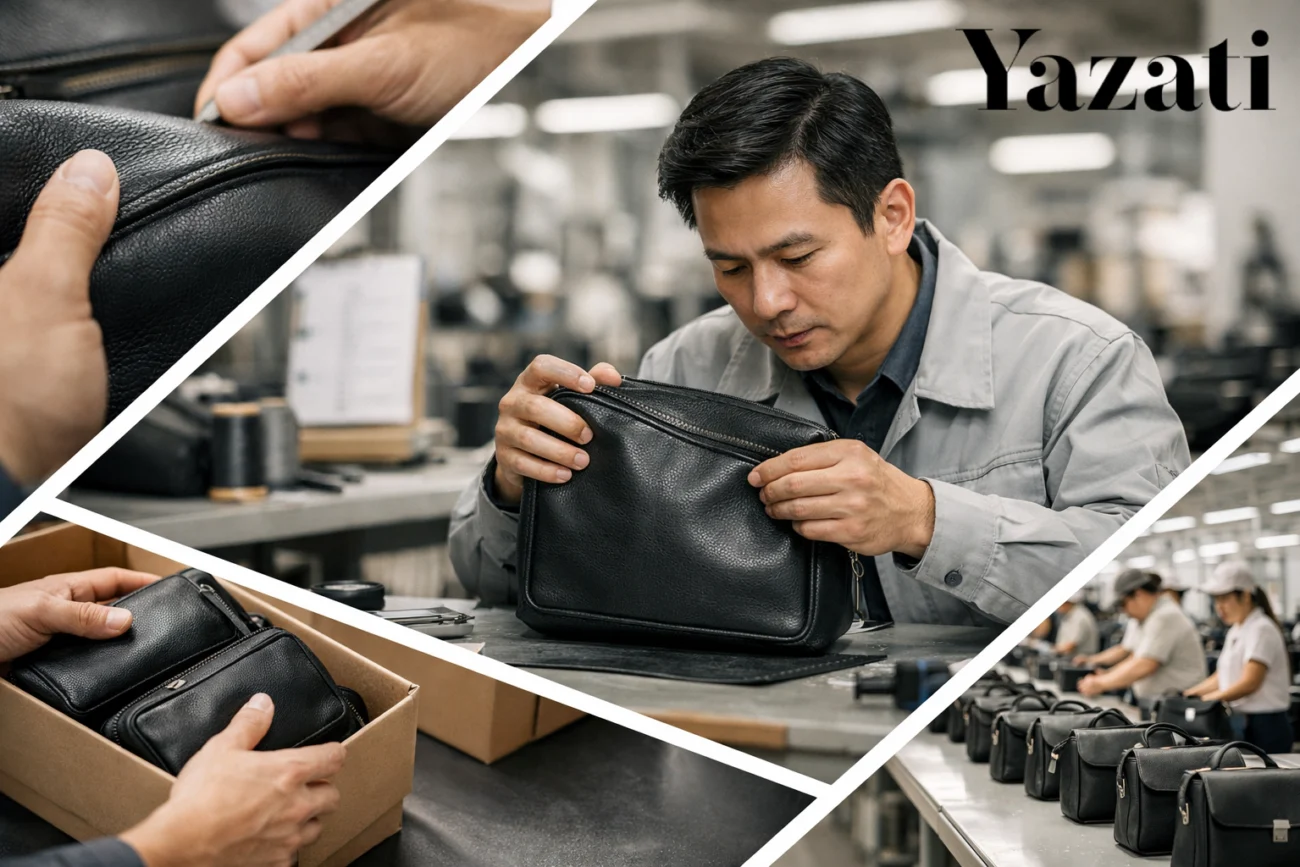
Understanding the Importance of Quality Audits in Bag Manufacturing
Quality audits play a crucial role in maintaining production standards. Without proper checks, even small defects can lead to major losses.
Why Quality Audits Matter
Quality audits help identify defects early, reduce waste, and ensure compliance with industry standards. They also improve customer satisfaction by delivering reliable products.
Impact on Brand Reputation
A well-audited product reflects professionalism and builds long-term trust with customers. Poor quality, on the other hand, can damage brand credibility.
Overview of Yazati’s End-to-End Quality Audit for Bag Manufacturing
Yazati’s system is structured, detailed, and highly effective.
Key Features of the Audit System
- Multi-stage inspection process
- Standardized quality benchmarks
- Real-time defect tracking
- Continuous improvement strategies
Audit Coverage Across Production Stages
The audit spans from raw material procurement to final shipment, ensuring no stage is overlooked.
Raw Material Inspection: The First Line of Defense
The foundation of a quality bag lies in its materials.
Fabric Quality Checks
Inspectors evaluate fabric strength, color consistency, and texture. Any deviation can affect the final product.
Accessory and Component Inspection
Zippers, buckles, and straps are tested for durability and functionality to avoid failures during use.
Pre-Production Audit: Setting the Standards
Before manufacturing begins, clear standards are established.
Sample Approval Process
Prototype bags are created and evaluated for design accuracy and functionality.
Specification Verification
Every detail, from stitching patterns to dimensions, is verified against approved specifications.
Cutting Process Quality Control
Precision is key during the cutting phase.
Pattern Accuracy
Cutting must follow exact patterns to ensure uniformity.
Material Utilization Efficiency
Efficient cutting reduces waste and improves cost-effectiveness.
Stitching and Assembly Inspection
This stage determines the structural integrity of the bag.
Stitch Quality Assessment
Inspectors check stitch density, alignment, and strength.
Assembly Accuracy
All components must be correctly aligned and securely attached.
In-Line Production Audits
Continuous monitoring ensures consistency.
Real-Time Defect Detection
Issues are identified and corrected immediately.
Process Standardization
Workers follow standardized procedures to maintain uniform quality.
Hardware and Accessories Testing
Small components can make a big difference.
Durability Testing
Zippers, buckles, and handles undergo stress tests.
Functional Performance Checks
Each component must operate smoothly and reliably.
Finishing Quality Inspection
The final look of the bag is crucial.
Surface Inspection
Inspectors check for stains, scratches, or uneven finishes.
Branding and Label Accuracy
Logos and labels must be correctly placed and clearly visible.
Final Product Audit: Ensuring Perfection
Before shipment, every bag undergoes a final inspection.
Comprehensive Quality Checklist
A detailed checklist ensures no aspect is overlooked.
Random Sampling Techniques
Random inspections help maintain overall production quality.
Packaging and Shipment Inspection
Proper packaging protects the product.
Packaging Standards
Bags are packed to prevent damage during transit.
Shipment Readiness Checks
Final verification ensures all products meet quality standards before dispatch.
Defect Classification and Reporting System
Understanding defects helps improve processes.
Types of Defects
- Minor defects
- Major defects
- Critical defects
Reporting and Documentation
All defects are documented for analysis and improvement.
Continuous Improvement Through Audit Feedback
Feedback drives growth.
Data Analysis and Insights
Audit data is analyzed to identify recurring issues.
Process Optimization Strategies
Improvements are implemented to enhance efficiency and quality.
Role of Technology in Quality Audits
Technology enhances accuracy and efficiency.
Digital Inspection Tools
Automated tools help track defects and maintain records.
Data-Driven Decision Making
Analytics provide insights for better quality control.
Training and Skill Development for Quality Teams
Skilled teams ensure effective audits.
Employee Training Programs
Regular training keeps teams updated on quality standards.
Skill Enhancement Techniques
Workshops and hands-on training improve inspection accuracy.
Compliance with Industry Standards
Meeting standards is essential for success.
International Quality Standards
Compliance ensures global acceptance of products.
Regulatory Requirements
Manufacturers must adhere to local and international regulations.
Benefits of Implementing Yazati’s End-to-End Quality Audit for Bag Manufacturing
This system offers multiple advantages.
Improved Product Quality
Consistent audits ensure high-quality output.
Reduced Production Costs
Early defect detection minimizes waste.
Enhanced Customer Satisfaction
High-quality products lead to repeat customers.
Challenges in Quality Auditing and How to Overcome Them
Every system faces challenges.
Common Audit Challenges
- Human error
- Inconsistent standards
- Lack of training
Effective Solutions
- Automation
- Standardization
- Continuous training
Future Trends in Bag Manufacturing Quality Audits
The industry is evolving rapidly.
Automation and AI Integration
AI-driven inspections improve accuracy.
Sustainability and Eco-Friendly Practices
Audits now include environmental considerations.
Frequently Asked Questions (FAQs)
1. What is Yazati’s End-to-End Quality Audit for Bag Manufacturing?
It is a comprehensive system that ensures quality at every stage of bag production, from raw materials to final shipment.
2. Why is quality auditing important in bag manufacturing?
It helps maintain consistency, reduce defects, and improve customer satisfaction.
3. What are the main stages of the audit process?
The process includes raw material inspection, pre-production checks, in-line audits, final inspection, and packaging verification.
4. How does technology improve quality audits?
Technology enables real-time monitoring, accurate data collection, and better decision-making.
5. What types of defects are identified during audits?
Defects are categorized as minor, major, or critical based on their impact on product quality.
6. How can manufacturers improve their quality audit system?
By adopting automation, training employees, and continuously analyzing audit data.
Conclusion
Yazati’s End-to-End Quality Audit for Bag Manufacturing provides a robust framework for ensuring excellence in every product. By implementing a structured audit system, manufacturers can achieve consistent quality, reduce costs, and enhance customer satisfaction.
In a market where quality defines success, adopting such a comprehensive approach is not just beneficial—it’s essential. With continuous improvements and technological advancements, the future of quality auditing in bag manufacturing looks promising and highly efficient.
✨ Discover Global Sourcing Excellence with Netyex ✨
Netyex is your trusted B2B sourcing partner, connecting international buyers with India’s finest manufacturers and curated product lines—from handicrafts and home décor to kitchenware, textiles, hospitality essentials, and more. With verified suppliers and end-to-end support, we make global procurement seamless, reliable, and efficient.
👉 Elevate your sourcing experience—explore Netyex today.
📦 Bulk orders & customisation | 🌍 Worldwide delivery | 🤝 Trusted by global buyers
Visit Netyex to source premium Indian products with confidence.