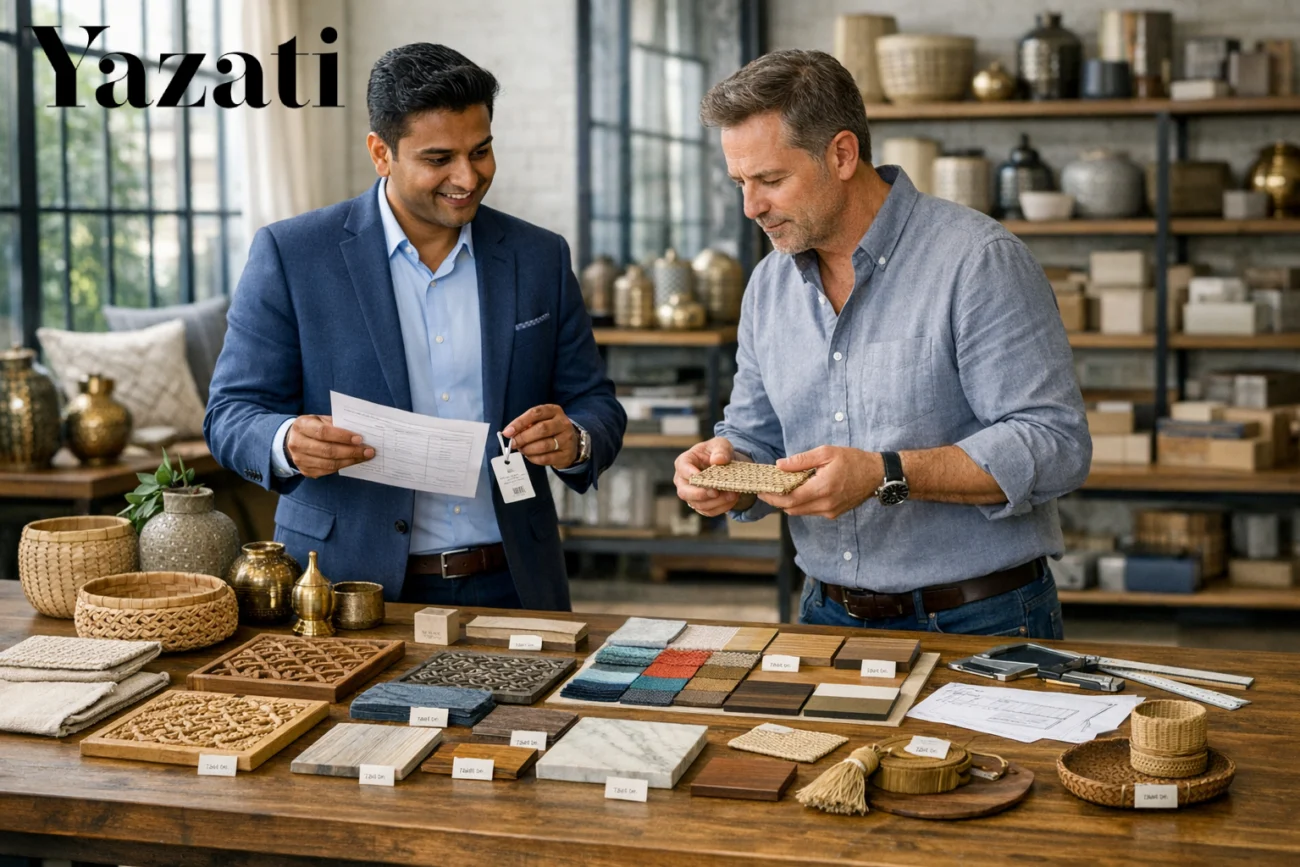
Introduction to Yazati’s Guide to Custom Décor Sampling for Global Buyers
In the global décor industry, customization is everything. Retailers, wholesalers, interior brands, and online stores around the world constantly search for suppliers that can create unique decorative products tailored to their brand identity. However, the success of any custom décor product begins with one crucial step: sampling.
Yazati’s Guide to Custom Décor Sampling for Global Buyers provides a clear roadmap for brands that want to develop custom décor products efficiently and confidently. Sampling helps buyers test materials, colors, shapes, and finishing details before moving into full-scale production.
Without proper sampling, businesses risk:
- Product defects
- Design mismatches
- Material inconsistencies
- Expensive production errors
- Delayed shipments
For global buyers working with overseas manufacturers, sampling becomes even more important. It bridges the gap between design concepts and real physical products.
This guide explains the entire sampling process, from idea creation to final production approval. Whether you are a décor retailer, e-commerce seller, importer, or private label brand, understanding these steps will help you avoid costly mistakes and achieve perfect product results.
Understanding the Importance of Custom Décor Sampling
Custom décor products often include intricate designs, textures, finishes, and materials. Unlike standard products, these pieces must match the exact design vision of the buyer.
Sampling allows manufacturers and buyers to:
- Test design feasibility
- Verify dimensions and structure
- Confirm color accuracy
- Evaluate material quality
- Ensure brand consistency
For example, a buyer may request a custom decorative lantern, wall art piece, or ceramic vase. Even if the design looks perfect in a digital sketch, the real product may appear different due to material behavior, manufacturing limitations, or finishing techniques.
Sampling helps identify such issues early.
Why Global Buyers Depend on Sampling
International buyers face additional challenges such as long-distance communication, shipping delays, and production uncertainties. A well-executed sample minimizes these risks.
Benefits include:
- Clear communication between buyer and supplier
- Early identification of design flaws
- Accurate cost estimation
- Reliable production planning
- Higher product quality
The Custom Décor Sampling Workflow
The sampling process usually follows a structured workflow that ensures every design detail is tested before mass production.
| Stage | Purpose | Key Outcome |
|---|---|---|
| Design Brief | Share product concept | Clear manufacturing instructions |
| Material Selection | Choose materials and finishes | Sample-ready components |
| Prototype Creation | Produce initial sample | Physical product model |
| Review & Feedback | Buyer evaluates sample | Required revisions |
| Final Approval | Confirm production version | Ready for mass manufacturing |
Each stage plays a critical role in reducing manufacturing risks.
Step 1: Defining the Product Concept
Every custom décor product begins with a clear concept. Buyers should prepare a detailed design brief including:
- Product sketches or CAD drawings
- Size specifications
- Material preferences
- Color codes
- Surface finishes
- Packaging requirements
A detailed concept prevents confusion during sampling.
Tips for Creating an Effective Design Brief
- Include reference images
- Specify exact measurements
- Mention material thickness or weight
- Provide color codes such as Pantone
- Explain the intended market segment
The more precise the design brief, the smoother the sampling process.
Step 2: Selecting the Right Materials
Material choice directly impacts the final appearance, durability, and cost of décor products.
Common décor materials include:
- Ceramic
- Metal
- Glass
- Wood
- Resin
- Marble
- Fabric
During sampling, manufacturers test how these materials behave when shaped, painted, polished, or assembled.
Factors to Consider in Material Selection
- Durability
- Weight
- Surface texture
- Cost
- Environmental impact
- Compatibility with finishing techniques
Choosing the right material ensures the sample accurately represents the final product.
Step 3: Creating the First Prototype Sample
The prototype sample is the first physical representation of the design. This version allows buyers to see how the concept translates into a real product.
Prototype samples focus on:
- Shape accuracy
- Structural stability
- Overall proportions
However, finishing details such as painting or polishing may still require adjustments.
What Buyers Should Check in a Prototype
- Are the dimensions correct?
- Does the product feel balanced?
- Is the structure strong?
- Does the design match the concept?
At this stage, feedback is essential.
Step 4: Reviewing the Sample and Providing Feedback
Once the sample reaches the buyer, it must be carefully inspected. This review determines whether the product is ready for production or requires modifications.
Important Evaluation Criteria
Buyers should examine:
- Craftsmanship quality
- Surface finishing
- Color consistency
- Assembly strength
- Packaging protection
Detailed feedback helps the manufacturer refine the design.
Common Sample Adjustments
Typical revisions include:
- Color correction
- Size adjustments
- Material substitution
- Surface finishing improvements
These refinements lead to the final approval sample.
Step 5: Approving the Pre-Production Sample
The pre-production sample (PPS) represents the exact product that will be manufactured in bulk.
It includes:
- Final materials
- Correct color finishing
- Production-level craftsmanship
- Final packaging
Once approved, this sample becomes the reference standard for mass production.
Manufacturers must ensure every produced item matches the approved sample.
Common Challenges in Custom Décor Sampling
Even experienced buyers encounter challenges during the sampling stage.
1. Color Variations
Different materials absorb pigments differently. Lighting conditions can also affect how colors appear.
2. Structural Weakness
Complex décor pieces may require internal reinforcement to maintain durability.
3. Material Limitations
Certain materials may not support intricate design details.
4. Production Cost Changes
Sometimes a design is technically feasible but too expensive for large-scale production.
Identifying these issues during sampling prevents larger problems later.
Best Practices for Efficient Sampling
Global buyers can streamline the sampling process by following a few proven practices.
Provide Detailed Documentation
Always include:
- Product drawings
- Material specifications
- Finishing details
- Packaging instructions
Clear documentation avoids misinterpretation.
Maintain Regular Communication
Frequent updates help resolve issues quickly. Video calls, photos, and progress reports improve transparency.
Plan for Multiple Sample Rounds
Most custom décor products require two to three sampling revisions before final approval.
Quality Control During the Sampling Stage
Quality checks should start during sampling rather than waiting for production.
Important quality factors include:
- Dimensional accuracy
- Material consistency
- Finish durability
- Structural strength
By inspecting these aspects early, buyers ensure smoother production.
Cost Factors in Custom Sampling
Sampling involves certain costs that buyers should consider when budgeting.
Typical Sampling Expenses
| Cost Component | Description |
|---|---|
| Tooling | Molds or shaping tools |
| Material | Raw materials used in sample |
| Labor | Skilled craftsmanship |
| Finishing | Painting, polishing, coating |
| Shipping | International delivery |
While sampling may require investment, it prevents much larger financial losses during production.
Packaging Considerations in Sampling
Packaging is often overlooked during the sampling phase, but it plays a crucial role in product safety and brand presentation.
A good packaging sample should include:
- Protective inserts
- Brand labeling
- Barcode placement
- Retail display considerations
Testing packaging ensures products arrive safely during shipping.
Communication Tips for International Buyers
Working with overseas manufacturers requires clear and consistent communication.
Effective Communication Methods
- Detailed written instructions
- Annotated images
- Video demonstrations
- Sample comparison photos
Clear communication reduces misunderstandings and accelerates approvals.
Timeline for Custom Décor Sampling
The typical sampling timeline varies depending on product complexity.
| Sampling Stage | Estimated Time |
|---|---|
| Design Review | 2–3 days |
| Prototype Development | 7–14 days |
| Sample Shipping | 3–7 days |
| Buyer Evaluation | 3–5 days |
| Final Revision | 5–10 days |
Overall, the full process may take 3–5 weeks.
Planning ahead ensures product launches stay on schedule.
How Sampling Leads to Successful Production
A well-structured sampling process ensures that production runs smoothly. When every detail has been tested and approved, manufacturers can confidently move to bulk manufacturing.
Advantages include:
- Reduced defect rates
- Faster production timelines
- Consistent product quality
- Stronger buyer-supplier relationships
Sampling ultimately acts as a blueprint for production success.
Frequently Asked Questions
What is custom décor sampling?
Custom décor sampling is the process of creating prototype products based on a buyer’s design before starting mass production. It allows buyers to evaluate materials, design accuracy, and craftsmanship.
How many sample revisions are usually needed?
Most décor products require two to three sample revisions to achieve the final approved version.
Why is sampling important for global buyers?
Sampling reduces risks such as design errors, material issues, and production defects, which are especially important when working with international suppliers.
How long does the sampling process take?
The complete process typically takes 3 to 5 weeks, depending on product complexity and shipping time.
Is sampling expensive?
Sampling costs vary based on materials, tooling, and craftsmanship. However, it is a necessary investment to ensure product quality before mass production.
What should buyers check when reviewing samples?
Buyers should inspect:
- Dimensions
- Color accuracy
- Material quality
- Surface finishing
- Structural durability
Conclusion
Custom décor products require careful planning, detailed design communication, and rigorous evaluation before entering mass production. Yazati’s Guide to Custom Décor Sampling for Global Buyers highlights the essential steps that help international buyers transform their creative ideas into high-quality finished products.
By following a structured sampling process—starting from concept design and material selection to prototype review and final approval—buyers can minimize risks and ensure product excellence.
Successful sampling not only guarantees accurate manufacturing but also strengthens collaboration between buyers and suppliers. With the right approach, global décor brands can create unique products that meet market expectations and stand out in competitive retail environments.
✨ Discover Global Sourcing Excellence with Netyex ✨
Netyex is your trusted B2B sourcing partner, connecting international buyers with India’s finest manufacturers and curated product lines—from handicrafts and home décor to kitchenware, textiles, hospitality essentials, and more. With verified suppliers and end-to-end support, we make global procurement seamless, reliable, and efficient.
👉 Elevate your sourcing experience—explore Netyex today.
📦 Bulk orders & customisation | 🌍 Worldwide delivery | 🤝 Trusted by global buyers
Visit Netyex to source premium Indian products with confidence.