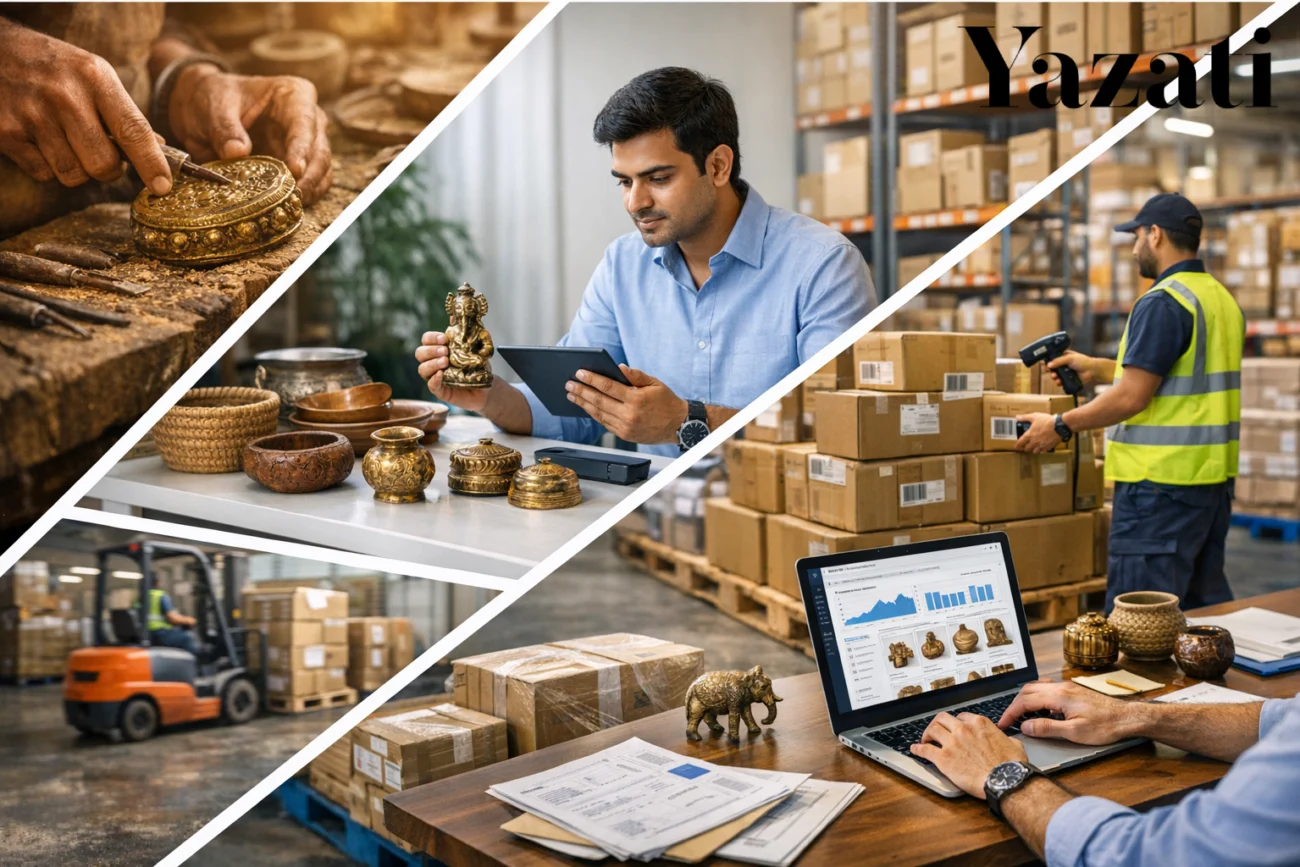
Introduction to Yazati’s Role in Modernizing the Indian Handicraft Supply Chain
India’s handicraft industry is one of the oldest and most culturally rich sectors in the country. For centuries, artisans have created unique handmade products such as textiles, pottery, wood carvings, metal crafts, and decorative items. These products represent regional traditions, artistic heritage, and the livelihood of millions of craftsmen and women across rural India.
Despite its cultural significance, the handicraft sector has long struggled with inefficiencies in the supply chain. Fragmented distribution networks, limited market access, poor pricing transparency, and lack of digital infrastructure have historically prevented artisans from reaching global buyers. Middlemen often dominate the system, leaving artisans with only a small share of the final selling price.
This is where Yazati’s Role in Modernizing the Indian Handicraft Supply Chain becomes important. By introducing technology-driven solutions, streamlined logistics, and direct market access, Yazati is helping reshape how handicraft products move from rural workshops to domestic and international markets.
Modernizing the supply chain not only improves efficiency but also empowers artisans. It ensures fair pricing, reduces delays, and enhances product visibility in competitive global markets. Through innovation and digital transformation, Yazati is bridging the gap between traditional craftsmanship and modern commerce.
In this article, we will explore how Yazati contributes to the modernization of the handicraft supply chain in India, the challenges it addresses, and the impact it has on artisans, businesses, and consumers.
Understanding the Indian Handicraft Industry
A Legacy of Cultural Heritage
India’s handicraft sector is deeply rooted in history. Each region has its own unique style and technique passed down through generations. Examples include:
- Handwoven textiles from Gujarat and Rajasthan
- Wooden carvings from Karnataka
- Blue pottery from Jaipur
- Brassware from Moradabad
- Bamboo crafts from the Northeast
These crafts represent more than just products—they tell stories of culture, tradition, and identity.
Economic Importance of Handicrafts
The handicraft sector supports millions of artisans and contributes significantly to rural employment. Many families rely on craft production as their primary source of income.
Key economic benefits include:
- Rural job creation
- Preservation of traditional skills
- Export revenue generation
- Promotion of sustainable handmade products
However, the industry still faces challenges that limit its growth potential.
Challenges in the Traditional Handicraft Supply Chain
Fragmented Production Networks
Most artisans work in small, decentralized workshops. Production often happens in rural villages where infrastructure and transportation options are limited. This fragmentation makes it difficult to coordinate production and delivery.
Dependence on Middlemen
Middlemen play a significant role in the traditional handicraft supply chain. While they help connect artisans to markets, they often control pricing and distribution.
As a result:
- Artisans receive lower profits
- Product pricing lacks transparency
- Market access remains restricted
Limited Market Visibility
Many artisans lack the knowledge or tools to promote their products online. Without digital marketing or e-commerce platforms, their reach is limited to local markets or exhibitions.
Logistics and Delivery Challenges
Transportation from rural areas to major cities or export hubs can be slow and expensive. Inefficient logistics increase delivery times and reduce product competitiveness in global markets.
How Yazati is Transforming the Handicraft Supply Chain
Introducing Digital Platforms for Artisan Connectivity
One of the key aspects of Yazati’s Role in Modernizing the Indian Handicraft Supply Chain is the integration of digital platforms. These platforms connect artisans directly with buyers, wholesalers, and retailers.
Digital solutions allow:
- Direct communication between artisans and buyers
- Transparent pricing structures
- Online product catalogs
- Real-time order tracking
By reducing reliance on intermediaries, artisans can gain better control over their business.
Enhancing Market Access
Yazati helps artisans reach broader markets by promoting their products through modern distribution channels. Instead of being limited to local fairs or exhibitions, artisans can showcase their crafts to national and international audiences.
This expanded reach improves demand and encourages artisans to scale their production.
Supporting Artisan Communities
Modern supply chains are not only about technology but also about people. Yazati focuses on building partnerships with artisan communities by offering support such as:
- Training programs
- Design guidance
- Quality improvement initiatives
- Market trend awareness
These initiatives help artisans adapt to evolving consumer preferences.
Technology Integration in the Handicraft Supply Chain
Inventory Management Systems
Traditional handicraft businesses often rely on manual record-keeping. This can lead to stock mismanagement and delays.
Modern inventory systems introduced through supply chain modernization help track:
- Product availability
- Raw material usage
- Production timelines
This ensures better planning and faster fulfillment.
Data-Driven Demand Forecasting
Understanding market demand is essential for artisans and craft businesses. By using data analytics, supply chain platforms can predict trends and consumer preferences.
This allows artisans to produce items that are more likely to sell successfully.
Digital Payment Systems
Another important improvement is the introduction of secure digital payments. These systems make transactions faster and safer for both artisans and buyers.
Benefits include:
- Instant payments
- Reduced financial risk
- Improved financial transparency
Improving Logistics and Distribution Networks
Streamlined Transportation
Efficient logistics are essential for modern supply chains. Yazati contributes by coordinating transportation routes that reduce delays and shipping costs.
This includes:
- Consolidated shipments
- Organized delivery schedules
- Improved warehouse coordination
Packaging and Product Protection
Handicraft products are often delicate and require careful packaging. Supply chain modernization introduces better packaging solutions to ensure products arrive safely.
This reduces product damage during transportation.
Warehouse Management
Warehousing solutions help manage large volumes of handicraft items while maintaining proper storage conditions.
Benefits include:
- Faster order processing
- Organized product categorization
- Improved inventory tracking
Empowering Artisans Through Training and Education
Skill Development Programs
Many artisans are highly skilled in craftsmanship but lack exposure to modern business practices. Training programs can help them learn about:
- Product pricing strategies
- Quality control standards
- Market trends
These skills allow artisans to compete more effectively in global markets.
Digital Literacy for Artisans
Technology adoption requires basic digital knowledge. Training artisans to use smartphones, online platforms, and digital payment systems helps them participate in modern supply chains.
Design Innovation and Product Development
Consumer preferences change over time. By introducing design innovation workshops, artisans can combine traditional techniques with contemporary styles.
This helps crafts appeal to younger and international buyers.
Sustainability in the Modern Handicraft Supply Chain
Eco-Friendly Production
Many handicrafts are already environmentally friendly because they use natural materials and handmade techniques. Modern supply chains can further promote sustainable production.
Ethical Sourcing and Fair Trade
Supply chain transparency ensures that artisans receive fair compensation for their work. Ethical sourcing practices strengthen consumer trust in handmade products.
Reducing Waste Through Better Planning
Efficient production planning reduces raw material waste and improves resource utilization.
Impact of Yazati’s Supply Chain Modernization
Increased Income for Artisans
By connecting artisans directly with buyers and improving pricing transparency, modern supply chains allow artisans to earn better profits.
Global Exposure for Indian Crafts
Indian handicrafts have strong international appeal. Supply chain modernization enables these products to reach new global markets.
Preservation of Traditional Craftsmanship
When artisans earn sustainable incomes, younger generations are more likely to continue traditional crafts instead of abandoning them for other jobs.
Future Opportunities for the Indian Handicraft Supply Chain
Expansion of Digital Marketplaces
Digital platforms will continue to play a major role in connecting artisans with global buyers.
Integration with Global E-Commerce
Global online marketplaces create new opportunities for handcrafted products.
Artificial Intelligence in Supply Chain Management
AI-powered tools can further optimize inventory management, demand forecasting, and logistics.
Blockchain for Supply Chain Transparency
Blockchain technology could help verify product authenticity and trace the origin of handicrafts.
Frequently Asked Questions (FAQs)
1. What is Yazati’s Role in Modernizing the Indian Handicraft Supply Chain?
Yazati helps improve the handicraft supply chain by introducing digital platforms, better logistics, and direct connections between artisans and buyers. This modernization improves efficiency and increases artisan income.
2. Why does the handicraft supply chain need modernization?
Traditional supply chains often suffer from inefficiencies such as multiple intermediaries, slow logistics, and limited market access. Modernization improves transparency, speed, and market reach.
3. How does technology benefit artisans?
Technology helps artisans manage inventory, receive digital payments, connect with buyers online, and promote their products to larger markets.
4. Can supply chain modernization increase handicraft exports?
Yes. Improved logistics, quality standards, and digital marketing can significantly boost international demand for Indian handicrafts.
5. How does modernization protect traditional craftsmanship?
By improving income opportunities for artisans, modernization encourages younger generations to continue traditional crafts instead of abandoning them.
6. What challenges remain in the handicraft supply chain?
Challenges include limited infrastructure in rural areas, lack of digital awareness among some artisans, and competition from mass-produced goods.
Conclusion
The Indian handicraft sector represents centuries of artistic heritage and cultural identity. However, traditional supply chain limitations have prevented many artisans from fully benefiting from their work.
Yazati’s Role in Modernizing the Indian Handicraft Supply Chain demonstrates how technology, efficient logistics, and direct market connections can transform this historic industry. By integrating digital tools, improving distribution networks, and supporting artisan communities, the handicraft ecosystem becomes stronger and more sustainable.
Modern supply chains not only improve business efficiency but also protect cultural traditions. When artisans receive fair compensation and global recognition, their crafts continue to thrive.
As modernization continues, the future of the Indian handicraft industry looks promising—combining ancient artistry with innovative systems that bring these unique creations to the world.
✨ Discover Global Sourcing Excellence with Netyex ✨
Netyex is your trusted B2B sourcing partner, connecting international buyers with India’s finest manufacturers and curated product lines—from handicrafts and home décor to kitchenware, textiles, hospitality essentials, and more. With verified suppliers and end-to-end support, we make global procurement seamless, reliable, and efficient.
👉 Elevate your sourcing experience—explore Netyex today.
📦 Bulk orders & customisation | 🌍 Worldwide delivery | 🤝 Trusted by global buyers
Visit Netyex to source premium Indian products with confidence.