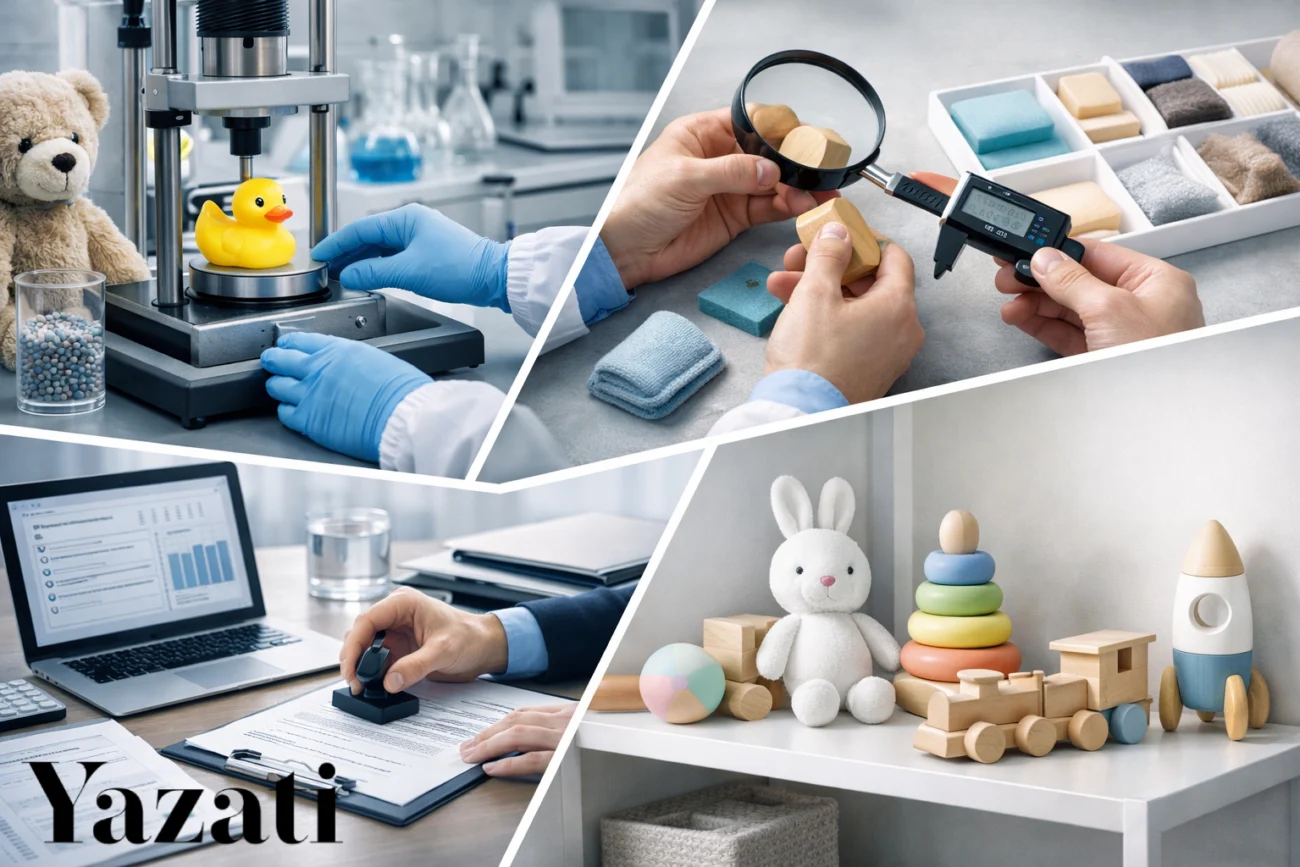
Introduction to Yazati’s Safety Protocol for Toy Testing and Certification
When it comes to children’s toys, safety isn’t just important—it’s absolutely critical. Yazati’s Safety Protocol for Toy Testing and Certification sets a high standard for ensuring toys are safe, reliable, and compliant with global regulations. This protocol is designed to protect children from physical, chemical, and environmental hazards while also helping manufacturers meet strict safety requirements.
In today’s fast-growing toy industry, where innovation meets mass production, maintaining safety standards can be challenging. That’s where Yazati’s protocol shines. It provides a structured, thorough, and globally aligned approach to testing and certification.
Importance of Toy Safety Standards
Why Toy Testing Matters
Toy testing plays a vital role in protecting children from potential hazards. Kids are naturally curious and often explore toys by touching, chewing, or even throwing them. Without proper testing, toys could pose serious risks such as choking, poisoning, or injury.
Testing ensures:
- Materials are non-toxic
- Components are durable
- Designs are age-appropriate
- Products meet regulatory standards
In short, toy testing builds trust between manufacturers and consumers.
Risks of Non-Compliant Toys
Failing to meet safety standards can lead to severe consequences. Unsafe toys may:
- Contain harmful chemicals like lead or phthalates
- Break easily, causing sharp edges
- Include small detachable parts that pose choking hazards
Beyond physical harm, non-compliance can damage a brand’s reputation and lead to costly recalls or legal penalties.
Overview of Yazati’s Safety Protocol Framework
Core Principles of the Protocol
Yazati’s approach is built on three main pillars:
- Child Safety First – Every test prioritizes child well-being
- Scientific Accuracy – Testing methods are data-driven
- Global Compliance – Aligns with international safety standards
These principles ensure that no aspect of safety is overlooked.
Global Compliance Alignment
The protocol aligns with major international standards, ensuring toys can be sold across different markets without additional testing. This makes it especially valuable for global manufacturers.
Material Safety Testing
Chemical Composition Analysis
One of the first steps in Yazati’s Safety Protocol for Toy Testing and Certification is analyzing the materials used in toys. This includes checking for:
- Heavy metals (lead, mercury)
- Harmful plasticizers
- Toxic dyes and coatings
Advanced lab techniques are used to detect even trace amounts of harmful substances.
Toxicity and Hazard Screening
Toys are tested to ensure they do not pose ingestion or skin-contact risks. This includes:
- Oral toxicity testing
- Skin irritation analysis
- Long-term exposure risk evaluation
Mechanical and Physical Testing
Durability Checks
Toys must withstand rough handling. Yazati’s protocol includes stress testing such as:
- Drop tests
- Compression tests
- Pull and twist tests
These ensure toys don’t break easily during normal use.
Small Parts Testing
Small parts are a major choking hazard for young children. The protocol includes strict testing to ensure:
- Parts do not detach easily
- Components meet size safety thresholds
Flammability Testing Standards
Toys must not catch fire easily. Yazati’s protocol evaluates how materials react to heat and flame exposure. Toys are tested for:
- Flame spread rate
- Ignition resistance
- Self-extinguishing properties
This is especially important for plush toys and fabrics.
Electrical Safety Testing
Battery Safety Requirements
Battery-operated toys undergo detailed testing to prevent:
- Overheating
- Leakage
- Explosion risks
Secure battery compartments are also mandatory.
Circuit Protection Measures
Electronic toys are tested for:
- Short circuit prevention
- Insulation quality
- Voltage regulation
Age Appropriateness Evaluation
Not all toys are suitable for every age group. Yazati’s protocol ensures toys are:
- Designed with age-specific safety in mind
- Free from hazards inappropriate for younger children
Clear age labeling is also required.
Labeling and Packaging Compliance
Proper labeling is essential for safety communication. The protocol ensures:
- Warning labels are clear and visible
- Instructions are easy to understand
- Packaging does not pose suffocation risks
Hygiene and Microbial Safety Testing
Toys, especially for infants, must be hygienic. Testing includes:
- Bacterial contamination checks
- Mold resistance evaluation
- Washability testing
Environmental Impact Assessment
Yazati’s protocol also considers environmental safety. This includes:
- Eco-friendly materials
- Recyclability
- Reduced carbon footprint
Certification Process Explained
Pre-Testing Documentation
Manufacturers must submit:
- Product specifications
- Material details
- Design blueprints
Laboratory Evaluation
Accredited labs conduct all required tests using standardized methods.
Certification Approval
Once all tests are passed, the toy receives certification, confirming compliance.
Role of Accredited Laboratories
Accredited labs ensure:
- Accurate testing
- Reliable results
- Compliance with global standards
They play a key role in maintaining trust in the certification process.
Common Challenges in Toy Certification
Manufacturers often face:
- Complex regulations
- High testing costs
- Time-consuming processes
However, following Yazati’s protocol simplifies compliance.
Benefits of Following Yazati’s Safety Protocol
- Ensures child safety
- Enhances brand reputation
- Reduces legal risks
- Enables global market access
FAQs About Yazati’s Safety Protocol for Toy Testing and Certification
1. What is Yazati’s Safety Protocol for Toy Testing and Certification?
It is a structured system for ensuring toys meet safety, quality, and regulatory standards.
2. Why is toy certification important?
It ensures toys are safe for children and compliant with regulations.
3. What types of tests are included?
Chemical, mechanical, electrical, flammability, and microbial testing.
4. Who conducts the testing?
Accredited laboratories with certified equipment and expertise.
5. How long does certification take?
It depends on the complexity of the toy but typically takes a few weeks.
6. Can small manufacturers follow this protocol?
Yes, the protocol is designed to be scalable for businesses of all sizes.
Conclusion
Yazati’s Safety Protocol for Toy Testing and Certification is a comprehensive and reliable framework that ensures toys are safe, durable, and compliant with global standards. By covering every aspect—from material safety to environmental impact—it provides a complete solution for manufacturers aiming to deliver high-quality products.
In a world where children’s safety is non-negotiable, following a robust protocol like Yazati’s is not just a requirement—it’s a responsibility. Manufacturers who adopt these standards not only protect young users but also build lasting trust and credibility in the market.
✨ Discover Global Sourcing Excellence with Netyex ✨
Netyex is your trusted B2B sourcing partner, connecting international buyers with India’s finest manufacturers and curated product lines—from handicrafts and home décor to kitchenware, textiles, hospitality essentials, and more. With verified suppliers and end-to-end support, we make global procurement seamless, reliable, and efficient.
👉 Elevate your sourcing experience—explore Netyex today.
📦 Bulk orders & customisation | 🌍 Worldwide delivery | 🤝 Trusted by global buyers
Visit Netyex to source premium Indian products with confidence.