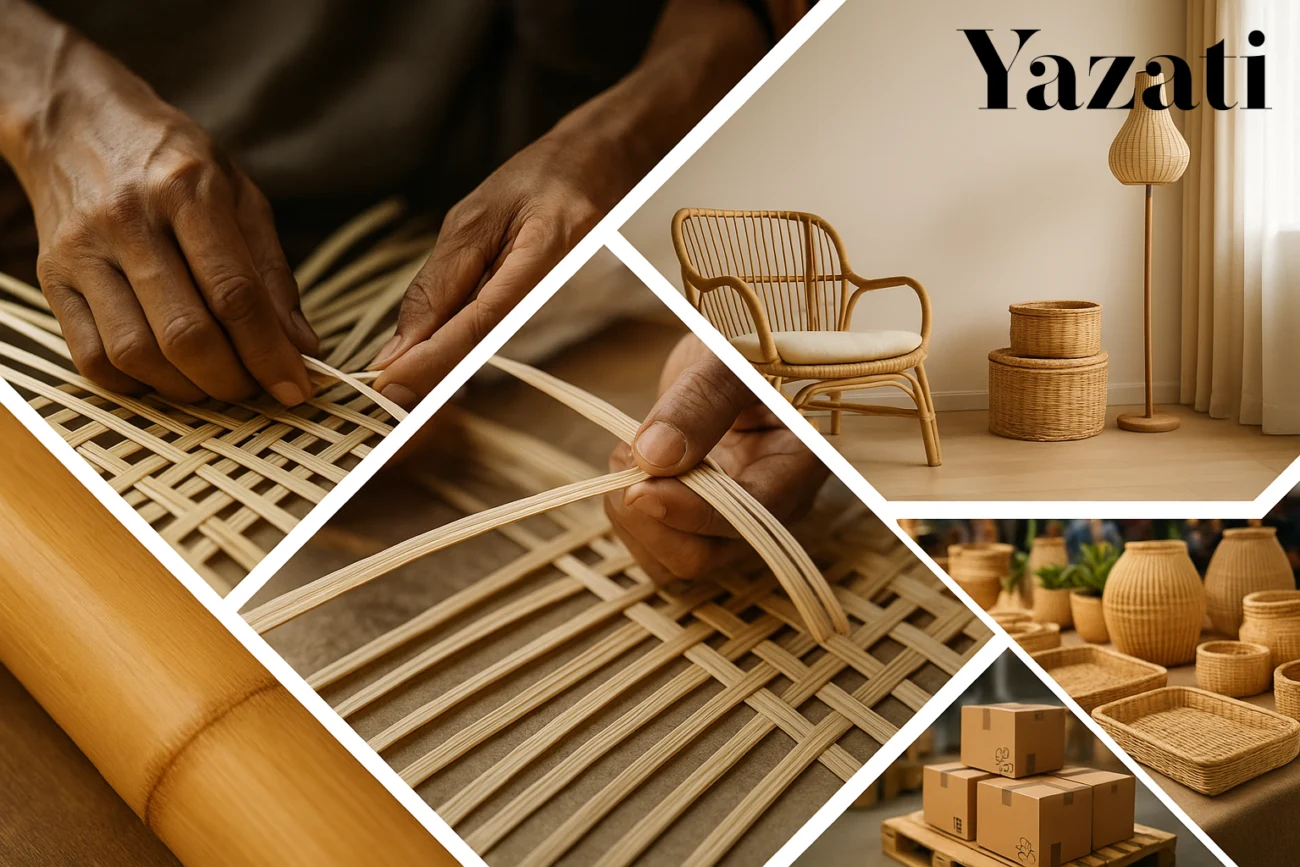
India’s bamboo and cane handicrafts represent one of the country’s most ancient, sustainable, and versatile art forms—yet they remain largely untapped in the modern marketplace. Despite global trends favoring eco-friendly products, India’s bamboo and cane artisans still struggle for visibility and fair value. This article explores the heritage, opportunities, and future potential of this overlooked craft sector, highlighting how innovation and awareness could transform it into a pillar of India’s green economy.
Understanding India’s Rich Bamboo and Cane Heritage
The Legacy of Traditional Craftsmanship
Bamboo and cane have been part of India’s cultural fabric for centuries. From the woven baskets of Assam to the intricately designed cane furniture of Kerala, these natural materials have supported both livelihoods and lifestyles. Ancient texts and temple carvings depict the use of bamboo in architecture, music, and daily life.
Traditional craftsmanship was passed down through generations, with each community developing its signature patterns, weaving styles, and motifs. In tribal regions, bamboo served as both a functional and artistic resource—used for making tools, storage containers, and even housing frameworks.
Cultural Symbolism and Traditional Uses
In many Indian cultures, bamboo symbolizes strength, flexibility, and purity. During weddings and religious ceremonies, bamboo structures and decorations hold spiritual importance. Cane weaving, meanwhile, became a form of social art—expressing identity, heritage, and local storytelling through intricate designs and techniques.
Economic Landscape of Bamboo and Cane Industry in India
Current Market Size and Growth Trends
India is the second-largest bamboo-growing nation in the world, covering more than 13 million hectares of bamboo forests. However, its share in the global bamboo trade remains minimal—less than 5%. The domestic bamboo and cane handicraft market is valued at around ₹3,000 crore, but experts believe it could grow to ₹15,000 crore by 2030 with better marketing, branding, and export channels.
Employment and Livelihood Opportunities
The bamboo and cane industry provides direct or indirect employment to over 10 million rural and tribal artisans. Women play a significant role, particularly in weaving and finishing crafts. In states like Assam and Tripura, almost every household has at least one artisan involved in bamboo or cane craft production, making it a cornerstone of rural self-employment.
Regional Hubs of Bamboo and Cane Handicrafts
Northeastern India – The Bamboo Heartland
The Northeastern states, especially Assam, Tripura, and Manipur, are recognized as India’s bamboo hubs. Artisans here are known for their traditional basketry, mats, furniture, and decorative items. The unique weaving techniques and fine finishing of these products have earned international admiration.
South India’s Emerging Bamboo Artisans
In Kerala and Tamil Nadu, artisans have adapted traditional bamboo crafts into contemporary furniture and decor products. Cities like Kochi and Bengaluru now host boutique studios and startups blending traditional weaving with modern design sensibilities.
Design Evolution – From Tradition to Modern Utility
Fusion of Traditional Craft with Contemporary Aesthetics
The recent shift toward eco-conscious living has revived interest in bamboo and cane crafts. Designers are fusing traditional patterns with minimalist aesthetics, creating home décor, lighting, fashion accessories, and even architectural structures that appeal to urban consumers.
The Role of Designers and Startups
Startups like Bamboology and Greensole are integrating sustainable bamboo designs into modern lifestyles. These initiatives connect artisans to broader markets and encourage product innovation—expanding the craft’s relevance beyond its rural roots.
Sustainability and Environmental Benefits
Carbon Footprint and Renewable Nature of Bamboo
Bamboo grows rapidly, reaching maturity in 3–5 years, and absorbs up to 12 tons of carbon dioxide per hectare annually. Unlike hardwood, it regenerates without replanting, making it a renewable and eco-positive alternative to plastic, metal, or timber.
Waste-Free Production and Recycling Practices
Artisans utilize nearly every part of the bamboo—culms for structure, shavings for decoration, and dust for biofuel. This zero-waste approach aligns perfectly with the principles of the circular economy and supports India’s sustainability goals.
Challenges Hindering the Growth of the Industry
Lack of Awareness and Market Linkages
Despite its eco-friendly advantages, bamboo and cane crafts suffer from poor branding and limited exposure. Most artisans rely on local fairs for sales, missing out on lucrative e-commerce opportunities.
Skill Development and Technological Gaps
Many artisans still use outdated tools and lack training in modern design or finishing techniques. Without access to design schools or digital marketing, they struggle to compete with factory-made products.
Policy and Infrastructure Limitations
Although bamboo is now categorized as a grass (not timber), easing transport restrictions, the industry still faces bureaucratic hurdles, poor logistics, and lack of funding. Better coordination between government schemes and private investment is urgently needed.
Government Initiatives and Support Systems
National Bamboo Mission (NBM) and Its Impact
The National Bamboo Mission, launched under the Ministry of Agriculture, aims to boost bamboo cultivation, processing, and product development. It encourages bamboo-based entrepreneurship and provides financial aid to artisans and small businesses.
Handicraft Clusters and Export Promotion Councils
Organizations like the Export Promotion Council for Handicrafts (EPCH) and DC Handicrafts are helping artisans with design workshops, certifications, and global trade exposure. However, awareness and accessibility at the grassroots level remain limited.
The Role of E-Commerce and Digital Platforms
Online Marketplaces: Expanding Reach Beyond Borders
Digital platforms such as Etsy, Amazon India, and IndiaMART have become game-changers, enabling artisans to sell directly to international customers. This shift reduces middlemen and provides better margins.
Social Media and Branding of Handicrafts
Platforms like Instagram and Pinterest empower artisans to tell their stories visually. Hashtags like #SustainableArt, #BambooDesign, and #EcoIndia have helped small creators gain global recognition and collaborations.
Export Potential of Indian Bamboo and Cane Handicrafts
Global Demand for Eco-Friendly Handicrafts
As the world moves toward sustainable living, there’s increasing demand for eco-friendly decor and lifestyle products. Countries like Japan, Germany, and the US are key markets for Indian bamboo and cane products.
India’s Competitive Advantage in Global Trade
India’s diverse craftsmanship, combined with its affordable labor and design versatility, positions it as a strong global competitor. With improved packaging, certification, and branding, the country could capture a much larger share of the $12 billion global bamboo market.
Future of Bamboo and Cane Handicrafts – A Vision for 2030
Integration of AI, Design Software, and Smart Tools
Emerging technologies can help artisans modernize production. From CAD-based bamboo furniture designs to 3D visualization tools, innovation can make traditional crafts more scalable and consistent.
Collaborative Models for Rural Empowerment
Partnerships between NGOs, startups, and cooperatives are proving effective. These models combine traditional skills with modern business practices, ensuring artisans earn sustainable incomes while preserving cultural heritage.
Conclusion – Unlocking the True Potential
The future of Indian bamboo and cane handicrafts lies in synergy between tradition and innovation. With the right mix of technology, policy support, and global exposure, this industry can become a beacon of sustainable development and cultural pride. Unlocking its potential will not only uplift millions of rural artisans but also strengthen India’s leadership in eco-conscious craftsmanship.
FAQs about Indian Bamboo and Cane Handicrafts
Q1: Why are Indian bamboo and cane handicrafts considered sustainable?
Because bamboo regenerates quickly, requires minimal water, and is biodegradable, making it one of the most eco-friendly raw materials available.
Q2: Which states in India are famous for bamboo and cane crafts?
Assam, Tripura, Manipur, Kerala, and Karnataka are top producers known for unique craftsmanship styles.
Q3: How does the government support bamboo artisans?
Through schemes like the National Bamboo Mission and the Handicrafts Cluster Development Program, which provide training, tools, and financial aid.
Q4: What challenges do artisans face today?
They struggle with limited market access, outdated tools, lack of branding, and insufficient design education.
Q5: Are bamboo and cane crafts in demand internationally?
Yes, global consumers increasingly prefer eco-friendly and handmade decor, offering huge export potential for Indian artisans.
Q6: How can consumers support this industry?
By choosing locally made bamboo and cane products, shopping from artisan platforms, and promoting sustainable craft practices online.
✨ Discover Global Sourcing Excellence with Netyex ✨
Netyex is your trusted B2B sourcing partner, connecting international buyers with India’s finest manufacturers and curated product lines—from handicrafts and home décor to kitchenware, textiles, hospitality essentials, and more. With verified suppliers and end-to-end support, we make global procurement seamless, reliable, and efficient.
👉 Elevate your sourcing experience—explore Netyex today.
📦 Bulk orders & customisation | 🌍 Worldwide delivery | 🤝 Trusted by global buyers
Visit Netyex to source premium Indian products with confidence.