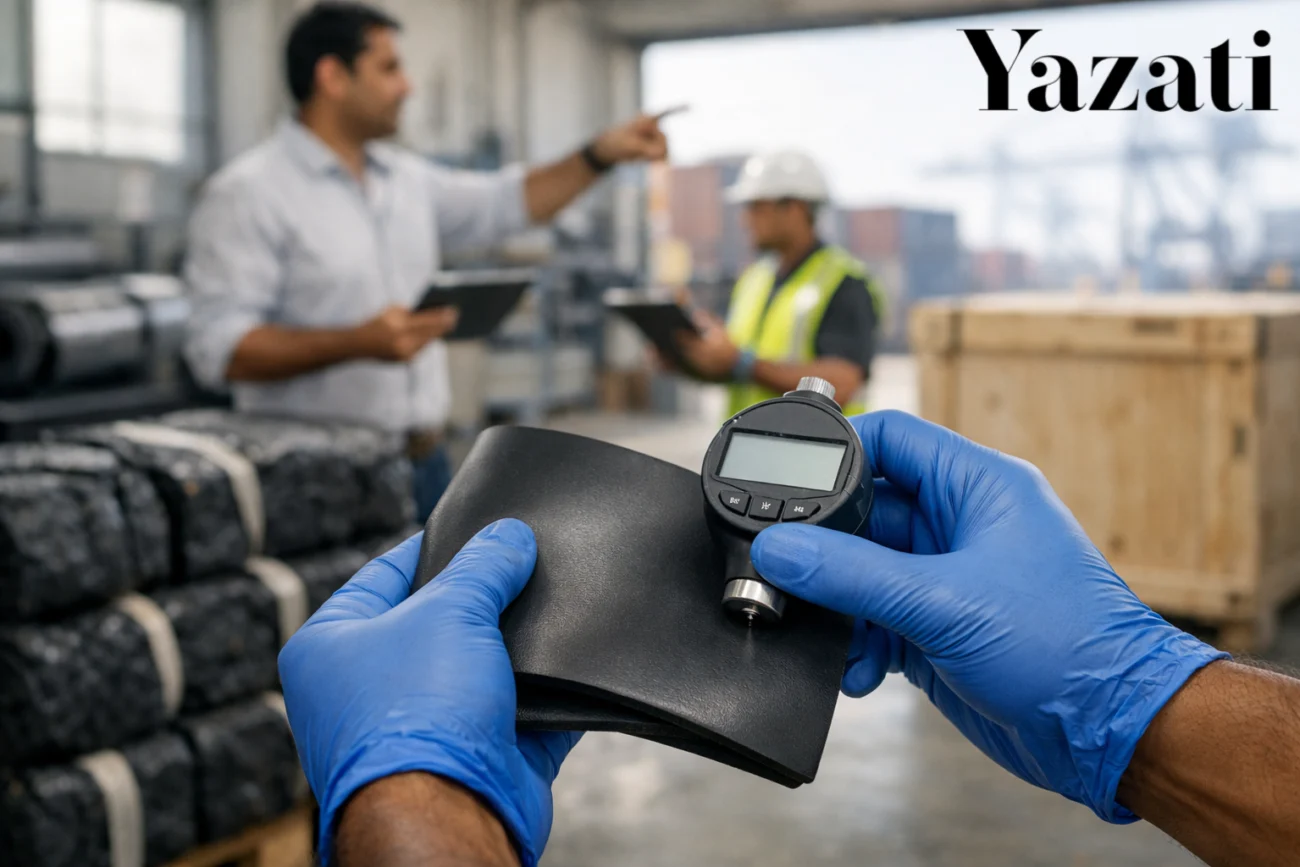
Introduction: The Global Shift in Rubber Sourcing
In recent years, global supply chains have experienced major disruptions due to geopolitical tensions, rising manufacturing costs, and changing trade policies. These challenges have prompted businesses around the world to reconsider their dependence on a single sourcing destination. One area where this shift is especially noticeable is in the rubber industry.
For decades, China has dominated global rubber processing and export markets. However, increasing labor costs, trade tariffs, and supply chain vulnerabilities have encouraged manufacturers and procurement teams to explore alternative sourcing hubs.
This is where India is rapidly gaining attention. With its strong agricultural base, growing manufacturing ecosystem, skilled workforce, and favorable trade environment, India is becoming a compelling option for rubber sourcing.
Understanding why India is a strategic alternative to China for rubber sourcing is essential for global buyers looking to diversify supply chains, reduce risk, and ensure long-term sustainability.
Understanding the Global Rubber Supply Chain
Before analyzing India’s advantages, it is important to understand how the global rubber supply chain works.
Rubber is broadly categorized into two main types:
| Type | Description | Common Uses |
|---|---|---|
| Natural Rubber | Extracted from rubber trees | Tires, automotive parts, industrial products |
| Synthetic Rubber | Manufactured using petrochemicals | Medical equipment, adhesives, footwear |
Natural rubber production is concentrated mainly in Asia, with countries such as Thailand, Indonesia, Vietnam, China, and India playing major roles.
The supply chain typically includes:
- Rubber plantations
- Processing facilities
- Manufacturing units
- Exporters and distributors
China has traditionally controlled a large portion of rubber processing and product manufacturing. However, companies now seek diversified sourcing options due to risks associated with over-dependence.
Why Businesses Are Moving Away from China
Many global companies are reevaluating their sourcing strategies due to several evolving challenges.
Rising Manufacturing Costs
China’s economic growth has significantly increased wages and production costs. What once made China a low-cost manufacturing hub is no longer guaranteed.
Labor costs in China have increased substantially over the last decade, reducing its cost advantage.
Trade Tensions and Tariffs
Trade disputes between major economies have created uncertainty in global supply chains.
Tariffs on Chinese exports have increased costs for manufacturers and buyers alike, forcing companies to explore alternative sourcing destinations.
Supply Chain Disruptions
Events such as global pandemics, shipping bottlenecks, and geopolitical issues have exposed vulnerabilities in centralized supply chains.
Companies now prefer multi-country sourcing strategies to reduce risk.
Environmental Regulations
China has tightened environmental regulations in recent years, leading to factory shutdowns and reduced production capacity in some industries.
While these policies support sustainability, they also increase operational costs for manufacturers.
India’s Position in the Global Rubber Industry
India is one of the world’s largest producers and consumers of natural rubber. The country has steadily strengthened its rubber ecosystem through investment, policy reforms, and agricultural development.
Key characteristics of India’s rubber sector include:
- Large rubber plantation areas
- Established processing infrastructure
- Skilled workforce
- Growing domestic demand
- Expanding export capabilities
India ranks among the top natural rubber producers globally, with major production concentrated in regions such as Kerala, Tamil Nadu, and the northeastern states.
Additionally, India has a strong downstream industry producing tires, automotive components, medical products, and industrial rubber goods.
Abundant Natural Rubber Production
One major reason India is a strategic alternative to China for rubber sourcing is its robust natural rubber production capacity.
India’s climate and soil conditions are ideal for rubber cultivation. The country has millions of hectares dedicated to rubber plantations, primarily in southern and northeastern regions.
Major Rubber Producing Regions
| Region | Key Characteristics |
|---|---|
| Kerala | Largest rubber producing state |
| Tamil Nadu | Expanding plantations |
| Tripura | Emerging production hub |
| Assam | Growing rubber sector |
| Meghalaya | Government-supported plantations |
The Indian government has also introduced initiatives to expand rubber cultivation in northeastern states, which are geographically closer to Southeast Asian trade routes.
This expansion ensures a stable long-term supply of natural rubber.
Competitive Manufacturing Costs
Another major advantage of sourcing rubber from India is cost competitiveness.
India offers:
- Lower labor costs
- Competitive land prices
- Efficient manufacturing ecosystems
- Government incentives for export industries
Compared to China, many manufacturers find India’s operating costs significantly lower, particularly in labor-intensive processes.
Additionally, India’s growing industrial clusters improve efficiency by bringing suppliers, manufacturers, and logistics providers closer together.
Strong Government Support and Policies
India’s government has actively promoted manufacturing growth through several initiatives.
Key programs include:
Make in India Initiative
This program encourages global companies to manufacture products in India by offering investment incentives, simplified regulations, and infrastructure support.
Production Linked Incentive (PLI) Schemes
These schemes reward manufacturers for increasing domestic production and exports.
Rubber Board Development Programs
India’s Rubber Board supports farmers, exporters, and manufacturers through research, training, and plantation development.
These policies create a favorable environment for international buyers looking to source rubber products.
Growing Rubber Processing and Manufacturing Sector
India is not only a producer of natural rubber but also a major processor and manufacturer of rubber-based products.
The country has thousands of rubber processing units and manufacturers producing:
- Automotive components
- Industrial rubber goods
- Medical equipment
- Footwear materials
- Conveyor belts
- Rubber hoses
India is also home to one of the world’s largest tire manufacturing industries, supplying both domestic and international markets.
This integrated ecosystem makes India an attractive sourcing destination.
Strategic Geographic Location
India’s geographic location provides logistical advantages for global trade.
The country sits at the center of major international shipping routes connecting:
- Southeast Asia
- the Middle East
- Europe
- Africa
India has numerous major ports that facilitate efficient export operations.
These include:
- Mumbai
- Chennai
- Kochi
- Visakhapatnam
- Kolkata
This connectivity allows faster delivery to global markets compared to some competing regions.
Supply Chain Diversification Benefits
Diversifying rubber sourcing beyond China offers several strategic advantages.
Reduced Risk
Relying on a single country increases vulnerability to disruptions. Multiple sourcing destinations reduce operational risks.
Improved Price Stability
Different sourcing regions help companies negotiate better prices and avoid market volatility.
Increased Supply Security
By sourcing from India and other countries, businesses ensure stable access to raw materials even during global disruptions.
For many multinational companies, India now forms a critical component of their supply diversification strategy.
Sustainability and Ethical Production
Sustainability has become an essential factor in modern supply chains.
India’s rubber industry is increasingly adopting environmentally responsible practices, including:
- Sustainable rubber farming
- Reduced chemical usage
- Responsible labor practices
- Waste recycling initiatives
Smallholder farmers play a significant role in India’s rubber production, which supports rural livelihoods and economic development.
Companies seeking ethical sourcing options often view India as a responsible supplier.
Technological Advancements in Rubber Processing
India’s rubber industry is rapidly modernizing through technology adoption.
Advancements include:
- Automated rubber processing plants
- Advanced quality testing laboratories
- Digital supply chain management
- Research and development in rubber compounds
Institutions and research centers collaborate with manufacturers to improve product quality and innovation.
These technological improvements increase reliability and product consistency for international buyers.
Strong Domestic Demand Strengthens Industry Stability
India has one of the fastest-growing automotive markets in the world, which significantly drives domestic rubber consumption.
High domestic demand supports industry stability because:
- Manufacturers maintain consistent production levels
- Supply chains remain active even during export fluctuations
- Innovation continues through domestic competition
A strong internal market helps maintain production resilience and supply reliability.
Challenges and Considerations
While India presents many advantages, companies must also consider certain challenges.
Infrastructure Development
Although improving rapidly, logistics infrastructure in some regions still requires modernization.
Production Volume Compared to China
China remains one of the largest rubber processing hubs globally. India is still scaling its capacity to match global demand.
Regulatory Complexity
India’s regulatory system can sometimes involve bureaucratic procedures. However, ongoing reforms aim to simplify processes for international businesses.
Despite these challenges, improvements continue to strengthen India’s position as a global sourcing hub.
Future Outlook for Rubber Sourcing in India
The global supply chain landscape is evolving quickly, and India is positioned to play a major role in the future of rubber sourcing.
Key growth factors include:
- Expansion of rubber plantations
- Government-backed manufacturing initiatives
- Increased foreign investment
- Improved infrastructure projects
- Rising global demand for rubber products
As companies seek resilient supply chains, India’s importance in the global rubber market is expected to increase significantly.
Frequently Asked Questions (FAQs)
1. Why are companies looking for alternatives to China for rubber sourcing?
Companies seek alternatives due to rising manufacturing costs, trade tensions, supply chain risks, and the need for diversified sourcing strategies.
2. Is India a major producer of natural rubber?
Yes, India is among the world’s leading natural rubber producers, with significant cultivation in states like Kerala, Tamil Nadu, and northeastern regions.
3. What industries benefit from rubber sourcing in India?
Industries such as automotive manufacturing, medical equipment production, footwear manufacturing, construction, and industrial machinery rely heavily on rubber sourcing.
4. How does India compare to China in manufacturing costs?
India generally offers lower labor and operational costs, making it attractive for rubber processing and manufacturing.
5. Does India export rubber products globally?
Yes, India exports a wide range of rubber products including tires, automotive components, industrial rubber goods, and medical supplies.
6. Is India investing in the future of rubber production?
Yes, India is expanding rubber plantations, supporting farmers, investing in technology, and promoting manufacturing growth through government initiatives.
Conclusion
Global supply chains are undergoing a transformation, and businesses are increasingly prioritizing resilience, diversification, and sustainability. While China remains a major player in the rubber industry, the risks associated with over-dependence on a single sourcing destination have encouraged companies to explore alternatives.
India is emerging as a strong contender in this evolving landscape. With abundant natural rubber production, competitive manufacturing costs, government support, growing infrastructure, and a skilled workforce, India provides a compelling alternative for global rubber sourcing.
Understanding why India is a strategic alternative to China for rubber sourcing can help businesses make informed decisions, strengthen supply chain resilience, and build long-term partnerships in one of the world’s fastest-growing economies.
✨ Discover Global Sourcing Excellence with Netyex ✨
Netyex is your trusted B2B sourcing partner, connecting international buyers with India’s finest manufacturers and curated product lines—from handicrafts and home décor to kitchenware, textiles, hospitality essentials, and more. With verified suppliers and end-to-end support, we make global procurement seamless, reliable, and efficient.
👉 Elevate your sourcing experience—explore Netyex today.
📦 Bulk orders & customisation | 🌍 Worldwide delivery | 🤝 Trusted by global buyers
Visit Netyex to source premium Indian products with confidence.