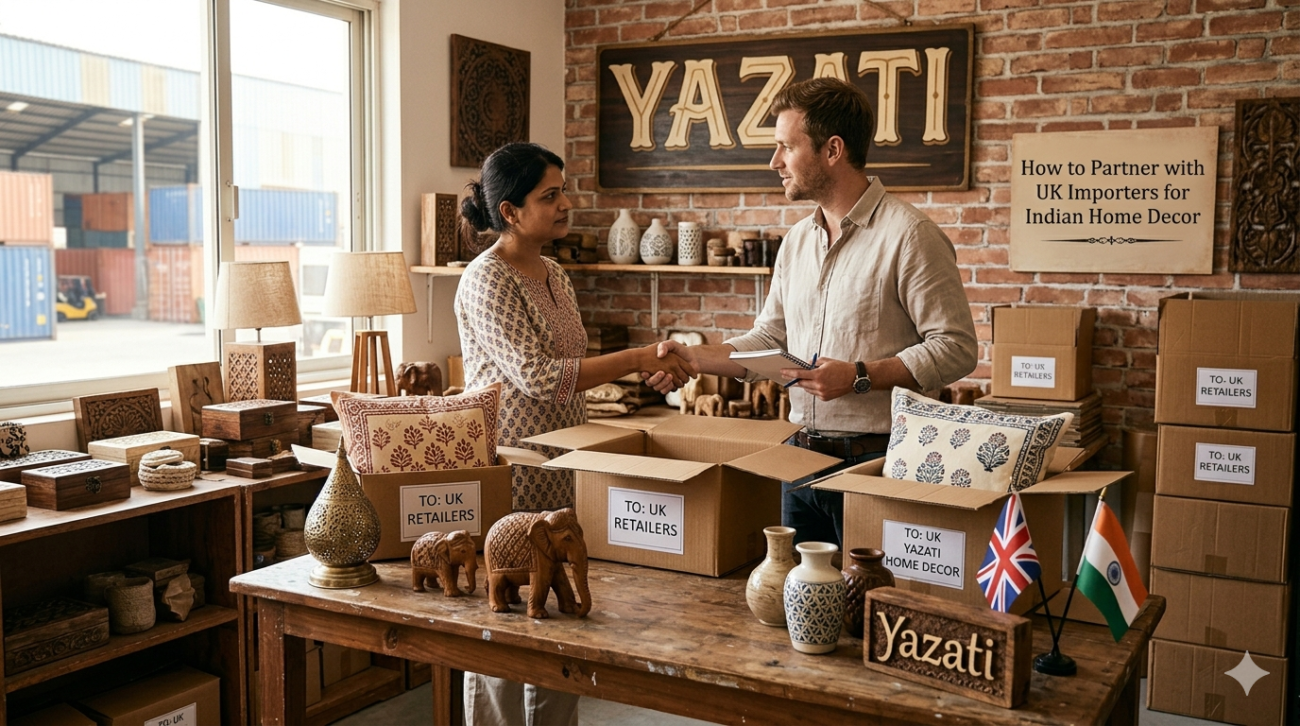
The global demand for handcrafted and artistic home decor products continues to rise, and Indian artisans are perfectly positioned to meet this growing need. From handwoven rugs and carved wooden furniture to brass lanterns and embroidered cushions, Indian home decor products have become highly desirable in the United Kingdom.
If you are an Indian manufacturer, wholesaler, artisan, or exporter, learning How to Partner with UK Importers for Indian Home Decor can unlock enormous business opportunities. The UK market appreciates sustainable craftsmanship, cultural authenticity, and handmade artistry—qualities deeply rooted in Indian decor traditions.
This comprehensive guide explains how to build successful partnerships with UK importers, navigate export regulations, and establish long-term business growth.
Understanding the UK Home Decor Market
Why Indian Home Decor Is Popular in the UK
Indian home decor products appeal strongly to UK buyers because they combine traditional craftsmanship with unique aesthetics. British consumers increasingly prefer products that feel authentic, sustainable, and handmade rather than mass-produced.
Popular Indian decor products in the UK include:
- Handcrafted wall art
- Wooden furniture
- Brass and copper accessories
- Handwoven rugs
- Block-printed textiles
- Ceramic decor
- Decorative lanterns
- Sustainable bamboo products
Consumers in the UK often seek globally inspired interior designs, and Indian products fit perfectly into bohemian, rustic, vintage, and contemporary styles.
Current Trends in UK Interior Design
To succeed in exporting, understanding trends is essential. UK importers currently favor:
- Eco-friendly materials
- Minimalist handcrafted decor
- Sustainable furniture
- Earth-tone palettes
- Ethical sourcing
- Artisan-made products
Businesses that align their product collections with these trends gain a competitive advantage.
Benefits of Partnering with UK Importers
Expanding International Reach
One of the biggest benefits of working with UK importers is access to a large and mature retail market. Importers already have established distribution networks, retail contacts, and online marketplaces.
This helps Indian exporters avoid the challenges of setting up direct retail operations overseas.
Building Long-Term Revenue Streams
Strong importer relationships often lead to recurring orders and predictable revenue. Once UK buyers trust your quality and delivery standards, they may continue ordering for years.
Long-term partnerships also create opportunities for:
- Exclusive product collaborations
- Seasonal collections
- Private labeling
- Bulk orders
Researching the Right UK Importers
Finding Verified Importers Online
Finding genuine importers is one of the most important steps in How to Partner with UK Importers for Indian Home Decor.
Useful platforms include:
- Alibaba
- IndiaMART
- TradeIndia
- Global Sources
- Europages
You can also explore UK wholesale marketplaces and importer directories.
A helpful external resource is the UK government trade portal:
https://www.great.gov.uk
Using Trade Directories and B2B Platforms
Trade directories can help identify importers specializing in:
- Handmade decor
- Ethical products
- Sustainable furniture
- Boutique home accessories
Before contacting an importer, verify:
- Company registration
- Website authenticity
- Customer reviews
- Trade references
- Import history
Preparing Your Indian Home Decor Business for Export
Product Quality Standards
UK importers prioritize consistency and reliability. Your products should meet:
- Material safety standards
- Durability requirements
- Accurate sizing
- Color consistency
- Professional finishing
Even small defects can damage importer trust.
Implementing quality control processes is highly recommended.
Packaging and Labeling Requirements
Packaging must protect products during international shipping while remaining visually appealing.
Effective packaging should include:
- Product labels
- Material details
- Country of origin
- Barcode information
- Handling instructions
Eco-friendly packaging is especially attractive to UK buyers.
Export Documentation Essentials
Essential export documents include:
| Document | Purpose |
| Commercial Invoice | Product and payment details |
| Packing List | Shipment contents |
| Bill of Lading | Shipping confirmation |
| Certificate of Origin | Product manufacturing location |
| Export License | Regulatory compliance |
Working with a customs broker can simplify this process.
Creating an Attractive Product Catalog
Photography and Product Presentation
High-quality visuals significantly impact buying decisions. Your catalog should feature:
- Professional lighting
- Multiple product angles
- Lifestyle images
- Close-up craftsmanship details
UK importers want to visualize how products will appear in retail environments.
Writing Compelling Product Descriptions
Descriptions should highlight:
- Materials used
- Handmade techniques
- Dimensions
- Usage ideas
- Sustainability benefits
Instead of writing:
“Wooden bowl”
Write:
“Handcrafted mango wood serving bowl featuring traditional Indian carving techniques.”
Pricing Strategies for UK Buyers
FOB vs CIF Pricing
Two common export pricing methods include:
| Pricing Type | Meaning |
| FOB (Free on Board) | Buyer handles shipping after port loading |
| CIF (Cost, Insurance, Freight) | Seller covers shipping and insurance |
Many beginners prefer FOB pricing because it reduces logistics complexity.
Managing Currency Exchange Risks
International trade involves currency fluctuations. To protect profits:
- Use stable pricing periods
- Negotiate payment terms carefully
- Consider forward contracts through banks
Clear financial planning reduces risk.
Building Trust with UK Importers
Professional Communication Practices
Professional communication builds credibility quickly.
Best practices include:
- Replying promptly
- Using clear English
- Sharing complete product details
- Being transparent about production timelines
Avoid exaggerating manufacturing capacity.
Offering Product Samples
Many UK importers request samples before placing bulk orders.
Samples help demonstrate:
- Product quality
- Material standards
- Packaging quality
- Craftsmanship consistency
Treat sample orders seriously because they often lead to larger partnerships.
Trade Shows and Networking Opportunities
International Home Decor Exhibitions
Trade shows remain one of the best ways to meet UK importers.
Popular exhibitions include:
- Ambiente Frankfurt
- Maison & Objet Paris
- Spring Fair Birmingham
- IHGF Delhi Fair
These events attract global buyers actively seeking suppliers.
Virtual Trade Fairs and Online Networking
Digital networking has become increasingly important.
You can connect with importers through:
- Zoom meetings
- Virtual expos
- B2B webinars
An active online presence increases visibility and trust.
Digital Marketing for Export Businesses
SEO and Website Optimization
A professional website helps UK importers evaluate your business.
Important website sections include:
- Product catalog
- About us
- Certifications
- Manufacturing capabilities
- Export experience
- Contact information
SEO optimization improves visibility on search engines.
For example, using keywords like:
- Indian home decor exporter
- handmade decor supplier India
- Indian handicrafts wholesale UK
can attract international buyers organically.
Leveraging LinkedIn and Social Media
LinkedIn is highly effective for B2B networking.
Share:
- Product launches
- Manufacturing videos
- Artisan stories
- Trade fair participation
- Export achievements
Instagram and Pinterest also work well for visual home decor products.
Shipping and Logistics Management
Choosing Reliable Freight Partners
Reliable logistics partners help avoid costly delays.
Consider:
- International shipping experience
- Insurance options
- Warehousing support
- Customs expertise
Sea freight is usually more economical for large shipments.
Managing Delivery Timelines
UK importers value punctual delivery.
To improve reliability:
- Build production buffers
- Plan around holidays
- Track shipments carefully
- Maintain communication during transit
Consistent delivery strengthens importer confidence.
Legal and Compliance Requirements
UK Import Regulations
Some products require compliance with UK safety standards.
Common regulated categories include:
- Electrical decor
- Furniture
- Treated wood products
- Textiles
Always verify current import regulations before shipping.
Intellectual Property Protection
Protecting your designs is important.
Consider:
- Trademark registration
- Design patents
- Non-disclosure agreements
Unique artisan designs can become valuable business assets.
Common Challenges in Export Partnerships
Cultural and Communication Barriers
Business communication styles differ between countries.
UK buyers often prefer:
- Direct communication
- Clear timelines
- Written confirmations
- Detailed specifications
Understanding cultural expectations improves relationships.
Handling Delayed Payments
Late payments occasionally occur in international trade.
Protect yourself by:
- Using secure payment methods
- Requesting deposits
- Setting clear contracts
- Using trade credit insurance
Professional agreements reduce financial risk.
How to Maintain Long-Term Partnerships
Consistent Product Quality
Consistency is the foundation of successful export relationships.
Maintain:
- Standardized production
- Quality inspections
- Material consistency
- Skilled artisan training
Importers value reliability more than occasional perfection.
Regular Communication and Updates
Stay connected with buyers even between orders.
Share:
- New collections
- Market trends
- Production updates
- Festival greetings
Strong relationships often lead to referrals and repeat business.
Frequently Asked Questions
1. What products from India sell best in the UK home decor market?
Handcrafted furniture, block-printed textiles, brass decor, rugs, lanterns, and sustainable home accessories are especially popular.
2. How do I find genuine UK importers?
Use trusted B2B platforms, trade fairs, LinkedIn, and official trade directories to identify verified buyers.
3. Do I need an export license to ship home decor products from India?
Most exporters require an Import Export Code (IEC) issued by the Indian government.
4. Is attending trade fairs necessary?
While not mandatory, trade fairs provide valuable networking opportunities and direct access to international buyers.
5. What payment methods are safest for exporters?
Letters of credit, bank transfers, and partial advance payments are commonly used for international transactions.
6. How important is sustainability for UK buyers?
Sustainability is extremely important. Eco-friendly materials and ethical sourcing significantly improve product appeal.
Conclusion
Learning How to Partner with UK Importers for Indian Home Decor requires preparation, professionalism, and persistence. The UK market offers enormous opportunities for Indian exporters who can deliver quality craftsmanship, reliable service, and competitive pricing.
Success depends on understanding market trends, building trust with buyers, maintaining product consistency, and investing in strong communication. With the right strategy, Indian home decor businesses can establish profitable long-term partnerships that expand internationally and strengthen brand reputation.
The growing appreciation for handmade, sustainable, and culturally rich products makes this the perfect time for Indian exporters to enter the UK market confidently.
✨ Discover Global Sourcing Excellence with Netyex ✨
Netyex is your trusted B2B sourcing partner, connecting international buyers with India’s finest manufacturers and curated product lines—from handicrafts and home décor to kitchenware, textiles, hospitality essentials, and more. With verified suppliers and end-to-end support, we make global procurement seamless, reliable, and efficient.
👉 Elevate your sourcing experience—explore Netyex today.
📦 Bulk orders & customisation | 🌍 Worldwide delivery | 🤝 Trusted by global buyers
Visit Netyex to source premium Indian products with confidence.