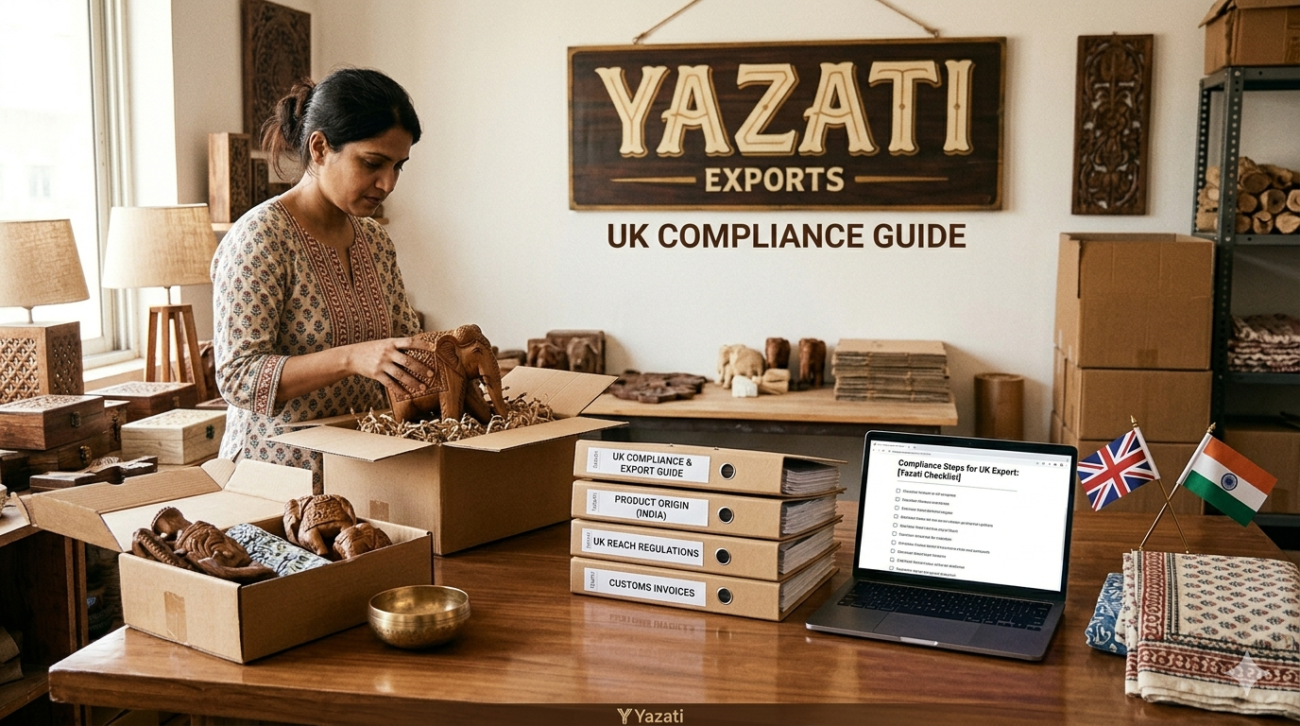
The UK remains one of the world’s most attractive markets for handmade and artisanal products. From handwoven textiles and wooden décor to pottery and metal crafts, British consumers appreciate authentic craftsmanship and sustainable products. However, entering this market requires careful planning and strict adherence to import regulations. This Compliance Guide for Exporting Handicrafts to the UK helps exporters understand the legal, logistical, and quality requirements needed for successful international trade.
Exporting handicrafts is not just about creating beautiful products. Businesses must also meet customs rules, labeling laws, tax regulations, environmental standards, and shipping requirements. Failure to comply can result in shipment delays, penalties, rejected goods, or financial losses.
This guide explains everything exporters need to know about UK compliance for handicrafts in a simple and practical way.
Understanding the UK Handicraft Import Market
The UK imports a wide range of handicraft products from countries across Asia, Africa, and Latin America. Handmade items are especially popular among consumers looking for:
- Sustainable home décor
- Ethically sourced products
- Handmade gifts
- Artisan furniture
- Traditional textiles
- Eco-friendly accessories
The growing demand for unique products creates strong opportunities for exporters. However, the UK market also places high importance on:
- Product safety
- Consumer transparency
- Environmental responsibility
- Ethical sourcing
- Accurate labeling
Businesses that meet these expectations gain trust and long-term buyers.
Why Compliance Matters for Handicraft Exporters
Compliance is essential because UK authorities carefully inspect imported goods. Customs officers verify whether shipments meet import laws and safety standards.
Proper compliance helps exporters:
- Avoid customs delays
- Reduce shipment rejection risks
- Build buyer confidence
- Improve business reputation
- Prevent legal penalties
- Increase repeat orders
Non-compliance, on the other hand, can lead to severe problems such as confiscated goods, additional inspections, or import bans.
For small handicraft businesses, even one rejected shipment can create major financial losses. That is why understanding regulations before shipping products is extremely important.
Key UK Regulations for Handicraft Imports
Customs Requirements
Every handicraft shipment entering the UK must pass customs clearance. Importers and exporters must provide accurate product information including:
- Product description
- Quantity
- Product value
- Country of origin
- HS code classification
The UK uses the Harmonized System (HS) code to classify imported goods. Incorrect HS codes may result in incorrect duty charges or customs delays.
Import Duties and Taxes
Import duties depend on:
- Product category
- Material used
- Country of origin
- Trade agreements
Some countries benefit from reduced tariffs under trade agreements with the UK. Exporters should check whether their products qualify for preferential treatment.
UK Global Tariff System
The UK Global Tariff (UKGT) system determines customs duties after Brexit. Exporters must review current tariff rates before shipping products.
Official UK trade information can be found through government trade resources and customs authorities.
Essential Documents Required for Export
Documentation plays a major role in international trade compliance.
Commercial Invoice
The commercial invoice includes:
- Seller and buyer details
- Product description
- Product quantity
- Unit price
- Total shipment value
- Currency used
- Shipping terms
The information must match customs declarations exactly.
Packing List
A packing list explains how products are packed. It contains:
- Carton dimensions
- Weight
- Number of packages
- Product arrangement
This helps customs officials inspect shipments efficiently.
Certificate of Origin
The Certificate of Origin verifies where the handicrafts were produced. Some UK buyers require this document to claim reduced tariffs under trade agreements.
Bill of Lading and Airway Bill
These transportation documents confirm shipment ownership and delivery terms.
- Bill of Lading: used for sea freight
- Airway Bill: used for air cargo
Without these documents, shipments cannot move smoothly through customs.
Product Labeling Requirements in the UK
Correct labeling is one of the most important parts of the Compliance Guide for Exporting Handicrafts to the UK.
Country of Origin Marking
Many handicraft products must clearly display their country of origin.
Examples:
- Made in India
- Handmade in Nepal
- Crafted in Vietnam
This helps consumers make informed purchasing decisions.
Material Disclosure Rules
Products containing textiles, wood, leather, or metals may require material disclosure labels.
For example:
- 100% Cotton
- Mango Wood
- Brass Alloy
- Natural Wool
Transparency improves consumer trust and reduces legal risks.
Language and Consumer Information
Labels and instructions should generally be provided in English. Safety instructions must be easy to understand.
Products intended for children require especially clear labeling and warnings.
Safety and Quality Standards for Handicrafts
Different handicrafts must comply with specific UK safety standards.
Wooden Handicraft Compliance
Wooden products may require phytosanitary certification to prove they are free from pests and diseases.
Untreated wood products often face stricter inspections.
Exporters should ensure:
- Proper fumigation
- Pest treatment
- Safe varnishes and paints
Textile and Handmade Fabric Rules
Textile handicrafts must comply with UK textile labeling laws.
Requirements may include:
- Fiber composition disclosure
- Care instructions
- Flammability standards
Products such as cushions, rugs, and fabric décor may require fire safety compliance.
Metal and Ceramic Product Safety
Metal handicrafts should not contain excessive levels of hazardous substances such as lead or cadmium.
Ceramic items used for food purposes may require food-contact safety testing.
Examples include:
- Ceramic mugs
- Bowls
- Plates
- Serving trays
Testing through certified laboratories helps avoid import rejection.
Packaging and Environmental Regulations
Environmental sustainability is becoming increasingly important in the UK.
Sustainable Packaging Expectations
Many UK buyers prefer:
- Recyclable packaging
- Plastic-free packaging
- Biodegradable wrapping
- Minimal packaging waste
Eco-friendly packaging also improves brand image.
Recycling Symbols and Waste Compliance
Certain packaging materials require recycling symbols or environmental markings.
Exporters working with large UK retailers may need to comply with packaging waste regulations.
VAT and Tax Obligations for Exporters
UK VAT Registration
Businesses selling directly to UK consumers through e-commerce platforms may need UK VAT registration.
VAT obligations depend on:
- Sales volume
- Sales method
- Marketplace involvement
Import VAT Procedures
Import VAT is usually collected during customs clearance.
Businesses should understand:
- VAT thresholds
- Reverse charge procedures
- VAT reclaim options
Consulting a tax specialist can simplify compliance.
Shipping and Logistics Compliance
Choosing the Right Freight Method
Exporters can choose:
- Air freight
- Sea freight
- Courier shipping
Sea freight works best for bulk handicraft shipments, while air freight offers faster delivery.
Customs Clearance Process
Customs clearance involves:
- Document submission
- Duty calculation
- Inspection
- Release approval
Errors in paperwork are one of the most common reasons for delays.
Working with Freight Forwarders
Experienced freight forwarders help businesses:
- Handle customs paperwork
- Arrange shipping
- Manage inspections
- Track cargo
A reliable logistics partner reduces export risks significantly.
Intellectual Property and Trademark Protection
Handicraft exporters should protect:
- Brand names
- Product designs
- Logos
- Packaging concepts
Trademark registration helps prevent counterfeiting and unauthorized copying in international markets.
Businesses selling original artisan designs benefit greatly from intellectual property protection.
Common Compliance Mistakes Exporters Should Avoid
Many exporters face problems because of avoidable mistakes.
Common issues include:
- Incorrect HS codes
- Missing documents
- Inaccurate product descriptions
- Improper labeling
- Under-declared shipment values
- Non-compliant packaging
Careful preparation minimizes these risks.
Digital Documentation and E-Commerce Rules
The rise of online marketplaces has changed global trade.
Exporters selling through e-commerce platforms must ensure:
- Accurate digital invoices
- Transparent return policies
- Product traceability
- Consumer safety compliance
Popular online marketplaces often have additional seller compliance standards.
How Brexit Changed UK Import Regulations
Brexit introduced several changes to UK import procedures.
Key updates include:
- Separate UK customs systems
- New tariff schedules
- Updated VAT handling
- Border inspection changes
Exporters should stay informed because regulations continue evolving.
Best Practices for Exporting Handicrafts Successfully
To succeed in the UK market, exporters should follow these best practices:
Maintain High Product Quality
Consistency matters greatly in international trade.
Use:
- Durable materials
- Professional finishing
- Secure packaging
Keep Compliance Records Organized
Maintain digital copies of:
- Invoices
- Certificates
- Test reports
- Shipping documents
Good recordkeeping speeds up customs clearance.
Build Strong Buyer Relationships
Communication is essential.
Respond quickly to:
- Buyer questions
- Compliance requests
- Shipping updates
Reliable exporters gain long-term partnerships.
Stay Updated on UK Regulations
Import laws can change frequently. Subscribe to government trade updates and industry newsletters.
Continuous learning helps businesses remain competitive.
Benefits of Complying with UK Import Regulations
Compliance provides several long-term advantages.
Improved Business Reputation
Buyers trust exporters who consistently meet legal requirements.
Faster Customs Clearance
Accurate paperwork reduces delays at ports and airports.
Higher Customer Satisfaction
Proper labeling, safe packaging, and quality assurance improve customer experience.
Better Market Expansion Opportunities
Compliant businesses can expand into:
- Retail chains
- E-commerce platforms
- Wholesale markets
- International exhibitions
Frequently Asked Questions
1. Do handicrafts require certification before entering the UK?
Some handicrafts require certifications depending on materials used, especially wood, textiles, ceramics, and children’s products.
2. Are handmade products exempt from UK import duties?
No. Handmade products may still attract customs duties and VAT depending on product classification and trade agreements.
3. What is the most important export document for handicrafts?
The commercial invoice is one of the most important documents because customs authorities use it to assess duties and shipment value.
4. Can I export handicrafts to the UK through online marketplaces?
Yes. Many exporters use e-commerce platforms, but they must comply with UK consumer laws, VAT requirements, and marketplace rules.
5. Do wooden handicrafts need pest treatment certification?
Often yes. Many wooden products require phytosanitary certificates or proof of treatment to prevent pest contamination.
6. How can exporters reduce customs delays?
Exporters can reduce delays by:
- Using accurate HS codes
- Preparing complete documents
- Following labeling rules
- Working with experienced freight forwarders
Conclusion
Entering the UK market offers exciting opportunities for handicraft exporters, but compliance is critical for long-term success. This Compliance Guide for Exporting Handicrafts to the UK highlights the importance of customs regulations, product labeling, safety standards, VAT obligations, packaging rules, and logistics management.
Businesses that invest time in understanding compliance requirements can build stronger buyer relationships, avoid costly mistakes, and expand internationally with confidence. As consumer demand for authentic handmade products continues growing, exporters who combine craftsmanship with proper compliance practices will enjoy the greatest success in the UK market.
For official guidance, exporters can also review UK government trade resources and customs information through official portals like the UK government trade website.
✨ Discover Global Sourcing Excellence with Netyex ✨
Netyex is your trusted B2B sourcing partner, connecting international buyers with India’s finest manufacturers and curated product lines—from handicrafts and home décor to kitchenware, textiles, hospitality essentials, and more. With verified suppliers and end-to-end support, we make global procurement seamless, reliable, and efficient.
👉 Elevate your sourcing experience—explore Netyex today.
📦 Bulk orders & customisation | 🌍 Worldwide delivery | 🤝 Trusted by global buyers
Visit Netyex to source premium Indian products with confidence.