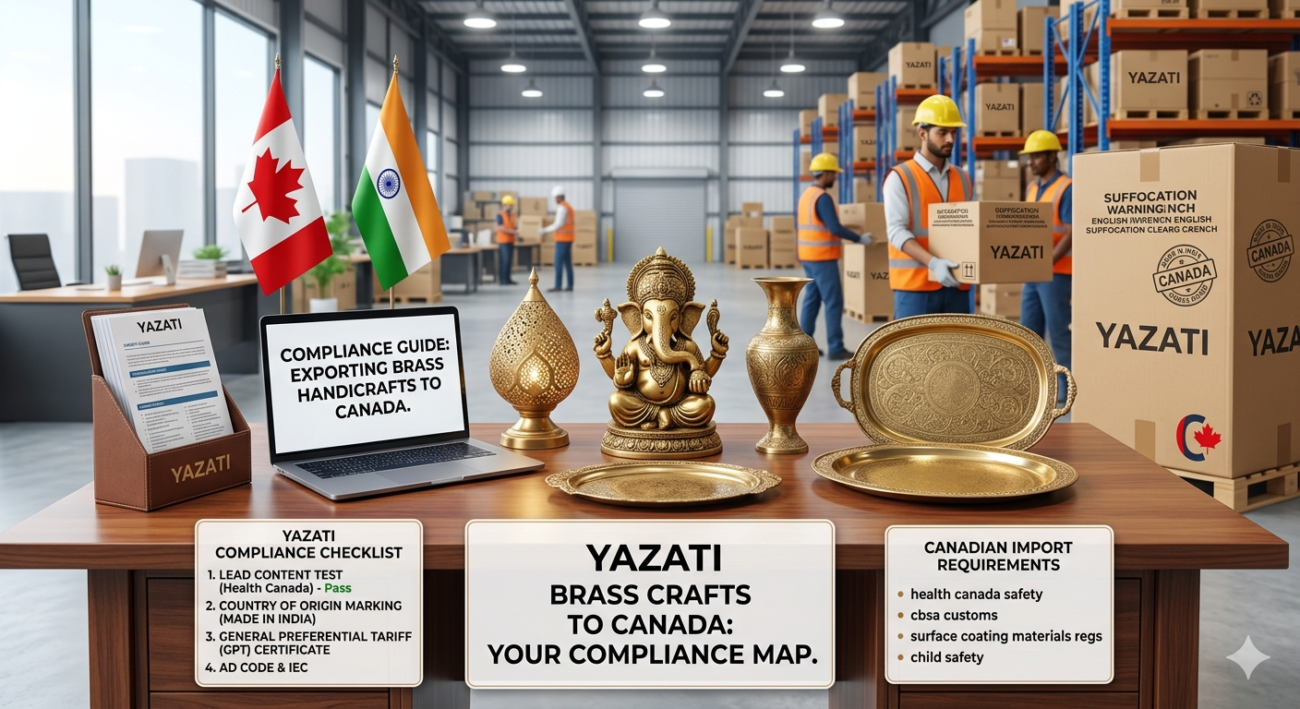
Introduction to Brass Handicrafts Export
Exporting brass handicrafts to international markets has become a lucrative opportunity for artisans and businesses in countries like India. Among global destinations, Canada stands out as a promising market due to its appreciation for handcrafted décor, cultural artifacts, and sustainable products.
The Compliance Guide for Brass Handicrafts Export to Canada is essential for exporters aiming to enter this regulated yet rewarding market. Without proper compliance, shipments may face delays, penalties, or rejection.
Importance of Export Compliance
Export compliance ensures that your products meet all legal, safety, and documentation standards required by Canadian authorities. It helps:
- Avoid customs delays
- Build trust with buyers
- Reduce financial risks
- Ensure long-term business sustainability
Overview of Canadian Market Demand
Canada’s demand for handcrafted brass items includes:
- Home décor (lamps, figurines)
- Religious artifacts
- Antique-style products
- Eco-friendly handcrafted goods
Consumers value authenticity, craftsmanship, and ethical sourcing—making brass handicrafts highly attractive.
Understanding Canadian Import Regulations
To export successfully, you must comply with regulations enforced by the Canada Border Services Agency (CBSA).
Role of Canada Border Services Agency
The CBSA oversees:
- Import compliance
- Tariff classification
- Duty collection
- Border inspections
They ensure goods entering Canada meet all safety and legal requirements.
Import Duties and Taxes
Brass handicrafts may be subject to:
- Customs duties (based on HS code)
- Goods and Services Tax (GST)
- Provincial taxes (if applicable)
Duty rates vary depending on product classification and trade agreements.
Product Classification and HS Codes
Harmonized System Codes Explained
HS (Harmonized System) codes are used globally to classify traded goods. Brass handicrafts generally fall under metalware categories.
Correct classification ensures:
- Accurate duty calculation
- Faster customs clearance
- Compliance with trade laws
Correct Classification Practices
To avoid errors:
- Consult customs experts
- Use official tariff schedules
- Double-check product descriptions
Documentation Requirements
Proper documentation is critical in the Compliance Guide for Brass Handicrafts Export to Canada.
Commercial Invoice
This document includes:
- Buyer and seller details
- Product description
- Value and currency
- HS code
Packing List and Bill of Lading
- Packing List: Details contents of shipment
- Bill of Lading: Acts as shipment receipt and contract
Certificate of Origin
This confirms the product is manufactured in India and may help in claiming tariff benefits.
Compliance with Canadian Safety Standards
Canada enforces strict product safety rules under the Canada Consumer Product Safety Act.
Consumer Product Safety Regulations
Brass items must:
- Be free from harmful substances (like lead)
- Not pose injury risks
- Meet durability standards
Hazardous Materials Restrictions
Certain coatings or finishes may be restricted. Always verify materials used in production.
Labeling Requirements for Brass Handicrafts
Bilingual Labeling Rules
Canada requires labels in:
- English
- French
This applies to packaging and product information.
Country of Origin Marking
Products must clearly state:
- “Made in India”
Incorrect labeling can result in rejection at customs.
Environmental and Sustainability Regulations
Eco-Friendly Packaging Requirements
Canada promotes sustainable practices:
- Use recyclable materials
- Avoid excessive plastic packaging
Waste Reduction Policies
Compliance with environmental standards improves brand reputation and market acceptance.
Quality Control and Certification
ISO Standards
Adhering to ISO certifications enhances credibility and assures buyers of consistent quality.
Third-Party Inspection Agencies
Independent inspections help verify:
- Product quality
- Compliance standards
- Shipment accuracy
Export Licensing and Indian Regulations
Role of DGFT
The Directorate General of Foreign Trade regulates exports from India. Exporters must:
- Obtain IEC (Import Export Code)
- Follow export policies
Export Promotion Councils
Organizations like the Export Promotion Council for Handicrafts (EPCH) provide:
- Market insights
- Buyer connections
- Export support
Logistics and Shipping Considerations
Freight Options
Exporters can choose:
- Sea freight (cost-effective for bulk)
- Air freight (faster but expensive)
Insurance and Risk Management
Marine insurance protects against:
- Damage
- Loss
- Theft during transit
Customs Clearance Process in Canada
Role of Customs Brokers
Customs brokers help:
- Prepare documentation
- Calculate duties
- Ensure compliance
Common Clearance Delays
Delays may occur due to:
- Incorrect HS codes
- Missing documents
- Labeling errors
Pricing Strategy and Duties Impact
Cost Breakdown
Export pricing includes:
- Production cost
- Packaging
- Shipping
- Duties and taxes
Currency Considerations
Fluctuations between INR and CAD can impact profit margins.
Trade Agreements and Benefits
India-Canada Trade Relations
India and Canada maintain strong trade ties, offering opportunities for exporters.
Tariff Advantages
While no full free trade agreement exists yet, ongoing negotiations may reduce tariffs in the future.
Challenges in Exporting Brass Handicrafts
Regulatory Challenges
Strict compliance requirements can be complex for new exporters.
Market Competition
Competition from countries like China and Vietnam is significant.
Best Practices for Successful Export
Building Buyer Relationships
- Maintain clear communication
- Deliver consistent quality
- Meet deadlines
Maintaining Compliance Consistency
Regular audits and updates ensure ongoing compliance with changing regulations.
FAQs
1. What documents are required to export brass handicrafts to Canada?
You need a commercial invoice, packing list, bill of lading, and certificate of origin.
2. Are brass handicrafts subject to duties in Canada?
Yes, duties depend on HS classification and applicable tax rates.
3. Is bilingual labeling mandatory?
Yes, English and French labeling is required in Canada.
4. Do I need certification for brass handicrafts?
While not always mandatory, ISO and quality certifications improve credibility.
5. What is the role of CBSA in imports?
The CBSA regulates imports, collects duties, and ensures compliance.
6. How can I reduce export risks?
Use insurance, verify documentation, and work with experienced logistics partners.
Conclusion
The Compliance Guide for Brass Handicrafts Export to Canada provides a clear roadmap for exporters aiming to succeed in this competitive yet rewarding market. By understanding regulations, maintaining quality standards, and ensuring proper documentation, businesses can build strong international relationships and expand globally.
Exporting isn’t just about selling products—it’s about building trust, meeting standards, and delivering value across borders. With the right approach, brass handicraft exporters can thrive in Canada’s growing market.
✨ Discover Global Sourcing Excellence with Netyex ✨
Netyex is your trusted B2B sourcing partner, connecting international buyers with India’s finest manufacturers and curated product lines—from handicrafts and home décor to kitchenware, textiles, hospitality essentials, and more. With verified suppliers and end-to-end support, we make global procurement seamless, reliable, and efficient.
👉 Elevate your sourcing experience—explore Netyex today.
📦 Bulk orders & customisation | 🌍 Worldwide delivery | 🤝 Trusted by global buyers
Visit Netyex to source premium Indian products with confidence.