Introduction
Global retail brands demand extremely high standards when it comes to packaging, labeling, and printed marketing materials. From clothing tags and product boxes to promotional catalogs and retail signage, printing quality directly impacts a brand’s identity and consumer trust.
In recent years, How India’s Printing Industry Meets Global Retail Standards has become an important topic in the global manufacturing ecosystem. India has emerged as one of the leading hubs for high-quality printing services, serving multinational retail brands across North America, Europe, the Middle East, and Asia.
The country’s printing sector combines advanced technology, skilled professionals, strict quality systems, and cost efficiency. These factors enable Indian printing companies to meet the strict requirements set by global retailers while maintaining scalability and sustainability.
Today, India’s printing industry supports sectors such as:
- Fashion and apparel retail
- FMCG packaging
- E-commerce product packaging
- Pharmaceutical labeling
- Retail advertising materials
With modernization and global certification standards, India is no longer just a low-cost production hub. Instead, it has become a strategic partner for international retailers seeking reliability, innovation, and compliance.
This article explores How India’s Printing Industry Meets Global Retail Standards, highlighting the key technologies, quality systems, sustainability practices, and operational strengths that allow Indian printers to compete on a global level.
Growth of the Indian Printing Industry
India’s printing industry has experienced rapid growth over the past two decades. The expansion is driven by increasing domestic demand, the rise of organized retail, and growing export opportunities.
The industry includes multiple printing segments such as:
- Offset printing
- Digital printing
- Flexographic printing
- Gravure printing
- Screen printing
Retail brands require a mix of these technologies depending on the product category. For example:
| Printing Method | Common Retail Use |
|---|---|
| Offset Printing | Catalogs, brochures, retail marketing materials |
| Flexographic Printing | Packaging labels and cartons |
| Gravure Printing | High-volume packaging |
| Digital Printing | Short-run customized retail prints |
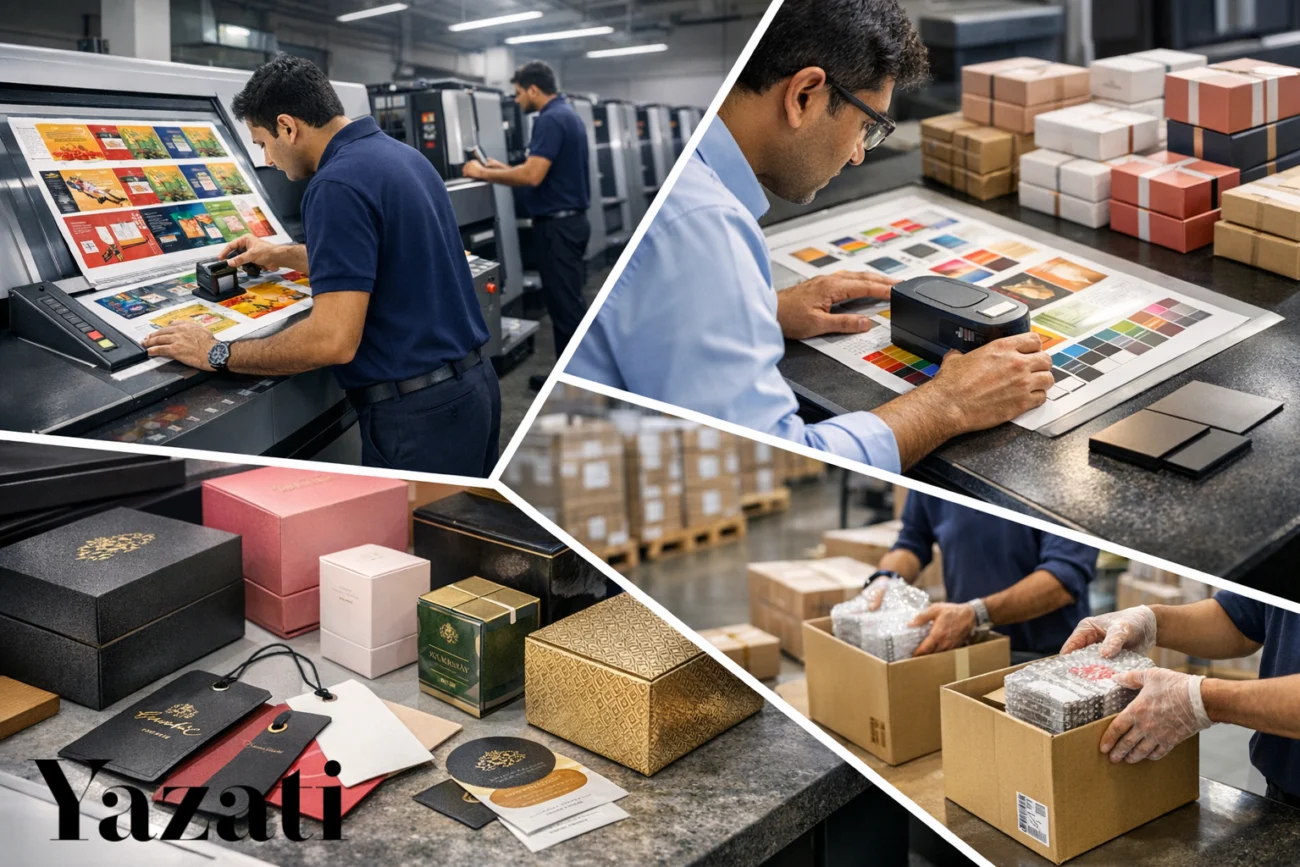
Indian printing companies have invested heavily in automation, high-speed presses, and precision color management systems. These upgrades allow them to deliver the consistency required by global retailers.
The presence of printing clusters in cities such as Mumbai, Delhi, Chennai, Bengaluru, and Ahmedabad has further strengthened the industry’s infrastructure.
Understanding Global Retail Printing Standards
Before discussing How India’s Printing Industry Meets Global Retail Standards, it is important to understand what these standards involve.
Global retail companies typically follow strict requirements related to:
1. Print Quality Consistency
Retail packaging must maintain identical color tones across large production runs.
2. Brand Color Accuracy
Brand colors must match exact color profiles across all materials.
3. Durability
Labels and packaging must withstand shipping, storage, and handling.
4. Regulatory Compliance
Printed materials must meet international compliance requirements, including:
- Product information standards
- Environmental regulations
- Barcode readability
- Safety labeling
5. Supply Chain Efficiency
Retailers require large production volumes with tight deadlines.
Meeting these standards requires technology, certification, skilled operators, and strict quality control systems.
Advanced Printing Technology in India
One major factor explaining How India’s Printing Industry Meets Global Retail Standards is the widespread adoption of modern printing equipment.
Indian printing companies now operate:
- High-speed offset presses
- Automated flexographic machines
- Digital color management systems
- Computer-to-plate (CTP) technology
Benefits of Modern Technology
Advanced machines allow printers to achieve:
- High-resolution prints
- Consistent color accuracy
- Faster production cycles
- Lower waste levels
Automation also improves repeatability, which is critical for global retail clients that require identical packaging across multiple product batches.
In addition, many Indian printing companies integrate ERP systems and digital workflow management, allowing clients to track orders and monitor production progress.
Quality Control Systems and Certifications
Another key aspect of How India’s Printing Industry Meets Global Retail Standards is strict quality control.
Many leading Indian printing companies hold international certifications such as:
- ISO quality management certification
- Environmental management certifications
- Food-grade packaging compliance
- Color management standards
Quality Assurance Processes
Printing facilities implement multi-stage inspection processes including:
- Pre-press file verification
- Color calibration checks
- Print sample approval
- Production monitoring
- Final quality inspection
These measures ensure that printed materials meet the exact specifications required by international retailers.
Skilled Workforce and Technical Expertise
India has a strong pool of trained printing professionals, including:
- Print engineers
- Color specialists
- Packaging designers
- Quality control inspectors
Many professionals graduate from specialized printing technology institutes and undergo additional training in modern printing systems.
Advantages of Skilled Talent
A trained workforce helps printing companies deliver:
- Accurate color matching
- Efficient machine operation
- Reduced production errors
- Faster troubleshooting
This expertise is one of the reasons why How India’s Printing Industry Meets Global Retail Standards continues to gain global recognition.
Sustainable Printing Practices
Sustainability has become a major requirement for international retail brands. Companies are increasingly seeking environmentally responsible packaging and printing partners.
India’s printing industry has responded by adopting eco-friendly practices such as:
- Water-based inks
- Soy-based inks
- Recyclable paper materials
- Energy-efficient printing machines
Waste Reduction Strategies
Printing companies also implement strategies to minimize environmental impact:
- Paper waste recycling
- Efficient ink usage
- Digital proofing to reduce print samples
- Sustainable packaging materials
These initiatives help retailers achieve their sustainability targets while maintaining product presentation quality.
Efficient Supply Chain and Logistics
Another important element explaining How India’s Printing Industry Meets Global Retail Standards is strong supply chain management.
India’s printing companies have developed efficient logistics networks that support global exports.
Key Supply Chain Advantages
- Strategic port locations
- Large manufacturing capacity
- Flexible production scheduling
- Competitive shipping costs
Retailers benefit from reliable order fulfillment and predictable delivery timelines.
Many printing firms also offer integrated packaging and labeling services, allowing brands to manage multiple printing requirements through a single partner.
Cost Efficiency Without Compromising Quality
Cost efficiency is another factor that strengthens India’s position in global printing.
Indian printing companies can offer competitive pricing due to:
- Lower operational costs
- Skilled labor availability
- High production volumes
- Efficient resource management
However, cost advantage alone is not enough. What makes India unique is the ability to combine affordability with international quality standards.
This balance attracts global retail brands that want premium printing without excessive production costs.
Digital Transformation in the Printing Industry
Digital technology is transforming the global printing landscape, and India is actively adopting these innovations.
Digital printing enables:
- Personalized packaging
- Short production runs
- Faster design changes
- On-demand printing
Retail brands increasingly require customization for:
- Seasonal campaigns
- Limited product editions
- Regional packaging variations
Indian printers equipped with digital technologies can respond quickly to these evolving retail demands.
Role of Packaging Innovation
Packaging plays a major role in retail marketing. Modern packaging must be visually appealing while also protecting the product.
India’s printing industry supports retail innovation through:
- Creative packaging design
- Specialty finishes
- Embossing and foil stamping
- UV coating
These techniques help brands enhance shelf visibility and attract customers in competitive retail environments.
As a result, How India’s Printing Industry Meets Global Retail Standards is not just about compliance but also about innovation and brand storytelling.
Collaboration with Global Retail Brands
Many international retailers partner with Indian printing companies for long-term projects.
These collaborations involve:
- Design consultation
- Material selection
- Production planning
- Quality testing
Indian printing firms often work closely with global packaging teams to ensure every printed element aligns with brand guidelines.
Such partnerships strengthen India’s role in the international retail supply chain.
Challenges Faced by the Industry
Despite its growth, India’s printing industry faces several challenges:
- Rising raw material costs
- Rapid technological changes
- Sustainability regulations
- Increasing competition
To remain competitive, printing companies must continue investing in:
- Automation
- workforce training
- eco-friendly technologies
- digital solutions
Continuous improvement will ensure India remains a reliable partner for global retailers.
Future of India’s Printing Industry
The future of the industry looks promising as global demand for high-quality printing continues to grow.
Key trends shaping the future include:
- Smart packaging technologies
- Sustainable materials
- AI-driven print automation
- On-demand digital printing
India’s printing companies are actively exploring these innovations to strengthen their position in the global market.
As technology evolves, How India’s Printing Industry Meets Global Retail Standards will increasingly involve digital integration, sustainable production, and advanced packaging solutions.
Frequently Asked Questions
1. Why is India becoming a global hub for printing services?
India offers a combination of advanced printing technology, skilled professionals, and competitive production costs. These factors make it an attractive destination for global retail printing needs.
2. What types of retail printing services are commonly outsourced to India?
Common services include packaging printing, product labels, retail catalogs, promotional materials, and garment tags.
3. How do Indian printing companies maintain color consistency?
They use digital color management systems, calibrated printing equipment, and strict quality inspection procedures during production.
4. Are Indian printing companies compliant with international standards?
Yes. Many printing companies follow internationally recognized quality and environmental standards to meet global retail requirements.
5. How does sustainability influence printing practices in India?
Many printing firms use eco-friendly inks, recyclable materials, and energy-efficient machines to reduce environmental impact.
6. What role does technology play in modern printing?
Technology improves production speed, color accuracy, automation, and customization capabilities, allowing printers to meet global retail demands.
Conclusion
Understanding How India’s Printing Industry Meets Global Retail Standards reveals the country’s transformation from a traditional printing market into a sophisticated global production hub.
Through advanced technology, skilled professionals, strict quality control, and sustainable practices, Indian printing companies have proven their ability to meet the expectations of international retail brands.
In addition to cost efficiency, the industry now emphasizes innovation, reliability, and compliance, making it a trusted partner for global packaging and printing needs.
As digital technologies and sustainable practices continue to evolve, India’s printing industry is well positioned to strengthen its role in the global retail ecosystem and deliver high-quality printing solutions for brands worldwide.
✨ Discover Global Sourcing Excellence with Netyex ✨
Netyex is your trusted B2B sourcing partner, connecting international buyers with India’s finest manufacturers and curated product lines—from handicrafts and home décor to kitchenware, textiles, hospitality essentials, and more. With verified suppliers and end-to-end support, we make global procurement seamless, reliable, and efficient.
👉 Elevate your sourcing experience—explore Netyex today.
📦 Bulk orders & customisation | 🌍 Worldwide delivery | 🤝 Trusted by global buyers
Visit Netyex to source premium Indian products with confidence.