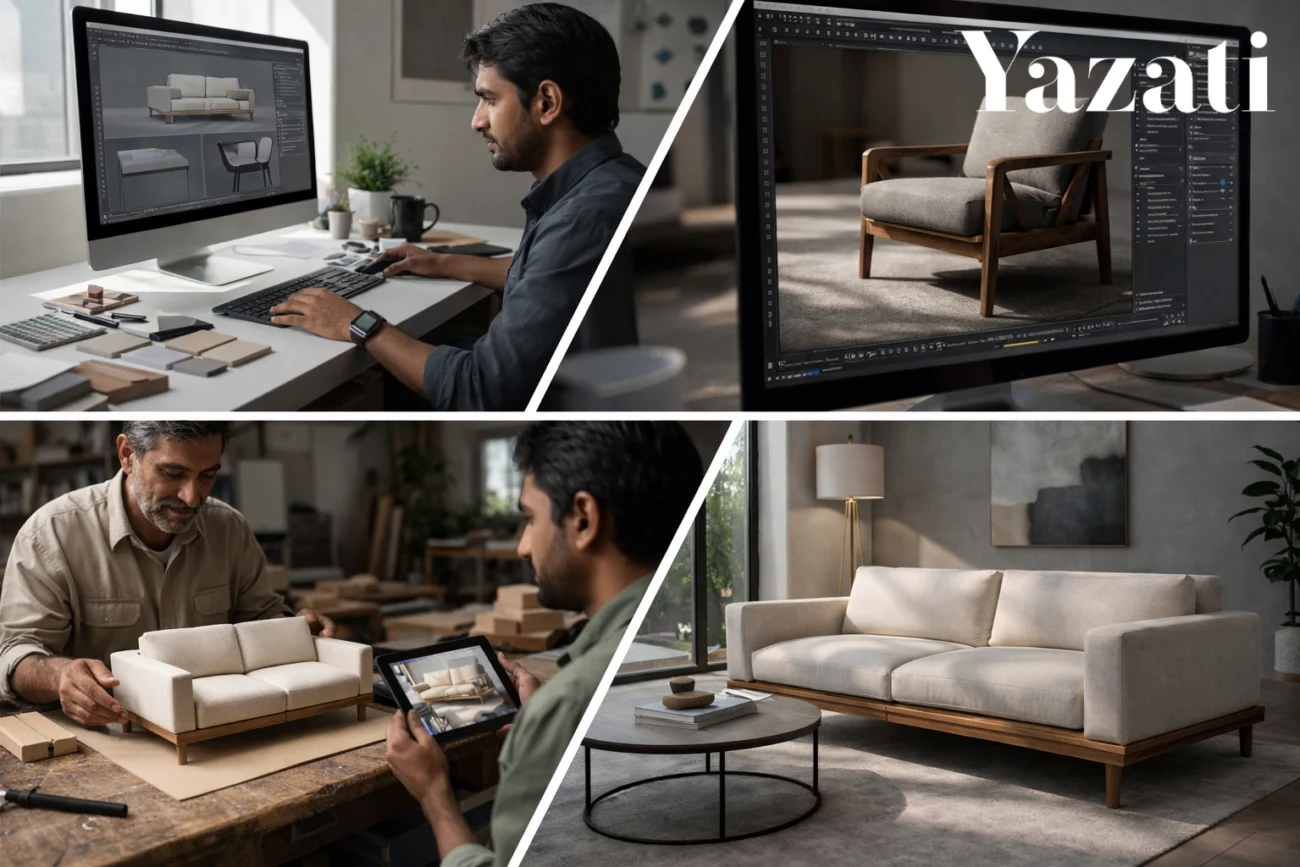
Introduction to 3D Prototyping in Furniture Design
The process of how Yazati creates 3D prototypes for furniture buyers is transforming the way people design and purchase furniture. In today’s fast-paced world, customers no longer want to rely solely on imagination or flat sketches. Instead, they prefer realistic visualizations that help them understand exactly how a piece will look and function in their space.
Evolution of Furniture Visualization Technology
Furniture design has come a long way from hand-drawn sketches. Initially, designers relied on blueprints and physical mockups. These methods were time-consuming and expensive. With the rise of computer-aided design (CAD), things improved, but even CAD lacked immersive visualization.
Today, 3D prototyping has revolutionized the industry. Buyers can now see lifelike models, explore textures, and even interact with designs before production begins.
Importance of 3D Prototypes for Buyers
3D prototypes help eliminate uncertainty. Buyers can:
- Visualize furniture in real-world settings
- Understand dimensions and proportions
- Experiment with colors and materials
- Reduce the risk of dissatisfaction
This is where Yazati stands out by offering highly detailed and interactive 3D solutions.
Understanding Yazati’s Approach to 3D Prototyping
Yazati follows a structured and innovative approach that blends creativity with technology.
Customer-Centric Design Philosophy
At the core of Yazati’s process is the customer. Every design starts with understanding:
- Lifestyle needs
- Space constraints
- Aesthetic preferences
This ensures the final prototype aligns perfectly with the buyer’s expectations.
Integration of Advanced Technologies
Yazati leverages cutting-edge tools such as:
- 3D modeling software
- Real-time rendering engines
- Virtual and augmented reality
These technologies allow for accurate and immersive prototypes.
Step-by-Step Process of Creating 3D Prototypes
Requirement Gathering and Concept Discussion
The first step in how Yazati creates 3D prototypes for furniture buyers is gathering detailed requirements.
Client Preferences and Functional Needs
Designers interact closely with clients to understand:
- Purpose of the furniture
- Size and layout constraints
- Style preferences (modern, classic, minimalist)
This phase sets the foundation for the entire project.
Digital Modeling and Sketching
Once the requirements are clear, designers begin creating digital models.
Software Tools and Precision Modeling
Using advanced software, Yazati designers:
- Build accurate 3D structures
- Define dimensions precisely
- Ensure ergonomic functionality
This stage transforms ideas into visual forms.
Material and Texture Simulation
After modeling, the next step is to make the design look realistic.
Realistic Rendering Techniques
Yazati applies:
- High-quality textures (wood, metal, fabric)
- Lighting effects for depth
- Shadow and reflection adjustments
This results in lifelike prototypes that closely resemble the final product.
Visualization and Interactive Features
360-Degree Views and Virtual Walkthroughs
One of the most exciting aspects of Yazati’s process is interactivity. Buyers can:
- Rotate furniture models
- Zoom in on details
- View from multiple angles
This provides a comprehensive understanding of the design.
Augmented Reality (AR) Integration
Yazati also incorporates AR technology, allowing buyers to:
- Place furniture in their actual room
- Check compatibility with existing decor
- Make real-time adjustments
This bridges the gap between imagination and reality.
Benefits of 3D Prototypes for Furniture Buyers
Better Decision Making
3D prototypes empower buyers to make informed decisions. Instead of guessing, they can see exactly what they’re getting.
Key Advantages
- Reduced design errors
- Increased satisfaction
- Clear visualization of final output
Cost and Time Efficiency
Traditional prototyping can be expensive and slow. Yazati’s digital approach offers:
- Faster turnaround times
- Lower production costs
- Fewer revisions during manufacturing
This benefits both buyers and manufacturers.
Quality Assurance and Iteration Process
Feedback Collection and Revisions
Yazati emphasizes collaboration. After presenting the prototype:
- Clients provide feedback
- Designers make necessary changes
- Multiple iterations ensure perfection
Final Prototype Approval
Once the client is satisfied:
- The design is finalized
- Production begins with confidence
- Errors are minimized
This ensures a smooth transition from design to manufacturing.
Challenges in 3D Prototyping and Solutions
Managing Complex Designs
Some furniture designs can be intricate. Yazati handles this by:
- Using advanced modeling tools
- Breaking designs into components
- Ensuring structural accuracy
Ensuring Realistic Outputs
Achieving realism is challenging. Yazati overcomes this by:
- Using high-resolution textures
- Implementing accurate lighting
- Testing prototypes in different environments
Future Trends in Furniture 3D Prototyping
AI-Driven Design Enhancements
Artificial intelligence is shaping the future. Yazati is exploring:
- Automated design suggestions
- Predictive customization
- Smart material selection
Sustainable Design Simulation
Sustainability is becoming crucial. Future prototypes may include:
- Eco-friendly material options
- Energy-efficient production insights
- Waste reduction simulations
FAQs
1. What is a 3D prototype in furniture design?
A 3D prototype is a digital model that shows how furniture will look and function before it is manufactured.
2. How does Yazati ensure accuracy in prototypes?
Yazati uses advanced software, precise measurements, and realistic rendering techniques to ensure high accuracy.
3. Can buyers customize furniture using Yazati’s prototypes?
Yes, buyers can customize size, color, material, and design features.
4. Is 3D prototyping cost-effective?
Absolutely. It reduces errors, minimizes revisions, and saves both time and money.
5. Does Yazati use AR or VR technologies?
Yes, Yazati integrates augmented reality to provide immersive experiences.
6. How long does it take to create a 3D prototype?
The timeline depends on complexity but is generally faster than traditional methods.
Conclusion
Understanding how Yazati creates 3D prototypes for furniture buyers reveals a powerful blend of creativity, technology, and customer focus. By leveraging advanced tools and interactive features, Yazati enables buyers to visualize, customize, and perfect their furniture before production begins.
This approach not only enhances decision-making but also saves time, reduces costs, and ensures satisfaction. As technology continues to evolve, 3D prototyping will become even more advanced, making furniture design more accessible and efficient than ever before.
✨ Discover Global Sourcing Excellence with Netyex ✨
Netyex is your trusted B2B sourcing partner, connecting international buyers with India’s finest manufacturers and curated product lines—from handicrafts and home décor to kitchenware, textiles, hospitality essentials, and more. With verified suppliers and end-to-end support, we make global procurement seamless, reliable, and efficient.
👉 Elevate your sourcing experience—explore Netyex today.
📦 Bulk orders & customisation | 🌍 Worldwide delivery | 🤝 Trusted by global buyers
Visit Netyex to source premium Indian products with confidence.