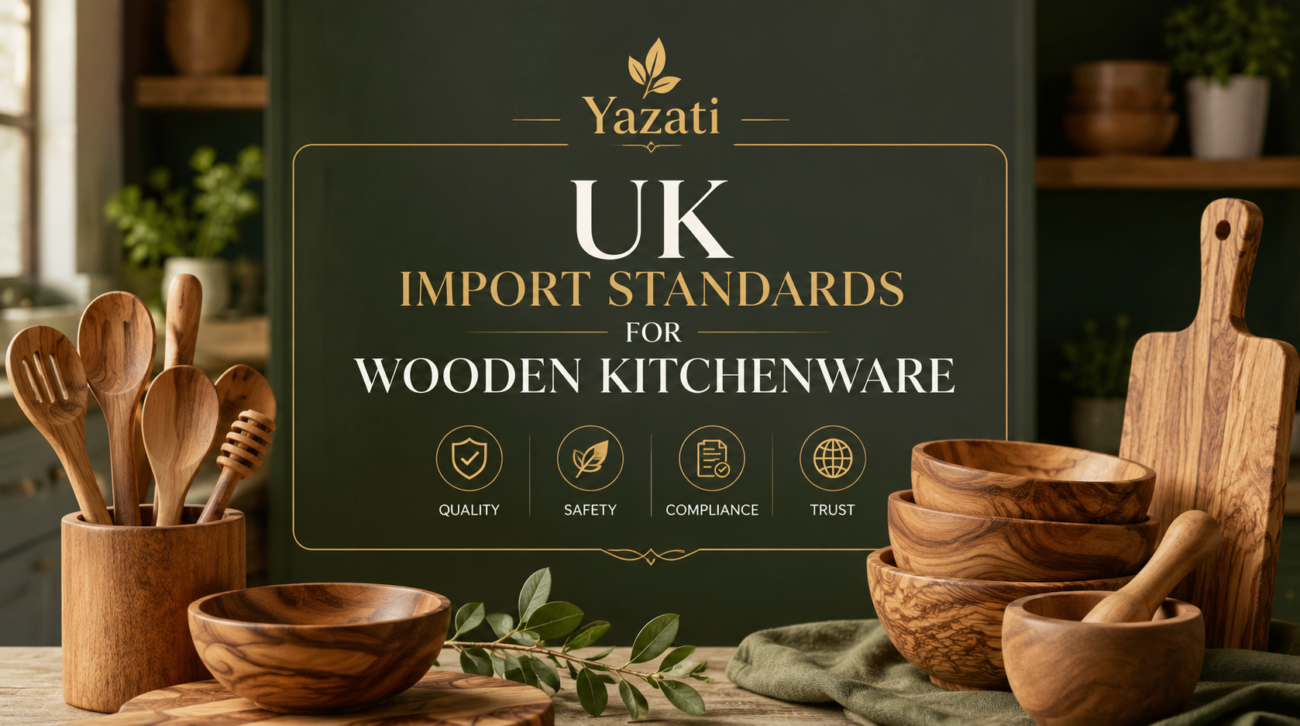
Importing wooden kitchen products into the United Kingdom can be profitable, but it also comes with strict compliance obligations. Understanding UK Import Standards for Wooden Kitchenware is essential for avoiding shipment delays, customs penalties, or rejected goods.
Wooden kitchenware includes products like spoons, spatulas, cutting boards, trays, bowls, and serving utensils. Since these items often come into direct contact with food, the UK government applies several safety, environmental, and customs regulations to protect consumers and ensure sustainable trade.
This guide explains everything importers need to know, from customs classifications and food-contact regulations to timber legality and labeling requirements.
Understanding Wooden Kitchenware Imports in the UK
Wooden kitchenware imports have grown rapidly due to increasing consumer demand for eco-friendly and sustainable kitchen products. Many UK retailers now prefer natural wooden utensils over plastic alternatives.
Common exporting countries include:
- China
- India
- Vietnam
- Indonesia
- Thailand
- Turkey
The UK import market values quality, sustainability, and safety compliance. Importers must therefore ensure that products meet all legal standards before entering the UK market.
Why UK Import Standards Matter
Following UK regulations protects businesses in several ways:
| Benefit | Explanation |
| Legal Compliance | Avoids fines and shipment seizures |
| Consumer Safety | Prevents harmful chemical exposure |
| Market Access | Enables sales through major UK retailers |
| Sustainability | Supports legal timber sourcing |
| Brand Reputation | Builds customer trust |
Failure to comply can result in:
- Customs delays
- Product recalls
- Financial penalties
- Destruction of goods
- Loss of retail partnerships
Types of Wooden Kitchenware Covered Under UK Rules
Different kitchenware items may face slightly different import requirements depending on their intended use.
Wooden Spoons and Spatulas
These are classified as food-contact materials because they directly touch food during cooking. Manufacturers must ensure:
- Safe coatings and finishes
- No toxic chemicals
- Smooth splinter-free surfaces
Cutting Boards and Serving Trays
Products exposed to moisture and repeated food contact require additional durability and hygiene standards.
Some UK retailers request:
- Antibacterial testing
- Moisture resistance testing
- Oil treatment disclosures
Bowls, Plates, and Utensils
Decorative coatings, paints, or lacquers used on bowls and utensils must comply with food safety regulations.
UK Customs Classification for Wooden Kitchenware
Correct tariff classification is one of the most important import requirements.
Understanding HS Codes
HS Codes (Harmonized System Codes) determine:
- Import duties
- VAT rates
- Customs declarations
- Border inspections
Wooden kitchenware commonly falls under tariff categories related to:
- Tableware
- Kitchenware
- Household wooden articles
Importers should verify the exact code with HM Revenue and Customs or a customs broker.
Common Tariff Categories
Typical classifications may include:
- Wooden tableware
- Wooden kitchen utensils
- Household wooden products
Incorrect classification can trigger:
- Customs audits
- Duty miscalculations
- Shipment holds
For official tariff guidance, visit the UK government trade portal:
https://www.gov.uk/trade-tariff
Timber Legality and Sustainability Requirements
The UK places strong emphasis on preventing illegal logging and unsustainable timber sourcing.
UK Timber Regulation
Importers must perform “due diligence” to prove timber legality. This includes:
- Identifying wood species
- Verifying country of harvest
- Assessing supplier risk
- Maintaining traceability records
Authorities may request evidence during inspections.
FSC and PEFC Certifications
Although not always legally required, sustainability certifications improve market acceptance.
Popular certifications include:
| Certification | Purpose |
| FSC | Forest Stewardship Council certification |
| PEFC | Sustainable forest management verification |
Many UK retailers prefer certified wooden kitchenware products.
Food Contact Material Regulations
Because kitchenware touches food, UK food safety laws are especially important.
Safety Testing Standards
Wooden utensils should undergo testing for:
- Chemical migration
- Surface contamination
- Heavy metals
- Food safety compliance
Testing is commonly performed by accredited laboratories.
Chemical and Coating Restrictions
Certain substances are restricted in food-contact products, including:
- Lead-based paints
- Harmful varnishes
- Toxic adhesives
Food-safe oils and coatings are strongly recommended.
Phytosanitary and Pest Control Measures
Wood products may carry insects, mold, or plant diseases.
ISPM 15 Packaging Standards
Wood packaging materials such as pallets and crates must comply with ISPM 15 standards.
This requires:
- Heat treatment
- Approved marking stamps
- Pest-control measures
Fumigation and Inspection Requirements
Border officials may inspect shipments for:
- Bark contamination
- Insect infestation
- Mold growth
Non-compliant shipments can be refused entry.
Labeling Requirements for Wooden Kitchenware
Proper labeling is essential for UK retail distribution.
Country of Origin Rules
Products usually require origin labeling such as:
- Made in India
- Made in Vietnam
- Made in China
Origin declarations help customs and consumers identify manufacturing sources.
Product Care Instructions
Retailers often require care labels including:
- Hand wash only
- Do not soak
- Oil periodically
- Not dishwasher safe
Clear instructions reduce customer complaints and product damage.
Documentation Needed for Import Clearance
Importers normally need the following documents:
| Document | Purpose |
| Commercial Invoice | Product valuation |
| Packing List | Shipment contents |
| Bill of Lading | Shipping ownership |
| Import Declaration | Customs processing |
| Phytosanitary Documents | Pest-control verification |
| Test Reports | Product safety evidence |
Missing paperwork is a major cause of customs delays.
VAT, Duties, and Import Costs
Import costs vary depending on:
- Product category
- Country of origin
- Trade agreements
- Shipment value
Typical costs include:
- Import duty
- UK VAT
- Customs clearance fees
- Freight charges
- Inspection costs
Importers should calculate landed cost carefully before placing large orders.
Product Testing and Certification Procedures
UK retailers often request third-party testing before accepting products.
Common testing areas include:
- Food-contact safety
- Moisture resistance
- Durability
- Splinter resistance
- Chemical analysis
Using accredited laboratories improves importer credibility.
Packaging Standards for UK Retail Markets
Retail packaging should meet:
- Consumer safety expectations
- Environmental standards
- Retail presentation requirements
Many UK stores prefer:
- Recyclable packaging
- Plastic-free packaging
- Barcode labeling
- Retail-ready cartons
Sustainable packaging is increasingly important in the UK market.
Common Mistakes Importers Should Avoid
Here are some frequent importing mistakes:
| Mistake | Risk |
| Wrong HS Code | Customs penalties |
| Missing phytosanitary compliance | Shipment rejection |
| Unsafe coatings | Product recalls |
| Poor supplier verification | Illegal timber risks |
| Incomplete labels | Retail refusal |
Avoiding these issues can save significant money and time.
How to Choose a Compliant Supplier
A good supplier should provide:
- Product test reports
- Timber source documentation
- Export experience
- Quality-control systems
- Compliance certifications
Before ordering:
- Request product samples
- Verify factory audits
- Review certifications
- Conduct independent inspections
Reliable suppliers reduce long-term compliance risks.
UK Border Inspections and Enforcement
UK authorities may inspect imported wooden products at ports or warehouses.
Enforcement agencies can:
- Detain shipments
- Request testing evidence
- Verify timber legality
- Inspect packaging compliance
Maintaining organized records helps importers pass inspections smoothly.
Future Trends in UK Wooden Kitchenware Imports
Several trends are shaping the market:
Eco-Friendly Consumer Demand
Consumers increasingly prefer sustainable kitchen products over plastic alternatives.
Stronger Sustainability Rules
The UK may introduce tighter environmental regulations for imported wood products.
Retailer Compliance Programs
Major retailers are demanding:
- Greater traceability
- Ethical sourcing
- Carbon footprint disclosures
Importers who adapt early may gain a competitive advantage.
Frequently Asked Questions
Do wooden kitchen utensils require food safety testing in the UK?
Yes. Products that contact food should comply with UK food-contact material regulations and may require laboratory testing.
Is FSC certification mandatory for wooden kitchenware imports?
No, but many retailers strongly prefer FSC-certified products because it demonstrates sustainable sourcing.
What happens if wooden packaging lacks ISPM 15 marking?
Customs authorities may reject, destroy, or return the shipment.
Can coated wooden bowls contain varnish?
Yes, but coatings must be food-safe and compliant with UK chemical safety standards.
Do importers need phytosanitary certificates for wooden kitchenware?
Requirements depend on the product type and wood condition. Certain untreated wood items may face stricter controls.
How can importers reduce customs delays?
Prepare accurate documents, use correct HS codes, verify supplier compliance, and ensure all packaging meets regulations.
Conclusion
Understanding UK Import Standards for Wooden Kitchenware is critical for any importer seeking long-term success in the UK market. Compliance involves much more than simply shipping products. Importers must consider customs rules, timber legality, food safety regulations, packaging standards, and sustainability expectations.
Businesses that prioritize compliance enjoy smoother customs clearance, better retailer relationships, and stronger customer trust. By working with reputable suppliers and maintaining proper documentation, importers can confidently enter the growing UK wooden kitchenware market.
✨ Discover Global Sourcing Excellence with Netyex ✨
Netyex is your trusted B2B sourcing partner, connecting international buyers with India’s finest manufacturers and curated product lines—from handicrafts and home décor to kitchenware, textiles, hospitality essentials, and more. With verified suppliers and end-to-end support, we make global procurement seamless, reliable, and efficient.
👉 Elevate your sourcing experience—explore Netyex today.
📦 Bulk orders & customisation | 🌍 Worldwide delivery | 🤝 Trusted by global buyers
Visit Netyex to source premium Indian products with confidence.