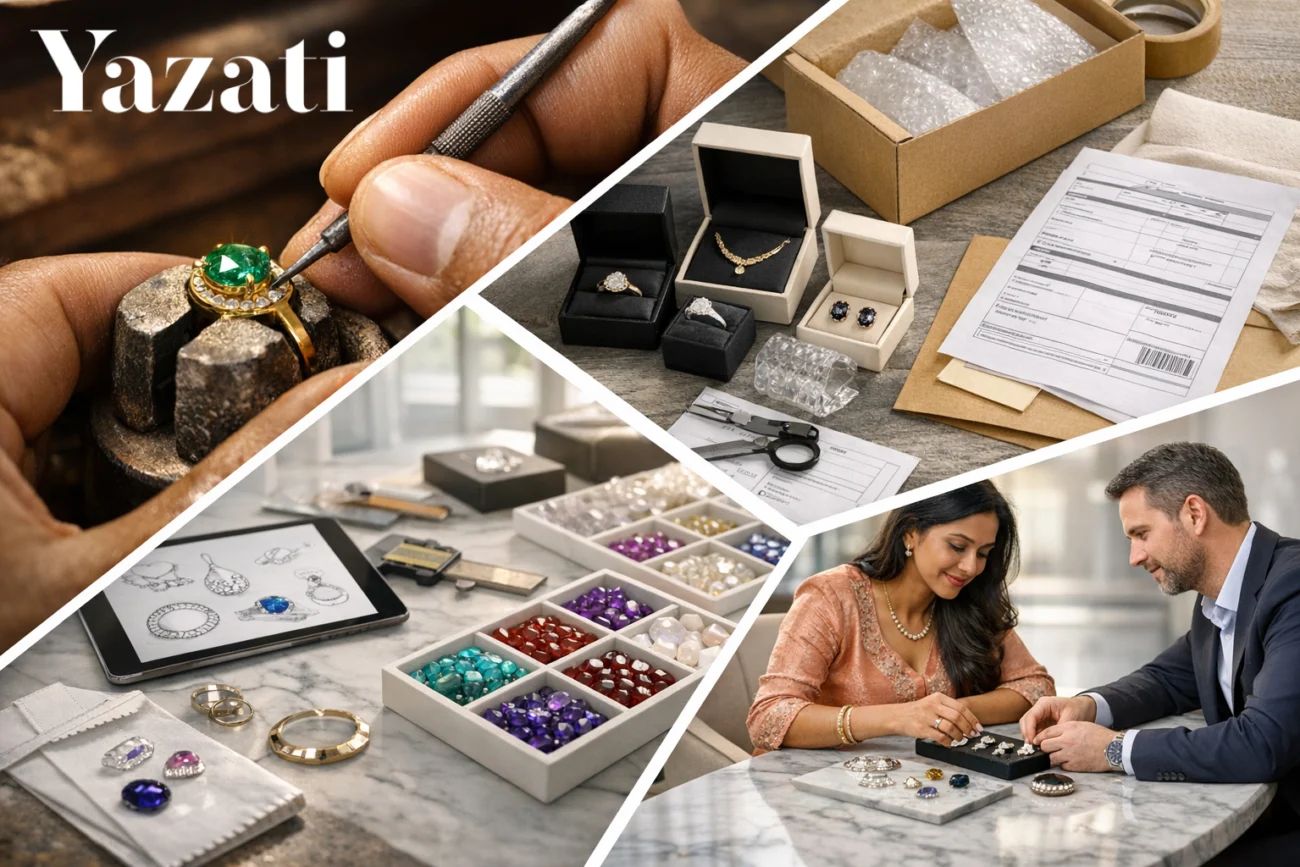
Introduction: India’s Jewelry Export Market in 2027
India has long been recognized as one of the world’s largest centers for jewelry manufacturing and gemstone processing. From intricate gold necklaces to finely cut diamonds, the country’s craftsmanship has earned global admiration for centuries. In recent years, however, something remarkable has happened: India’s jewelry export market has surged dramatically, particularly leading into 2027.
The phrase Why India’s Jewelry Export Market Is Booming in 2027 is now widely discussed in global trade circles. Industry analysts attribute this rapid growth to several powerful factors such as rising international demand, supportive government policies, advanced manufacturing technologies, and India’s unmatched jewelry craftsmanship.
India is responsible for a significant share of the world’s diamond cutting and polishing. More than 90% of global diamonds are processed in Indian cities like Surat. Meanwhile, jewelry hubs in Mumbai, Jaipur, and Kolkata continue to produce exquisite designs that appeal to markets across the United States, Europe, the Middle East, and Asia.
Additionally, the digital transformation of jewelry businesses has made exporting easier than ever. Online B2B platforms, global trade fairs, and improved logistics networks allow Indian exporters to reach international buyers quickly and efficiently.
As we move deeper into 2027, the growth shows no signs of slowing. In this article, we will explore why India’s jewelry export market is booming, the key trends shaping the industry, and what the future may hold for this rapidly expanding sector.
Historical Strength of India’s Jewelry Industry
India’s jewelry industry is deeply rooted in history. For centuries, the country has been known for its master craftsmen and intricate designs. Ancient Indian jewelry styles, including temple jewelry and royal Mughal designs, have influenced global fashion for generations.
The tradition of gold jewelry is particularly strong in India. Gold is not only worn for fashion but also considered a symbol of wealth, prosperity, and cultural heritage. These traditions helped establish India as a major center for jewelry manufacturing long before modern export markets existed.
In the late twentieth century, India began developing a strong export-oriented jewelry industry. Cities like Surat became global hubs for diamond cutting and polishing, while Jaipur emerged as a center for colored gemstones. Mumbai, meanwhile, developed into a leading jewelry export and trading hub.
By the early 2000s, India was already exporting billions of dollars worth of jewelry annually. However, the industry has evolved rapidly over the last decade. Modern design trends, improved manufacturing techniques, and global marketing strategies have helped Indian jewelers reach new markets.
Today, India is not only known for traditional jewelry but also for contemporary designs that appeal to international consumers.
Rising Global Demand for Indian Jewelry
One of the most important reasons India’s jewelry export market is booming in 2027 is the rising global demand for high-quality jewelry.
Several international markets have significantly increased their imports of Indian jewelry. The United States remains the largest buyer, followed by countries in Europe and the Middle East. Asian markets, particularly China and Southeast Asia, have also shown strong demand.
There are several reasons why global buyers prefer Indian jewelry:
- Competitive pricing
- Skilled craftsmanship
- Wide variety of gemstones
- Innovative designs
- High-quality diamond processing
Indian manufacturers are able to offer premium jewelry at competitive prices because of efficient production processes and skilled labor. This balance between quality and affordability makes India a preferred sourcing destination.
Additionally, global consumers are increasingly looking for unique jewelry pieces that combine traditional artistry with modern style. Indian designers are especially skilled at creating such combinations.
India’s Dominance in Diamond Processing
India’s diamond industry plays a major role in the country’s jewelry export boom.
Surat, located in Gujarat, is widely known as the diamond capital of the world. A vast majority of the world’s diamonds are cut and polished in this city before being exported to international jewelry manufacturers and retailers.
The diamond sector supports millions of workers and contributes significantly to India’s export economy.
Several factors explain India’s dominance in diamond processing:
Highly Skilled Workforce
Indian diamond workers are known for their exceptional skill and precision. Many workers learn the craft through years of training and experience, allowing them to handle even the smallest and most complex diamonds.
Advanced Cutting Technology
In recent years, diamond manufacturers have adopted advanced laser cutting and computer-aided design tools. These technologies improve accuracy, reduce waste, and enhance the final quality of diamonds.
Cost Efficiency
Compared to many other countries, India can process diamonds at lower costs while maintaining high quality standards. This makes Indian diamonds highly attractive to global buyers.
Government Support and Policy Initiatives
Government policies have played a crucial role in boosting jewelry exports.
India has introduced several initiatives to strengthen the gems and jewelry sector, including export incentives, simplified regulations, and infrastructure development.
Some key policy measures include:
- Export promotion schemes
- Reduced import duties on raw materials
- Support for jewelry manufacturing clusters
- Trade agreements with international markets
Special economic zones dedicated to gems and jewelry manufacturing have also helped increase production capacity. These zones provide tax benefits, improved logistics infrastructure, and simplified export procedures.
Such supportive policies encourage both large corporations and small jewelry businesses to expand their export operations.
Technological Innovation in Jewelry Manufacturing
Technology has transformed the jewelry industry in recent years.
Traditional handcrafting methods remain important, but modern technology now complements these techniques to improve efficiency and design capabilities.
Some of the most important technological advancements include:
Computer-Aided Design (CAD)
CAD software allows designers to create detailed digital models of jewelry pieces. These designs can be modified quickly and shared with international buyers before production begins.
3D Printing
3D printing technology enables jewelers to create prototypes quickly and accurately. This reduces development time and allows manufacturers to experiment with complex designs.
Automation and Precision Tools
Modern manufacturing machines improve consistency and quality while reducing production costs.
By combining traditional craftsmanship with advanced technology, Indian manufacturers can produce jewelry that meets global standards.
Growth of Online Jewelry Export Platforms
Digital platforms have opened new opportunities for jewelry exporters.
In the past, exporters relied heavily on physical trade fairs and wholesale buyers. Today, many jewelry manufacturers sell directly to international clients through online B2B marketplaces.
Digital platforms offer several advantages:
- Access to global buyers
- Faster communication
- Transparent pricing
- Easier product showcasing
High-quality product photography and virtual catalogs allow international buyers to view thousands of designs without traveling.
This digital transformation has significantly expanded the reach of Indian jewelry exporters.
Expanding Global Trade Networks
Another major reason India’s jewelry export market is booming in 2027 is the expansion of global trade networks.
International trade fairs and exhibitions provide Indian jewelers with opportunities to showcase their products to buyers from around the world. These events help build relationships with global retailers and distributors.
At the same time, improved logistics infrastructure allows exporters to deliver products faster and more securely.
Efficient shipping systems, secure packaging technologies, and reliable courier services ensure that high-value jewelry reaches international buyers safely.
Sustainability and Ethical Jewelry Practices
Modern consumers are increasingly concerned about sustainability and ethical sourcing. Indian jewelry exporters have responded by adopting responsible practices.
Many manufacturers now ensure that their diamonds and gemstones are sourced through ethical supply chains. Certification programs help verify that stones are conflict-free and responsibly mined.
Recycled metals are also becoming more common in jewelry production. This reduces environmental impact while maintaining product quality.
By adopting sustainable practices, Indian exporters are strengthening their reputation in global markets.
Rise of Designer and Luxury Jewelry Brands
India’s jewelry export industry is no longer limited to mass manufacturing.
A growing number of Indian designers are launching luxury jewelry brands that target international consumers. These brands combine traditional Indian artistry with contemporary global design trends.
Designer collections often feature:
- Rare gemstones
- Unique handcrafted details
- Limited edition pieces
- Innovative design concepts
Luxury jewelry from India is gaining recognition in fashion capitals around the world.
Impact of Skilled Artisans and Craftsmanship
At the heart of India’s jewelry export success lies its artisans.
Thousands of skilled craftsmen across India specialize in various jewelry-making techniques such as stone setting, engraving, enamel work, and filigree.
Many of these skills are passed down through generations. This deep cultural knowledge allows artisans to create pieces that are both technically impressive and artistically beautiful.
Even with modern technology, the human touch remains essential in jewelry production.
Future Outlook for India’s Jewelry Export Market
Looking ahead, the future of India’s jewelry export industry appears extremely promising.
Several trends are expected to drive continued growth:
- Rising global demand for luxury goods
- Expansion of e-commerce jewelry platforms
- Increasing adoption of advanced manufacturing technology
- Growing recognition of Indian jewelry design worldwide
Industry experts believe that India will continue strengthening its position as a global leader in jewelry exports.
FAQs
1. Why is India’s jewelry export market growing so fast in 2027?
India’s jewelry export market is growing due to rising global demand, advanced manufacturing technology, skilled artisans, and supportive government policies.
2. Which countries import the most jewelry from India?
The United States, United Arab Emirates, Hong Kong, and several European countries are among the largest importers of Indian jewelry.
3. What role does Surat play in the jewelry industry?
Surat is the world’s leading diamond cutting and polishing center, processing the majority of global diamonds before export.
4. How does technology help the jewelry export industry?
Technologies such as CAD design, laser cutting, and 3D printing improve precision, reduce production time, and allow manufacturers to create innovative designs.
5. Are Indian jewelry exports sustainable and ethical?
Many exporters now follow ethical sourcing guidelines and use recycled metals to meet growing global demand for sustainable jewelry.
6. What is the future of India’s jewelry export industry?
The future looks strong, with increasing global demand, expanding digital trade platforms, and continued innovation in jewelry design and manufacturing.
Conclusion
Understanding why India’s jewelry export market is booming in 2027 requires looking at several interconnected factors. A strong tradition of craftsmanship, combined with modern technology and supportive government policies, has positioned India as a global leader in the jewelry industry.
The country’s dominance in diamond processing, expanding global trade networks, and rising demand for designer jewelry have further strengthened export growth. At the same time, digital platforms and sustainable practices are helping Indian jewelers adapt to changing market expectations.
As international consumers continue to appreciate the beauty and quality of Indian jewelry, the export market is expected to grow even further. With its rich heritage, skilled artisans, and innovative manufacturing techniques, India is likely to remain one of the most influential players in the global jewelry industry for years to come.
✨ Discover Global Sourcing Excellence with Netyex ✨
Netyex is your trusted B2B sourcing partner, connecting international buyers with India’s finest manufacturers and curated product lines—from handicrafts and home décor to kitchenware, textiles, hospitality essentials, and more. With verified suppliers and end-to-end support, we make global procurement seamless, reliable, and efficient.
👉 Elevate your sourcing experience—explore Netyex today.
📦 Bulk orders & customisation | 🌍 Worldwide delivery | 🤝 Trusted by global buyers
Visit Netyex to source premium Indian products with confidence.