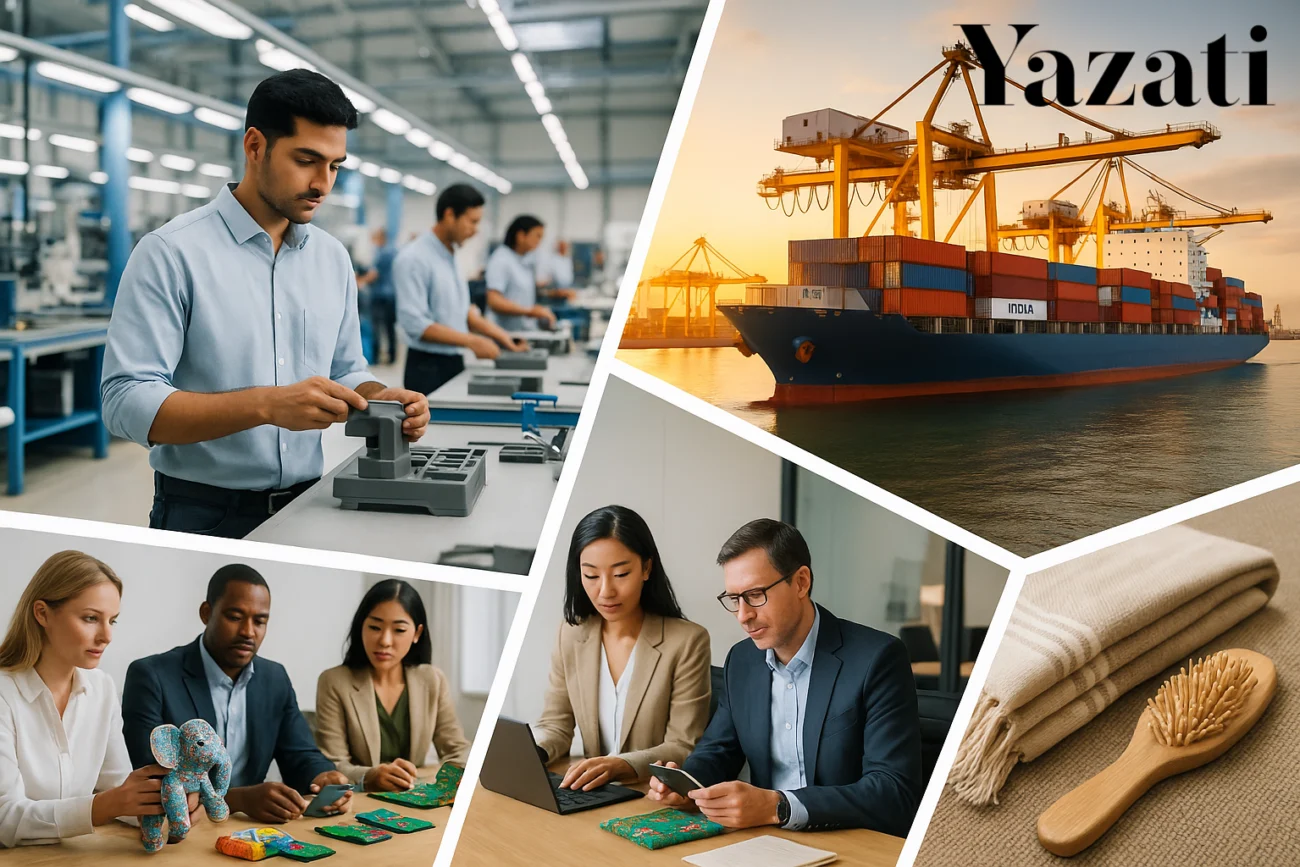
Introduction: The Rise of India’s Export Powerhouse
As we move deeper into 2026, India’s prominence in global trade has reached new heights. Global buyers are rapidly increasing their imports from India — not just because of low costs but due to the nation’s remarkable combination of manufacturing capability, innovation, and reliability. From pharmaceuticals and textiles to digital services and electric vehicles, India’s exports are now driving global supply chains.
What’s fueling this surge? It’s a mix of strategic government reforms, digital transformation, and a global shift toward diversified sourcing. Let’s explore the reasons behind this significant rise in demand for Indian exports.
Overview of India’s Trade Landscape in 2026
India’s Export Growth Rate and Sectoral Performance
According to the Ministry of Commerce, India’s export value has surpassed $780 billion in 2026, marking a 14% year-on-year increase. Sectors like IT services, auto components, and pharmaceuticals have emerged as front-runners. India’s focus on sustainability, renewable energy products, and organic food exports has also attracted international buyers seeking ethically sourced goods.
Shifting Global Supply Chains After 2024
Post-pandemic and post-global disruptions, many corporations have been looking to reduce dependency on single-country supply chains — particularly China. This “China+1 strategy” has turned India into a preferred alternative. With improved logistics, favorable trade agreements, and production incentives, India is now central to the world’s new supply ecosystem.
Key Drivers Behind the Surge in Imports from India
Competitive Labor Costs and Skilled Workforce
India continues to offer a cost-effective yet highly skilled labor pool, enabling companies to balance quality and price efficiently. The country produces over 1.5 million engineers annually, ensuring a steady stream of technically trained professionals for global industries.
Government Policies Boosting Export Potential
Initiatives like “Make in India”, Production Linked Incentive (PLI) schemes, and National Logistics Policy (NLP) have dramatically enhanced India’s manufacturing and export competitiveness. These policies have attracted major investments from global brands across sectors such as electronics, automotive, and semiconductors.
Enhanced Infrastructure and Digital Trade Platforms
India has invested heavily in modern ports, highways, and digital customs systems. Platforms like ICEGATE and the Unified Logistics Interface Platform (ULIP) have simplified export documentation and tracking — cutting down turnaround times and boosting efficiency.
Top Industries Fueling India’s Export Boom in 2026
Pharmaceuticals and Healthcare Products
India, often called the “Pharmacy of the World,” continues to dominate global generic drug markets. Exports of APIs (Active Pharmaceutical Ingredients) and vaccines are witnessing double-digit growth, especially in African and European markets.
Textiles, Apparel, and Sustainable Fashion
The global shift toward eco-friendly fashion has given Indian textile exporters a huge edge. Organic cotton, handloom fabrics, and ethically produced apparel are gaining traction among European and North American buyers.
Automotive Components and Electric Vehicles
India’s auto sector has seen tremendous FDI inflows. The export of EV parts, lithium batteries, and hybrid vehicles has surged as nations push for green mobility solutions.
IT, Software, and Business Process Outsourcing (BPO)
With its vast pool of English-speaking professionals and strong digital infrastructure, India remains the global hub for IT and BPO services. Exports in this sector are projected to exceed $250 billion in 2026.
Agricultural and Organic Food Exports
From basmati rice to organic tea and spices, India’s agricultural exports continue to charm global consumers. The growing demand for traceable and sustainable food has put Indian agribusinesses at the forefront of global sourcing.
The Role of “Make in India” and PLI Schemes
The “Make in India” initiative has transformed the nation into a global manufacturing destination. With PLI schemes across 14 sectors, India incentivizes local production while meeting international quality standards.
Impact on Foreign Trade Relations
These initiatives have improved India’s trade ties with regions like the EU, ASEAN, and North America, enabling duty-free access for multiple goods under new Free Trade Agreements (FTAs).
Encouraging Global Manufacturing Partnerships
Global players such as Apple, Tesla, and Samsung have either expanded or started new production lines in India, not only to serve local demand but also to export to global markets.
How Technology is Transforming India’s Export Efficiency
AI, Blockchain, and Logistics Automation
Artificial intelligence and blockchain are being integrated into export documentation, customs clearance, and shipment tracking. These innovations improve transparency, reduce fraud, and ensure faster delivery times.
E-commerce Platforms and Cross-border Trade
E-commerce exports through platforms like Amazon Global Selling and Flipkart Global have empowered Indian MSMEs to reach buyers across 200+ countries directly.
Global Buyers’ Perspective: Why India Over Other Nations?
Comparison with China, Vietnam, and Bangladesh
While China remains a manufacturing giant, rising labor costs and geopolitical risks have pushed global buyers toward India. Compared to Vietnam and Bangladesh, India offers a more diversified industrial base and better legal and IP protections.
India’s Edge in Quality, Compliance, and Reliability
India’s exporters have matured significantly in quality assurance and ESG (Environmental, Social, and Governance) compliance — two key factors for Western importers in 2026.
Challenges Facing Indian Exporters in 2026
Logistics Bottlenecks and Port Congestion
Despite improvements, some regions still face infrastructure gaps and high logistics costs. Addressing last-mile connectivity remains critical.
Currency Fluctuations and Global Trade Barriers
The volatility of the Indian rupee and protectionist policies in certain countries occasionally create export uncertainties.
Future Outlook: India’s Road to Becoming a Global Export Leader by 2030
Strategic Trade Partnerships and FTAs
India is negotiating new FTAs with the UK, EU, and Canada, which are expected to further enhance export growth and market access.
Sustainability and Green Exports
The government’s focus on carbon-neutral manufacturing and green energy exports will play a decisive role in positioning India as a responsible global supplier.
FAQs
1. Why are global buyers increasing imports from India in 2026?
Because India offers competitive prices, improved quality, digital infrastructure, and strong government support through PLI and trade reforms.
2. Which sectors are leading India’s export growth in 2026?
Top sectors include IT, pharmaceuticals, textiles, automotive components, and agriculture.
3. How is India competing with China in exports?
India provides a stable business environment, skilled labor, and diversified production capacity, making it an attractive “China+1” alternative.
4. What government initiatives support Indian exporters?
“Make in India,” PLI schemes, and National Logistics Policy have been instrumental in enhancing export competitiveness.
5. What role does technology play in India’s export rise?
AI, blockchain, and e-commerce are streamlining logistics, reducing delays, and increasing transparency.
6. What’s India’s long-term export goal?
India aims to become a $1 trillion export economy by 2030, focusing on innovation, sustainability, and value-added goods.
Conclusion: The World Turns Toward India’s Export Power
India’s export landscape in 2026 reflects a historic transformation — one driven by innovation, government reforms, and global confidence in Indian products. As global buyers seek reliability, affordability, and sustainability, India stands tall as the world’s next big export hub.
From digital services to organic food, from EVs to textiles, the future of global trade is undeniably “Made in India.”
✨ Discover Global Sourcing Excellence with Netyex ✨
Netyex is your trusted B2B sourcing partner, connecting international buyers with India’s finest manufacturers and curated product lines—from handicrafts and home décor to kitchenware, textiles, hospitality essentials, and more. With verified suppliers and end-to-end support, we make global procurement seamless, reliable, and efficient.
👉 Elevate your sourcing experience—explore Netyex today.
📦 Bulk orders & customisation | 🌍 Worldwide delivery | 🤝 Trusted by global buyers
Visit Netyex to source premium Indian products with confidence.