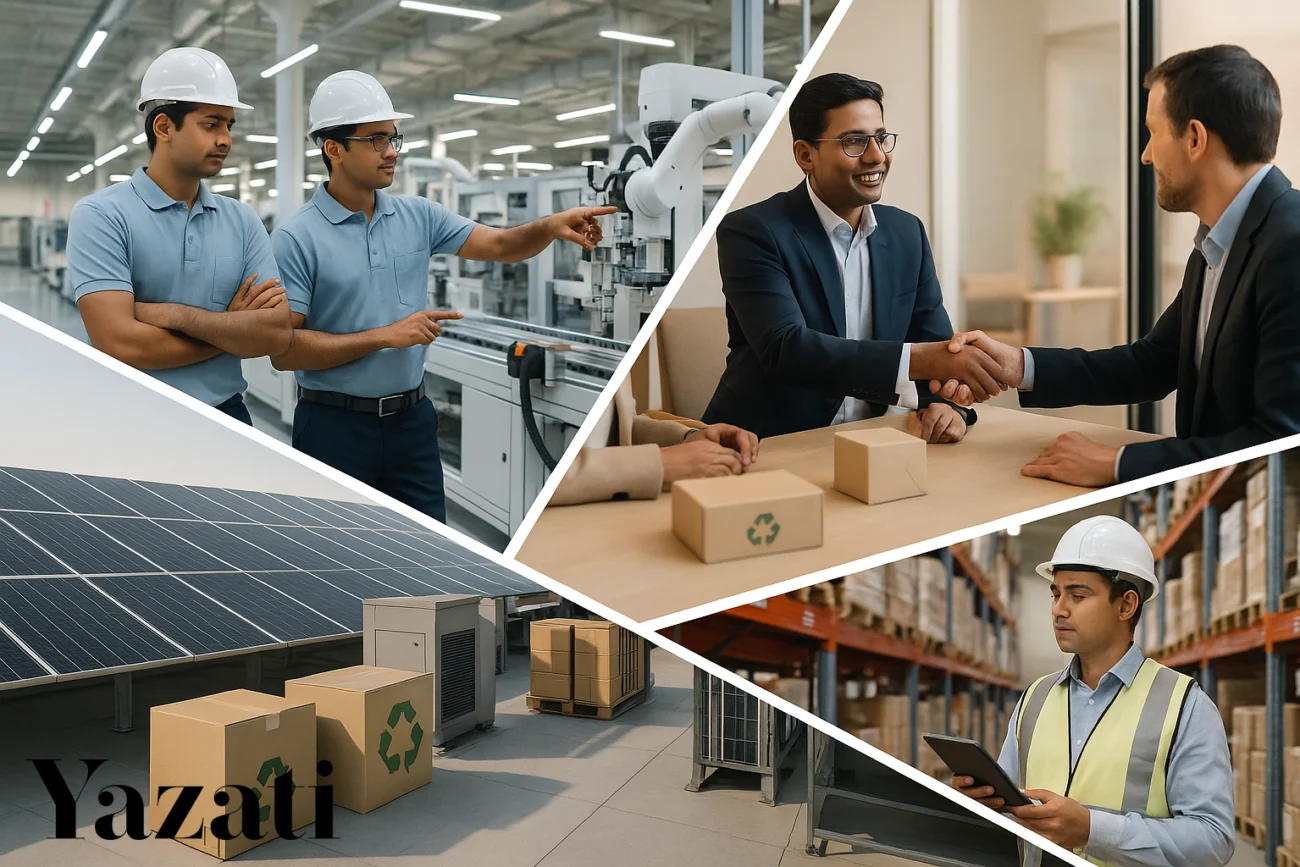
Introduction: The Rising Power of Indian Manufacturing
Over the last decade, India has emerged as a formidable player in the global manufacturing ecosystem. By 2026, the country is poised to become the next global manufacturing powerhouse. With a rapidly growing economy, skilled labor force, advanced infrastructure, and strong government initiatives, India is no longer just a low-cost production destination—it’s becoming a center for innovation, sustainability, and high-quality manufacturing.
Global businesses are increasingly looking toward India not just for production efficiency but also for long-term strategic partnerships that ensure resilience and reliability in their supply chains. This shift positions 2026 as a milestone year for those ready to collaborate with Indian manufacturers.
The Global Shift in Manufacturing Dynamics
How Supply Chain Diversification Is Changing Global Trade
The pandemic exposed the vulnerability of global supply chains that heavily relied on a single source—China. In response, businesses worldwide began diversifying their production bases to reduce dependency. Countries like Vietnam, Mexico, and especially India became the primary beneficiaries of this “China+1” strategy.
By 2026, India will be at the heart of this transformation, offering world-class infrastructure, favorable policies, and robust export systems to support global supply chains.
The Decline of Overdependence on China
Rising labor costs, trade tensions, and stricter environmental policies have made China less attractive as a sole manufacturing hub. India, with its democratic governance, skilled talent, and competitive production costs, presents an ideal alternative for companies seeking stability and scalability.
Why India Is Emerging as the World’s Next Manufacturing Hub
Government Policies Boosting Indian Manufacturing in 2026
Make in India and Production Linked Incentive (PLI) Schemes
The Indian government’s Make in India initiative and PLI schemes have revolutionized industrial growth by incentivizing local production and attracting foreign investment. These policies have led to exponential growth in key industries like electronics, automotive, and semiconductors.
Ease of Doing Business and Infrastructure Improvements
In recent years, India has made remarkable strides in simplifying business registration, improving logistics, and modernizing transport networks. The creation of industrial corridors, smart cities, and digital infrastructure enhances its appeal to global investors.
Growth of Strategic Manufacturing Sectors in India
Automotive, Electronics, and Renewable Energy Growth
India’s automotive industry, already the fourth largest in the world, is on track to lead in electric vehicles (EVs) and green mobility. Similarly, the electronics manufacturing sector—powered by companies like Foxconn and Samsung—is witnessing unprecedented expansion.
Pharmaceuticals and Biotech Advancements
India remains a global leader in pharmaceuticals, supplying over 50% of the world’s vaccines. By 2026, advancements in biotechnology and healthcare innovation will make the country a preferred partner for life sciences manufacturing.
Economic Forecast: India’s Manufacturing Surge in 2026
GDP Growth and Export Projections
According to leading economists, India’s GDP is expected to surpass $5 trillion by 2026, largely driven by manufacturing exports. The government’s focus on self-reliance (Atmanirbhar Bharat) and strategic trade agreements will further accelerate this growth.
Rise of Skilled Labor and Technological Integration
With over 65% of its population under 35, India boasts one of the world’s youngest and most tech-savvy workforces. The integration of AI, robotics, and IoT into manufacturing is enhancing efficiency and product quality.
Key Benefits of Partnering with Indian Manufacturers in 2026
Cost Competitiveness and Quality Assurance
India offers a unique blend of affordability and high standards. While production costs remain low, strict quality control protocols ensure products meet global benchmarks.
Sustainable and Ethical Manufacturing Practices
Indian manufacturers are increasingly adopting renewable energy, waste management, and ethical sourcing, aligning perfectly with the sustainability goals of global brands.
Technological Innovation and Digital Transformation
From smart factories to AI-driven logistics, India is rapidly digitizing its industrial sector. This technological leap ensures greater transparency, traceability, and productivity for global partners.
Case Studies: Global Brands Partnering with India Successfully
Apple’s Expanding Supply Chain in India
Apple’s strategic move to manufacture iPhones in India is a testament to the country’s growing reliability. By 2026, India could produce nearly 25% of Apple’s global output.
Tesla’s Entry into Indian Manufacturing Ecosystem
Tesla’s plan to set up manufacturing units in India marks a pivotal shift toward green mobility and sustainable production partnerships.
Challenges to Consider and How to Overcome Them
While India’s manufacturing landscape is bursting with opportunity, foreign investors and partners should be mindful of certain challenges. Understanding these early on helps businesses navigate effectively and maximize success in 2026.
Logistics and Infrastructure Bottlenecks
Despite vast improvements, some regions in India still face logistics inefficiencies and infrastructural constraints, especially in Tier-2 and Tier-3 cities. Delays in transportation or port congestion can occasionally affect delivery timelines.
How to overcome it:
- Partner with logistics firms specializing in Indian supply chains.
- Utilize government-developed industrial corridors like the Delhi-Mumbai Industrial Corridor (DMIC) for optimized transport.
- Invest in localized storage facilities or shared warehousing systems.
Regulatory and Cultural Nuances
Navigating India’s diverse legal and cultural environment can be daunting for newcomers. Different states have unique regulations, languages, and business practices.
How to overcome it:
- Collaborate with local consultants or legal advisors familiar with compliance and tax laws.
- Build relationships based on trust and mutual respect—India values long-term collaboration over transactional deals.
- Provide cross-cultural training to management teams to foster understanding and harmony.
2026 Outlook: The Future of Global Partnerships with Indian Manufacturers
India’s Role in the Global Green Economy
Sustainability will be the defining theme of the 2026 global manufacturing scene. India, with its emphasis on renewable energy and eco-friendly industrial zones, is well-positioned to lead the charge. From solar-powered factories to circular economy initiatives, India’s industries are evolving toward carbon neutrality.
The Rise of Smart Manufacturing and AI Integration
Automation and artificial intelligence are no longer futuristic concepts—they’re the present reality in Indian manufacturing. Companies are embracing predictive maintenance, digital twins, and AI-driven quality control systems. These technologies make Indian factories more productive, safer, and cost-efficient, offering immense benefits to international partners.
Steps to Successfully Partner with Indian Manufacturers in 2026
Building a successful manufacturing partnership in India requires strategy, diligence, and clear communication.
Researching and Selecting Reliable Partners
Before entering into a contract, conduct in-depth research on potential manufacturers. Examine their certifications, export records, and customer feedback. Trade fairs such as India Industrial Expo or IMTEX are excellent venues to meet qualified suppliers.
Legal and Contractual Due Diligence
Ensure all contracts include clauses about quality assurance, delivery schedules, and intellectual property protection. Working with local law firms that specialize in foreign investment ensures compliance with India’s legal framework.
Building Long-Term Strategic Alliances
The most successful partnerships are those based on collaboration rather than mere cost advantage. Share innovation, offer training opportunities, and build co-development models that benefit both sides equally. By 2026, such alliances will be the backbone of global supply chain resilience.
FAQs About Partnering with Indian Manufacturers
1. Why is 2026 considered the best year to partner with Indian manufacturers?
Because by 2026, India’s manufacturing infrastructure, policies, and export readiness will peak—offering global companies unmatched opportunities for cost savings, scalability, and innovation.
2. Which industries in India offer the best partnership potential?
Key industries include electronics, automotive (especially EVs), pharmaceuticals, renewable energy, textiles, and precision engineering.
3. Are Indian manufacturers reliable for global quality standards?
Absolutely. Many Indian manufacturers hold ISO, CE, and FDA certifications. In fact, global giants like Apple, GE, and Siemens already rely on Indian facilities.
4. What incentives does the Indian government offer to foreign partners?
Foreign partners benefit from tax incentives, FDI allowances, and Production Linked Incentive (PLI) schemes across multiple sectors.
5. How can I protect intellectual property when working with Indian partners?
India has robust IP laws aligned with global standards. Register your IP with Indian authorities and include clear protection clauses in your contracts.
6. How do I find trustworthy Indian manufacturers?
Use verified B2B platforms like IndiaMART or visit trade expos. Working with export councils such as EEPC India also ensures credibility.
Conclusion: Why 2026 Is the Perfect Time to Collaborate with India’s Manufacturing Giants
The year 2026 represents more than just economic opportunity—it symbolizes the dawn of a new manufacturing era driven by resilience, sustainability, and innovation. India’s dynamic workforce, policy-driven growth, and technological leap forward make it an unparalleled destination for global partnerships.
Businesses that act now stand to gain not only competitive advantages but also long-term stability in an evolving global market. Partnering with Indian manufacturers in 2026 isn’t just a smart business move—it’s an investment in the future of global industry.
✅ Key Takeaway
“Those who recognize India’s manufacturing momentum in 2026 will lead the next global industrial revolution.”
✨ Discover Global Sourcing Excellence with Netyex ✨
Netyex is your trusted B2B sourcing partner, connecting international buyers with India’s finest manufacturers and curated product lines—from handicrafts and home décor to kitchenware, textiles, hospitality essentials, and more. With verified suppliers and end-to-end support, we make global procurement seamless, reliable, and efficient.
👉 Elevate your sourcing experience—explore Netyex today.
📦 Bulk orders & customisation | 🌍 Worldwide delivery | 🤝 Trusted by global buyers
Visit Netyex to source premium Indian products with confidence.