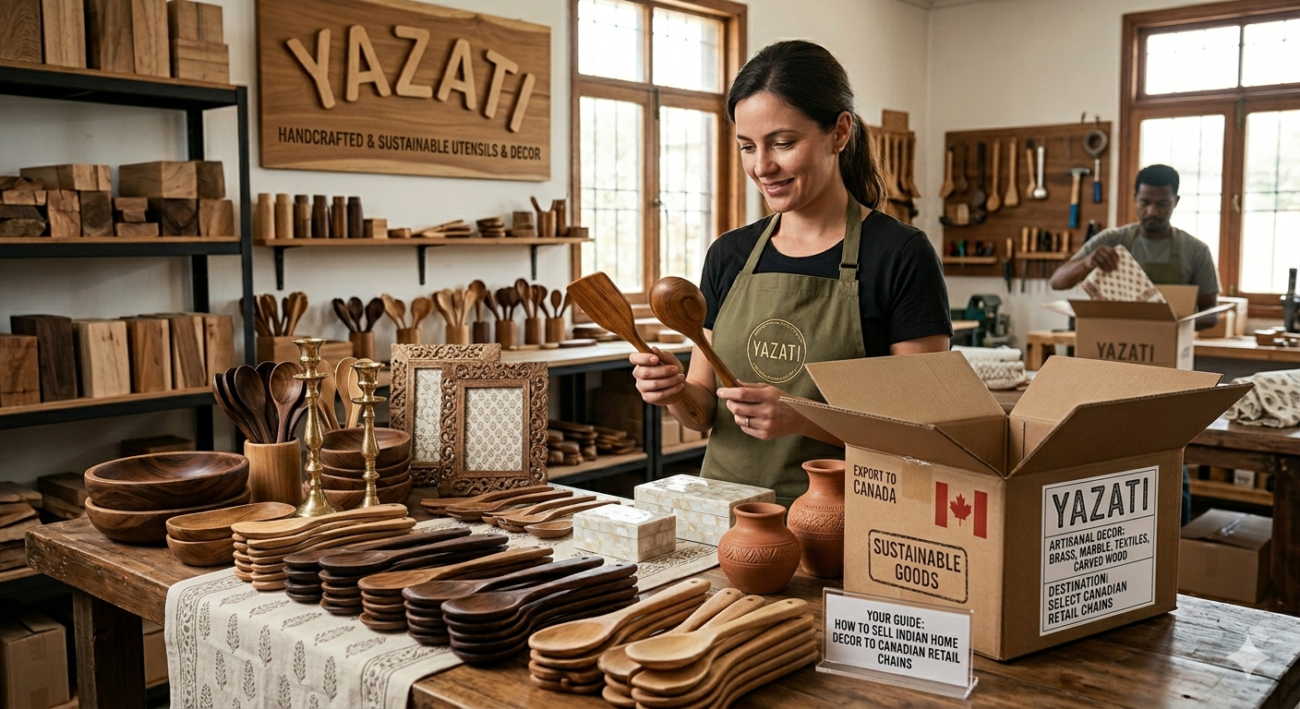
The demand for handcrafted and culturally inspired products is growing rapidly across North America. One of the most profitable opportunities today is learning How to Sell Indian Home Decor to Canadian Retail Chains. Canadian retailers are actively looking for unique, artisan-made, eco-friendly, and ethically sourced products that stand out in a competitive market. Indian home decor products fit perfectly into this trend.
India has a rich tradition of craftsmanship, including wooden decor, brass items, textiles, wall hangings, handwoven rugs, ceramic products, and sustainable handmade accessories. Canadian consumers appreciate authenticity and artistic value, making Indian decor products highly attractive for stores across Canada.
In this guide, you’ll learn everything from market research and pricing to logistics and retailer negotiations. Whether you’re a manufacturer, exporter, or small business owner, this article will help you build a profitable export strategy.
Understanding the Canadian Home Decor Market
Canada’s home decor industry is diverse and heavily influenced by modern, bohemian, rustic, and multicultural design trends. Indian products often blend naturally into these categories.
Why Canadian Consumers Love Indian Home Decor
Several factors drive Canadian demand for Indian decor:
- Handmade craftsmanship
- Sustainable materials
- Ethnic and bohemian aesthetics
- Fair-trade products
- Unique artisan stories
- Rich textures and colors
Consumers increasingly prefer products that tell a story. Indian decor items often carry centuries of cultural heritage, making them emotionally appealing.
Popular buying seasons include:
- Christmas holidays
- Fall decor season
- Spring home refresh
- Wedding gift season
- Diwali celebrations in multicultural communities
Retail chains seek products that offer uniqueness while maintaining consistent quality and reliable supply.
Popular Indian Decor Categories in Canada
The following product categories perform exceptionally well:
| Product Category | Demand Level |
| Handwoven Rugs | High |
| Brass Decor | Medium-High |
| Wooden Furniture | High |
| Macrame and Textiles | High |
| Candle Holders | Medium |
| Wall Art | High |
| Ceramic Decor | Medium-High |
| Sustainable Bamboo Products | Growing |
Minimalist and eco-conscious decor products are especially trending in Canada.
Researching Canadian Retail Chains Before Pitching
Before approaching buyers, you need detailed market research.
Identifying the Right Retail Segment
Canadian retail chains vary significantly in customer demographics.
Mass-Market Retailers
These stores prioritize:
- Lower prices
- High volume
- Standardized packaging
Boutique Retail Chains
These retailers value:
- Handmade uniqueness
- Premium branding
- Artisan storytelling
Luxury Home Stores
These buyers seek:
- High-end craftsmanship
- Designer collaborations
- Exclusive collections
Choosing the right retail segment helps avoid wasted effort.
Understanding Retail Buyer Expectations
Retail buyers evaluate suppliers based on:
- Product consistency
- Delivery reliability
- MOQ flexibility
- Packaging quality
- Product safety
- Profit margins
- Communication speed
Canadian buyers appreciate professionalism and transparency. Delayed replies or incomplete information can damage trust quickly.
Building a Strong Indian Home Decor Brand
A strong brand can dramatically increase your success rate.
Creating a Unique Brand Story
Canadian consumers connect emotionally with authentic stories.
Your brand story should explain:
- Where products are made
- Artisan involvement
- Sustainable sourcing
- Traditional craftsmanship
- Ethical labor practices
For example:
“Handcrafted by artisans in Rajasthan using recycled wood and traditional carving methods.”
This creates emotional value beyond the product itself.
Packaging and Labeling Standards
Professional packaging matters greatly in retail.
Your packaging should include:
- Product name
- Country of origin
- Barcode
- Material information
- Care instructions
- Safety labels if required
Eco-friendly packaging also appeals strongly to Canadian consumers.
Use recyclable:
- Kraft paper
- Corrugated boxes
- Cloth bags
- Biodegradable fillers
Choosing Profitable Indian Home Decor Products
Not every product will succeed internationally.
Handmade vs Machine-Made Products
Handmade products often command premium pricing because of their uniqueness. However, machine-made products offer consistency and scalability.
A balanced product line may include:
| Handmade Products | Machine-Made Products |
| Artisan wall art | Standard cushions |
| Hand-carved decor | Basic ceramics |
| Embroidered textiles | Simple trays |
Retail chains often prefer combining both approaches.
Eco-Friendly and Sustainable Decor Trends
Sustainability is no longer optional in Canada.
Products made from:
- Reclaimed wood
- Bamboo
- Organic cotton
- Jute
- Recycled metal
have growing demand.
Eco-certifications can strengthen your credibility and attract larger retailers.
Pricing Strategy for Canadian Retail Chains
Pricing mistakes can ruin export opportunities.
Calculating Export Costs Correctly
Many exporters underestimate hidden costs.
Your pricing must include:
- Manufacturing
- Packaging
- Inland transport
- Customs clearance
- Freight charges
- Duties
- Insurance
- Warehousing
- Marketing costs
Use FOB (Free on Board) and CIF (Cost, Insurance, Freight) pricing models carefully.
Wholesale Pricing vs Retail Pricing
Retail chains expect healthy margins.
Typical retail markup:
- 2x to 3x wholesale cost
Example:
| Item | Cost |
| Manufacturing | $10 |
| Wholesale Price | $20 |
| Retail Price | $40-$60 |
Pricing too high reduces competitiveness. Pricing too low hurts profitability and brand perception.
Export Compliance and Canadian Import Regulations
Understanding regulations is critical when learning How to Sell Indian Home Decor to Canadian Retail Chains.
Product Safety Standards
Certain products require compliance checks.
Examples include:
- Electrical lighting
- Candles
- Furniture coatings
- Textiles
- Children’s decor
Always verify Canadian safety standards before shipping products.
Documentation Required for Export
Essential export documents include:
- Commercial invoice
- Packing list
- Bill of lading
- Certificate of origin
- Insurance certificate
- Export declaration
Missing documents can delay shipments and damage retailer relationships.
For official guidance, visit the Canadian government trade website:
https://www.tradecommissioner.gc.ca/
Finding Canadian Retail Buyers
Finding quality buyers requires persistence and networking.
Trade Shows and B2B Platforms
Trade shows remain one of the best methods for connecting with retailers.
Popular options include:
- Toronto gift shows
- Interior design expos
- International home furnishing fairs
Useful B2B platforms:
- Alibaba
- Faire
- IndiaMART
- Global Sources
These platforms help establish credibility and visibility.
Using LinkedIn and Email Outreach
LinkedIn is highly effective for B2B exporting.
Search for:
- Retail buyers
- Category managers
- Home decor sourcing specialists
Your outreach email should include:
- Brief introduction
- Product catalog
- MOQ details
- Certifications
- Pricing sheet
Keep messages short and professional.
Creating a Winning Product Catalog
Your catalog is your sales weapon.
Photography and Product Presentation
Professional photos increase buyer confidence dramatically.
Use:
- White backgrounds
- Lifestyle images
- Multiple angles
- Size references
- High resolution
Poor product images instantly reduce credibility.
Writing Product Descriptions That Sell
Strong descriptions should include:
- Materials
- Dimensions
- Craftsmanship details
- Usage suggestions
- Care instructions
Example:
“Handwoven jute rug crafted by artisans using sustainable natural fibers, ideal for modern bohemian interiors.”
Negotiating with Canadian Retail Chains
Negotiation skills can determine profitability.
Minimum Order Quantities
Large retailers usually request bulk quantities.
However, many smaller chains prefer:
- Low-risk trial orders
- Seasonal collections
- Flexible MOQs
Offering smaller initial orders can help build trust.
Payment Terms and Contracts
Common payment methods include:
- Letter of Credit (LC)
- Wire transfer
- Net 30 or Net 60 terms
Always clarify:
- Delivery timelines
- Defect policies
- Return agreements
- Currency terms
Written contracts protect both parties.
Shipping and Logistics for Indian Exporters
Reliable logistics are essential for long-term success.
Air Freight vs Sea Freight
| Shipping Method | Advantages | Disadvantages |
| Air Freight | Faster delivery | Expensive |
| Sea Freight | Lower cost | Longer transit |
Sea freight is typically preferred for large decor shipments.
Warehousing and Distribution
Some exporters use Canadian fulfillment centers to:
- Reduce delivery times
- Improve inventory management
- Support retail replenishment
This can improve retailer satisfaction significantly.
Marketing Indian Home Decor in Canada
Even wholesale exporters benefit from branding and marketing.
Digital Marketing Strategies
Effective strategies include:
- Instagram marketing
- Pinterest inspiration boards
- SEO blogs
- Email newsletters
- Google Ads
Visual platforms perform especially well for decor products.
Influencer and Social Media Promotion
Collaborating with:
- Interior designers
- Home decor influencers
- Lifestyle bloggers
can dramatically increase visibility.
Canadian consumers trust social proof heavily before purchasing decor products.
Common Mistakes Indian Exporters Make
Avoid these common errors:
- Poor packaging quality
- Inconsistent product sizing
- Weak communication
- Delayed shipping
- Ignoring compliance requirements
- Unrealistic MOQs
- Poor product photography
- No branding strategy
Consistency and professionalism are essential for long-term retail relationships.
FAQs
1. Is Canada a good market for Indian home decor exports?
Yes. Canada has growing demand for handmade, sustainable, and multicultural home decor products.
2. Which Indian decor products sell best in Canada?
Handwoven rugs, wooden decor, wall art, textiles, brass items, and sustainable decor products perform very well.
3. Do Canadian retail chains require certifications?
Some products may require safety certifications, especially lighting, candles, textiles, and furniture.
4. How can I find Canadian retail buyers?
You can use trade shows, B2B marketplaces, LinkedIn, sourcing agents, and email outreach campaigns.
5. What pricing strategy works best for Canadian retailers?
Competitive wholesale pricing with healthy retail margins works best. Retailers typically expect 2x to 3x markup potential.
6. Should I offer private labeling to Canadian chains?
Yes. Many retailers prefer private-label manufacturing because it strengthens their own branding.
Conclusion
Learning How to Sell Indian Home Decor to Canadian Retail Chains can unlock major international business opportunities. Canada’s growing interest in artisan craftsmanship, sustainable products, and multicultural design trends creates strong demand for Indian home decor.
Success depends on:
- Understanding the Canadian market
- Building a strong brand
- Maintaining product consistency
- Offering competitive pricing
- Following import regulations
- Developing professional buyer relationships
Exporting is not just about selling products. It’s about building trust, delivering quality consistently, and creating long-term retail partnerships.
Indian manufacturers and exporters who invest in branding, logistics, and customer relationships can establish highly profitable businesses in Canada’s expanding home decor market.
✨ Discover Global Sourcing Excellence with Netyex ✨
Netyex is your trusted B2B sourcing partner, connecting international buyers with India’s finest manufacturers and curated product lines—from handicrafts and home décor to kitchenware, textiles, hospitality essentials, and more. With verified suppliers and end-to-end support, we make global procurement seamless, reliable, and efficient.
👉 Elevate your sourcing experience—explore Netyex today.
📦 Bulk orders & customisation | 🌍 Worldwide delivery | 🤝 Trusted by global buyers
Visit Netyex to source premium Indian products with confidence.