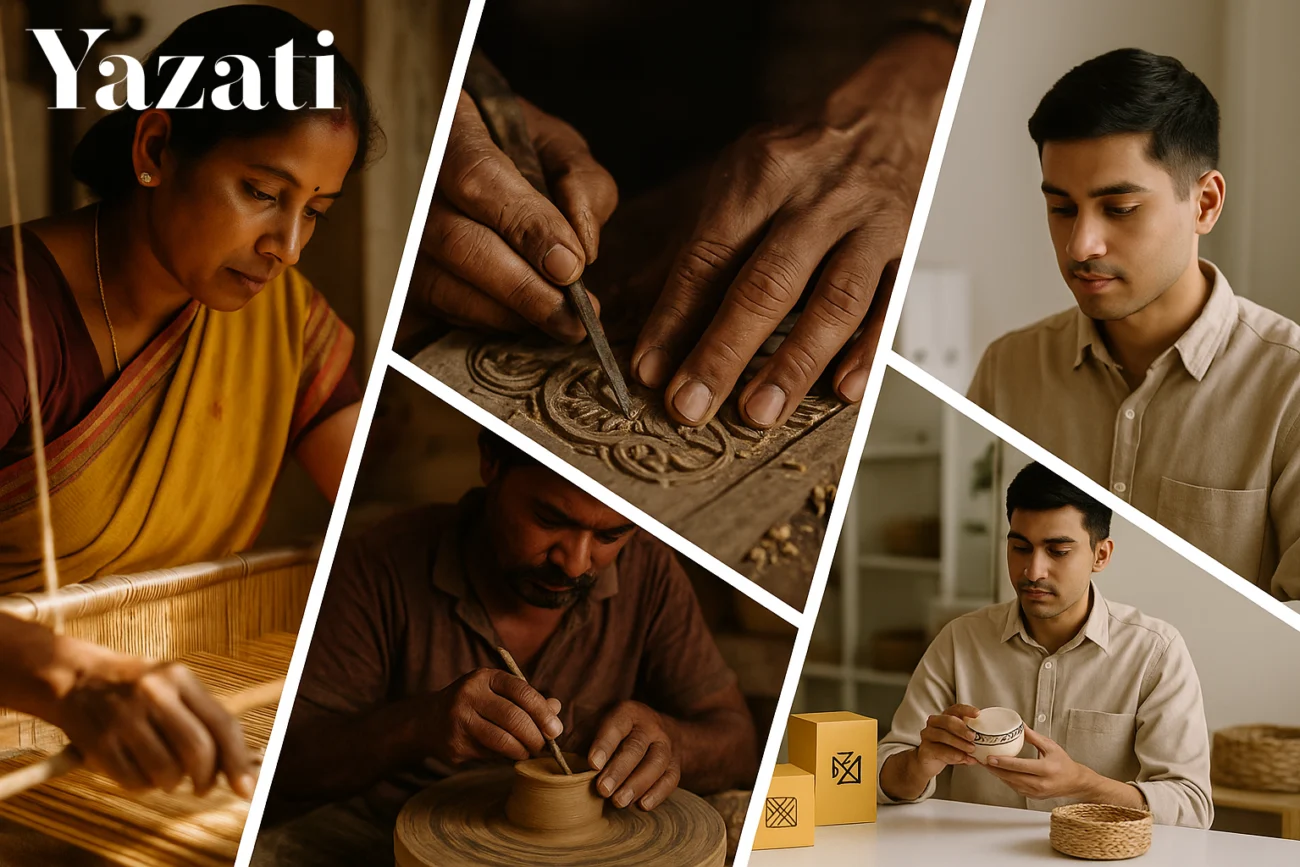
Introduction: The Living Legacy of India’s Handicrafts
India’s handicrafts are not just art forms — they’re living testaments to centuries of cultural evolution. From the intricate embroidery of Gujarat to the delicate filigree of Odisha, every handmade piece tells a story. Yet, in the face of industrialization, these traditional crafts risk fading away.
That’s where Yazati steps in — a brand committed to breathing new life into India’s artisan legacy while ensuring that each craftsperson’s story continues to shine.
Understanding India’s Rich Artisan Culture
India’s artisan culture dates back over 5,000 years, rooted in craftsmanship that blends spirituality, functionality, and beauty. Generations of artisans have perfected their techniques through oral traditions and apprenticeships, ensuring skills were passed down like treasured heirlooms.
Each region boasts unique crafts — the Phulkari embroidery of Punjab, Channapatna wooden toys from Karnataka, and Madhubani paintings from Bihar — reflecting the diversity of India’s heritage.
The Timeless Value of Handmade Creations
Handmade creations possess an authenticity no machine can replicate. The irregularities of handwoven fabrics or the subtle imperfections in pottery are what make them truly human — infused with the maker’s soul.
Yazati’s philosophy embraces this authenticity. The brand values craftsmanship over quantity, artistry over automation, and sustainability over short-lived trends.
The Historical Roots of Indian Handicrafts
India’s handicraft history is woven through ancient civilizations. Archaeological findings from Mohenjo-Daro and Harappa reveal advanced pottery, beadwork, and metal art that still inspire today’s artisans. Over time, influences from Mughal, Persian, and British eras enriched India’s craft vocabulary.
From Kashmir’s Pashmina to Tamil Nadu’s Tanjore paintings, regional craft styles evolved uniquely — forming a colorful mosaic of India’s creative genius.
The Role of Handicrafts in India’s Economy and Culture
A Source of Livelihood for Millions
More than seven million artisans across India depend on handicrafts for their livelihood. Rural and tribal communities, particularly women, play a central role in sustaining these crafts.
By supporting these artisans, brands like Yazati not only preserve culture but also empower communities economically and socially.
Preserving Cultural Identity Through Artistry
Crafts are living expressions of regional identity. They celebrate festivals, rituals, and community traditions — making them vital to India’s intangible heritage. Yazati recognizes this and works to ensure that these cultural expressions remain relevant in the modern world.
Modern Challenges Facing Traditional Crafts
Mass Production vs. Handmade Quality
Industrialization and mass production have overshadowed handmade artistry. Machine-made goods flood markets at lower costs, making it difficult for artisans to compete. Yet, Yazati champions slow craftsmanship, emphasizing quality, uniqueness, and ethical production.
Declining Artisan Communities and Skill Loss
Younger generations often move to cities, leaving behind traditional crafts. Yazati combats this decline through mentorship programs and awareness campaigns that make handicrafts aspirational once again.
Yazati: Reviving India’s Handicraft Heritage
The Vision Behind Yazati
Yazati was founded with a mission — to bridge the gap between tradition and modernity. It celebrates India’s cultural roots while infusing contemporary design sensibilities to make crafts globally appealing.
Supporting Rural Artisans and Craft Clusters
Yazati partners directly with rural artisans, ensuring fair compensation and eliminating exploitative middlemen. The brand’s initiatives span across Rajasthan, Gujarat, and Odisha — nurturing craft clusters that sustain entire communities.
Blending Tradition with Modern Aesthetics
From elegant home décor to wearable art, Yazati reinterprets heritage crafts in modern forms — proving that tradition can thrive alongside innovation.
How Yazati Empowers Artisan Communities
Fair Wages and Ethical Sourcing
Transparency is key to Yazati’s success. Every artisan is fairly compensated, materials are ethically sourced, and every product carries the mark of responsible craftsmanship.
Training, Design Innovation, and Skill Development
Through design workshops, Yazati helps artisans adapt traditional motifs into modern trends. This not only revitalizes ancient crafts but also attracts younger generations to continue the legacy.
Building Sustainable Craft Ecosystems
Yazati’s holistic approach ensures crafts are not just preserved but nurtured. From training programs to global marketing, the brand supports artisans at every step of the value chain.
Signature Crafts Promoted by Yazati
Handwoven Textiles and Natural Dyes
Using organic fibers and natural dyes, Yazati promotes eco-friendly weaving traditions from regions like Kutch and Assam.
Terracotta, Brassware, and Woodcrafts
Artisans skilled in ancient clay and metal crafts create home accents that blend traditional aesthetics with contemporary design.
Embroidery, Block Printing, and Jewelry Design
Each piece is a statement of Indian artistry — handcrafted to perfection with motifs rooted in cultural symbolism.
Yazati’s Commitment to Sustainability and Global Impact
Yazati champions a zero-waste philosophy, using leftover materials for smaller accessories or décor pieces. The brand also brings Indian handicrafts to the global stage through online marketplaces and collaborations with international designers.
The Future of Indian Handicrafts: Innovation Meets Tradition
With e-commerce, social media, and digital storytelling, the handicraft industry is witnessing a renaissance. Yazati leverages these tools to connect artisans directly with global consumers — creating a sustainable model that honors the past while embracing the future.
FAQs About India’s Handicraft Heritage and Yazati
1. What makes Indian handicrafts unique?
Each region of India has its own style, technique, and story — making every handicraft a piece of living history.
2. How does Yazati support artisans?
Yazati ensures fair wages, provides training, promotes sustainability, and helps artisans reach global markets.
3. Why are traditional crafts important today?
They preserve cultural identity, promote sustainability, and provide livelihoods to millions of rural families.
4. Is Yazati’s production eco-friendly?
Yes. Yazati emphasizes ethical sourcing, natural materials, and zero-waste processes.
5. Where can I buy Yazati’s handcrafted products?
You can explore Yazati’s official website and select partner marketplaces to purchase authentic handmade items.
6. How can consumers help preserve Indian crafts?
By choosing handmade over machine-made products and supporting ethical brands like Yazati.
Conclusion: Weaving the Past Into the Future
India’s handicraft heritage stands as a beacon of resilience and creativity. Brands like Yazati are not just preserving traditions — they’re redefining them for a new era. Each product tells a story, each artisan represents a legacy, and together, they’re crafting a sustainable, culturally rich future.
✨ Discover Global Sourcing Excellence with Netyex ✨
Netyex is your trusted B2B sourcing partner, connecting international buyers with India’s finest manufacturers and curated product lines—from handicrafts and home décor to kitchenware, textiles, hospitality essentials, and more. With verified suppliers and end-to-end support, we make global procurement seamless, reliable, and efficient.
👉 Elevate your sourcing experience—explore Netyex today.
📦 Bulk orders & customisation | 🌍 Worldwide delivery | 🤝 Trusted by global buyers
Visit Netyex to source premium Indian products with confidence.