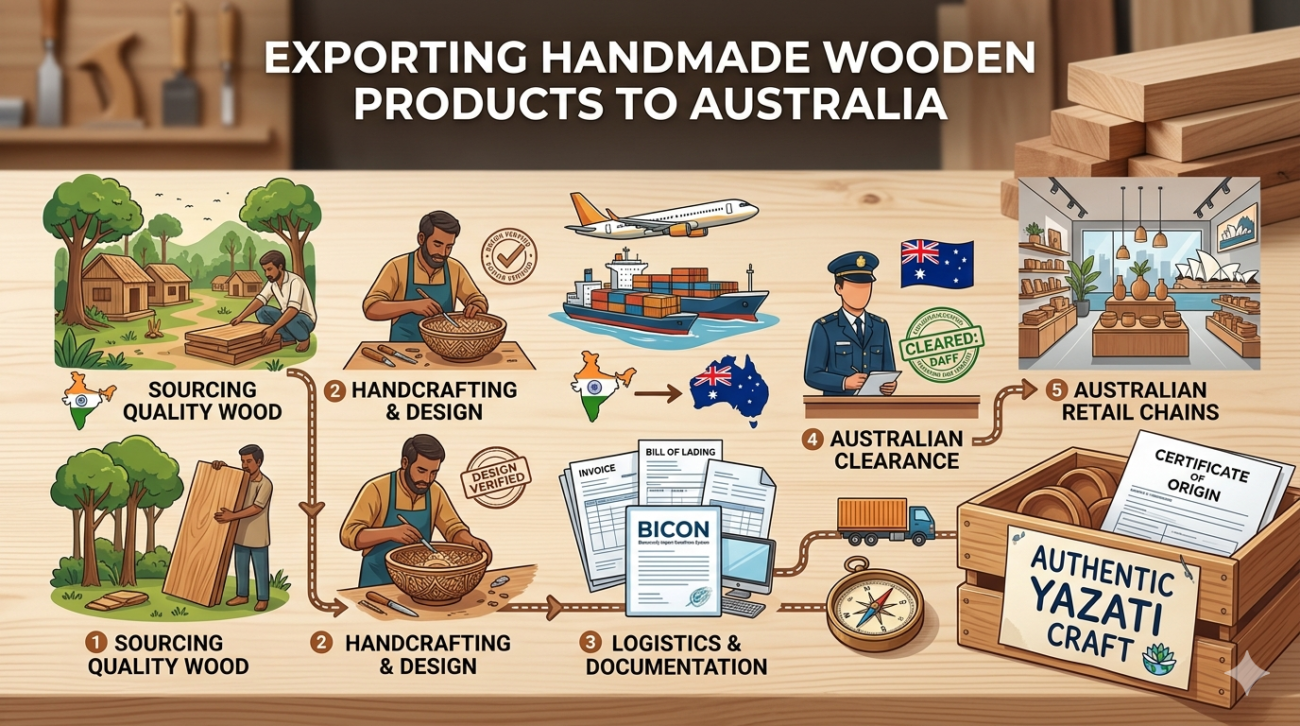
Introduction to Exporting Handmade Wooden Products to Australia
Exporting Handmade Wooden Products to Australia is becoming one of the most promising business opportunities for artisans and small manufacturers worldwide. With growing global demand for eco-friendly, handcrafted goods, Australia has emerged as a high-value market that appreciates craftsmanship, sustainability, and unique design.
Australia’s strong economy, high disposable income, and appreciation for handmade décor and furniture make it a prime destination for exporters. If you’re a craftsperson or business owner, entering this market can open doors to long-term profitability and international recognition.
Why Australia is a Lucrative Market for Wooden Handicrafts
Growth of Eco-Friendly and Handmade Products
Consumers in Australia are increasingly shifting toward sustainable and ethically sourced products. Handmade wooden goods fit perfectly into this trend. From home décor to kitchenware, Australians prefer items that are natural, durable, and environmentally friendly.
Additionally, there’s a strong movement toward reducing plastic use, which further boosts the demand for wooden alternatives.
Understanding the Australian Market
Consumer Preferences in Australia
Australian buyers value:
- High-quality craftsmanship
- Sustainable sourcing
- Unique, artisanal designs
- Functional yet aesthetic products
Popular Wooden Products in Demand
Some top-selling items include:
- Wooden kitchen utensils
- Hand-carved décor
- Furniture pieces
- Wooden toys
- Eco-friendly home accessories
Pricing Expectations
Australians are willing to pay premium prices for quality handmade goods. However, pricing must reflect:
- Quality
- Brand value
- Shipping costs
- Import duties
Legal Requirements for Exporting to Australia
Export Documentation
To successfully begin Exporting Handmade Wooden Products to Australia, you must prepare:
- Commercial invoice
- Packing list
- Bill of lading
- Certificate of origin
Customs Clearance Process
Australian customs authorities are strict and efficient. Ensure all documentation is accurate to avoid delays or penalties.
Australian Import Regulations
Australia has some of the world’s strictest import rules, especially for wooden goods.
Biosecurity Laws and Wood Treatment
The Australian Department of Agriculture, Fisheries and Forestry enforces strict biosecurity measures. Wooden products must be:
- Treated against pests
- Free from bark and contamination
- Properly declared
Failure to comply can result in shipment rejection or destruction.
Quality Standards and Certifications
ISPM 15 Compliance
If you’re using wooden packaging, it must meet ISPM 15 standards. This ensures the wood is treated to prevent pest infestations.
Sustainability Certifications
Eco-conscious buyers in Australia prefer certified products. Consider certifications like:
- FSC (Forest Stewardship Council)
- PEFC (Programme for the Endorsement of Forest Certification)
Packaging and Labeling Guidelines
Safe Packaging for Wooden Products
Proper packaging ensures your products arrive intact. Use:
- Bubble wrap
- Corrugated boxes
- Moisture-resistant materials
Labeling Requirements
Include:
- Product description
- Country of origin
- Handling instructions
Clear labeling improves trust and avoids customs issues.
Logistics and Shipping Options
Air Freight vs Sea Freight
Air freight is faster but expensive, while sea freight is cost-effective for bulk shipments.
Cost Comparison
| Shipping Method | Cost | Delivery Time |
| Air Freight | High | 3–7 days |
| Sea Freight | Low | 20–40 days |
Pricing Strategy for Export Success
Calculating Export Costs
Consider:
- Production cost
- Packaging
- Shipping
- Insurance
- Duties and taxes
Competitive Pricing in Australia
Research competitors and adjust pricing accordingly. A balance between affordability and premium quality is key.
Finding Buyers in Australia
Online Marketplaces
Platforms like:
- Amazon
- Etsy
These platforms help reach a wide audience.
Trade Shows and Exhibitions
Participate in international trade fairs to connect with wholesalers and retailers.
Marketing Your Handmade Wooden Products
Branding for International Markets
Create a strong brand identity:
- Storytelling about craftsmanship
- Eco-friendly messaging
- Attractive packaging
Digital Marketing Strategies
Use:
- Social media marketing
- SEO optimization
- Influencer collaborations
For more insights on global trade, visit
👉 https://www.trade.gov/export-solutions
Payment Methods and Risk Management
Secure Payment Options
Preferred methods include:
- Letters of credit
- PayPal
- Bank transfers
Avoiding Fraud
Always verify buyers and use secure payment channels to minimize risks.
Challenges in Exporting Handmade Wooden Products to Australia
Logistics Challenges
Shipping delays and high costs can impact profitability.
Regulatory Barriers
Strict biosecurity laws can be complex for new exporters.
Tips for Successful Exporting
Building Long-Term Relationships
Strong relationships with buyers ensure repeat business.
Continuous Product Improvement
Adapt designs based on market trends and feedback.
Future Trends in Wooden Product Exports
Sustainable Materials Demand
Eco-conscious living will continue to drive demand.
Customization Trends
Personalized wooden products are gaining popularity in Australia.
FAQs
1. Is exporting handmade wooden products to Australia profitable?
Yes, due to high demand for eco-friendly and handcrafted goods, it can be highly profitable.
2. Do wooden products need treatment before export?
Yes, they must meet strict biosecurity standards to prevent pest contamination.
3. What is the best shipping method?
Sea freight is ideal for bulk orders, while air freight suits urgent shipments.
4. Are certifications necessary?
Not always mandatory, but they significantly increase credibility and sales.
5. How can I find buyers in Australia?
Use online marketplaces, trade shows, and B2B platforms.
6. What are common challenges exporters face?
Regulations, shipping costs, and finding reliable buyers are common hurdles.
Conclusion
Exporting Handmade Wooden Products to Australia offers immense potential for artisans and businesses willing to meet quality standards and navigate regulatory requirements. With the right strategy, proper certifications, and effective marketing, you can build a successful export business and tap into one of the world’s most lucrative markets.
By focusing on sustainability, craftsmanship, and customer satisfaction, you not only grow your business but also contribute to a greener global economy.
✨ Discover Global Sourcing Excellence with Netyex ✨
Netyex is your trusted B2B sourcing partner, connecting international buyers with India’s finest manufacturers and curated product lines—from handicrafts and home décor to kitchenware, textiles, hospitality essentials, and more. With verified suppliers and end-to-end support, we make global procurement seamless, reliable, and efficient.
👉 Elevate your sourcing experience—explore Netyex today.
📦 Bulk orders & customisation | 🌍 Worldwide delivery | 🤝 Trusted by global buyers
Visit Netyex to source premium Indian products with confidence.