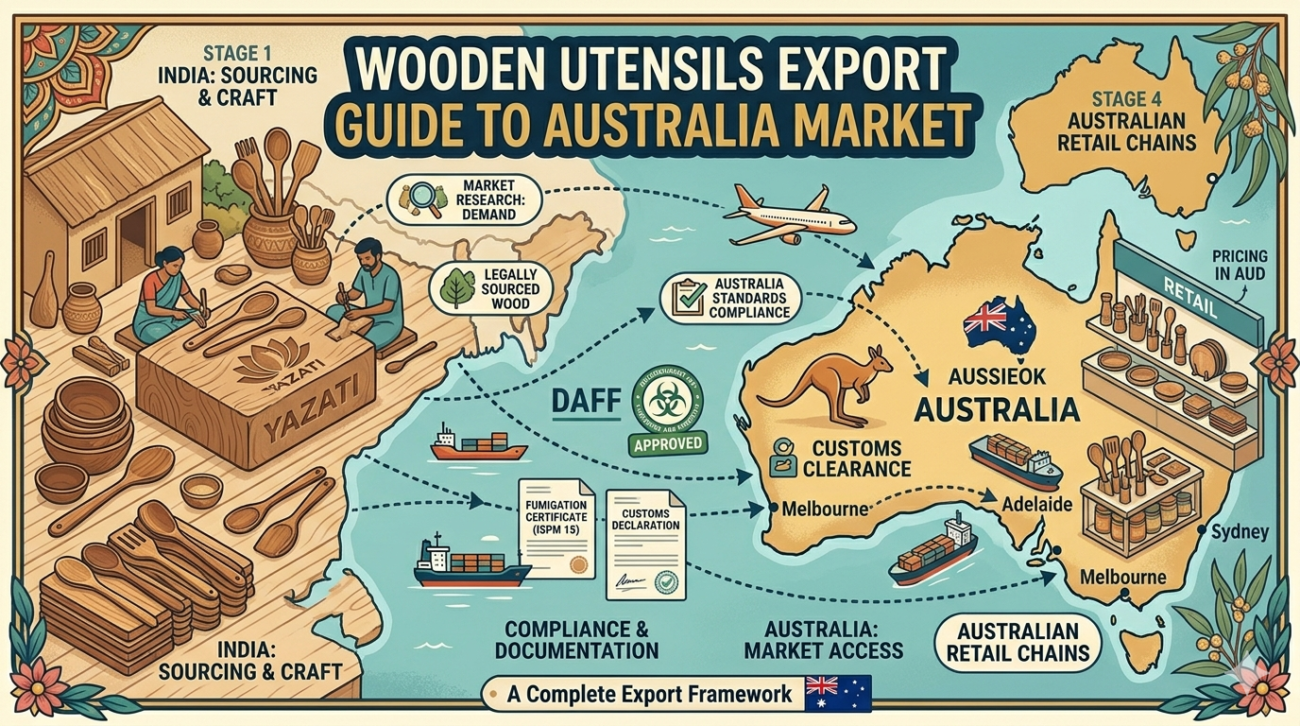
Introduction to Wooden Utensils Export
The Wooden Utensils Export Guide to Australia Market is essential for businesses aiming to expand globally with eco-friendly kitchen products. Wooden utensils are gaining traction worldwide due to sustainability concerns, and Australia is one of the fastest-growing markets for such products.
Exporting wooden utensils is not just about shipping products overseas—it involves understanding compliance, consumer behavior, pricing, and logistics. This guide simplifies everything into actionable steps.
Importance of Exporting Wooden Utensils
Wooden utensils are biodegradable, durable, and safe for cooking. With increasing restrictions on plastic, global demand is rising steadily.
Exporting allows businesses to:
- Expand revenue streams
- Build global brand recognition
- Leverage higher price margins in developed markets like Australia
Overview of the Australian Market Demand
Australia has a strong preference for sustainable and ethically sourced products. Wooden kitchen tools like spoons, spatulas, and cutting boards are widely used.
Key demand drivers include:
- Eco-conscious consumers
- Government sustainability policies
- Growth of home cooking culture
Understanding the Australian Market
To succeed, exporters must understand how Australian consumers think and shop.
Consumer Preferences in Australia
Australians prioritize:
- Sustainability
- High-quality craftsmanship
- Non-toxic materials
- Minimalist design
Sustainable Product Trends
Eco-friendly products are not just a trend—they are a lifestyle in Australia. Buyers often look for:
- FSC-certified wood
- Plastic-free packaging
- Ethical sourcing practices
Popular Wooden Kitchen Products
Top-selling items include:
- Wooden spoons
- Cutting boards
- Salad bowls
- Spatulas
- Serving trays
Legal Requirements for Export
Compliance is critical when exporting wooden utensils to Australia.
Export Documentation Checklist
You will need:
- Commercial Invoice
- Packing List
- Bill of Lading
- Certificate of Origin
- Phytosanitary Certificate
Certifications Required
Certifications ensure smooth customs clearance and build trust with buyers.
Phytosanitary Requirements
Wood products must be free from pests and contamination. Treatments like fumigation may be required.
FSC Certification Importance
Forest Stewardship Council (FSC) certification proves that wood is sourced responsibly, which is highly valued in Australia.
Australian Import Regulations
Australia has strict biosecurity laws to protect its ecosystem.
Biosecurity Laws and Compliance
The Department of Agriculture, Fisheries and Forestry enforces regulations on imported wooden goods.
Products must:
- Be pest-free
- Meet treatment standards
- Pass inspection upon arrival
Packaging and Labeling Rules
Ensure:
- Clear product labeling
- Country of origin mention
- Eco-friendly packaging compliance
Product Standards and Quality Control
Maintaining quality is essential for repeat business.
Material Selection Guidelines
Use hardwoods like:
- Teak
- Acacia
- Bamboo
These are durable and resistant to moisture.
Food Safety Standards
Products must:
- Be non-toxic
- Use food-grade finishes
- Avoid harmful chemicals
Pricing Strategy for Wooden Utensils
Pricing determines competitiveness in the Australian market.
Cost Calculation for Export
Include:
- Manufacturing cost
- Packaging cost
- Shipping charges
- Duties and taxes
Competitive Pricing Analysis
Research competitors to set optimal pricing. Premium products often perform better in Australia due to quality preference.
Shipping and Logistics
Efficient logistics ensure timely delivery.
Best Shipping Methods
- Sea Freight (cost-effective for bulk)
- Air Freight (faster but expensive)
Freight Forwarding Tips
Partner with experienced freight forwarders to handle:
- Customs clearance
- Documentation
- Delivery tracking
Finding Buyers in Australia
Connecting with the right buyers is crucial.
Online B2B Platforms
Use platforms like:
- Alibaba
- Global Sources
- TradeIndia
Trade Shows and Exhibitions
Participate in trade events to showcase products and build relationships.
Marketing Strategy for Export
A strong marketing strategy boosts visibility.
Digital Marketing Techniques
Focus on:
- SEO optimization
- Social media marketing
- Email campaigns
For more insights, visit: https://www.export.gov
Branding and Positioning
Highlight:
- Sustainability
- Handmade craftsmanship
- Premium quality
Payment Methods and Risk Management
Secure transactions are vital.
Secure Payment Options
- Letter of Credit (LC)
- PayPal
- Bank Transfer
Managing Currency Risks
Use hedging strategies to protect against currency fluctuations.
Challenges in Exporting Wooden Utensils
Exporting comes with hurdles.
Common Export Barriers
- Strict regulations
- High shipping costs
- Market competition
How to Overcome Them
- Stay compliant
- Optimize supply chain
- Build strong buyer relationships
Government Support and Schemes
Many governments offer export incentives.
Export Incentives
These may include:
- Tax benefits
- Subsidies
- Financial assistance
Assistance Programs
Export promotion councils can guide new exporters.
Case Study: Successful Exporter Strategy
A small wooden utensil manufacturer scaled globally by:
- Obtaining certifications
- Targeting eco-conscious markets
- Building strong branding
Result: 3x revenue growth in 2 years.
Future Trends in Wooden Utensils Market
The future looks promising.
Trends include:
- Increased demand for sustainable products
- Growth of online marketplaces
- Innovation in eco-friendly packaging
FAQs
1. Is exporting wooden utensils to Australia profitable?
Yes, due to high demand for sustainable products and premium pricing opportunities.
2. Do I need FSC certification?
While not mandatory, it significantly improves credibility and sales.
3. What is the biggest challenge in exporting?
Meeting strict biosecurity regulations is often the toughest part.
4. Which wood is best for export?
Teak, bamboo, and acacia are highly preferred.
5. How can I find buyers in Australia?
Use B2B platforms, trade fairs, and digital marketing.
6. What shipping method is best?
Sea freight is ideal for bulk exports due to lower costs.
Conclusion
The Wooden Utensils Export Guide to Australia Market provides a clear roadmap for businesses aiming to succeed internationally. With rising demand for eco-friendly products, exporters have a massive opportunity to grow.
By focusing on compliance, quality, pricing, and marketing, you can build a profitable export business and establish a strong presence in Australia.
✨ Discover Global Sourcing Excellence with Netyex ✨
Netyex is your trusted B2B sourcing partner, connecting international buyers with India’s finest manufacturers and curated product lines—from handicrafts and home décor to kitchenware, textiles, hospitality essentials, and more. With verified suppliers and end-to-end support, we make global procurement seamless, reliable, and efficient.
👉 Elevate your sourcing experience—explore Netyex today.
📦 Bulk orders & customisation | 🌍 Worldwide delivery | 🤝 Trusted by global buyers
Visit Netyex to source premium Indian products with confidence.