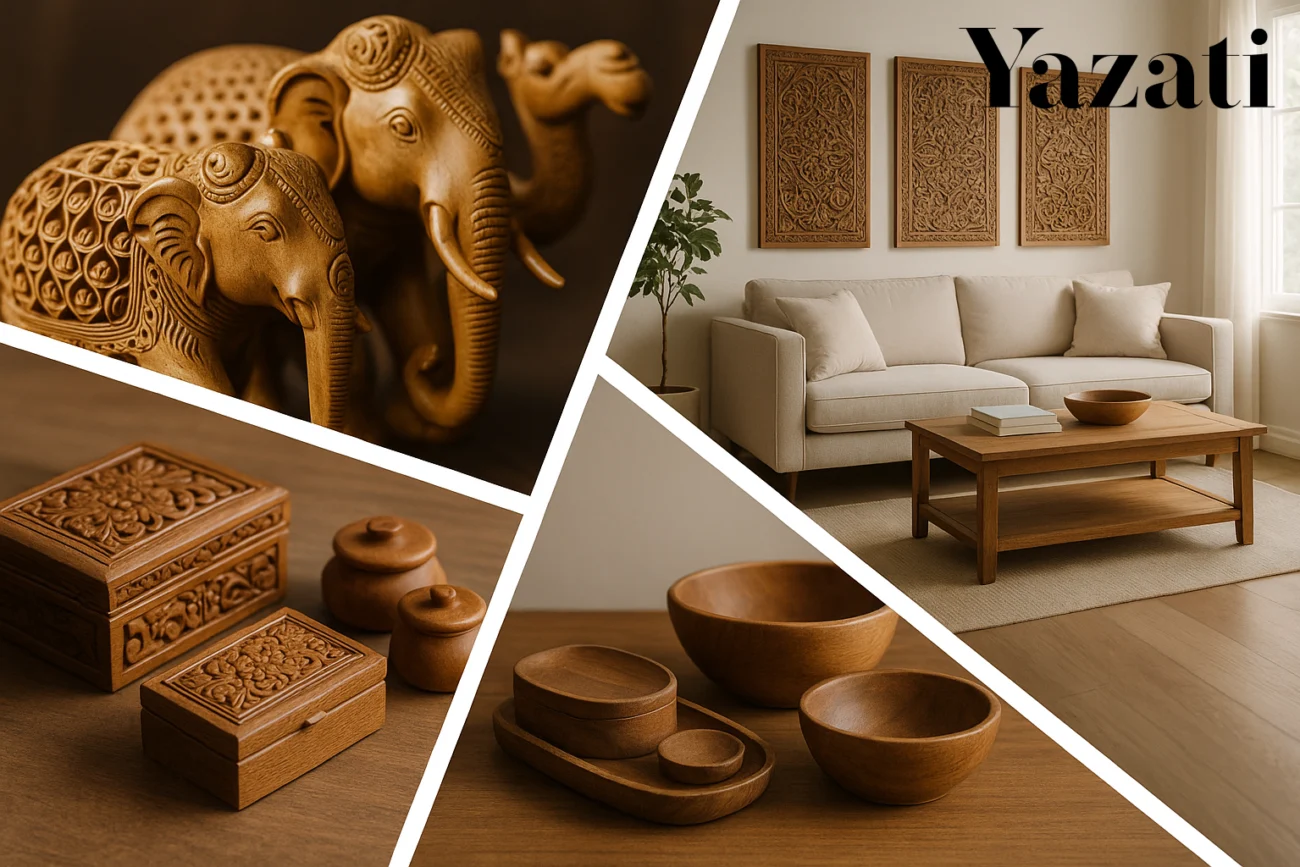
Introduction: The Timeless Allure of Indian Wooden Crafts
Indian wooden crafts have transcended borders and time, evolving from humble village workshops into globally celebrated décor masterpieces. These intricate works, carved from woods like teak, rosewood, and sandalwood, embody India’s artistic heritage and cultural essence. What began as temple carvings and royal furniture has now become a central element in global interior design, adored for its authenticity, sustainability, and timeless appeal.
In the last few decades, Indian woodcraft has found its way into luxury homes, boutique hotels, and art galleries across continents. But what makes these creations so special that they’ve captured hearts worldwide? The answer lies in their unique blend of craftsmanship, storytelling, and sustainability — qualities the modern world craves in its décor choices.
Historical Roots of Indian Wooden Craftsmanship
Ancient Traditions and Regional Styles
India’s love affair with woodcraft dates back thousands of years. From the richly carved pillars of ancient temples to the detailed furniture of Mughal courts, wood has always been a preferred medium for Indian artisans. Each region developed its own distinct style — from the bold floral motifs of Rajasthan to the delicate latticework of Kashmir.
These regional variations gave Indian woodcraft its diversity and depth. Artisans often passed down techniques through generations, ensuring that every carving carried not only artistic beauty but also ancestral wisdom.
Influence of Royal Patronage and Temple Art
The evolution of Indian wooden crafts was heavily influenced by kings and temples. Royal courts commissioned ornate furniture, doors, and thrones, while temples demanded intricate carvings of deities and mythological scenes. These early works established the precision and spiritual symbolism that continue to define Indian woodcraft today.
The Craftsmanship: Techniques That Define Indian Woodwork
Hand-Carving, Inlay Work, and Lacquer Finishes
Indian artisans employ techniques that blend precision and passion. Hand-carving remains the heart of the craft — every curve and motif is shaped by skilled hands. The inlay work of Rajasthan, featuring bone, brass, or mother-of-pearl, adds regal elegance, while lacquer finishes provide durability and shine.
Each technique reflects the artisan’s intimate relationship with their material — transforming simple wood into an artwork that tells a story.
Sustainable Materials and Natural Aesthetics
A growing global consciousness about sustainability has further amplified the appeal of Indian wooden crafts. Many artisans now rely on responsibly sourced wood, natural dyes, and eco-friendly finishes. The earthy tones, organic textures, and handcrafted imperfections are increasingly seen as marks of authenticity rather than flaws.
Iconic Regional Wooden Crafts of India
Saharanpur: The Hub of Intricate Carvings
Located in Uttar Pradesh, Saharanpur is often called the “woodcraft capital of India.” Its artisans are famous for delicate latticework, geometric patterns, and floral carvings that adorn furniture, trays, and wall panels.
Kashmir: Walnut Wood Elegance
Kashmiri woodcraft stands out for its smooth finish and rich detailing. Using walnut wood, artisans create furniture and décor items that exude warmth and sophistication.
Rajasthan: Sheesham and Sandalwood Artistry
Rajasthan’s Sheesham and sandalwood carvings are globally renowned for their intricate patterns and aromatic properties. These crafts often feature peacocks, elephants, and floral motifs that reflect the royal grandeur of the region.
South India: Rosewood and Temple-Inspired Designs
From Karnataka’s rosewood inlays to Tamil Nadu’s temple pillars, South Indian woodcraft is deeply rooted in spirituality. Many of these pieces mirror temple architecture and Dravidian design traditions.
Symbolism and Cultural Significance in Indian Woodwork
Spiritual Motifs and Folk Narratives
Wooden carvings in India often carry spiritual meanings — lotuses symbolize purity, elephants stand for prosperity, and peacocks represent beauty. Artisans incorporate these motifs to infuse deeper meaning into everyday objects.
The Art of Storytelling Through Wood
Beyond mere decoration, Indian wooden crafts serve as mediums of storytelling. Scenes from epics like the Ramayana or Mahabharata often find expression on wooden panels, turning furniture and artifacts into visual narrations of India’s cultural legacy.
Globalization and the Rise of Indian Wooden Décor
Export Trends and International Demand
In recent decades, the globalization of trade and the growing fascination with artisanal décor have catapulted Indian wooden crafts onto the global stage. From handcrafted furniture to wall hangings, these creations now grace homes and hotels from New York to Tokyo. According to India’s Export Promotion Council for Handicrafts (EPCH), wooden handicrafts consistently rank among the top exported Indian crafts, with demand surging in countries like the United States, the United Kingdom, Germany, and Australia.
This global admiration is fueled by a renewed appreciation for craftsmanship in an age dominated by mass production. Each Indian wooden artifact is unique — a product of human touch, patience, and creativity — offering what machine-made items often lack: soul.
Western Appreciation for Handcrafted Authenticity
Western consumers are increasingly turning to Indian wooden crafts for their authenticity and sustainability. With the rise of boho-chic and rustic interior design styles, these pieces fit seamlessly into modern homes that value warmth, texture, and storytelling. Global décor trends like “Wabi-sabi,” which celebrate imperfection, align perfectly with the handcrafted nature of Indian wooden art.
Luxury décor brands and interior designers now collaborate with Indian artisans to create custom furniture lines, ensuring that India’s rich tradition of woodworking continues to inspire global aesthetics.
Role of Indian Artisans in the Global Market
Empowering Rural Communities and Women Artisans
Behind every piece of Indian wooden craft lies the story of a skilled artisan. Many of these craftspeople hail from rural or tribal communities where woodworking has been a generational occupation. The globalization of their art has provided sustainable livelihoods and empowered women artisans, who are now increasingly involved in designing, finishing, and marketing products.
Artisan cooperatives and NGOs have played a vital role in ensuring fair wages and promoting equitable growth. By bringing rural craftsmanship to international audiences, these organizations are not only preserving heritage but also creating opportunities for economic independence.
Government Initiatives and Handicraft Promotion
The Indian government, through programs like “Make in India” and “ODOP (One District One Product),” has actively supported the promotion of wooden handicrafts. Export subsidies, artisan training programs, and digital marketing initiatives have boosted the visibility of Indian crafts in global trade fairs and online platforms.
This governmental support ensures that traditional artisans receive global exposure without compromising on the authenticity of their techniques.
Fusion Trends: Indian Woodcraft in Modern Interiors
Combining Tradition with Minimalist Aesthetics
Modern interior design is all about blending the old with the new. Indian wooden crafts have adapted beautifully to this philosophy. Designers are now integrating carved panels, wooden dividers, and rustic furniture into minimalist spaces, offering a perfect balance between tradition and modernity.
A Sheesham wood console table with geometric patterns or a hand-carved headboard inspired by temple art can instantly transform a contemporary setting into a cultural masterpiece.
Eco-Friendly Décor Choices and Global Sustainability Movements
With the world moving towards sustainable living, Indian wooden crafts have become symbols of ethical consumption. The use of reclaimed wood, water-based finishes, and eco-friendly packaging has enhanced their appeal to environmentally conscious buyers.
Global sustainability movements, such as “Buy Local, Think Global,” have further encouraged consumers to invest in handmade, ethically sourced products — positioning Indian wooden crafts as not just décor, but responsible art.
The Role of E-Commerce in Expanding Reach
Online Marketplaces and Social Media Influence
E-commerce has revolutionized the handicraft industry. Platforms like Etsy, Amazon Handmade, and India’s own Craftsvilla and iTokri have opened new markets for artisans who once depended solely on local exhibitions. Social media platforms such as Instagram and Pinterest now serve as digital galleries where global audiences can discover and purchase handcrafted Indian wooden art.
Through storytelling, behind-the-scenes videos, and artisan profiles, these platforms create emotional connections between consumers and creators — turning each purchase into a meaningful experience.
The Role of Global Décor Brands in Promoting Indian Crafts
Leading international décor brands have recognized the charm and craftsmanship of Indian wooden products. Collaborations with Indian workshops have resulted in limited-edition furniture lines and artisanal décor collections that showcase the beauty of handcrafted design. This symbiotic relationship ensures that while brands gain authenticity, artisans receive fair compensation and global recognition.
Challenges Faced by Indian Wooden Craft Industry
Deforestation, Counterfeiting, and Skill Decline
Despite its success, the Indian wooden craft industry faces several challenges. Deforestation and the unsustainable sourcing of wood pose significant environmental threats. Additionally, counterfeit machine-made products flooding the market often misrepresent authentic craftsmanship, undermining the value of genuine handmade goods.
The younger generation’s migration toward urban jobs also threatens the continuity of traditional skills. Without structured training and incentives, these centuries-old techniques risk fading away.
The Battle Between Machine and Handcrafted Art
In an era of automation, machine-made replicas can be produced cheaply and quickly. However, true connoisseurs of design still value handcrafted items for their uniqueness and imperfections — a reminder that human artistry can never truly be replicated by machines.
Success Stories: Indian Artisans Making Global Impact
From Local Workshops to Luxury Décor Stores
Many Indian artisans have transcended their humble beginnings to achieve global fame. For instance, wooden craftsmen from Saharanpur now export directly to international décor chains, while Kashmiri walnut wood artisans have their work displayed in luxury boutiques across Europe and the Middle East.
These success stories inspire a new generation of artisans to embrace tradition while exploring innovation.
Celebrity Endorsements and Global Recognition
From Bollywood stars to Hollywood celebrities, Indian wooden crafts have found patrons in influential circles. International designers such as Donna Karan and Ralph Lauren have incorporated Indian handcrafted pieces into their collections, further validating their global appeal.
Future of Indian Wooden Crafts in the Global Market
Sustainability, Innovation, and Cultural Revival
The future of Indian wooden crafts looks promising, with sustainability at its core. Emerging trends like customized décor, digital craftsmanship training, and eco-conscious sourcing are helping the industry evolve without losing its essence.
Cultural revival movements within India — emphasizing “Vocal for Local” — continue to boost awareness about the importance of supporting artisans. The fusion of innovation with heritage ensures that Indian wooden crafts will not only survive but thrive in the years to come.
FAQs on Indian Wooden Crafts
Q1: What makes Indian wooden crafts unique from other wooden décor styles?
Indian wooden crafts are distinguished by their intricate hand-carving, spiritual symbolism, and regional diversity. Each piece carries a story that blends art, history, and culture.
Q2: Which types of wood are most commonly used in Indian wooden crafts?
Artisans often use woods such as Sheesham, teak, rosewood, walnut, and sandalwood due to their durability, grain texture, and ease of carving.
Q3: How can I ensure the authenticity of Indian wooden crafts when buying online?
Purchase from verified sellers, certified handicraft stores, or government-recognized platforms like EPCH or Khadi India. Authentic products usually feature detailed craftsmanship and natural imperfections.
Q4: Are Indian wooden crafts environmentally sustainable?
Yes. Many artisans now use reclaimed wood, water-based finishes, and eco-friendly packaging to ensure minimal environmental impact.
Q5: How do Indian wooden crafts fit into modern home décor?
Their timeless elegance makes them versatile. They can complement bohemian, rustic, minimalist, or even Scandinavian interior designs.
Q6: Where can I learn more about Indian wooden craftsmanship?
You can explore resources from the Export Promotion Council for Handicrafts (EPCH) for authentic information and artisan stories.
Conclusion: Preserving Heritage, Inspiring the World
Indian wooden crafts are more than mere décor — they are a living legacy of artistry, patience, and culture. As they continue to adorn homes worldwide, they serve as ambassadors of India’s heritage, connecting hearts across continents.
In an increasingly mechanized world, these handcrafted treasures remind us of the irreplaceable value of human creativity. Supporting this craft is not just an act of appreciation — it’s a way of preserving the soul of a civilization that continues to inspire the world through wood and wonder.
✨ Discover Global Sourcing Excellence with Netyex ✨
Netyex is your trusted B2B sourcing partner, connecting international buyers with India’s finest manufacturers and curated product lines—from handicrafts and home décor to kitchenware, textiles, hospitality essentials, and more. With verified suppliers and end-to-end support, we make global procurement seamless, reliable, and efficient.
👉 Elevate your sourcing experience—explore Netyex today.
📦 Bulk orders & customisation | 🌍 Worldwide delivery | 🤝 Trusted by global buyers
Visit Netyex to source premium Indian products with confidence.