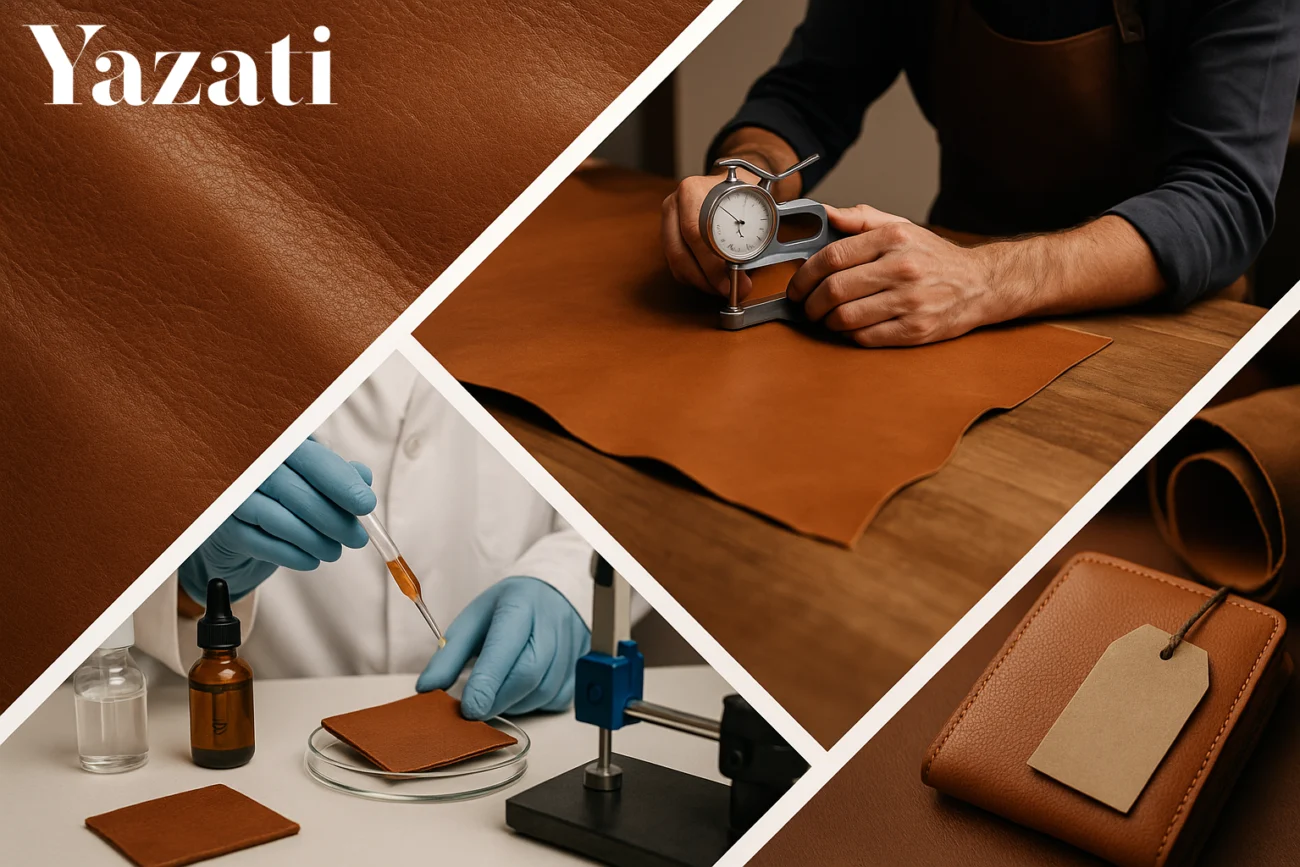
In today’s global market, EU safety standards are considered the gold standard for product safety, consumer protection, and environmental sustainability. For leather manufacturers like Yazati, ensuring compliance with these regulations isn’t just a legal obligation—it’s a reflection of quality, trust, and craftsmanship.
This article explores how Yazati’s leather products comply with EU safety standards, delving into its processes, materials, testing, and sustainability practices that align with the European Union’s rigorous requirements.
Understanding EU Leather Product Safety Regulations
The Importance of Product Safety in the European Market
The European Union places immense emphasis on consumer safety and environmental protection. Products entering the EU market must meet stringent health and safety regulations designed to minimize risks to consumers and the planet.
For leather goods, these regulations ensure that items like handbags, belts, shoes, and jackets are free from harmful chemicals, safe for skin contact, and environmentally responsible in their production.
Overview of REACH and EU Consumer Safety Directives
One of the key legal frameworks governing leather product safety is REACH (Registration, Evaluation, Authorisation, and Restriction of Chemicals). REACH restricts the use of hazardous substances such as chromium VI, azo dyes, and formaldehyde—chemicals often used in traditional tanning and dyeing processes.
Additionally, EU Directive 2001/95/EC on general product safety and Regulation (EU) 2019/1020 require brands to ensure traceability, labeling accuracy, and compliance documentation.
What Makes EU Safety Standards for Leather Products Unique
Chemical Safety: Restricted Substances Under REACH
REACH enforces strict limits on the concentration of hazardous substances used in leather production. Yazati ensures that every dye, adhesive, and finish used in its products is REACH-compliant, safeguarding both consumers and artisans from exposure to toxic chemicals.
Labeling and Traceability Requirements
EU standards mandate that each leather item carry clear labeling indicating its origin, materials, and compliance status. Yazati’s labeling system ensures full traceability—from raw hide sourcing to final assembly—building transparency and consumer trust.
Environmental Sustainability and Ethical Sourcing Rules
Compliance with EU safety standards extends beyond product testing. Manufacturers must also prove that their supply chains are ethical, their factories follow eco-friendly processes, and that workers’ rights are upheld. Yazati proudly partners with tanneries and suppliers that align with EU sustainability goals.
About Yazati: Craftsmanship Meets Compliance
Yazati’s Brand Philosophy and Ethical Values
Founded with a vision to blend timeless artistry and modern responsibility, Yazati has built its reputation on quality craftsmanship and integrity. The brand’s philosophy revolves around three principles: safety, sustainability, and sophistication.
The Company’s Commitment to European Quality Benchmarks
From sourcing to production, Yazati follows the ISO 9001:2015 quality management standards and ensures that each product meets EU’s safety benchmarks. The company regularly audits its processes to align with the latest REACH updates and environmental directives.
How Yazati Ensures Compliance with EU Leather Safety Standards
Raw Material Selection and Sourcing Transparency
Yazati only procures raw hides from certified European tanneries that comply with REACH and ISO 14001 environmental management standards. This ensures the foundation of every leather product is sustainable and safe.
Using REACH-Compliant Dyes and Finishing Chemicals
All dyes, pigments, and finishes used by Yazati are verified to be free of carcinogenic or allergenic compounds, aligning with EU’s restricted substance lists.
Tanning Processes That Meet Environmental Guidelines
Yazati’s tanning process minimizes water usage, employs biodegradable tanning agents, and controls waste discharge according to EU Directive 2010/75/EU on industrial emissions.
Internal Quality Control and Testing Protocols
Yazati understands that compliance doesn’t stop at raw material selection. To ensure each product meets or exceeds EU safety and performance requirements, the brand implements rigorous internal testing across every production phase.
Physical and Mechanical Safety Tests Conducted by Yazati
Every finished leather product undergoes physical and mechanical evaluations to ensure durability, flexibility, and resistance to wear. These tests check:
- Tensile strength and tear resistance
- Color fastness against perspiration and rubbing
- Abrasion resistance and seam strength
Such parameters ensure Yazati’s handbags, belts, and footwear not only look luxurious but also remain safe and durable for long-term use, fully aligning with EN ISO 2417 and EN ISO 11644 European standards for leather goods.
Collaboration with Certified EU Testing Laboratories
Beyond in-house tests, Yazati partners with EU-accredited laboratories for independent chemical and mechanical testing. Certified labs verify that no restricted substances (like azo dyes, chromium VI, or heavy metals) are present. This third-party validation strengthens the credibility of Yazati’s compliance claims and helps the company maintain consistent product safety certifications across Europe.
Documentation and Certifications Required by EU Law
EU compliance isn’t only about product quality—it’s also about maintaining meticulous records that prove adherence to all legal standards.
The Role of CE Marking and Safety Declarations
Although CE marking isn’t required for all leather goods, products falling under specific directives (like protective footwear or gloves) must bear this mark. Yazati ensures that such items are CE-certified, with comprehensive Declarations of Conformity (DoC) demonstrating compliance with relevant EU regulations.
Importance of Technical Files and Testing Reports
Every product line has a technical file containing testing results, supplier details, and safety certificates. These records are kept available for inspection by EU market surveillance authorities, ensuring transparency and accountability at every stage of production.
The Sustainability Aspect of Yazati’s Leather Production
Environmental stewardship lies at the heart of Yazati’s compliance philosophy. The brand believes that true luxury is sustainable luxury—where style and responsibility coexist.
Eco-Friendly Manufacturing and Waste Management
Yazati follows strict waste treatment policies in line with EU Waste Framework Directive (2008/98/EC). Solid and liquid waste from tanning and finishing operations are minimized and repurposed wherever possible.
- Wastewater is treated through closed-loop filtration systems before discharge.
- Trimmings and leather scraps are upcycled into accessories, reducing landfill waste.
This dedication to circular manufacturing not only supports EU environmental goals but also enhances Yazati’s brand image as a green innovator in the leather industry.
Ensuring Supply Chain Transparency and Traceability
To maintain full traceability, Yazati tracks every batch of raw material through a digital traceability platform. Each shipment includes verified documentation on animal origin, tanning process, and environmental compliance. This level of transparency enables Yazati to provide customers with complete visibility into the ethical journey of their leather products.
Case Study: Yazati’s Journey to Full EU Compliance
Yazati’s commitment to EU compliance didn’t happen overnight—it evolved through strategic planning, investment, and continuous improvement.
Initial Challenges Faced by Yazati
In the early stages, the company faced challenges in aligning its older tanning practices with the latest REACH regulations. Outdated chemical processes, lack of supplier certifications, and limited sustainability data were major hurdles. However, Yazati recognized the importance of adapting to EU standards to ensure long-term success and market acceptance.
Achievements After Implementing EU-Compliant Systems
After overhauling its supply chain and investing in eco-friendly technologies, Yazati achieved full compliance certification. Key outcomes included:
- Reduction of hazardous chemical usage by 92%
- Attainment of ISO 14001 environmental certification
- Increased export approvals across EU member states
- Positive feedback from major retail partners for sustainability transparency
This transformation solidified Yazati’s position as a benchmark for safety and responsibility in the European leather goods industry.
Consumer Benefits of EU-Compliant Leather Products
When consumers choose EU-compliant leather goods, they’re not only buying fashion—they’re investing in safety, trust, and longevity.
Improved Product Safety and Skin-Friendliness
Leather products compliant with EU standards are hypoallergenic, non-toxic, and safe for prolonged skin contact. Yazati’s materials are tested for potential allergens and irritants, ensuring that even sensitive users can enjoy their accessories without concern.
Trust and Brand Credibility in International Markets
EU compliance serves as a trust badge for global consumers. It signals that Yazati’s leather goods meet the highest international benchmarks, boosting buyer confidence and enabling the brand to expand its footprint in regions like North America and the Middle East.
Comparison: Yazati vs. Non-Compliant Leather Manufacturers
Why EU Compliance Sets Yazati Apart
Many leather manufacturers cut corners by using cheap chemicals or unregulated dyes. Yazati, however, invests in compliance testing, ethical sourcing, and sustainable production. This makes every Yazati product safer, more durable, and environmentally friendly than non-compliant alternatives.
Long-Term Market Advantages for Yazati
By strictly adhering to EU safety standards, Yazati not only avoids potential import bans or legal penalties but also builds a reputation for premium, ethically produced leather goods. As consumers become more conscious, brands with visible compliance credentials gain a clear market advantage.
Future Trends: The Evolution of EU Leather Safety Standards
Innovations in Sustainable Leather Production
The EU is moving toward carbon-neutral manufacturing, encouraging brands to adopt renewable energy, biodegradable tanning agents, and zero-waste production. Yazati is already experimenting with plant-based tanning extracts and biopolymer coatings to further reduce its environmental footprint.
Potential Updates to REACH and EU Eco-Regulations
The European Commission regularly updates the list of Substances of Very High Concern (SVHCs). Yazati stays proactive by conducting annual audits to ensure that none of its processes involve banned or high-risk chemicals, keeping the brand consistently ahead of regulatory changes.
FAQs: Everything You Need to Know About Yazati’s EU Compliance
1. What is REACH, and why is it important for Yazati?
REACH is an EU regulation controlling the use of chemicals in manufacturing. Yazati complies fully by ensuring that none of its materials contain harmful or restricted substances.
2. Are Yazati’s leather products safe for sensitive skin?
Yes. Yazati’s products undergo dermatological testing to confirm they are hypoallergenic and free of skin irritants.
3. How does Yazati ensure its suppliers follow EU standards?
The company only partners with suppliers that are REACH-certified and conduct regular audits to verify compliance.
4. Do Yazati’s leather goods have any EU certifications?
Yes. Depending on the product type, Yazati’s goods include CE markings, REACH compliance reports, and ISO certifications for environmental and quality management.
5. Is Yazati’s production process eco-friendly?
Absolutely. The brand minimizes waste, recycles water, and uses biodegradable tanning agents to ensure a sustainable production cycle.
6. Can consumers verify Yazati’s EU compliance claims?
Yes. Yazati provides transparent documentation and QR-code access on product tags for customers to view testing and compliance certificates.
Conclusion: Yazati’s Leather Products—A Benchmark for Safety and Quality
In an era where consumers demand accountability, Yazati stands out as a brand that blends artistry with responsibility. By fully aligning with EU safety and environmental standards, Yazati ensures its leather goods are not only beautiful but also safe, sustainable, and ethically produced.
Whether it’s through REACH-compliant materials, eco-conscious manufacturing, or transparent certification practices, Yazati continues to set the bar high for global leather craftsmanship—proving that luxury and compliance can indeed go hand in hand.
For more information on EU product regulations, visit the official European Chemicals Agency (ECHA) website.
✨ Discover Global Sourcing Excellence with Netyex ✨
Netyex is your trusted B2B sourcing partner, connecting international buyers with India’s finest manufacturers and curated product lines—from handicrafts and home décor to kitchenware, textiles, hospitality essentials, and more. With verified suppliers and end-to-end support, we make global procurement seamless, reliable, and efficient.
👉 Elevate your sourcing experience—explore Netyex today.
📦 Bulk orders & customisation | 🌍 Worldwide delivery | 🤝 Trusted by global buyers
Visit Netyex to source premium Indian products with confidence.