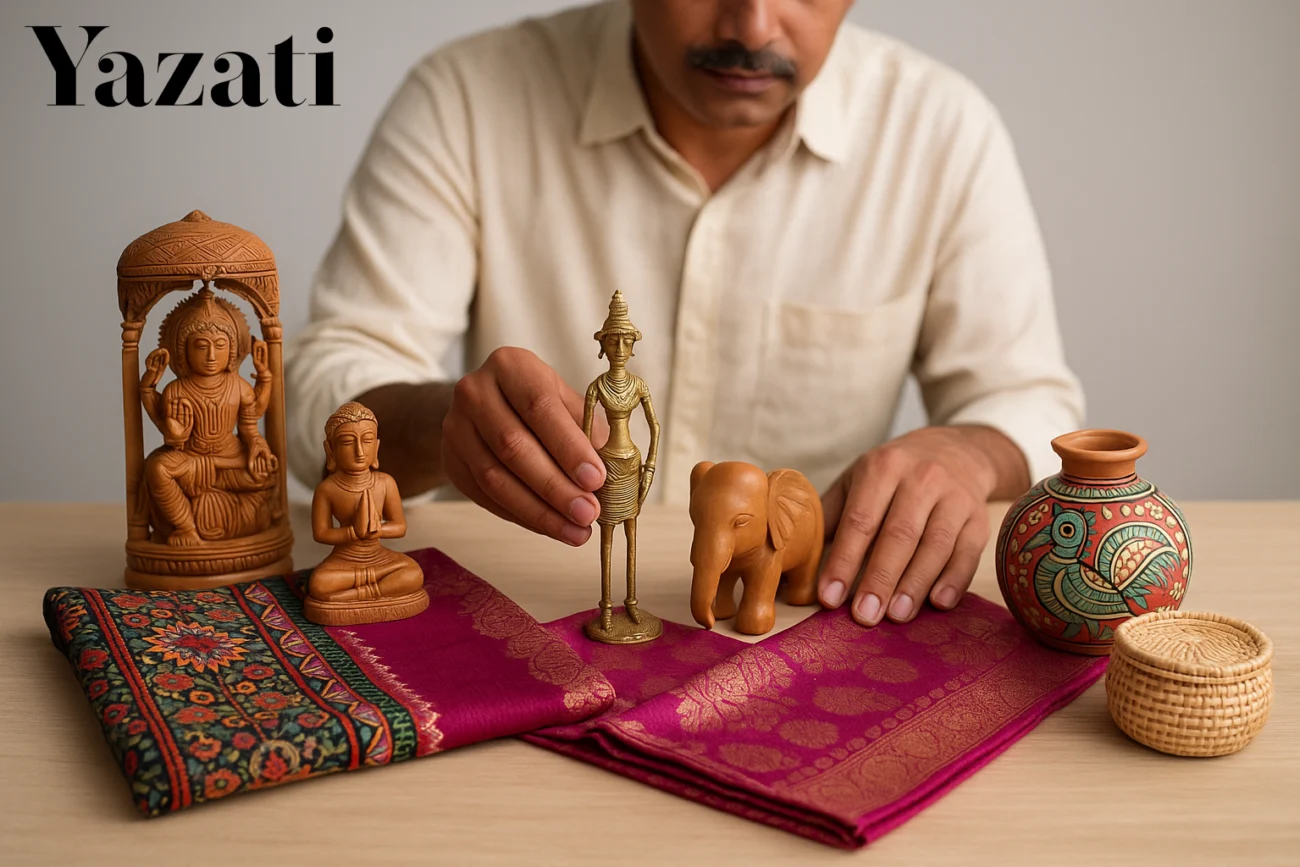
Introduction: The Global Renaissance of Indian Handicrafts
In an era dominated by machines and mass production, the world is rediscovering its love for authenticity, culture, and craftsmanship. Traditional Indian crafts, once confined to local bazaars and royal courts, are now commanding international attention. From fashion runways in Paris to art galleries in New York, Indian artisans are redefining luxury through heritage.
India’s centuries-old craftsmanship is thriving again — not just as souvenirs but as symbols of sustainability, storytelling, and spiritual connection. Let’s explore seven such remarkable crafts that have gracefully transcended borders.
The Timeless Heritage of Indian Craftsmanship
Understanding India’s Craft Legacy
India’s craft heritage is one of the oldest and most diverse in the world. Each region has its unique artistic vocabulary, shaped by local traditions, geography, and religion. From the intricate handloom weaves of Varanasi to the colorful tribal paintings of Madhubani, Indian crafts carry stories passed down through generations.
The Role of Handicrafts in India’s Cultural Identity
Handicrafts are not merely decorative; they’re an expression of identity and spirituality. Many crafts have evolved alongside temples, rituals, and royal patronage. Today, these same crafts stand as ambassadors of India’s soft power, connecting global audiences to its rich artistic soul.
1. Madhubani Painting: From Mithila to Modern Art Galleries
Origins and Symbolism of Madhubani Art
Born in the Mithila region of Bihar, Madhubani painting traces its origins to ancient epics like the Ramayana. Traditionally, women adorned their walls with depictions of gods, nature, and festivals. The art is characterized by vibrant colors, geometric patterns, and spiritual motifs.
Global Appeal and Contemporary Adaptations
Madhubani paintings have now reached international galleries and home décor markets. Modern artists have reimagined this folk art on canvas, textiles, and even apparel. UNESCO recognition and digital platforms have made it a global favorite, appealing to eco-conscious consumers and art collectors alike.
2. Pashmina Weaving: Kashmir’s Luxurious Gift to the World
The Fine Craftsmanship Behind Pashmina Shawls
Handcrafted in the scenic valleys of Kashmir, Pashmina shawls represent the pinnacle of Indian weaving excellence. Derived from the fine wool of the Changthangi goat, these shawls are renowned for their warmth, lightness, and luxurious feel.
International Demand and Sustainability Challenges
Global fashion houses like Hermès and Chanel have incorporated Kashmiri Pashmina into their collections. However, challenges like imitation products and climate change threaten the craft’s purity. Sustainable sourcing and artisan cooperatives are now helping preserve this Himalayan treasure.
3. Blue Pottery of Jaipur: The Art of Earth and Elegance
Ancient Roots of Jaipur’s Ceramic Legacy
The stunning Blue Pottery of Jaipur is famed for its turquoise glaze and Persian-inspired motifs. Introduced by Mughal artisans, it became a royal favorite under Jaipur’s rulers. Made using quartz instead of clay, its non-clay composition makes it unique among global ceramics.
Modern-Day Export Success and Design Innovation
Today, blue pottery is making waves in international décor markets. Designers are combining traditional floral motifs with contemporary designs to suit modern tastes. Export demand, particularly from Europe and the Middle East, has rejuvenated this ancient craft.
4. Channapatna Toys: Sustainable Wooden Wonders from Karnataka
Craftsmanship and Eco-Friendly Appeal
Often called “India’s Toy Town,” Channapatna in Karnataka is home to colorful, handcrafted wooden toys. These toys are made using non-toxic vegetable dyes and soft ivory wood, making them safe for children and environmentally friendly.
Global Market Recognition and UNICEF Promotion
With growing concerns about plastic pollution, Channapatna toys have gained global attention. They’ve been endorsed by UNICEF and sold in international fair-trade outlets, turning them into symbols of ethical craftsmanship.
5. Banarasi Silk Weaving: Elegance Woven in Gold and Silver
Historical Background of Banarasi Textiles
The Banarasi silk saree is synonymous with opulence. Originating from Varanasi, this textile art form is known for its intricate brocade work with gold and silver threads — once woven exclusively for royalty.
International Fashion Industry Embrace
From Bollywood brides to international celebrities, Banarasi weaves have become a staple of global fashion. Top designers and couture brands are collaborating with Indian weavers to incorporate these traditional fabrics into modern luxury designs.
6. Warli Art: Tribal Simplicity Winning Global Hearts
The Aesthetic and Spiritual Essence of Warli Paintings
The Warli tribe of Maharashtra uses simple geometric shapes to depict daily life and rituals. Despite its minimalism, Warli art conveys profound spiritual meaning — symbolizing harmony between humans and nature.
How Warli Art Is Being Reimagined Internationally
Global brands have embraced Warli motifs in home décor, apparel, and even digital design. The art form has appeared on international fashion runways, making it one of India’s most recognized tribal arts worldwide.
7. Terracotta Pottery: Ancient Clay Art in a Modern World
Traditional Uses and Regional Significance
Terracotta, literally meaning “baked earth,” has been part of Indian civilization since the Indus Valley era. Each region, from West Bengal to Tamil Nadu, has developed its own terracotta traditions — from idols to kitchenware.
International Revival and Sustainable Craft Trends
With the world turning toward eco-friendly alternatives, terracotta has found new admirers. International designers are showcasing terracotta décor in sustainable architecture and lifestyle products, giving this humble craft a modern identity.
The Economic Impact of Indian Handicrafts Abroad
Export Statistics and Market Growth
India’s handicraft exports exceeded $4 billion in 2025, with major markets in the US, Europe, and the Middle East. Textiles, woodcraft, and art metalware are among the top-performing categories.
E-commerce and Global Visibility of Local Artisans
Platforms like Etsy, Amazon Handmade, and India’s own “Tribes India” have enabled artisans to sell directly to global buyers. This digital empowerment has cut out middlemen and brought economic independence to rural craftsmen.
Challenges and Opportunities in Preserving Traditional Crafts
Threats from Mass Production and Cultural Dilution
The rise of machine-made replicas and industrial designs poses a real threat to authenticity. Younger generations, seeking faster income, often move away from their ancestral crafts.
Government and NGO Efforts for Revival
Programs like “Make in India,” “ODOP (One District, One Product),” and UNESCO’s Intangible Cultural Heritage listings have played crucial roles in promoting these crafts globally. NGOs are also training artisans in business management and digital marketing to ensure sustainability.
FAQs About Traditional Indian Crafts Thriving Internationally
1. Which Indian handicrafts are most popular internationally?
Madhubani paintings, Pashmina shawls, Banarasi silks, Blue Pottery, and Channapatna toys are among the top exports.
2. Why are traditional Indian crafts gaining popularity abroad?
Their uniqueness, eco-friendliness, and rich cultural stories attract consumers seeking authenticity and sustainability.
3. How does the Indian government support artisans?
Through initiatives like the Handloom Mark, GI tagging, and export subsidies, the government helps artisans reach global markets.
4. What role does e-commerce play in promoting Indian crafts?
Online platforms enable artisans to sell directly to international customers, expanding reach without relying on intermediaries.
5. Are Indian crafts sustainable?
Yes, most traditional crafts use natural materials, hand-based production, and zero-waste methods — aligning with global sustainability goals.
6. How can consumers support Indian crafts?
By purchasing authentic handmade products, sharing artisan stories, and promoting ethical fashion and décor choices.
Conclusion: The World’s Love Affair with Indian Craftsmanship
The story of 7 traditional Indian crafts thriving internationally is not just about art — it’s about resilience, identity, and global recognition. As modern markets embrace sustainability and authenticity, India’s handmade heritage stands tall, bridging the past and the future with threads of creativity and culture.
Every Madhubani brushstroke, every Pashmina weave, and every Banarasi motif carries not just design — but history, heart, and hope.
Indian craftsmanship is no longer a hidden gem — it’s a global treasure.
✨ Discover Global Sourcing Excellence with Netyex ✨
Netyex is your trusted B2B sourcing partner, connecting international buyers with India’s finest manufacturers and curated product lines—from handicrafts and home décor to kitchenware, textiles, hospitality essentials, and more. With verified suppliers and end-to-end support, we make global procurement seamless, reliable, and efficient.
👉 Elevate your sourcing experience—explore Netyex today.
📦 Bulk orders & customisation | 🌍 Worldwide delivery | 🤝 Trusted by global buyers
Visit Netyex to source premium Indian products with confidence.