How Indian Crafts Are Influencing Scandinavian Interior Design (2026 Guide)
In recent years, interior design has evolved into a global dialogue. One of the most fascinating conversations happening today is between Indian craftsmanship and Scandinavian design — two seemingly different worlds that are finding an unexpected yet beautiful harmony.
This fusion, often referred to as “Indo-Scandi” style, combines the warmth, color, and cultural richness of Indian artistry with the simplicity, serenity, and minimalism of Nordic design. The result? Spaces that are both calming and character-rich — serene yet soulful.
Introduction – The Unexpected Harmony Between India and Scandinavia
At first glance, the contrast is stark. Scandinavian interiors are known for their pale palettes, sleek lines, and functional furniture, while Indian design bursts with colors, intricate patterns, and handcrafted details. But beneath the surface, both share a profound respect for nature, authenticity, and craftsmanship.
In 2026, as global design becomes more inclusive, we’re witnessing a growing interest in cultural fusion aesthetics, where designers are merging heritage with modernity — and the Indo-Scandi movement is at the forefront.
The Global Fusion of Design Cultures
The rise of social media, global trade, and sustainable living movements has led to a cross-pollination of design philosophies. People no longer want cookie-cutter interiors; they crave spaces with stories.
From Minimalism to Maximalism – A Balanced Aesthetic
Scandinavian design traditionally celebrates “less is more,” while Indian interiors embrace “more is beautiful.” The Indo-Scandi trend finds a middle ground — maintaining visual calm while allowing tactile richness through handcrafted accents.
Sustainability as a Shared Core Value
Both traditions prioritize sustainable materials Nordic design favors natural wood and linen, while Indian crafts rely on bamboo, jute, clay, and handloom fabrics. Together, they create a planet-friendly aesthetic that feels both ethical and elegant.
Understanding Scandinavian Interior Design
To appreciate how Indian elements fit in, we must first understand what makes Scandinavian design timeless.
Simplicity and Functionality at Its Best
Rooted in the Danish concept of hygge (coziness), Scandinavian design emphasizes comfort, light, and purpose. Furniture serves multiple functions, and clutter is replaced with calm.
Neutral Tones and Natural Materials
Soft whites, muted greys, and earthy tones dominate Nordic homes. Oak, birch, and ash wood provide warmth without overwhelming the senses.
The Rich Legacy of Indian Crafts
India’s artistic legacy spans millennia, with each region producing its own distinctive craft forms.
Traditional Indian Handicrafts and Art Forms
From Rajasthani block printing to Kashmiri papier-mâché, Dhokra metalwork, and Madhubani paintings, Indian crafts are defined by detail and heritage. These crafts reflect not just aesthetics, but community identity and ancestral wisdom.
Artisanship and Cultural Storytelling
Indian artisans infuse meaning into every piece — a woven rug tells a story of local flora; a carved wooden panel carries folklore. When placed in Scandinavian settings, these pieces inject soul and history into otherwise minimalist rooms.
Where East Meets North – Blending Two Worlds
The Indo-Scandi aesthetic thrives on balance. It’s not about mixing everything — it’s about curating the right contrasts.
Warm Textures Meet Clean Lines
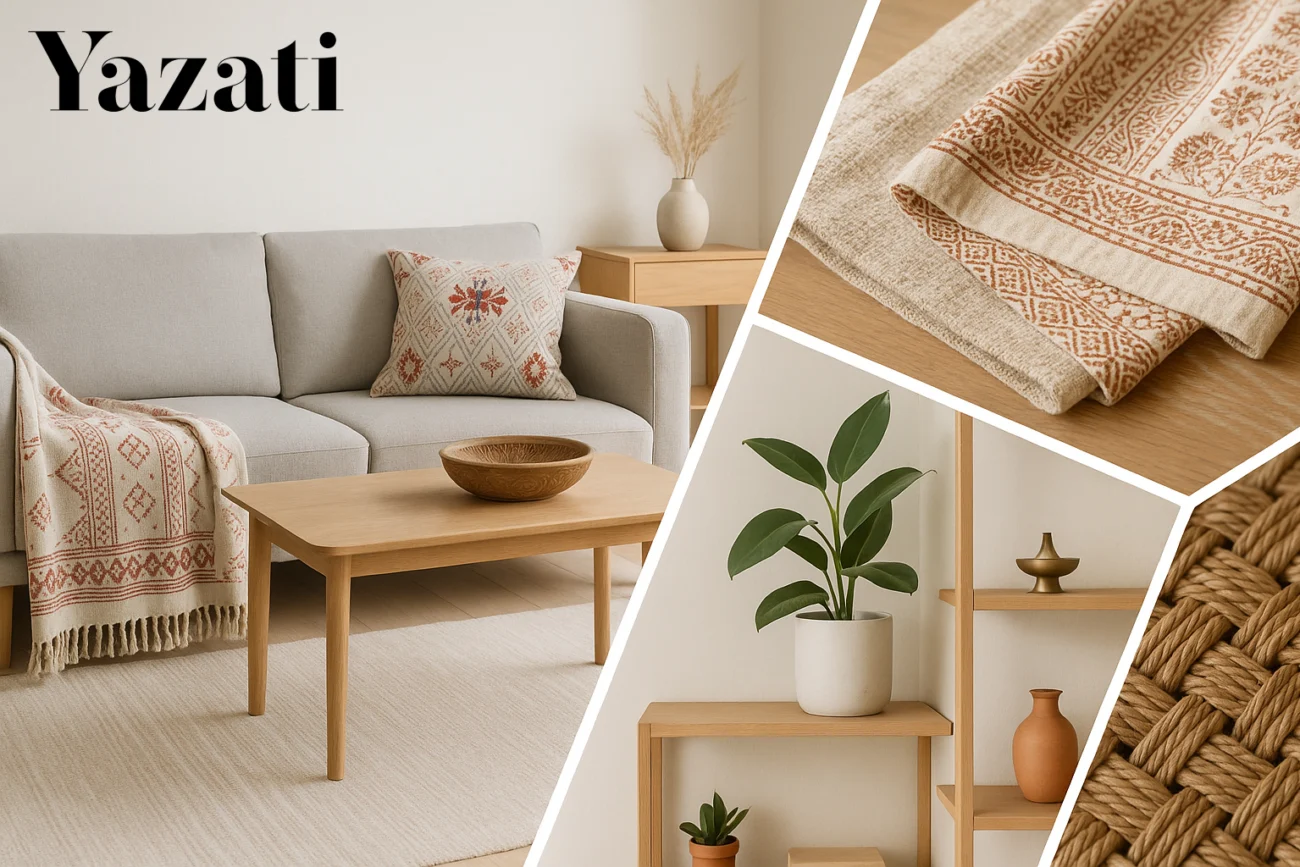
Handwoven Indian textiles, when draped over sleek Nordic furniture, introduce depth and tactile warmth. Linen sofas paired with kantha throws or cotton dhurries bring comfort without clutter.
Bright Accents in Minimalist Spaces
A single Indian block-printed cushion or brass lamp can serve as a focal point in a neutral Scandinavian room, maintaining calmness while adding intrigue.
Popular Indian Elements in Scandinavian Homes
Designers around the world are creatively blending Indian craftsmanship with Scandinavian restraint.
Handwoven Rugs and Dhurries
Lightweight, geometric dhurries (flatwoven rugs) perfectly complement wooden Scandinavian floors. Their earthy tones and subtle patterns make them ideal for Nordic minimalism.
Terracotta and Brass Accents
Indian terracotta planters and brass trays introduce a natural glow and rustic warmth. When paired with pale Nordic interiors, they create visual balance — soft yet striking.
Cane, Bamboo, and Rattan Furniture
These materials, long used in Indian households, are now beloved by Scandinavian designers for their sustainability and light aesthetic. Rattan chairs, bamboo lamps, and cane cabinets are increasingly common in Nordic interiors.
Designers Championing Indo-Scandinavian Fusion
This movement isn’t theoretical — it’s being shaped by real designers across the globe.
Indian Designers Inspired by Nordic Minimalism
Indian studios like Studio Wodehouse and Anagram Architects have embraced the Nordic philosophy of decluttering while preserving local craftsmanship.
Scandinavian Designers Using Indian Techniques
Nordic designers like Tine K Home and Ferm Living have collaborated with Indian artisans for handwoven textiles and handmade ceramics, creating globally loved pieces.
Why the Blend Works – Psychological and Aesthetic Reasons
Humans crave spaces that feel both peaceful and personal. Indo-Scandi interiors satisfy this dual desire.
Comfort, Mindfulness, and Cultural Depth
Scandinavian calmness encourages mindfulness, while Indian textures connect us to human touch and storytelling — creating interiors that soothe and inspire.
How to Incorporate Indian Crafts into Scandinavian Interiors
You don’t need a professional designer to embrace this trend. Here’s how to do it right.
Step-by-Step Styling Tips
- Start Neutral Keep walls, floors, and large furniture pieces light and simple.
- Add Craft Accents Introduce Indian cushions, throws, or pottery as focal points.
- Mix Textures, Not Colors Combine jute, wool, and bamboo for depth without visual chaos.
- Use Handcrafted Lighting Terracotta or brass lamps add a warm glow.
- Balance is Key For every vibrant element, pair it with a muted one.
Do’s and Don’ts for Perfect Balance
- ✅ Do choose handcrafted over mass-produced pieces.
- ✅ Do use natural fibers and materials.
- ❌ Don’t overload with color or pattern.
- ❌ Don’t mix too many craft styles in one room.
The Future of Indo-Scandinavian Design
As sustainability and authenticity dominate modern interiors, the Indo-Scandi aesthetic is set to grow even further.
Global Demand for Handcrafted Minimalism
The world is moving toward “warm minimalism” — spaces that are eco-friendly, minimalist, yet emotionally rich. Expect more global collaborations between Indian artisans and Nordic design houses.
FAQs About Indian Crafts and Scandinavian Design Fusion
Q1. What makes Indian crafts suitable for Scandinavian interiors?
Indian crafts add warmth, authenticity, and handmade charm, balancing the sleek minimalism of Scandinavian spaces.
Q2. Are Indian textiles too bold for Nordic homes?
Not at all — when used sparingly (like throws or cushions), they add just the right pop of character.
Q3. Which Indian materials work best in Scandinavian design?
Cane, jute, brass, terracotta, and handloom cotton fit perfectly with Nordic wood and linen.
Q4. Can this style fit small apartments?
Absolutely. Indo-Scandi design focuses on simplicity and natural elements, ideal for compact urban homes.
Q5. How can I shop for authentic Indian crafts?
Look for certified artisan cooperatives, ethical online stores, or Indian government emporiums to ensure fair trade.
Q6. What colors best represent this fusion?
Earthy neutrals — beige, sand, clay, and muted gold — paired with soft whites and natural wood tones.
Conclusion – A Cross-Cultural Symphony in Design
The dialogue between Indian craftsmanship and Scandinavian simplicity is more than a trend — it’s a celebration of cultural harmony. It bridges continents, uniting storytelling with stillness, color with calm, and heritage with modernity.
In embracing this fusion, we’re reminded that beauty often lies in contrasts — and that design, at its best, connects us all.
✨ Discover Global Sourcing Excellence with Netyex ✨
Netyex is your trusted B2B sourcing partner, connecting international buyers with India’s finest manufacturers and curated product lines—from handicrafts and home décor to kitchenware, textiles, hospitality essentials, and more. With verified suppliers and end-to-end support, we make global procurement seamless, reliable, and efficient.
👉 Elevate your sourcing experience—explore Netyex today.
📦 Bulk orders & customisation | 🌍 Worldwide delivery | 🤝 Trusted by global buyers
Visit Netyex to source premium Indian products with confidence.