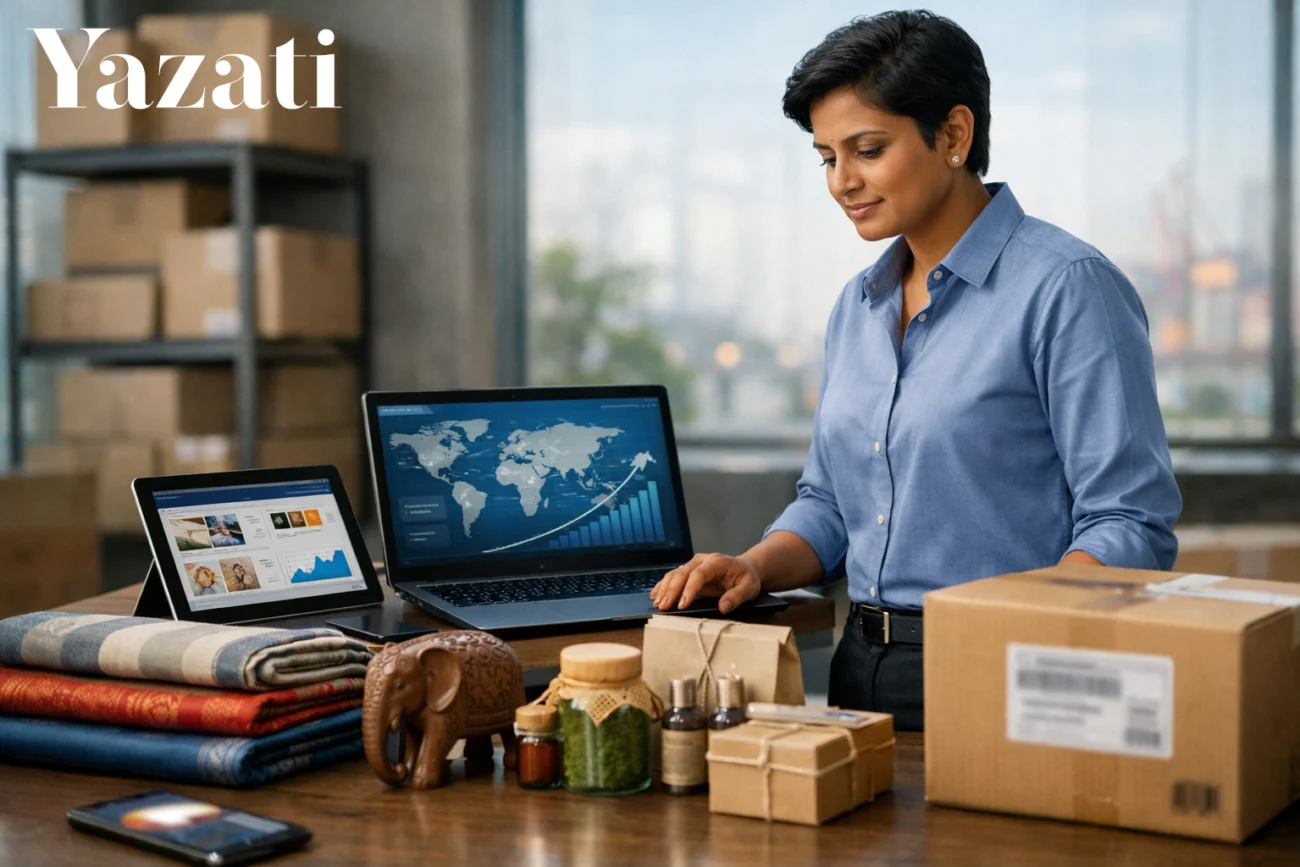
The Power of Indian Exports in the E-Commerce Era
Global trade is no longer driven only by large distributors and traditional wholesale networks. Today, digital platforms allow brands, retailers, and even small sellers to reach customers across borders directly. In this transformation, The Power of Indian Exports in the E-Commerce Era has become increasingly evident.
India has evolved from being primarily a backend manufacturing hub into a dynamic, e-commerce-enabled export powerhouse. Its combination of scale, product diversity, craftsmanship, and adaptability makes it uniquely suited for the demands of digital trade.
Introduction: A New Chapter for Global Trade
The Rise of Cross-Border E-Commerce
Cross-border e-commerce has lowered entry barriers for global selling. Businesses can now launch international products without building physical distribution networks in every country. This shift has increased demand for flexible, reliable export partners.
Why India Is Uniquely Positioned
India offers a rare mix of traditional manufacturing skills and modern export capability. From handcrafted goods to scalable consumer products, Indian exporters can support both niche online brands and high-volume e-commerce operations.
Understanding the E-Commerce Export Model
Traditional Exporting vs E-Commerce Exports
Traditional exports focused on large volumes, long lead times, and limited product variation. E-commerce exports require:
- Smaller and more frequent orders
- Faster turnaround
- Higher SKU variety
- Retail-ready quality
Indian exporters have increasingly adapted to this model.
How Digital Marketplaces Changed Buyer Behavior
Online platforms reward speed, consistency, and differentiation. Buyers expect rapid product refreshes and unique offerings—driving demand for agile sourcing partners.
The Power of Indian Exports in the E-Commerce Era
Scale, Diversity, and Flexibility
India’s manufacturing ecosystem spans millions of producers across categories. This diversity allows exporters to support:
- Broad product catalogs
- Frequent launches
- Seasonal experimentation
From Local Producers to Global Sellers
Digital trade enables Indian manufacturers and artisans to reach global consumers without intermediaries, increasing value capture and market responsiveness.
India’s Strength in Multi-Category E-Commerce Exports
Handicrafts, Décor, and Lifestyle Products
Indian handicrafts and décor products perform especially well online due to their uniqueness and storytelling appeal. These items differentiate e-commerce brands in crowded marketplaces.
Apparel, Accessories, and Home Goods
India’s strength in textiles, accessories, and home products supports scalable private-label and branded e-commerce programs.
Cost Competitiveness in a Digital-First World
Manufacturing Value vs Selling Price
Competitive production costs allow online sellers to maintain healthy margins even after platform fees, shipping, and returns.
Supporting Competitive Online Pricing
Indian exports enable e-commerce brands to price competitively without sacrificing quality—a key factor in online conversion rates.
Customization and Private Label Opportunities
Made-for-Platform Product Development
E-commerce thrives on differentiation. Indian exporters support customization in design, packaging, and branding, enabling products tailored to specific platforms or audiences.
Supporting Brand Differentiation Online
Private label and branded programs help sellers avoid direct price competition and build long-term brand value.
Speed, Agility, and Small-Batch Capability
Lower Minimums for Online Sellers
Unlike traditional mass production, many Indian suppliers support smaller minimum order quantities—ideal for testing new products online.
Faster Trend Response
This flexibility allows e-commerce sellers to respond quickly to trends, reviews, and customer feedback.
Logistics Evolution Supporting E-Commerce Exports
Parcel, Bulk, and Hybrid Shipping Models
Indian exporters increasingly support hybrid logistics—combining bulk exports to fulfillment centers with parcel-level distribution.
Role of Consolidation in E-Commerce Fulfillment
Multi-product consolidation reduces shipping costs and improves inventory efficiency for online sellers.
Compliance and Trust in Digital Trade
Meeting Platform and Market Regulations
E-commerce platforms enforce strict quality, safety, and labeling rules. Indian exporters have adapted processes to meet these expectations.
Building Buyer Confidence Across Borders
Consistent quality and transparent communication build trust—critical for maintaining ratings and reviews online.
Technology Adoption by Indian Exporters
Digital Documentation and Tracking
Digital tools improve order visibility, reduce errors, and support real-time coordination across borders.
Data-Driven Export Decisions
Analytics help exporters and buyers optimize pricing, lead times, and product selection.
Sustainability and Ethical Appeal in Online Markets
Storytelling Through Craft and Origin
Consumers increasingly value products with cultural and ethical stories. Indian exports naturally align with this trend.
Aligning With Conscious Consumer Demand
Responsible sourcing, traditional craftsmanship, and sustainable materials strengthen brand appeal online.
Challenges Indian Exporters Face in E-Commerce
Consistency, Returns, and Reviews
E-commerce exposes quality issues quickly. Maintaining consistency across batches is essential to avoid negative reviews.
Managing Global Expectations
Different markets have different expectations for packaging, finish, and delivery speed. Exporters must adapt continuously.
Opportunities for Global Buyers and Sellers
Accessing India’s Export Ecosystem
Buyers who understand India’s export landscape gain access to unmatched product diversity and scalability.
Scaling E-Commerce Brands With Indian Supply
From startups to established brands, Indian exports support scalable growth across multiple online channels.
The Future of Indian Exports in E-Commerce
From Cost Advantage to Strategic Value
India is moving beyond being a low-cost source to becoming a strategic partner in global digital commerce.
Long-Term Global Impact
As e-commerce continues to grow, Indian exports will play an even greater role in shaping global product availability and diversity.
FAQs on Indian Exports and E-Commerce
1. Why are Indian products popular in e-commerce?
They offer uniqueness, customization, and strong value.
2. Can small online sellers source from India?
Yes. Many exporters support small batches and flexible programs.
3. Are Indian exporters adapting to e-commerce needs?
Yes. Processes increasingly support speed, customization, and compliance.
4. Is quality a challenge in e-commerce exports?
It can be, but structured quality control reduces risk.
5. Do Indian exports support private labels?
Yes. Private-label and branding are major strengths.
6. Will Indian exports remain competitive long-term?
Yes, due to scale, adaptability, and evolving capabilities.
Conclusion: India’s Digital Export Advantage
The Power of Indian Exports in the E-Commerce Era lies in adaptability. As global trade becomes more digital, faster, and more fragmented, India’s export ecosystem offers exactly what modern e-commerce demands—diversity, flexibility, customization, and value.
For global buyers and sellers, India is no longer just a sourcing destination. It is a strategic partner in building competitive, scalable, and resilient e-commerce businesses. As digital trade accelerates, the influence of Indian exports will only continue to grow.
✨ Discover Global Sourcing Excellence with Netyex ✨
Netyex is your trusted B2B sourcing partner, connecting international buyers with India’s finest manufacturers and curated product lines—from handicrafts and home décor to kitchenware, textiles, hospitality essentials, and more. With verified suppliers and end-to-end support, we make global procurement seamless, reliable, and efficient.
👉 Elevate your sourcing experience—explore Netyex today.
📦 Bulk orders & customisation | 🌍 Worldwide delivery | 🤝 Trusted by global buyers
Visit Netyex to source premium Indian products with confidence.