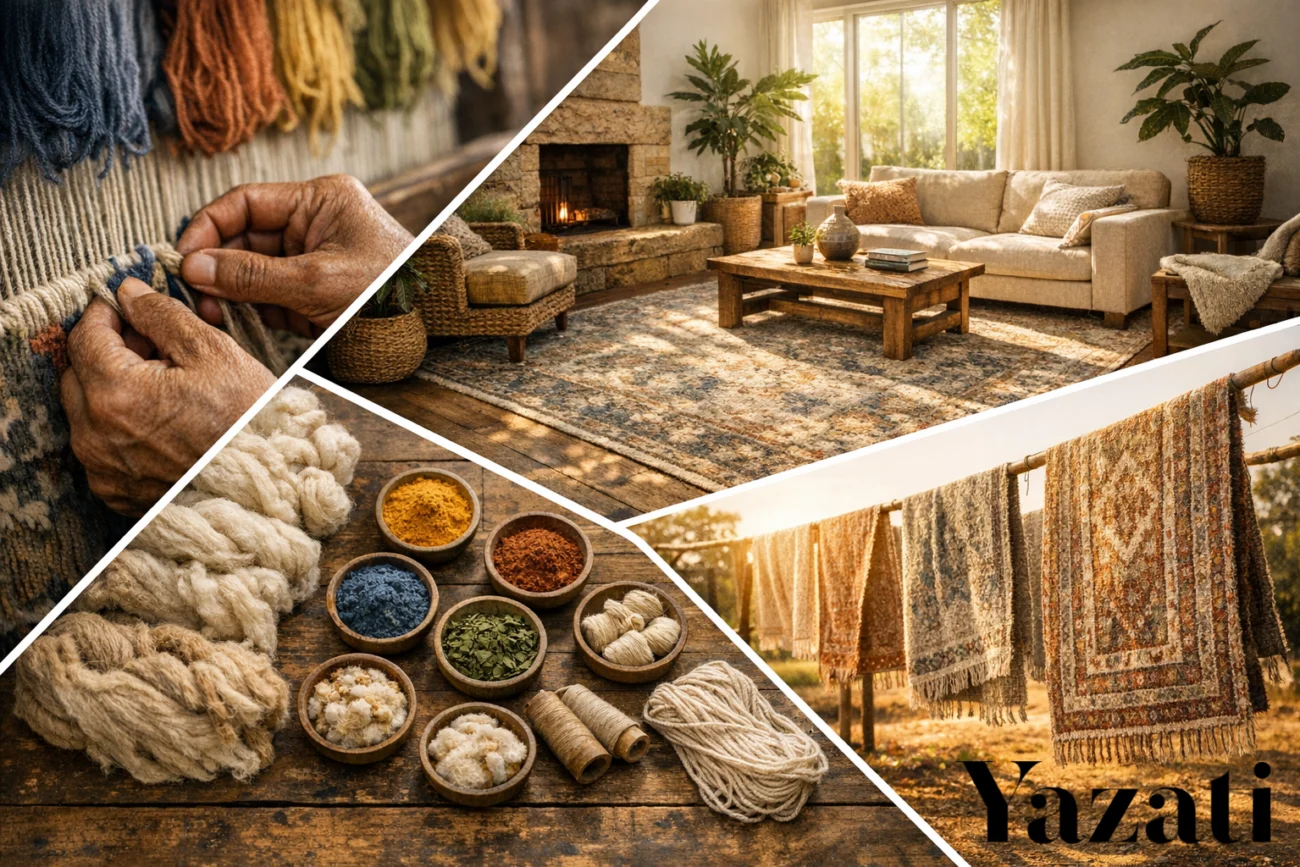
Introduction to Sustainable Flooring Choices
Sustainability has become a central focus in modern interior design. Homeowners, architects, and hospitality brands are increasingly choosing materials that minimize environmental impact while maintaining aesthetic appeal. Flooring, in particular, plays a significant role in sustainable interiors.
Understanding The Eco-Friendly Advantage of Indian Hand-Knotted Rugs reveals why these traditional pieces are gaining global recognition as environmentally responsible décor solutions. Beyond beauty and craftsmanship, these rugs offer long-term ecological benefits that align with green living principles.
Let’s explore why they stand out in the sustainability movement.
Understanding Hand-Knotted Rug Craftsmanship
To appreciate their eco-friendly value, it’s important to understand how they are made.
What Makes a Rug Hand-Knotted?
Hand-knotted rugs are created by individually tying knots onto a loom by hand. Each knot forms part of the rug’s pattern and texture. This labor-intensive method:
- Requires no heavy machinery
- Relies primarily on manual skill
- Produces unique, durable pieces
The absence of industrial automation reduces environmental strain.
The Traditional Weaving Process in India
India has centuries-old rug weaving traditions. Skilled artisans use wooden looms and manual tools to craft intricate designs. Production relies heavily on human expertise rather than energy-intensive equipment.
This traditional approach naturally reduces carbon emissions compared to factory-made rugs.
The Eco-Friendly Advantage of Indian Hand-Knotted Rugs Explained
Now let’s examine their environmental strengths.
Natural Fiber Materials
Indian hand-knotted rugs are typically made from:
- Wool
- Cotton
- Silk
These renewable materials are biodegradable and environmentally friendly.
Low Energy Production Process
Unlike machine-made rugs that depend on electricity-driven equipment, hand-knotting requires minimal energy input. Most of the work is done manually, significantly lowering production energy consumption.
Lower energy usage means a smaller carbon footprint.
Minimal Chemical Usage
Traditional dyeing processes often use natural or low-impact dyes. Reduced reliance on harsh chemicals:
- Protects water systems
- Reduces soil contamination
- Improves indoor air quality
This makes the rugs safer for homes and commercial spaces.
Sustainable Raw Materials Used in Indian Rugs
Material sourcing plays a major role in sustainability.
Organic Wool
Wool is:
- Renewable
- Naturally insulating
- Biodegradable
When sourced responsibly, it offers long-term environmental benefits.
Natural Cotton Foundations
Cotton used in rug foundations is often derived from renewable crops. Natural cotton reduces dependency on synthetic materials.
Plant-Based and Low-Impact Dyes
Many artisans use dyes derived from:
- Plants
- Minerals
- Natural pigments
These dyes reduce harmful runoff and environmental damage.
Reduced Carbon Footprint Compared to Machine-Made Rugs
Production methods significantly impact environmental performance.
Energy Consumption Differences
Machine-made rugs require:
- High-powered looms
- Continuous electricity
- Synthetic fiber processing
Hand-knotted rugs rely on manual labor, dramatically lowering energy demands.
Longevity and Lifecycle Benefits
Indian hand-knotted rugs are built to last decades. Their durability reduces the need for frequent replacements, which in turn:
- Decreases manufacturing demand
- Minimizes landfill waste
- Reduces overall resource consumption
Longevity enhances sustainability.
Biodegradability and End-of-Life Sustainability
Sustainable products must consider disposal impact.
Compostable Natural Fibers
Wool and cotton decompose naturally over time. Unlike synthetic rugs, they do not release harmful microplastics into the environment.
Reduced Landfill Impact
Synthetic rugs can take hundreds of years to decompose. Natural fiber rugs break down significantly faster, reducing long-term environmental harm.
Supporting Rural Artisan Communities
Sustainability also includes social responsibility.
Ethical Labor Practices
Hand-knotting supports:
- Traditional craftsmanship
- Local employment
- Fair wage opportunities
Ethical production strengthens sustainable development.
Sustainable Livelihoods
Rug weaving provides income for rural artisan communities, helping preserve cultural heritage and reduce migration to urban industrial sectors.
Sustainable livelihoods contribute to social stability.
Durability as a Sustainability Factor
Durability is often overlooked in eco-friendly discussions.
Long-Term Use Reduces Waste
Because hand-knotted rugs can last for generations, they significantly reduce consumption cycles.
Fewer replacements mean fewer resources used.
Repair and Restoration Potential
These rugs can be:
- Professionally cleaned
- Repaired
- Restored
Restoration extends product lifespan and prevents disposal.
Comparing Hand-Knotted vs Synthetic Rugs
Understanding the contrast highlights sustainability benefits.
Environmental Impact of Synthetic Materials
Synthetic rugs are often made from:
- Polyester
- Polypropylene
- Nylon
These materials rely on petroleum-based production and generate higher carbon emissions.
Microplastic Concerns
Synthetic fibers shed microplastics during use and cleaning, contributing to environmental pollution.
Natural fibers do not pose this risk.
Market Demand for Eco-Conscious Interiors
Sustainability drives purchasing decisions.
Hospitality and Green Building Trends
Hotels and commercial properties increasingly adopt:
- Green building certifications
- Sustainable interior solutions
- Low-emission materials
Hand-knotted rugs align with these initiatives.
Consumer Preference for Sustainable Luxury
Modern consumers seek products that combine:
- Luxury aesthetics
- Ethical sourcing
- Environmental responsibility
Indian hand-knotted rugs meet these expectations.
Challenges and Responsible Purchasing
Responsible sourcing enhances eco-benefits.
Verifying Authentic Craftsmanship
Ensure rugs are genuinely hand-knotted and not machine-made imitations marketed as handmade.
Choosing Certified Suppliers
Partnering with ethical suppliers ensures transparency and responsible production practices.
Frequently Asked Questions (FAQs)
1. Are hand-knotted rugs environmentally friendly?
Yes, they use natural materials and require minimal energy during production.
2. Do hand-knotted rugs last longer than machine-made rugs?
Yes, they often last decades with proper care.
3. Are natural dyes safer than synthetic dyes?
Generally, natural dyes reduce environmental contamination and improve indoor air quality.
4. Can hand-knotted rugs be recycled?
They are biodegradable and can also be restored or repurposed.
5. Are these rugs suitable for modern interiors?
Yes, they are available in contemporary and traditional designs.
6. Why are synthetic rugs less sustainable?
They rely on petroleum-based materials and contribute to microplastic pollution.
Conclusion
Understanding The Eco-Friendly Advantage of Indian Hand-Knotted Rugs highlights their role as sustainable, durable, and socially responsible décor choices. With natural materials, low-energy production processes, and exceptional longevity, these rugs offer environmental benefits that extend far beyond aesthetics.
As global consumers and businesses prioritize eco-conscious living, Indian hand-knotted rugs stand out as a timeless and environmentally responsible flooring solution. Sustainability, craftsmanship, and durability come together—creating interiors that are both beautiful and responsible.
✨ Discover Global Sourcing Excellence with Netyex ✨
Netyex is your trusted B2B sourcing partner, connecting international buyers with India’s finest manufacturers and curated product lines—from handicrafts and home décor to kitchenware, textiles, hospitality essentials, and more. With verified suppliers and end-to-end support, we make global procurement seamless, reliable, and efficient.
👉 Elevate your sourcing experience—explore Netyex today.
📦 Bulk orders & customisation | 🌍 Worldwide delivery | 🤝 Trusted by global buyers
Visit Netyex to source premium Indian products with confidence.