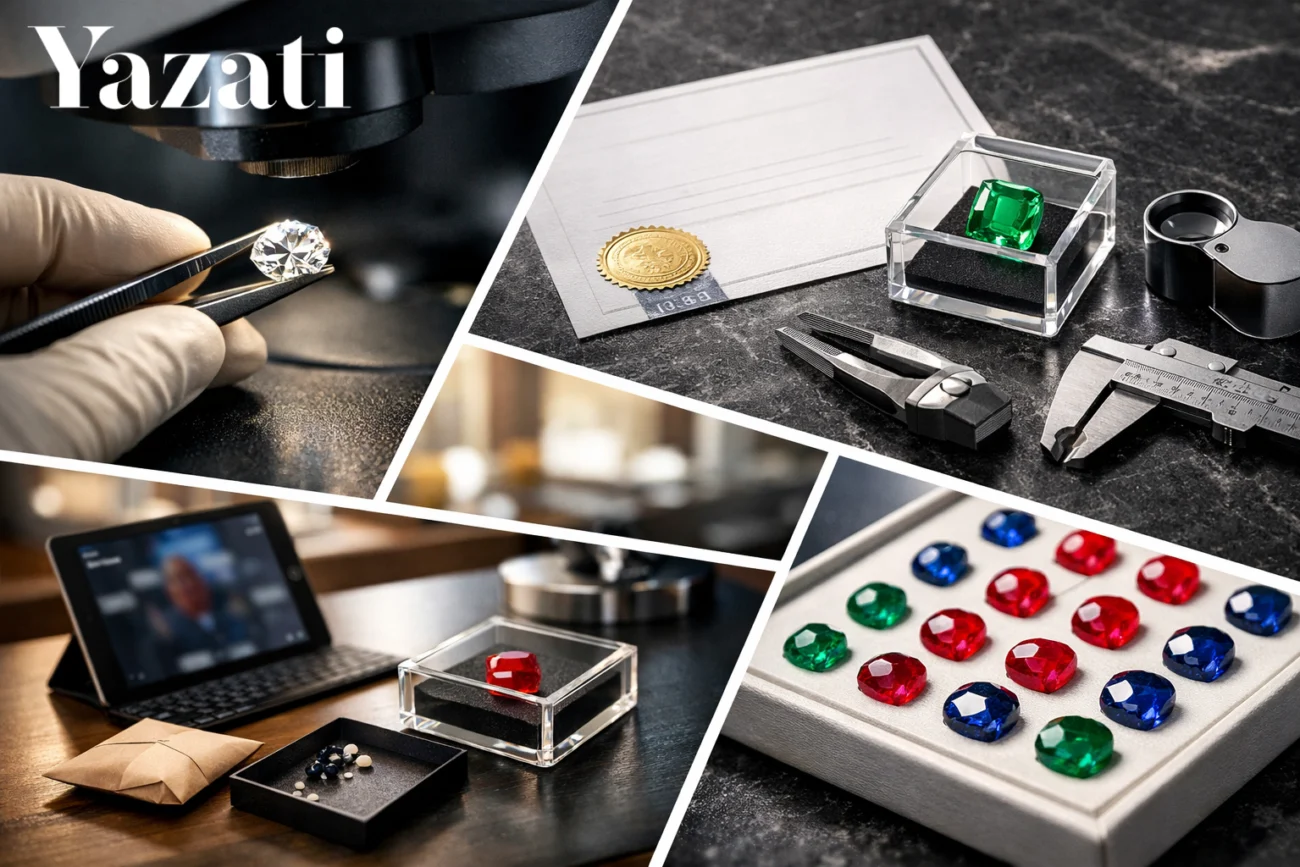
Why Source Gemstones Directly from India?
India offers several advantages in the global gemstone trade:
- Skilled cutting and polishing expertise
- Competitive labor costs
- Wide variety of precious and semi-precious stones
- Established export infrastructure
- Strong wholesale markets
Direct sourcing eliminates intermediaries, improving margins and product selection flexibility.
However, direct sourcing requires informed decision-making.
Step 1: Identify the Type of Gemstone You Need
The first step in How Buyers Can Source Certified Gems Directly from India is clarity about product requirements.
Define:
- Gemstone type (diamond, sapphire, ruby, emerald, etc.)
- Natural or lab-grown preference
- Size and carat range
- Cut and shape
- Color grade
- Clarity grade
- Budget
Precise specifications simplify supplier communication.
Clear goals prevent confusion.
Step 2: Understand Gem Certification Standards
Certification confirms a gemstone’s authenticity and quality.
Reputable certificates evaluate:
- Carat weight
- Cut quality
- Color grading
- Clarity grading
- Treatment disclosures
Only purchase stones accompanied by recognized laboratory certification.
Certification protects investment value.
Step 3: Work with Reputable Gem Dealers
India has many gemstone traders, but reputation matters.
Before choosing a supplier:
- Verify business registration
- Check export license
- Review trade references
- Examine years of experience
- Request client testimonials
Established exporters are more likely to provide transparent transactions.
Trustworthy partners reduce risk.
Step 4: Request Certified Documentation
Always request:
- Original gemstone certificate
- Invoice with full description
- Treatment disclosure
- Export documentation
Ensure certificate details match the physical stone exactly.
Consistency prevents fraud.
Step 5: Verify Laboratory Accreditation
Not all gem certificates carry equal credibility.
Confirm that certification comes from:
- Recognized gemological laboratories
- Accredited and internationally accepted institutions
- Independent testing bodies
Reliable certification increases resale value and buyer confidence.
Verification is essential.
Step 6: Inspect Stones Personally or Through Trusted Agents
Whenever possible:
- Visit suppliers in person
- Attend gemstone trade shows
- Use professional inspection agents
If physical inspection is not possible, request:
- High-resolution images
- Detailed videos
- 360-degree stone views
Transparency improves trust.
Step 7: Clarify Treatment and Enhancement Disclosure
Some gemstones undergo treatments such as:
- Heat treatment
- Oil treatment
- Filling
- Irradiation
Ensure all treatments are clearly disclosed in certification and invoices.
Undisclosed enhancements reduce value.
Full transparency protects your business.
Step 8: Negotiate Pricing Based on Market Rates
Gem pricing depends on:
- Quality grade
- Rarity
- Demand
- Origin
Before negotiating, research current market rates.
Understanding pricing benchmarks strengthens negotiation power.
Knowledge supports profitability.
Step 9: Start with Small Orders
For first-time transactions:
- Begin with limited quantities
- Evaluate quality consistency
- Test supplier reliability
- Monitor shipping efficiency
Gradual scaling reduces financial risk.
Trust builds over time.
Step 10: Confirm Payment Terms Carefully
Secure payment methods include:
- Bank transfers
- Letters of credit
- Escrow services
Avoid unsecured payment arrangements for high-value orders.
Financial security protects both parties.
Step 11: Ensure Proper Export Documentation
For international shipments, ensure the supplier provides:
- Commercial invoice
- Packing list
- Certificate of origin
- Export declaration
- Gem certification documents
Complete documentation ensures smooth customs clearance.
Organization avoids delays.
Step 12: Insure High-Value Shipments
Gemstones are high-value and compact.
Always insure shipments against:
- Theft
- Loss
- Damage
Insurance coverage safeguards investment.
Risk management is essential.
Step 13: Understand Import Regulations in Your Country
Different countries have:
- Customs duties
- Import tax rules
- Licensing requirements
- Anti-money laundering regulations
Consult a customs broker if necessary.
Regulatory compliance prevents legal complications.
Step 14: Build Long-Term Supplier Relationships
Once trust is established:
- Maintain consistent communication
- Provide feedback
- Plan repeat orders
- Explore customization options
Long-term partnerships often lead to better pricing and priority service.
Strong relationships enhance stability.
Step 15: Stay Updated with Market Trends
Gemstone demand shifts over time.
Monitor:
- Popular gemstone colors
- Fashion trends
- Investment-grade stones
- Lab-grown gemstone growth
Market awareness improves purchasing decisions.
Strategic sourcing increases competitiveness.
Common Risks and How to Avoid Them
Sourcing gemstones can involve risks such as:
- Fake certification
- Undisclosed treatments
- Overpricing
- Inconsistent grading
To avoid these risks:
- Verify certificates independently
- Work with established exporters
- Conduct due diligence
- Start small and scale gradually
Caution protects your investment.
Advantages of Direct Sourcing from India
Direct sourcing offers:
- Better pricing margins
- Access to larger inventory
- Custom cutting options
- Faster product availability
- Competitive export infrastructure
India’s well-developed gemstone ecosystem supports international trade.
Strategic sourcing enhances profitability.
How Buyers Can Source Certified Gems Directly from India Safely
To summarize the safest approach:
- Research gemstone requirements.
- Verify supplier credibility.
- Confirm laboratory certification.
- Inspect quality carefully.
- Negotiate fairly.
- Ensure documentation and insurance.
- Maintain compliance with import laws.
Structured processes reduce uncertainty.
Professional discipline ensures success.
FAQs About How Buyers Can Source Certified Gems Directly from India
1. Are certified gems from India reliable?
Yes, when accompanied by recognized laboratory certification and sourced from reputable exporters.
2. Can buyers visit gemstone markets in India?
Yes, major gemstone trading centers welcome international buyers.
3. How can I verify a gem certificate?
Most accredited laboratories provide online verification systems using certificate numbers.
4. Are lab-grown gemstones also certified?
Yes, lab-grown stones can also receive certification detailing quality characteristics.
5. Is direct sourcing cheaper than buying from local distributors?
Often yes, but costs depend on order size, shipping, and import duties.
6. What is the safest payment method for high-value gems?
Letters of credit and escrow services provide added financial security.
Conclusion
Understanding How Buyers Can Source Certified Gems Directly from India empowers jewelers and retailers to access high-quality gemstones while protecting their investments.
India’s gemstone industry offers vast selection, skilled craftsmanship, and competitive pricing. However, successful sourcing requires due diligence, certification verification, secure payment practices, and strong supplier relationships.
By following structured steps and prioritizing transparency, buyers can confidently import certified gemstones while maximizing profitability.
Smart sourcing builds long-term success in the global gem trade.
✨ Discover Global Sourcing Excellence with Netyex ✨
Netyex is your trusted B2B sourcing partner, connecting international buyers with India’s finest manufacturers and curated product lines—from handicrafts and home décor to kitchenware, textiles, hospitality essentials, and more. With verified suppliers and end-to-end support, we make global procurement seamless, reliable, and efficient.
👉 Elevate your sourcing experience—explore Netyex today.
📦 Bulk orders & customisation | 🌍 Worldwide delivery | 🤝 Trusted by global buyers
Visit Netyex to source premium Indian products with confidence.