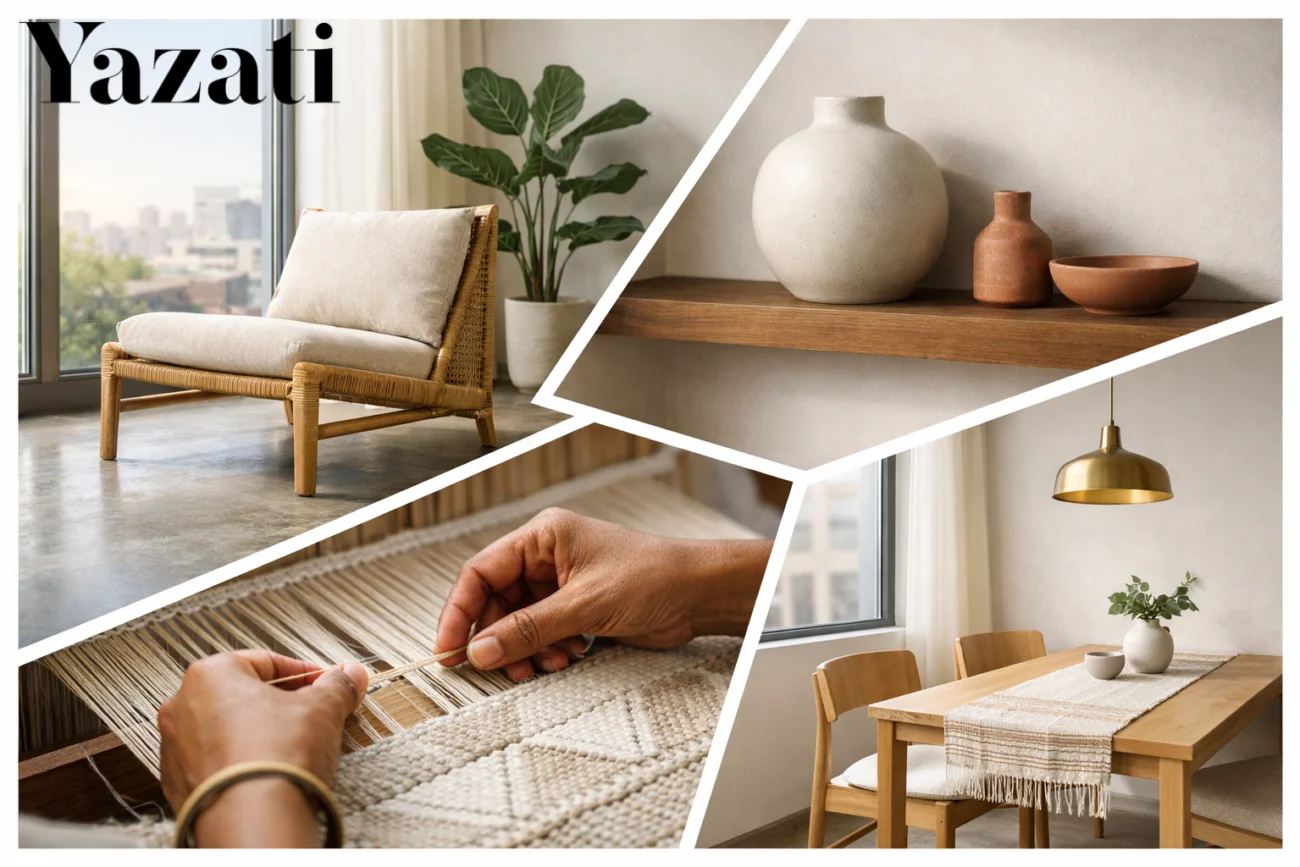
The Rise of Minimalism in Urban Living
City life moves quickly. Apartments are compact. Storage is limited. People want calm spaces that help them relax after busy days. That’s where minimalism steps in.
Minimalism in 2027 focuses on:
- Functional design
- Neutral color palettes
- Clean silhouettes
- Thoughtful decoration
But here’s the twist—minimalism is no longer cold or sterile. It’s warm, layered, and personal. Homeowners want stories behind their décor. And that’s exactly what Indian crafts provide.
Urban dwellers are moving away from mass-produced furniture. Instead, they prefer handcrafted pieces that feel intentional. The result? Homes that feel airy yet soulful.
Why Indian Crafts Are Gaining Global Attention
Indian craftsmanship has always been rich in detail and heritage. However, in recent years, global designers have simplified these traditional forms to suit contemporary aesthetics.
Why the growing popularity?
- Authenticity – Handmade items feel genuine.
- Sustainability – Natural materials reduce environmental impact.
- Timeless Appeal – Craft techniques passed down for generations.
- Cultural Depth – Each piece tells a story.
Global urban homeowners want interiors that feel human—not factory-made. Indian crafts bring warmth, texture, and character without overwhelming the space.
Understanding the Fusion: Minimalism Meets Tradition
The beauty of 2027 Trends: Minimal Indian Crafts for Global Urban Homes lies in balance.
Minimalism says: “Less is more.”
Indian crafts say: “Detail matters.”
When combined thoughtfully, they create interiors that feel refined and rich at the same time.
Decluttering Without Losing Cultural Identity
Instead of multiple decorative pieces, homeowners now choose:
- One statement woven wall hanging
- A single handcrafted terracotta vase
- A low wooden coffee table with subtle carvings
It’s about restraint. Each object has breathing room. Negative space enhances its beauty.
Craft as a Statement Piece
Rather than spreading patterns across the entire room, designers focus on focal points:
- A hand-carved console table
- A block-printed cushion in muted tones
- A brass floor lamp with a simple silhouette
The craft shines without overpowering the space.
Key Materials Defining 2027
Material choice plays a huge role in minimal Indian interiors.
Sustainable Textiles in Modern Interiors
Textiles in 2027 are soft, breathable, and natural.
Popular choices include:
- Handloom cotton
- Khadi
- Linen blends
- Organic wool
These fabrics are used in:
- Upholstery
- Cushion covers
- Curtains
- Throws
The patterns are subtle—fine stripes, delicate block prints, and tone-on-tone embroidery.
Earthy Ceramics and Terracotta Revival
Terracotta is making a strong comeback. However, instead of glossy finishes, 2027 favors raw textures.
Expect:
- Matte clay vases
- Minimal ceramic bowls
- Unglazed planters
The colors stay natural—clay red, sand beige, ash grey.
Color Trends for 2027 Urban Homes
Bold colors are taking a back seat. In 2027, subtlety rules.
Warm Earth Tones
Urban homes are embracing:
- Ochre
- Muted rust
- Sand
- Soft terracotta
These tones add warmth without feeling loud.
Soft Monochromes
Minimal palettes include:
- Off-white
- Cream
- Warm grey
- Pale taupe
When paired with handcrafted elements, these colors feel comforting rather than plain.
Minimal Indian Furniture Trends
Furniture in 2027 prioritizes simplicity and craftsmanship.
Key features include:
- Low seating inspired by traditional forms
- Solid wood with smooth edges
- Light cane-backed chairs
- Modular shelving with handcrafted touches
Bulky, heavily carved pieces are being replaced with refined silhouettes. The craftsmanship remains—but the form evolves.
Wall Décor and Art Forms Going Global
Walls are no longer crowded with frames. Instead, homeowners choose:
- One large woven panel
- Minimal line art inspired by traditional motifs
- Subtle block-printed fabric stretched in wooden frames
These elements add depth without clutter.
Lighting Trends Using Indian Craft Techniques
Lighting is becoming a major focal point.
Popular options include:
- Cane pendant lamps
- Minimal brass sconces
- Woven lantern-style fixtures
Soft lighting enhances textures and creates a cozy urban retreat.
Functional Craft: Everyday Objects Reimagined
Craft is no longer only decorative. It’s practical.
In 2027, you’ll see:
- Handwoven storage baskets
- Wooden trays with simple handles
- Ceramic dinnerware sets
- Cane magazine holders
Beauty meets functionality. That’s the new rule.
Sustainability and Ethical Sourcing in 2027
Modern buyers care about origin and impact.
They ask:
- Who made this piece?
- What material was used?
- Is it eco-friendly?
Minimal Indian crafts naturally align with sustainable values. Many artisans use locally sourced materials and low-energy production methods.
Consumers now prefer quality over quantity. Investing in one handcrafted piece is better than buying five factory-made items.
How Designers Are Adapting Indian Crafts for Urban Apartments
Urban apartments require smart solutions.
Designers are:
- Scaling down traditional patterns
- Simplifying carvings
- Creating foldable handcrafted furniture
- Designing multi-purpose storage units
The goal is adaptability. Even small studio apartments can incorporate cultural depth without feeling crowded.
Styling Tips for Global Urban Homes
Want to adopt this trend? Keep these tips in mind:
- Choose one hero piece per room.
- Stick to neutral backgrounds.
- Mix textures, not patterns.
- Leave negative space around handcrafted items.
- Use natural light to highlight textures.
Remember—minimal doesn’t mean empty. It means intentional.
Investment Value of Minimal Indian Crafts
Handcrafted pieces often age beautifully.
Advantages include:
- Durability
- Timeless design
- Cultural relevance
- Growing global demand
Unlike fast furniture, handcrafted pieces often retain or increase value over time.
Challenges in Balancing Minimalism and Ornamentation
It’s easy to overdo it.
Common mistakes:
- Mixing too many patterns
- Choosing overly ornate pieces
- Ignoring scale
The solution? Edit ruthlessly. If something doesn’t serve a purpose or enhance the space, remove it.
The Future Outlook Beyond 2027
Looking ahead, technology will blend with craftsmanship.
Expect:
- Smart lighting integrated into handcrafted fixtures
- Digitally customized block prints
- Sustainable innovations in natural materials
The future is not about replacing tradition—but refining it.
Frequently Asked Questions
1. What makes minimal Indian crafts suitable for global urban homes?
Their simplified designs, natural materials, and neutral colors blend easily with modern interiors worldwide.
2. Are handcrafted pieces more expensive?
They can cost more upfront, but their durability and timeless appeal often make them cost-effective long-term.
3. How can small apartments incorporate Indian crafts?
Use compact items like woven baskets, minimal ceramic décor, or a single handcrafted furniture piece.
4. Do minimal Indian interiors work with Scandinavian design?
Yes. Both styles value simplicity, natural materials, and clean lines, making them highly compatible.
5. Are these trends environmentally friendly?
Many Indian crafts use sustainable materials and low-energy production methods, aligning with eco-conscious living.
6. Will this trend continue beyond 2027?
Absolutely. As people prioritize authenticity and sustainability, handcrafted minimal designs will remain relevant.
Conclusion
2027 Trends: Minimal Indian Crafts for Global Urban Homes highlights a powerful shift in global design thinking. Urban living is no longer about filling spaces with objects. It’s about choosing meaningful, sustainable, and beautifully crafted pieces that tell a story.
Minimal Indian crafts offer the perfect balance between tradition and modern simplicity. They bring warmth into compact city apartments and create calm in fast-paced environments. As we move forward, this design movement will continue shaping homes that are not only stylish but also soulful.
The future of urban interiors is clear: fewer pieces, deeper meaning, and craftsmanship that stands the test of time.
✨ Discover Global Sourcing Excellence with Netyex ✨
Netyex is your trusted B2B sourcing partner, connecting international buyers with India’s finest manufacturers and curated product lines—from handicrafts and home décor to kitchenware, textiles, hospitality essentials, and more. With verified suppliers and end-to-end support, we make global procurement seamless, reliable, and efficient.
👉 Elevate your sourcing experience—explore Netyex today.
📦 Bulk orders & customisation | 🌍 Worldwide delivery | 🤝 Trusted by global buyers
Visit Netyex to source premium Indian products with confidence.