Introduction
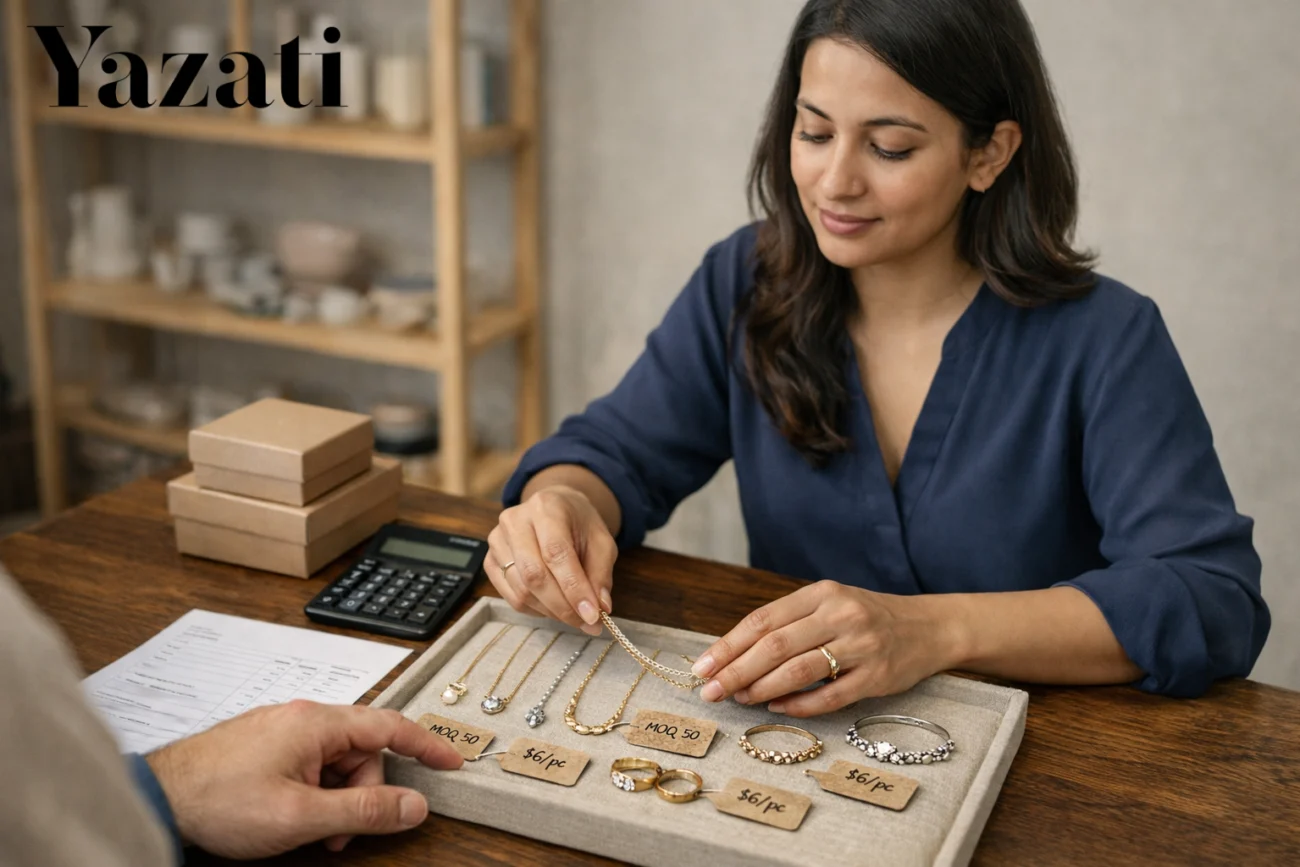
Understanding MOQ and Bulk Pricing for Jewelry Orders is essential for retailers, resellers, and jewelry businesses that want to maximize profits while managing inventory wisely. Whether you run an online jewelry store, a boutique shop, or a wholesale business, knowing how minimum order quantities (MOQ) and bulk pricing work can significantly impact your purchasing strategy.
In the jewelry industry, suppliers often set a minimum number of pieces that buyers must purchase in a single order. This requirement helps manufacturers maintain production efficiency and manage costs. For buyers, it presents both opportunities and challenges. Ordering in bulk can lower the price per piece, but it also requires careful financial planning and inventory management.
Understanding MOQ and Bulk Pricing for Jewelry Orders allows businesses to strike the right balance between affordability and risk. With the right knowledge, you can negotiate better deals, optimize purchasing decisions, and maintain a healthy profit margin.
This guide explores how MOQ works, how bulk pricing structures operate, and how jewelry businesses can use these concepts to grow successfully.
What Is MOQ in Jewelry Orders
MOQ stands for Minimum Order Quantity. It refers to the smallest number of units a supplier is willing to sell in a single order.
In jewelry manufacturing and wholesale markets, MOQs are common because producing small quantities is often inefficient and costly for manufacturers.
Why Suppliers Set MOQ
Suppliers use MOQ to ensure profitability and operational efficiency. Manufacturing jewelry involves several processes such as casting, polishing, plating, stone setting, and packaging. Producing only a few pieces would increase the cost per item significantly.
Common reasons for MOQ include:
- Production efficiency
- Material cost management
- Labor cost coverage
- Inventory stability
- Quality control processes
Typical MOQ in the Jewelry Industry
MOQ varies widely depending on the supplier and product type.
| Jewelry Type | Typical MOQ |
|---|---|
| Fashion Jewelry | 50–100 pieces |
| Silver Jewelry | 20–50 pieces |
| Custom Jewelry | 100–300 pieces |
| Luxury Jewelry | 5–20 pieces |
Custom designs usually require higher MOQs because molds and design work involve additional production costs.
What Is Bulk Pricing
Bulk pricing refers to discounted pricing offered when buyers purchase larger quantities of a product.
In the jewelry business, bulk pricing is used to encourage larger orders and strengthen relationships with buyers.
Instead of paying the same price for every piece, buyers receive a lower price per unit as the order quantity increases.
Example of Bulk Pricing Structure
| Quantity Ordered | Price Per Piece |
|---|---|
| 50 pieces | $10 |
| 100 pieces | $8 |
| 300 pieces | $6 |
| 500 pieces | $5 |
As shown above, the more units purchased, the lower the price per piece.
How MOQ and Bulk Pricing Work Together
MOQ and bulk pricing often operate together in wholesale jewelry transactions.
A supplier might require a minimum order of 100 pieces, but offer better pricing tiers for larger purchases.
Example:
| Quantity | Price |
|---|---|
| 100 pieces (MOQ) | $8 per piece |
| 200 pieces | $7 per piece |
| 500 pieces | $6 per piece |
This system encourages buyers to increase their order size to benefit from greater discounts.
Understanding MOQ and Bulk Pricing for Jewelry Orders helps businesses determine whether purchasing additional units will increase profitability.
Benefits of Bulk Jewelry Orders
Buying jewelry in bulk offers several advantages for retailers and distributors.
Lower Cost Per Unit
The most obvious benefit is reduced pricing. Lower per-unit costs allow businesses to increase profit margins.
Better Supplier Relationships
Suppliers prefer working with buyers who place large orders regularly. Consistent bulk orders can lead to:
- Better negotiation opportunities
- Priority production scheduling
- Access to exclusive designs
Inventory Stability
Bulk orders help maintain a steady supply of products, preventing stock shortages during high-demand seasons.
Improved Brand Consistency
Retailers can maintain consistent designs and product quality by ordering larger batches.
Challenges of MOQ for Small Businesses
Although MOQ offers advantages, it can also create challenges, especially for startups or small retailers.
Higher Initial Investment
Meeting MOQ requirements often requires significant upfront capital.
For example:
If the MOQ is 200 pieces at $7 each, the initial order would cost $1,400.
Inventory Risk
Buying too many pieces may lead to unsold stock if demand is lower than expected.
Storage Requirements
Large orders require proper storage to maintain product quality and organization.
Limited Product Variety
Meeting MOQ limits may force businesses to focus on fewer designs instead of offering a wide range of jewelry styles.
Factors That Influence MOQ in Jewelry Manufacturing
Several factors determine the MOQ set by jewelry suppliers.
Material Costs
Precious metals such as gold and silver have fluctuating prices. Suppliers may increase MOQ to offset material expenses.
Production Techniques
Complex jewelry pieces involving handcrafting, gemstone settings, or engraving may require higher MOQs.
Customization Requirements
Custom jewelry designs often require new molds, CAD designs, and production adjustments.
These additional costs typically result in higher minimum order quantities.
Supplier Size
Large factories may require higher MOQs compared to small artisan workshops.
Strategies for Managing MOQ Effectively
Retailers can manage MOQ requirements more efficiently by adopting smart purchasing strategies.
Start With Best-Selling Designs
Focus on jewelry styles that have proven demand.
Examples include:
- Minimalist necklaces
- Hoop earrings
- Stackable rings
- Charm bracelets
These items tend to sell consistently across many markets.
Combine Multiple Styles
Some suppliers allow buyers to mix different designs to meet MOQ.
For example:
Instead of ordering 100 pieces of one necklace, buyers may order:
- 25 rings
- 25 bracelets
- 25 earrings
- 25 necklaces
This approach increases product variety while meeting the supplier’s minimum order requirement.
Negotiate With Suppliers
Many manufacturers are open to negotiation, especially if you plan to place repeat orders.
Possible negotiation options include:
- Lower MOQ for first orders
- Flexible quantity combinations
- Gradual order increases
Understanding Price Breaks in Bulk Orders
Price breaks refer to points where the price per unit decreases as the quantity increases.
Jewelry suppliers often offer multiple pricing tiers.
Example:
| Order Size | Price Per Unit |
|---|---|
| 50 pieces | $12 |
| 100 pieces | $10 |
| 250 pieces | $8 |
| 500 pieces | $6 |
Buyers must calculate whether ordering more pieces actually increases profits after considering:
- Storage costs
- Shipping fees
- Sales forecasts
Calculating Profit Margins for Bulk Jewelry Orders
Before placing a bulk order, businesses should calculate their expected profit margins.
Basic Profit Margin Formula
Profit Margin =
(Selling Price − Cost Price) ÷ Selling Price × 100
Example:
| Factor | Value |
|---|---|
| Cost per unit | $6 |
| Selling price | $18 |
| Profit | $12 |
Profit margin = 66%
Higher margins help cover expenses such as:
- Marketing
- Shipping
- Packaging
- Taxes
Tips for Negotiating Better Bulk Pricing
Negotiation is a common practice in wholesale jewelry purchasing.
Here are some practical tips:
Build Long-Term Relationships
Suppliers are more flexible with buyers who place regular orders.
Order During Low-Demand Periods
Manufacturers may offer discounts during slower production seasons.
Request Sample Orders
Before committing to a large order, ask for product samples to evaluate quality.
Compare Multiple Suppliers
Evaluating different suppliers helps buyers identify the best pricing and terms.
How Custom Jewelry Orders Affect MOQ
Custom jewelry production often requires additional steps such as:
- 3D design modeling
- Mold creation
- Prototype development
- Quality testing
Because these steps involve higher setup costs, suppliers typically set higher MOQs for custom designs.
However, custom jewelry offers major advantages:
- Unique branding
- Exclusive product lines
- Strong market differentiation
Businesses aiming to build a private label jewelry brand often invest in custom manufacturing despite higher MOQs.
Inventory Planning for Bulk Jewelry Purchases
Proper inventory planning ensures that bulk purchases do not become financial burdens.
Use Sales Data
Review previous sales trends to predict demand accurately.
Track Seasonal Demand
Jewelry sales often increase during:
- Holiday seasons
- Wedding periods
- Valentine’s Day
- Festival celebrations
Planning bulk orders ahead of these seasons ensures product availability.
Maintain Inventory Balance
Avoid overstocking slow-moving items while ensuring fast-selling products remain available.
Common Mistakes When Ordering Jewelry in Bulk
Businesses sometimes make costly mistakes when placing bulk orders.
Ignoring Market Trends
Fashion jewelry trends change quickly. Buying outdated styles can result in unsold inventory.
Choosing Price Over Quality
Low prices may lead to poor product quality, which can damage brand reputation.
Overestimating Demand
New businesses often overestimate sales projections.
Skipping Product Samples
Without samples, buyers risk receiving products that differ from expectations.
Future Trends in Jewelry Wholesale Purchasing
The jewelry industry continues to evolve with technological advancements and changing consumer preferences.
Smaller MOQs From New Suppliers
Some modern suppliers offer low MOQ options to support small businesses and online retailers.
Digital Manufacturing
Technologies such as 3D printing and CAD design are reducing production costs and enabling more flexible order sizes.
Direct-to-Consumer Jewelry Brands
Many brands are now ordering bulk jewelry directly from manufacturers and selling through e-commerce platforms.
These trends are gradually reshaping how MOQ and bulk pricing operate in the industry.
Frequently Asked Questions (FAQs)
1. What does MOQ mean in jewelry wholesale?
MOQ stands for Minimum Order Quantity, which is the smallest number of jewelry pieces a supplier requires for a single order.
2. Why do jewelry suppliers require bulk orders?
Bulk orders help suppliers reduce manufacturing costs, manage materials efficiently, and maintain profitable production levels.
3. Can MOQ be negotiated with jewelry suppliers?
Yes, many suppliers are willing to negotiate MOQ, especially for first-time buyers or long-term business partnerships.
4. Is bulk jewelry purchasing always cheaper?
Bulk purchases usually reduce the cost per unit, but buyers must also consider storage, marketing, and inventory risks.
5. What is the difference between MOQ and bulk pricing?
MOQ defines the minimum quantity required, while bulk pricing refers to discounted pricing tiers based on larger order volumes.
6. How can small businesses handle high MOQ requirements?
Small businesses can manage MOQ by ordering best-selling items, combining product styles, negotiating with suppliers, or partnering with other retailers.
Conclusion
Understanding MOQ and Bulk Pricing for Jewelry Orders is a critical skill for anyone involved in jewelry retail, wholesale, or manufacturing. These pricing structures influence purchasing decisions, profit margins, and overall business growth.
While MOQ requirements may initially seem restrictive, they are designed to support efficient production and cost management. When combined with bulk pricing strategies, they can provide businesses with valuable opportunities to reduce costs and increase profitability.
By carefully evaluating supplier terms, forecasting demand accurately, and negotiating strategically, jewelry businesses can use MOQ and bulk purchasing to their advantage.
Ultimately, mastering these concepts allows retailers and entrepreneurs to build sustainable jewelry operations, maintain competitive pricing, and deliver consistent quality to their customers.
✨ Discover Global Sourcing Excellence with Netyex ✨
Netyex is your trusted B2B sourcing partner, connecting international buyers with India’s finest manufacturers and curated product lines—from handicrafts and home décor to kitchenware, textiles, hospitality essentials, and more. With verified suppliers and end-to-end support, we make global procurement seamless, reliable, and efficient.
👉 Elevate your sourcing experience—explore Netyex today.
📦 Bulk orders & customisation | 🌍 Worldwide delivery | 🤝 Trusted by global buyers
Visit Netyex to source premium Indian products with confidence.