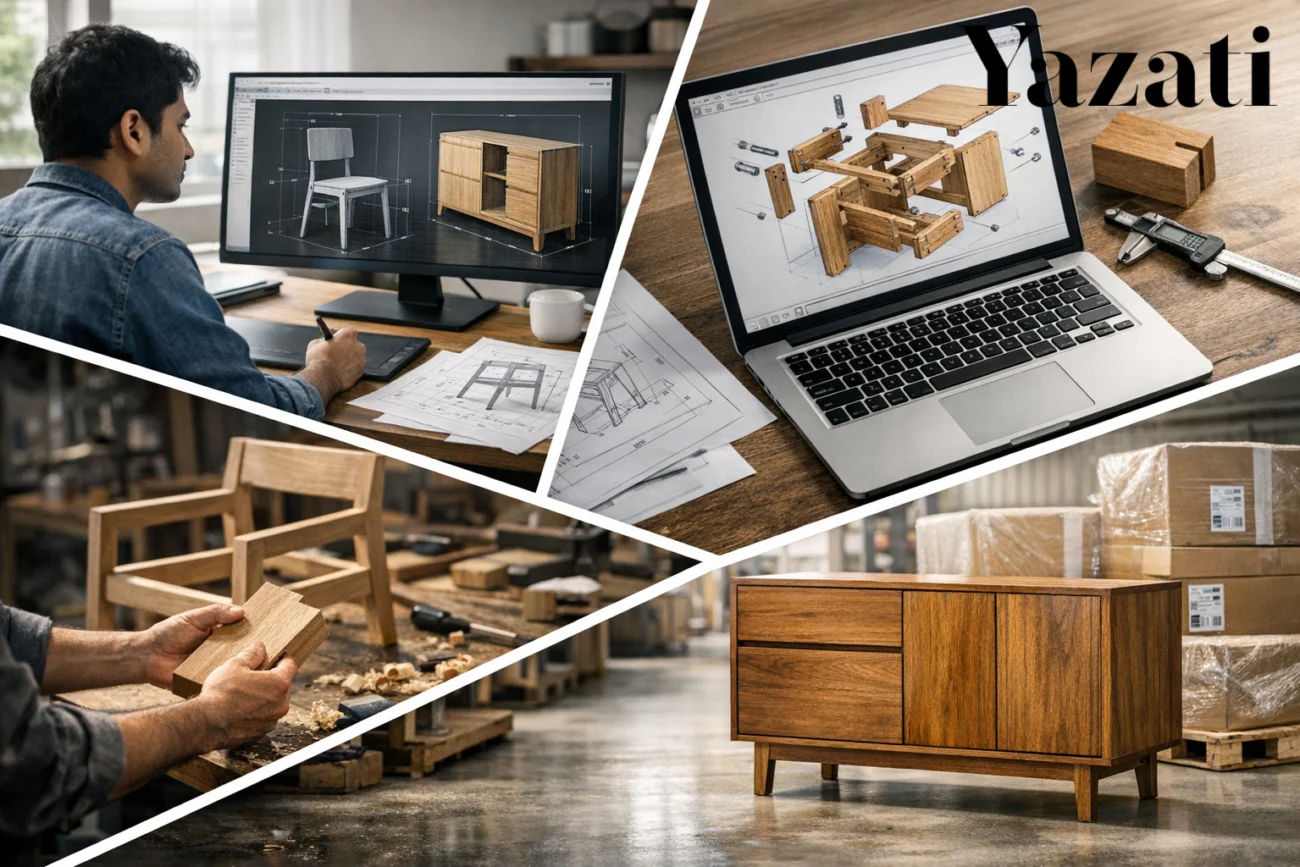
Introduction to The Role of CAD Prototyping in Furniture Exports
In today’s competitive global furniture market, manufacturers must deliver innovative designs, consistent quality, and fast production cycles. One of the most important technological tools enabling this transformation is Computer-Aided Design (CAD) prototyping. Understanding The Role of CAD Prototyping in Furniture Exports has become essential for manufacturers, designers, and exporters aiming to compete in international markets.
CAD prototyping allows furniture designers to create detailed digital models before production begins. Instead of relying solely on physical samples, manufacturers can test, modify, and optimize furniture designs digitally. This approach significantly reduces development time, minimizes production errors, and improves collaboration between designers, manufacturers, and overseas buyers.
Furniture exporters especially benefit from CAD prototyping because international buyers often require precise specifications, customization, and visual previews before placing large orders. Digital prototypes make it easier to communicate design ideas, verify measurements, and ensure that the final product meets the expectations of global customers.
Moreover, CAD technology supports sustainable manufacturing by reducing material waste and eliminating the need for multiple physical prototypes. In a world where efficiency and sustainability are increasingly important, CAD prototyping plays a vital role in shaping the future of furniture exports.
This article explores The Role of CAD Prototyping in Furniture Exports, highlighting how this technology improves product development, enhances quality control, and strengthens global competitiveness.
Understanding CAD Prototyping in Furniture Design
CAD prototyping refers to the process of creating detailed digital models of furniture using specialized computer software. These models replicate the structure, dimensions, and materials of the furniture before physical production begins.
What is CAD Prototyping?
CAD prototyping is the digital simulation of a product design using computer software. Designers create accurate 2D drawings and 3D models that represent the final product.
Key elements include:
- Precise measurements
- Material specifications
- Structural components
- Assembly details
- Visual aesthetics
These digital prototypes help designers analyze the feasibility of a furniture design before manufacturing begins.
Evolution of Furniture Design Technology
Traditional furniture design relied heavily on manual sketches and handcrafted prototypes. This process was time-consuming and expensive, especially when modifications were required.
The introduction of CAD software revolutionized the industry by enabling designers to:
- Quickly modify design elements
- Test structural stability
- Visualize products in 3D
- Share designs instantly with international clients
As a result, The Role of CAD Prototyping in Furniture Exports has become increasingly significant in modern furniture manufacturing.
Importance of CAD Technology in Global Furniture Trade
Global furniture exports involve multiple stages, including design development, product approval, manufacturing, packaging, and shipping. CAD technology simplifies and improves each of these stages.
Enhancing Design Communication
When exporting furniture, clear communication between manufacturers and international buyers is crucial. CAD models provide detailed visual representations that eliminate misunderstandings.
Exporters can share:
- 3D renderings
- Technical drawings
- Dimension specifications
- Assembly diagrams
This transparency ensures that buyers fully understand the product before placing orders.
Reducing Product Development Time
Time efficiency is critical in international markets. CAD prototyping speeds up the design and approval process.
Designers can quickly:
- Adjust dimensions
- Change materials
- Modify structural elements
These rapid changes help exporters meet tight deadlines and respond quickly to market demands.
How CAD Prototyping Improves Furniture Export Quality
Quality assurance is a major concern for furniture exporters. International buyers expect consistency, durability, and high-quality finishes.
Precision and Accuracy
CAD software allows designers to create extremely precise designs. Every component is measured digitally, reducing the chances of production errors.
Benefits include:
- Accurate joinery design
- Correct material thickness
- Proper structural support
- Perfect alignment of parts
Early Detection of Design Flaws
One of the biggest advantages of CAD prototyping is the ability to identify problems before manufacturing begins.
Designers can test:
- Load-bearing capacity
- Structural stability
- Assembly efficiency
By detecting issues early, manufacturers avoid costly mistakes during production.
Cost Reduction Through Digital Prototyping
Furniture exporters must carefully manage production costs to remain competitive in international markets.
Eliminating Multiple Physical Samples
Traditionally, manufacturers produced several physical prototypes before finalizing a design. Each prototype required materials, labor, and time.
CAD prototyping eliminates most of these physical samples, significantly reducing development costs.
Efficient Material Utilization
Digital design tools help manufacturers optimize material usage. CAD software can calculate precise material requirements and minimize waste.
This results in:
- Lower production costs
- Sustainable manufacturing practices
- Improved profit margins
Speeding Up Product Development for International Markets
Global furniture trends change rapidly. Exporters must respond quickly to new design preferences and customer demands.
Rapid Design Modifications
CAD technology enables designers to modify products instantly. If a buyer requests changes in size, material, or structure, adjustments can be made within minutes.
Faster Approval Processes
International buyers often request design previews before confirming orders. CAD models allow exporters to present realistic visualizations, speeding up the approval process.
This capability strengthens The Role of CAD Prototyping in Furniture Exports by making product development more efficient.
Customization Opportunities for Global Buyers
Furniture customization has become a major trend in global markets. Buyers want products tailored to specific styles, spaces, and functional requirements.
Flexible Design Adjustments
CAD software makes customization easy by allowing designers to adjust:
- Dimensions
- Materials
- Colors
- Decorative elements
Meeting Market-Specific Preferences
Different countries have unique design preferences. CAD prototyping allows exporters to create variations of the same product for different markets.
For example:
| Market | Design Preference |
|---|---|
| Europe | Minimalist furniture |
| USA | Large and functional pieces |
| Japan | Compact and space-saving designs |
By adapting designs digitally, exporters can meet diverse customer expectations.
Enhancing Collaboration Between Designers and Manufacturers
Furniture production involves collaboration between designers, engineers, and factory teams.
Digital Design Sharing
CAD files can be easily shared across teams and locations. This improves communication between:
- Designers
- Production engineers
- Manufacturers
- International buyers
Reducing Miscommunication
Detailed CAD drawings eliminate confusion during manufacturing. Workers can follow exact measurements and assembly instructions.
This ensures consistency in mass production.
Role of CAD in Sustainable Furniture Manufacturing
Sustainability is becoming a key factor in global furniture trade. Many international buyers prefer environmentally responsible manufacturing.
Reducing Material Waste
CAD software helps calculate optimal material usage. This reduces wood waste and improves resource efficiency.
Supporting Eco-Friendly Design
Designers can experiment with sustainable materials and efficient structures using CAD models.
This contributes to environmentally responsible production.
CAD Prototyping and Supply Chain Efficiency
Furniture export supply chains involve multiple stages, from design to shipping.
Better Production Planning
CAD models help manufacturers plan production processes more efficiently.
Factories can:
- Estimate production time
- Plan material procurement
- Optimize assembly lines
Improved Packaging Design
Digital prototypes allow exporters to design efficient packaging that protects products during international shipping.
Integration with Advanced Manufacturing Technologies
CAD prototyping works seamlessly with modern manufacturing technologies.
CNC Machines
Computer Numerical Control (CNC) machines use CAD data to cut materials with extreme precision.
3D Visualization and Simulation
Advanced CAD tools allow designers to simulate real-world usage, ensuring durability and functionality.
Challenges in Implementing CAD Prototyping
Despite its benefits, adopting CAD technology can present certain challenges.
High Initial Investment
Professional CAD software and training require significant investment.
Training Requirements
Designers and engineers must develop specialized skills to use CAD tools effectively.
However, the long-term benefits outweigh these initial challenges.
Future Trends in CAD Technology for Furniture Exports
The future of CAD prototyping is closely tied to emerging technologies.
Artificial Intelligence in Design
AI-powered CAD tools can automatically generate optimized furniture designs.
Virtual Reality Visualization
Buyers may soon explore furniture designs in immersive virtual environments before placing orders.
Cloud-Based Collaboration
Cloud CAD platforms allow global teams to work together in real time.
These advancements will further strengthen The Role of CAD Prototyping in Furniture Exports.
Frequently Asked Questions
1. What is CAD prototyping in furniture manufacturing?
CAD prototyping is the creation of digital furniture models using computer software to test designs before physical production.
2. Why is CAD important for furniture exports?
CAD improves design accuracy, reduces production errors, and helps exporters communicate clearly with international buyers.
3. Does CAD prototyping reduce production costs?
Yes. It eliminates the need for multiple physical prototypes and optimizes material usage.
4. Can CAD support furniture customization?
Yes. CAD software allows designers to quickly modify dimensions, materials, and styles to meet customer preferences.
5. How does CAD improve furniture quality?
CAD ensures precise measurements and allows designers to identify design flaws before manufacturing begins.
6. Is CAD prototyping suitable for small furniture manufacturers?
Yes. Even small manufacturers benefit from CAD by improving efficiency and reducing costly mistakes.
Conclusion
In the modern furniture industry, technology plays a crucial role in improving efficiency, quality, and competitiveness. Understanding The Role of CAD Prototyping in Furniture Exports reveals how digital design tools have transformed traditional furniture manufacturing processes.
CAD prototyping allows designers to create accurate digital models, test structural integrity, and make rapid design adjustments. These capabilities significantly reduce production costs, shorten development cycles, and improve communication with international buyers.
Furniture exporters benefit greatly from this technology because global markets demand precision, customization, and fast delivery. CAD tools enable manufacturers to meet these expectations while maintaining high product quality.
Additionally, CAD supports sustainable manufacturing by reducing material waste and improving production planning. As advanced technologies such as artificial intelligence and virtual reality continue to evolve, CAD prototyping will become even more powerful.
Ultimately, companies that embrace CAD technology will gain a competitive advantage in global furniture markets. By integrating digital prototyping into their workflows, furniture exporters can innovate faster, deliver superior products, and expand their presence in international trade.
✨ Discover Global Sourcing Excellence with Netyex ✨
Netyex is your trusted B2B sourcing partner, connecting international buyers with India’s finest manufacturers and curated product lines—from handicrafts and home décor to kitchenware, textiles, hospitality essentials, and more. With verified suppliers and end-to-end support, we make global procurement seamless, reliable, and efficient.
👉 Elevate your sourcing experience—explore Netyex today.
📦 Bulk orders & customisation | 🌍 Worldwide delivery | 🤝 Trusted by global buyers
Visit Netyex to source premium Indian products with confidence.