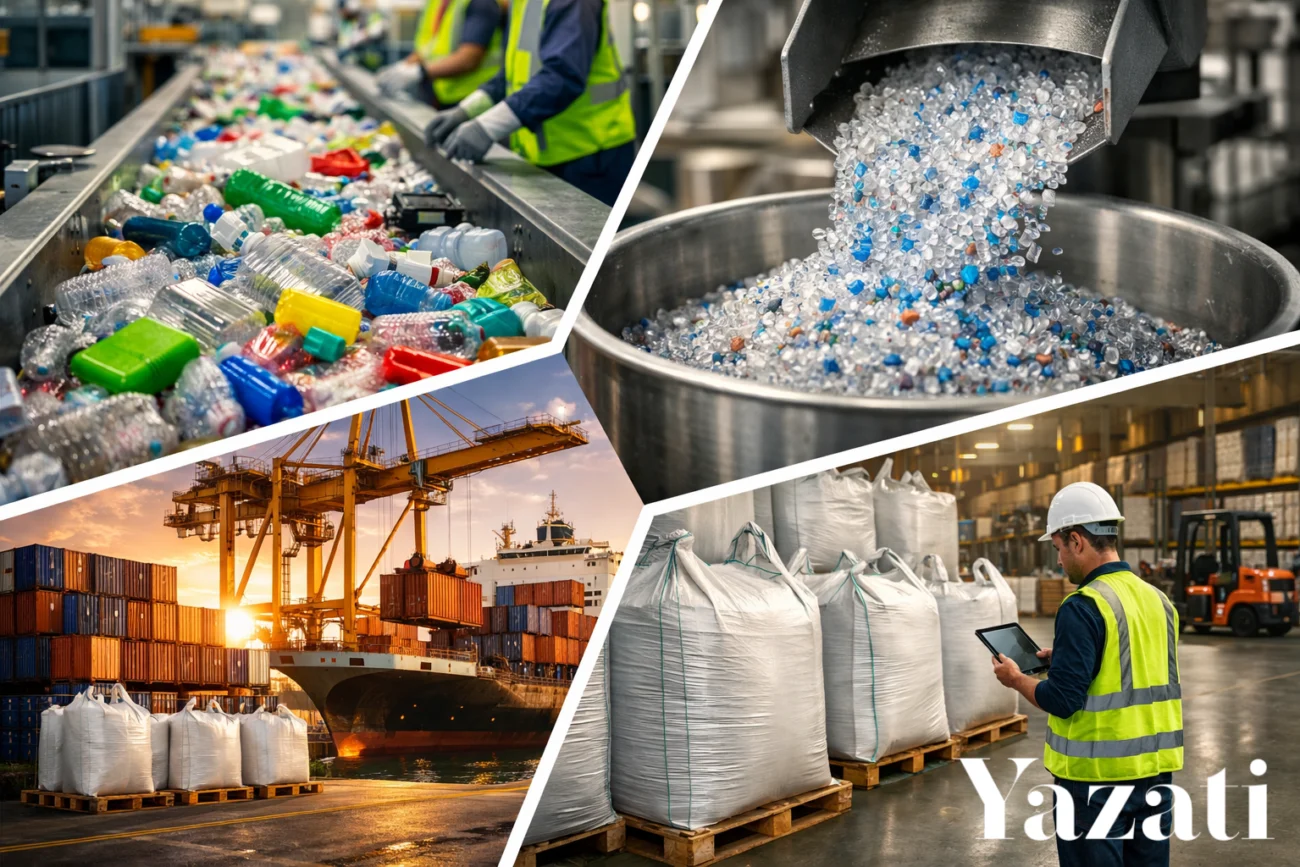
Introduction to India’s Recycled Plastic Export Industry
The growth of recycled plastic exports from India has become an important development in the global recycling and sustainability sector. As countries worldwide strive to reduce plastic waste and move toward circular economies, recycled plastic materials are increasingly being used in manufacturing and packaging industries. India has emerged as a key supplier of recycled plastic materials due to its strong recycling network, cost-effective processing capabilities, and expanding export infrastructure.
Over the past decade, demand for recycled plastic has grown significantly. Industries ranging from packaging and textiles to automotive manufacturing now use recycled plastic resins and flakes as alternatives to virgin plastic. This shift has opened a valuable export market for Indian recyclers, who process large volumes of plastic waste into reusable raw materials.
The expansion of recycling technologies and improved waste collection systems have also contributed to the rising supply of recyclable plastics in India. Combined with supportive government policies and increasing global environmental awareness, the industry has experienced steady growth.
Today, Indian recycled plastic exports serve multiple international markets, helping reduce global plastic waste while also creating economic opportunities domestically. The sector not only contributes to environmental sustainability but also supports employment and innovation within the recycling ecosystem.
What is Recycled Plastic?
Recycled plastic refers to plastic materials that have been collected, processed, and transformed into reusable raw materials. Instead of sending plastic waste to landfills or incinerators, recycling allows it to be converted into new products.
Common recycled plastic materials include:
- PET (Polyethylene Terephthalate)
- HDPE (High-Density Polyethylene)
- LDPE (Low-Density Polyethylene)
- Polypropylene (PP)
These materials can be turned into flakes, pellets, or granules that manufacturers use to produce packaging materials, fibers, containers, and other products.
Why Recycled Plastic Matters Globally
Plastic pollution has become a major environmental challenge worldwide. Millions of tons of plastic waste enter oceans and landfills every year, causing harm to ecosystems and wildlife. Recycling plastic reduces this environmental burden while conserving valuable natural resources.
Globally, industries are shifting toward sustainable materials. Many companies now set targets for using recycled content in their products. As a result, demand for recycled plastic raw materials has increased dramatically, creating export opportunities for recycling hubs such as India.
Historical Development of Recycled Plastic Exports from India
The journey toward the growth of recycled plastic exports from India began with informal waste collection networks. For decades, waste pickers and small recycling units collected and processed plastic waste for local reuse.
Early Recycling Efforts in India
In the early stages, plastic recycling in India was largely unorganized. Small workshops collected plastic waste from households, markets, and industries. These materials were cleaned, sorted, and processed into reusable forms using basic equipment.
Despite limited technology, this system managed to recycle significant quantities of plastic waste. The informal sector played a critical role in establishing the foundation for India’s recycling industry.
Emergence of Export Opportunities
As global awareness about plastic waste grew, international industries began searching for reliable suppliers of recycled plastic materials. Indian recyclers recognized this opportunity and gradually started exporting processed plastic products.
Improved infrastructure, better machinery, and international trade connections enabled the industry to scale up operations. Over time, Indian recycling companies began meeting international quality standards, allowing them to enter global markets.
Major Types of Recycled Plastics Exported by India
India exports several types of recycled plastics used across various industries worldwide. Each material has specific applications and demand in different manufacturing sectors.
PET Flakes
PET flakes are one of the most widely exported recycled plastic products from India. These flakes are produced by cleaning and shredding used PET bottles.
Common uses include:
- Polyester fiber production
- Textile manufacturing
- Food-grade packaging
- Plastic containers
Many global textile manufacturers rely on recycled PET fibers for sustainable clothing production.
HDPE and LDPE Recyclates
High-density and low-density polyethylene recyclates are widely used in industrial manufacturing. These materials are commonly processed into pellets or granules.
Applications include:
- Plastic bags
- Pipes and containers
- Household goods
- Industrial packaging
Their versatility makes them popular in international markets.
Polypropylene Recycled Granules
Recycled polypropylene is often used in automotive components, packaging materials, and consumer goods. Indian recycling companies export polypropylene granules that can be molded into various products.
Due to its durability and lightweight nature, polypropylene remains a valuable material in many manufacturing sectors.
Key Export Markets for India
The success of the growth of recycled plastic exports from India is closely tied to global demand. Several regions have become major importers of recycled plastic materials from Indian suppliers.
Asian Markets
Asian countries represent a large share of India’s recycled plastic exports. Many developing economies rely on recycled materials for cost-effective manufacturing.
Industries in these markets use recycled plastics in:
- Packaging
- Construction materials
- Consumer goods
Geographical proximity also makes trade more efficient.
European Markets
Europe has strict environmental regulations and strong sustainability initiatives. Many companies are required to include recycled materials in their products.
This has increased the demand for high-quality recycled plastics. Indian exporters supply processed plastic materials that meet these standards, making Europe an important trading partner.
Emerging Global Buyers
Other regions such as Africa and parts of the Middle East are gradually increasing their demand for recycled plastic materials. As these economies expand their manufacturing sectors, the need for affordable raw materials continues to grow.
Economic Impact of Recycled Plastic Exports from India
The recycling sector has created significant economic opportunities in India. The expansion of recycled plastic exports has strengthened the country’s waste management ecosystem while generating employment and revenue.
Job Creation in Recycling Sector
Millions of people in India depend on recycling-related jobs. These include:
- Waste collectors
- Sorting facility workers
- Recycling plant operators
- Export logistics professionals
The industry provides income opportunities for both skilled and unskilled workers.
Contribution to Circular Economy
Recycling plays a key role in building a circular economy where materials are reused instead of discarded. By exporting recycled plastic, India contributes to global sustainability efforts while maximizing the value of plastic waste.
This approach reduces the need for virgin plastic production and conserves fossil fuel resources used in manufacturing new plastic materials.
Government Policies Supporting Recycled Plastic Exports from India
Government initiatives have helped strengthen India’s recycling sector and promote exports.
Waste Management Rules
India introduced waste management regulations that encourage recycling and responsible plastic disposal. These policies support waste segregation, collection, and recycling infrastructure development.
Such initiatives increase the availability of recyclable materials for processing and export.
Export Promotion Initiatives
Trade promotion policies and export incentives have also supported recycling businesses. Exporters benefit from infrastructure improvements, trade facilitation programs, and easier access to international markets.
These measures help Indian recycling companies remain competitive globally.
Technological Advancements in Plastic Recycling
Modern recycling technologies have significantly improved the efficiency and quality of recycled plastics.
Mechanical Recycling Innovations
Mechanical recycling involves sorting, cleaning, shredding, and melting plastic waste to produce reusable materials. Advances in machinery have improved product purity and processing speed.
High-quality sorting systems now allow recyclers to separate different plastic types more accurately.
Chemical Recycling Technologies
Chemical recycling is an emerging technology that breaks plastics down into their chemical components. These components can then be used to create new plastic materials with properties similar to virgin plastic.
Although still developing, chemical recycling has the potential to transform the plastic recycling industry.
Challenges Facing the Recycled Plastic Export Sector
Despite strong growth, the industry also faces several challenges.
Quality Standardization Issues
International buyers require strict quality standards. Variations in plastic waste quality can make it difficult for recyclers to maintain consistent product specifications.
Improving sorting and processing systems is essential to address this issue.
Global Trade Restrictions
Some countries impose restrictions on plastic waste imports and recycled material trade. These regulations can affect international market access for exporters.
Companies must adapt to changing policies and ensure compliance with global environmental standards.
Sustainability Benefits of Recycling Plastics
Recycling plastics offers significant environmental advantages.
Reduction in Plastic Waste
By recycling plastic materials, large quantities of waste are diverted from landfills and oceans. This helps protect ecosystems and reduce pollution.
Lower Carbon Emissions
Producing recycled plastic generally requires less energy than manufacturing virgin plastic. As a result, recycling contributes to lower greenhouse gas emissions.
Role of Private Companies and Startups
Private enterprises play a major role in advancing recycling technology and expanding exports.
Recycling Enterprises
Large recycling companies invest in modern processing facilities that produce export-quality recycled plastics.
Innovative Recycling Startups
Startups are developing innovative solutions such as AI-based waste sorting systems and advanced recycling technologies.
These innovations improve efficiency and product quality, supporting the growth of the industry.
Future Outlook of Recycled Plastic Exports from India
The growth of recycled plastic exports from India is expected to continue as global industries adopt sustainable manufacturing practices.
Growing Global Demand
Companies worldwide are setting sustainability targets that require higher use of recycled materials. This trend will likely increase demand for recycled plastics.
Opportunities for Expansion
India has strong potential to expand its recycling infrastructure and improve processing technologies. With proper investment and policy support, the country could become a global leader in recycled plastic exports.
Frequently Asked Questions (FAQs)
1. Why are recycled plastic exports from India increasing?
Growing global demand for sustainable materials and improved recycling infrastructure have boosted exports.
2. What types of recycled plastics does India export?
Common exports include PET flakes, HDPE recyclates, LDPE materials, and polypropylene granules.
3. Which countries import recycled plastic from India?
Asian and European countries are major importers, along with emerging markets in Africa and the Middle East.
4. How does recycling benefit the environment?
Recycling reduces landfill waste, conserves natural resources, and lowers carbon emissions.
5. What challenges does the recycling industry face?
Challenges include quality standardization, policy restrictions, and fluctuating global demand.
6. What is the future of recycled plastic exports from India?
The sector is expected to grow as global industries prioritize sustainability and circular economy practices.
Conclusion
The growth of recycled plastic exports from India represents a significant step toward sustainable resource management and economic development. By transforming plastic waste into valuable raw materials, India supports global efforts to reduce environmental pollution while strengthening its own recycling economy.
With increasing global demand, technological advancements, and supportive policies, the industry is well positioned for continued expansion. If these trends continue, India could become one of the leading global suppliers of recycled plastic materials, helping build a cleaner and more sustainable future.
✨ Discover Global Sourcing Excellence with Netyex ✨
Netyex is your trusted B2B sourcing partner, connecting international buyers with India’s finest manufacturers and curated product lines—from handicrafts and home décor to kitchenware, textiles, hospitality essentials, and more. With verified suppliers and end-to-end support, we make global procurement seamless, reliable, and efficient.
👉 Elevate your sourcing experience—explore Netyex today.
📦 Bulk orders & customisation | 🌍 Worldwide delivery | 🤝 Trusted by global buyers
Visit Netyex to source premium Indian products with confidence.