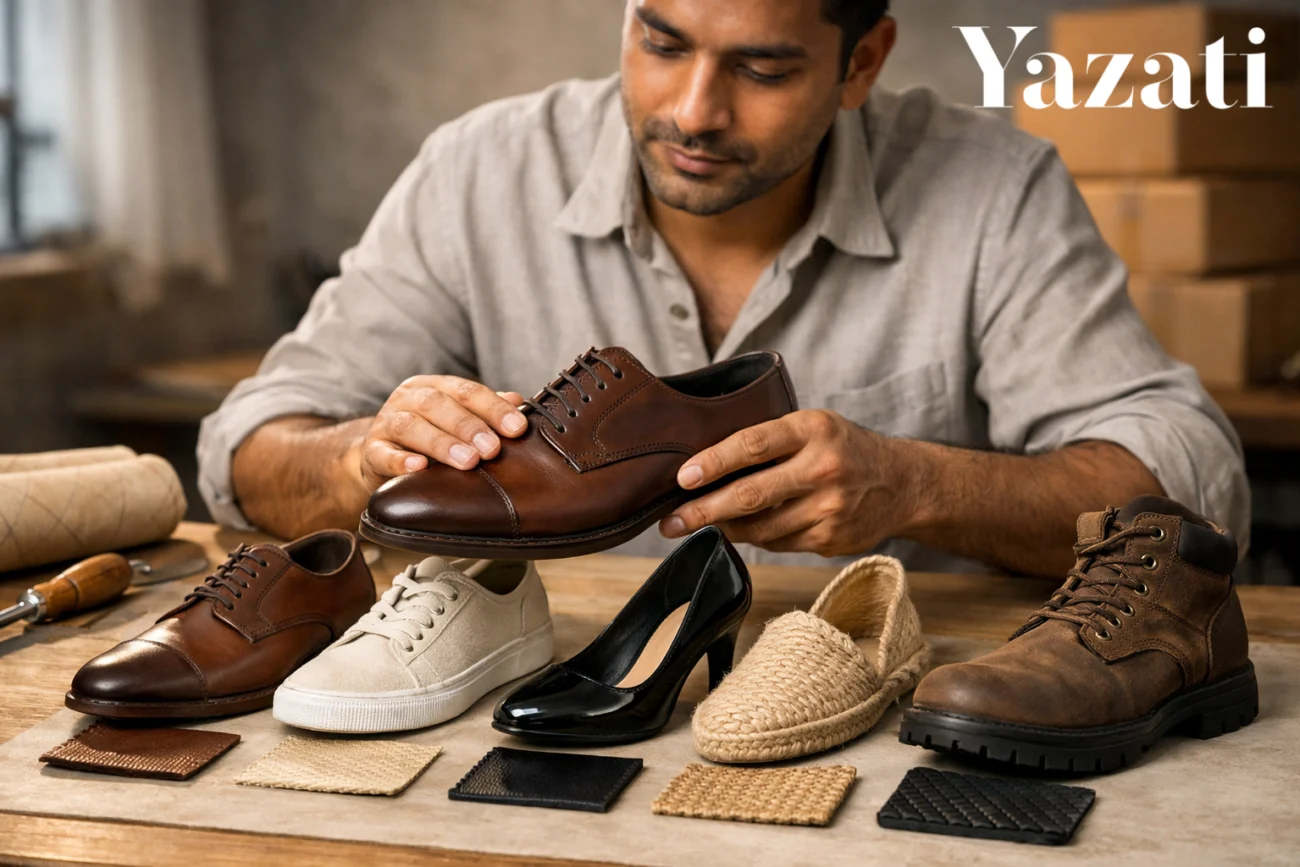
Understanding the Importance of Materials in Footwear Exports
Materials are the backbone of footwear manufacturing. The quality of the material directly affects the durability, comfort, design flexibility, and cost of the final product. When exporting footwear, manufacturers must meet the expectations of international markets where customers demand reliability, comfort, and style.
Indian exporters select materials that balance performance, affordability, and sustainability. These materials allow them to produce different types of footwear including:
- Formal shoes
- Sports shoes
- Casual footwear
- Safety footwear
- Fashion footwear
The right materials also help manufacturers comply with international safety standards and environmental regulations. This is one of the reasons why the 5 Footwear Materials That Define Indian Shoe Exports play such a crucial role in maintaining India’s reputation in global markets.
1. Genuine Leather
Why Leather Remains the Backbone of Indian Shoe Exports
Leather is widely considered the most premium material used in footwear manufacturing. India is one of the largest producers of leather in the world, making it a major advantage for the footwear export sector.
Leather shoes are known for their durability, flexibility, and premium appearance. Many international buyers prefer leather footwear because it adapts to the shape of the foot and becomes more comfortable over time.
Key Advantages of Leather Footwear
- Long-lasting durability
- Breathable material for better comfort
- Premium and professional appearance
- Natural flexibility
- High resale value in global markets
Types of Leather Used in Export Footwear
Indian footwear manufacturers use several types of leather, including:
| Leather Type | Characteristics | Common Footwear |
|---|---|---|
| Full Grain Leather | Highest quality, durable | Formal shoes |
| Top Grain Leather | Smooth finish | Luxury footwear |
| Suede Leather | Soft texture | Casual shoes |
| Nubuck Leather | Velvet-like surface | Fashion footwear |
These leather varieties help Indian exporters cater to different international markets including Europe, North America, and the Middle East.
2. Synthetic Leather (PU Leather)
Affordable and Versatile Material for Global Markets
Synthetic leather, commonly known as PU leather, is another material that significantly contributes to the 5 Footwear Materials That Define Indian Shoe Exports. It offers a leather-like appearance but at a lower cost.
This material is widely used in fashion footwear, casual shoes, and budget-friendly export products.
Benefits of Synthetic Leather
- Cost-effective compared to genuine leather
- Lightweight and flexible
- Available in multiple textures and colors
- Easier to maintain
- Animal-friendly alternative
Because of its affordability, synthetic leather footwear is extremely popular in developing markets and price-sensitive regions.
Industries Using Synthetic Leather Footwear
- Fashion footwear brands
- School shoes manufacturers
- Sports footwear producers
- Budget footwear retailers
The adaptability of synthetic leather allows manufacturers to quickly respond to changing fashion trends in international markets.
3. Rubber
Essential for Durable Shoe Soles
Rubber is a key component in footwear manufacturing, especially for soles. It provides traction, flexibility, and durability, making it ideal for sports shoes, work boots, and outdoor footwear.
India produces both natural rubber and synthetic rubber, giving manufacturers multiple options depending on the type of shoe being produced.
Why Rubber Is Important in Footwear Exports
Rubber offers several advantages that make it a valuable export material:
- Excellent grip and traction
- High durability
- Water resistance
- Flexibility for comfort
- Shock absorption
Rubber soles are especially popular in:
- Running shoes
- Hiking footwear
- Industrial safety boots
- Casual sneakers
Many international buyers prefer rubber-based soles because they provide long-lasting performance.
4. EVA (Ethylene Vinyl Acetate)
Lightweight Comfort for Modern Footwear
EVA is a modern material widely used in sports and casual footwear. It is extremely lightweight and provides excellent cushioning, making it perfect for comfort-focused shoes.
EVA has become one of the most important materials in the 5 Footwear Materials That Define Indian Shoe Exports, especially in the athletic footwear segment.
Advantages of EVA Material
- Extremely lightweight
- Soft and comfortable cushioning
- Good shock absorption
- Flexible structure
- Moisture resistance
Because of these features, EVA is commonly used in:
- Running shoes
- Flip-flops
- Sandals
- Walking shoes
- Sports footwear
EVA also helps reduce production costs because it is easy to mold into different shapes and designs.
5. Textile and Mesh Fabrics
Breathable Materials for Athletic Footwear
Textile and mesh fabrics are increasingly popular in modern footwear designs. These materials allow air circulation, keeping feet cool and comfortable during extended use.
They are widely used in sports shoes, casual sneakers, and lightweight footwear.
Benefits of Textile Materials in Footwear
- High breathability
- Lightweight structure
- Flexible movement
- Stylish design possibilities
- Comfortable for daily wear
Popular Textile Materials Used in Footwear
| Material | Features | Common Use |
|---|---|---|
| Polyester Mesh | Lightweight and breathable | Running shoes |
| Canvas | Durable fabric | Casual sneakers |
| Knitted Textile | Flexible design | Athletic footwear |
Textile-based footwear has become increasingly popular in international markets due to growing demand for comfort-driven footwear designs.
How These Materials Strengthen India’s Footwear Export Industry
The combination of leather, synthetic materials, rubber, EVA, and textile fabrics allows Indian manufacturers to produce a wide variety of footwear products.
These materials support different price segments, from premium leather shoes to affordable casual footwear.
Key Advantages for Indian Exporters
- Material availability within the country
- Cost-effective manufacturing
- Skilled craftsmanship
- Advanced manufacturing technology
- Compliance with international quality standards
Because of these advantages, India exports footwear to more than 100 countries worldwide.
Global Demand for Indian Footwear
The international footwear market continues to grow rapidly. Many global brands source footwear from India due to the country’s strong manufacturing capabilities.
Major export destinations include:
- United States
- United Kingdom
- Germany
- United Arab Emirates
- France
- Italy
Buyers value Indian footwear for its competitive pricing, quality craftsmanship, and reliable supply chain.
Sustainability Trends in Footwear Materials
The global footwear industry is also moving toward sustainable materials. Many Indian manufacturers are now adopting eco-friendly alternatives such as:
- Recycled rubber
- Plant-based leather alternatives
- Organic cotton fabrics
- Water-based adhesives
Sustainable production helps exporters meet international environmental regulations while also attracting eco-conscious consumers.
FAQs About 5 Footwear Materials That Define Indian Shoe Exports
1. Why is leather important for Indian shoe exports?
Leather is important because it offers durability, comfort, and a premium appearance. India has a strong leather industry, making it easier for manufacturers to produce high-quality export footwear.
2. What is the most affordable material used in export footwear?
Synthetic leather is one of the most affordable materials used in footwear exports. It provides a leather-like appearance at a lower cost.
3. Why is EVA used in modern footwear?
EVA is widely used because it is lightweight, flexible, and offers excellent cushioning, making it ideal for sports and casual shoes.
4. What role does rubber play in footwear manufacturing?
Rubber is primarily used in shoe soles because it provides traction, durability, and shock absorption.
5. Are textile shoes popular in international markets?
Yes, textile shoes are popular because they are breathable, lightweight, and comfortable for everyday wear.
6. Which countries import the most footwear from India?
Major importers include the United States, United Kingdom, Germany, France, and the United Arab Emirates.
Conclusion
The success of India’s footwear export industry is strongly influenced by the materials used in manufacturing. The 5 Footwear Materials That Define Indian Shoe Exports — leather, synthetic leather, rubber, EVA, and textile fabrics — form the foundation of a diverse and competitive footwear market.
These materials enable manufacturers to produce footwear that meets global standards while maintaining cost efficiency and design flexibility. As international demand for comfortable, durable, and sustainable footwear continues to rise, Indian exporters are well positioned to expand their presence in global markets.
With strong material resources, skilled craftsmanship, and modern production methods, India will continue to play a major role in the global footwear industry.
✨ Discover Global Sourcing Excellence with Netyex ✨
Netyex is your trusted B2B sourcing partner, connecting international buyers with India’s finest manufacturers and curated product lines—from handicrafts and home décor to kitchenware, textiles, hospitality essentials, and more. With verified suppliers and end-to-end support, we make global procurement seamless, reliable, and efficient.
👉 Elevate your sourcing experience—explore Netyex today.
📦 Bulk orders & customisation | 🌍 Worldwide delivery | 🤝 Trusted by global buyers
Visit Netyex to source premium Indian products with confidence.