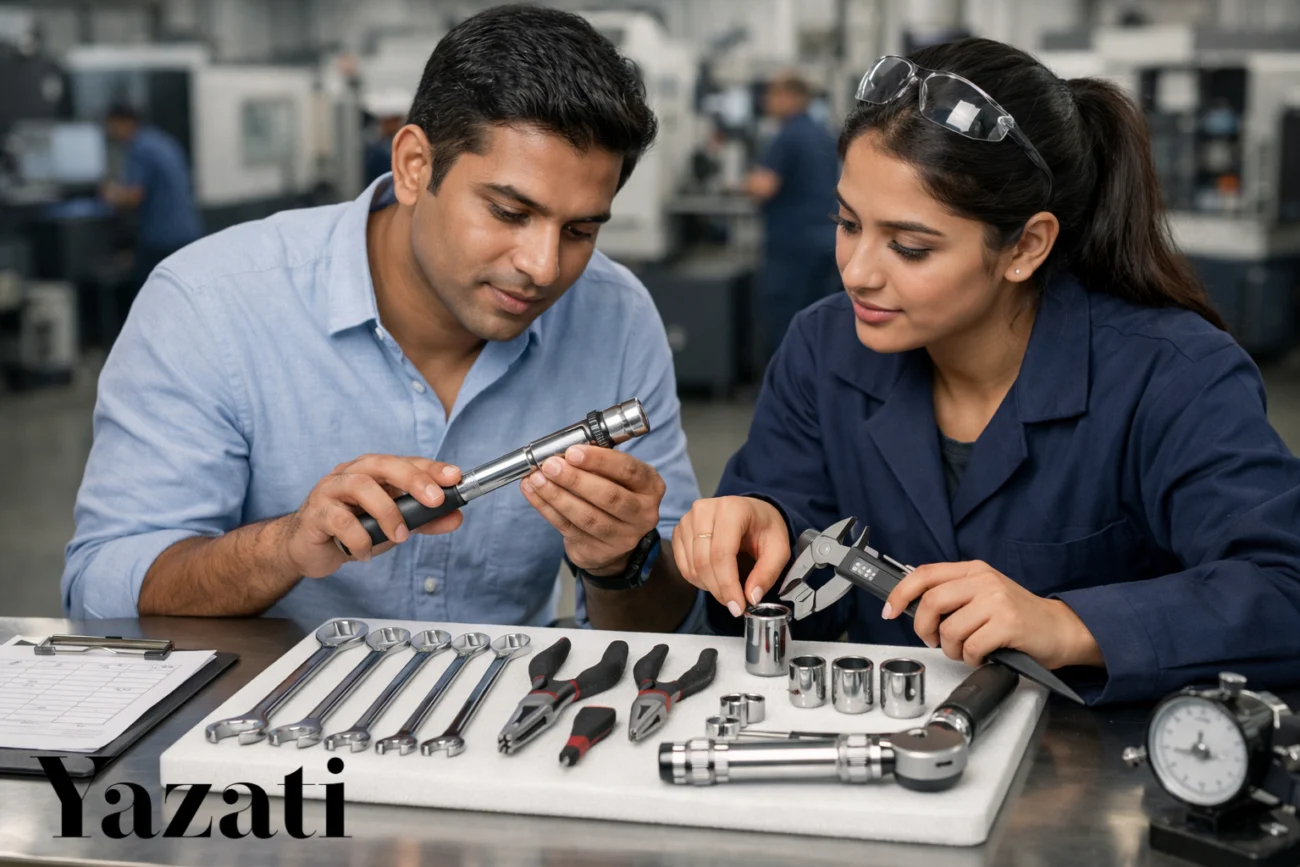
Introduction
In recent years, global buyers and distributors have increasingly shifted their sourcing strategies toward OEM hand tool production in India. From industrial tool brands to private-label retailers, many importers now rely on Indian manufacturers to produce high-quality hand tools under their own brand names.
OEM (Original Equipment Manufacturer) production allows businesses to design, customize, and brand tools while outsourcing manufacturing to experienced factories. India has emerged as a leading destination for this type of production because of its competitive pricing, skilled workforce, modern infrastructure, and strong export capabilities.
This article explores the main reasons why importers prefer India for OEM hand tool production, the advantages manufacturers offer, and how the country has become a global hub for tool manufacturing.
Understanding OEM Hand Tool Manufacturing
OEM manufacturing refers to the process where a manufacturer produces tools based on the specifications of a buyer or brand owner. Instead of selling products under the manufacturer’s name, the tools are customized and branded according to the client’s requirements.
Key Characteristics of OEM Production
OEM hand tool manufacturing typically involves several stages:
- Product design or customization
- Material selection
- Tool engineering and prototyping
- Mass production
- Quality inspection
- Branding and packaging
This model allows importers to build their own product line without investing heavily in factories or production equipment.
Popular Hand Tools Produced Through OEM
Many different tools are manufactured through OEM partnerships, including:
- Pliers
- Screwdrivers
- Wrenches and spanners
- Hammers
- Socket sets
- Adjustable tools
- Cutting tools
- Insulated electrical tools
Indian manufacturers are capable of producing these tools in large quantities while maintaining consistent quality standards.
India’s Growing Reputation in Global Tool Manufacturing
Over the last two decades, India has significantly strengthened its position in the global manufacturing landscape. The country has built a reputation for reliable industrial production and export-oriented manufacturing.
Major Hand Tool Manufacturing Clusters
India has several well-established industrial hubs dedicated to tool production. Some of the most notable clusters include:
| Manufacturing Hub | Specialty |
|---|---|
| Jalandhar | Hand tools and sports goods |
| Ludhiana | Industrial tools and machine parts |
| Mumbai | Engineering tools and export manufacturing |
| Delhi NCR | OEM and private label production |
These regions have developed specialized supply chains that support large-scale hand tool manufacturing.
Export-Oriented Manufacturing
Indian hand tool manufacturers export products to more than 100 countries worldwide, including markets in:
- North America
- Europe
- Middle East
- Southeast Asia
- Africa
This global reach demonstrates the country’s strong capability in international trade and compliance with foreign quality standards.
Competitive Manufacturing Costs
One of the most important reasons importers prefer India for OEM hand tool production is cost efficiency.
Lower Production Costs
India offers significantly lower manufacturing costs compared to many Western countries. Several factors contribute to this advantage:
- Affordable labor
- Lower operational costs
- Local availability of raw materials
- Efficient production processes
Because of these cost advantages, importers can maintain strong profit margins while still offering competitive pricing to their customers.
Economies of Scale
Indian factories often operate large production lines capable of handling high-volume orders. This allows manufacturers to reduce the per-unit cost of tools, making large OEM orders economically viable.
Skilled Workforce and Technical Expertise
India has a large pool of skilled workers with expertise in metalworking, forging, machining, and tool engineering.
Experienced Tool Engineers
Many manufacturers employ trained engineers who specialize in:
- Tool design
- Heat treatment processes
- Precision machining
- Quality control
This technical expertise ensures that tools meet the performance expectations of international buyers.
Skilled Craftsmen
In addition to engineers, India also has thousands of skilled technicians who have decades of experience in tool manufacturing. These workers contribute to:
- Precise forging and shaping
- Accurate finishing
- Durable assembly
Their craftsmanship plays a crucial role in maintaining high product standards.
Strong Raw Material Availability
Hand tool production requires high-quality metals such as carbon steel, chrome vanadium steel, and alloy steel. India has strong access to these materials.
Domestic Steel Production
India is one of the world’s largest steel producers. This ensures a stable supply of raw materials for tool manufacturers.
Advantages include:
- Reduced material costs
- Faster production timelines
- Consistent material quality
Reliable access to steel helps manufacturers maintain both quality and affordability.
High Manufacturing Standards and Quality Control
Quality is a top priority for importers sourcing OEM hand tools. Indian manufacturers have invested heavily in quality assurance systems.
Modern Manufacturing Technology
Many factories now use advanced equipment such as:
- CNC machines
- Automated forging systems
- Laser cutting tools
- Precision grinding machines
These technologies help produce tools with tight tolerances and consistent performance.
Strict Quality Testing
Quality control processes often include:
- Hardness testing
- Torque testing
- Dimensional inspection
- Surface finishing checks
Some manufacturers also comply with international certifications such as:
- ISO standards
- DIN specifications
- ANSI standards
These certifications increase buyer confidence and ensure compliance with global regulations.
Customization and Private Label Flexibility
OEM production is attractive to importers because it allows for product customization and brand differentiation.
Branding Opportunities
Indian manufacturers support private labeling by offering services such as:
- Custom logos
- Branded packaging
- Laser engraving
- Color customization
This allows businesses to create a unique brand identity in competitive markets.
Product Customization
Manufacturers can also customize:
- Tool dimensions
- Material composition
- Grip designs
- Surface coatings
Such flexibility helps importers tailor products to specific customer preferences.
Reliable Export Infrastructure
India has developed strong export logistics that support global trade.
Efficient Shipping Networks
Major ports such as Mumbai, Chennai, and Mundra connect Indian manufacturers to international markets. These ports support large cargo volumes and regular shipping schedules.
Advantages for importers include:
- Faster delivery timelines
- Reduced shipping delays
- Global distribution capability
Experienced Export Teams
Many OEM manufacturers maintain dedicated export departments that handle:
- Documentation
- Compliance regulations
- Customs procedures
- International shipping coordination
This expertise simplifies the sourcing process for overseas buyers.
Government Support for Manufacturing
The Indian government has introduced several policies to encourage industrial growth and exports.
Make in India Initiative
Programs like the Make in India initiative promote domestic manufacturing and attract international business partnerships.
Benefits include:
- Improved infrastructure
- Industrial incentives
- Export promotion programs
- Technology upgrades
These policies have strengthened India’s manufacturing ecosystem.
Export Incentives
Export-oriented manufacturers can also benefit from government support programs that reduce operational costs and improve competitiveness.
Reliable Supply Chains and Vendor Networks
India’s tool manufacturing industry benefits from strong supplier ecosystems.
Supporting Industries
OEM manufacturers work closely with specialized suppliers that provide:
- Steel components
- Tool handles
- Rubber grips
- Fasteners
- Packaging materials
This network ensures smooth production and reduces delays.
Integrated Manufacturing Processes
Many factories also manage multiple stages of production in-house, including:
- Forging
- Machining
- Heat treatment
- Finishing
Vertical integration improves efficiency and product consistency.
Growing Trust Among Global Importers
Over time, Indian manufacturers have built long-term partnerships with international brands.
Long-Term Business Relationships
Importers value manufacturers who provide:
- Consistent product quality
- Transparent pricing
- Reliable communication
- Timely deliveries
Indian suppliers have proven their reliability in all these areas.
Expanding Global Client Base
Many global retailers and industrial suppliers now source tools from India for both OEM and private label brands.
As these partnerships continue to grow, India’s reputation as a reliable manufacturing destination becomes even stronger.
FAQs
Why do importers choose India for OEM hand tool production?
Importers choose India because of its cost-effective manufacturing, skilled workforce, strong raw material supply, and reliable export infrastructure.
Are Indian hand tools high quality?
Yes. Many Indian manufacturers follow international standards such as ISO, DIN, and ANSI, ensuring consistent quality and durability.
What types of tools are commonly produced through OEM in India?
Common OEM tools include pliers, screwdrivers, wrenches, hammers, socket sets, and specialized industrial tools.
Can importers customize hand tools when sourcing from India?
Yes. Manufacturers offer customization options such as branding, packaging, material selection, tool design, and grip styles.
Is India competitive compared to China for hand tool manufacturing?
India is becoming a strong alternative to China due to competitive costs, reliable quality, and government support for manufacturing exports.
How do importers find reliable OEM manufacturers in India?
Importers typically identify manufacturers through trade fairs, industry directories, sourcing agents, and online B2B platforms.
Conclusion
India has become one of the most attractive destinations for OEM hand tool production. The combination of competitive costs, skilled labor, advanced manufacturing technologies, and strong export infrastructure makes the country highly appealing to international buyers.
Importers benefit from India’s ability to deliver high-quality tools, flexible customization options, and dependable supply chains. Government initiatives and growing industrial capabilities further strengthen the country’s position in global manufacturing.
As demand for private label and OEM products continues to increase, India is expected to play an even larger role in the global hand tool industry. For businesses looking to build their own tool brand or expand their product lines, partnering with Indian manufacturers offers a practical and profitable solution.
✨ Discover Global Sourcing Excellence with Netyex ✨
Netyex is your trusted B2B sourcing partner, connecting international buyers with India’s finest manufacturers and curated product lines—from handicrafts and home décor to kitchenware, textiles, hospitality essentials, and more. With verified suppliers and end-to-end support, we make global procurement seamless, reliable, and efficient.
👉 Elevate your sourcing experience—explore Netyex today.
📦 Bulk orders & customisation | 🌍 Worldwide delivery | 🤝 Trusted by global buyers
Visit Netyex to source premium Indian products with confidence.