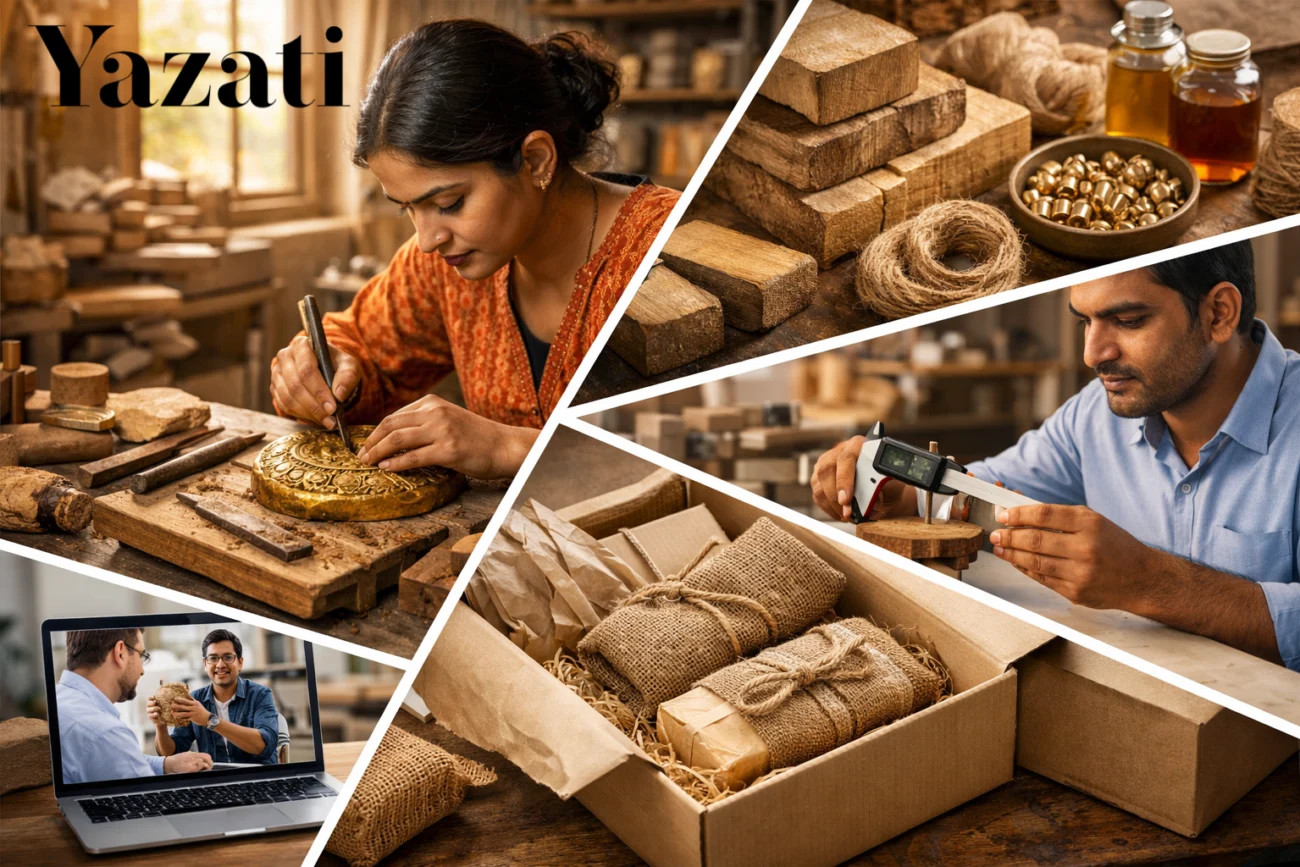
Introduction: The Growing Demand for Sustainable Handcrafted Products
In recent years, global buyers have shifted their focus toward sustainability, ethical production, and authenticity. Retailers, wholesalers, and importers across the world are increasingly searching for products that are environmentally responsible and socially conscious. This shift has created a strong demand for handcrafted goods that are made using sustainable materials and traditional techniques.
India has emerged as one of the most trusted destinations for sustainable handcrafted sourcing. With its centuries-old artisan traditions, abundant natural materials, and large network of skilled craftsmen, the country offers unique advantages for international importers. From handwoven textiles and eco-friendly home décor to handmade furniture and organic lifestyle products, India’s handcrafted industry continues to attract global buyers.
Importers choose India not only for its beautiful handmade products but also for its ethical manufacturing ecosystem, competitive pricing, and diverse product range. The combination of craftsmanship, sustainability, and cultural heritage makes Indian handicrafts highly desirable in international markets.
This article explores the key reasons why importers worldwide rely on India for sustainable handcrafted sourcing and how the country continues to strengthen its position as a global handicraft hub.
India’s Rich Heritage of Handicrafts
India’s handicraft tradition dates back thousands of years. Each region of the country has developed its own unique art forms, techniques, and materials.
For example, Rajasthan is famous for wood carving and blue pottery, Kashmir for hand-embroidered textiles, and Uttar Pradesh for brassware and leather goods. These crafts are often passed down through generations, preserving ancient techniques that machines cannot replicate.
This long cultural history provides importers with access to authentic handmade products that carry deep cultural value. Consumers across the globe increasingly appreciate products with a story behind them, and Indian handicrafts deliver exactly that.
Traditional methods such as hand weaving, block printing, metal engraving, and hand carving create products that stand out in quality and uniqueness. This heritage gives Indian handicrafts a competitive edge in global markets where originality is highly valued.
Abundant Availability of Natural and Sustainable Materials
One of the biggest reasons importers choose India for sustainable handcrafted sourcing is the easy availability of eco-friendly raw materials.
Indian artisans commonly use materials such as:
- Bamboo
- Jute
- Cane
- Reclaimed wood
- Organic cotton
- Natural dyes
- Terracotta clay
- Stone
These materials are renewable, biodegradable, and environmentally friendly. Since sustainability is becoming a top priority for modern consumers, products made from natural resources are gaining popularity in global markets.
Many artisans also practice waste reduction by using leftover materials to create new items. This circular approach helps reduce environmental impact and supports sustainable production.
Skilled Artisan Workforce
India has one of the largest artisan communities in the world. Millions of craftsmen across rural and urban regions depend on handicraft production for their livelihood.
These artisans possess specialized skills developed through years of training and experience. Their ability to create intricate designs, detailed patterns, and durable handmade products is unmatched.
Unlike factory production, handcrafted manufacturing allows artisans to focus on precision and artistic quality. Importers benefit from this high level of craftsmanship, which adds significant value to the final product.
Additionally, many artisan clusters specialize in specific crafts. This specialization ensures consistent quality and expertise in particular product categories such as textiles, ceramics, metalware, and furniture.
Wide Product Variety for Global Markets
Another major advantage for importers sourcing from India is the vast range of handcrafted products available.
Indian artisans produce goods across many categories, including:
- Home décor
- Furniture
- Textiles and fabrics
- Fashion accessories
- Jewelry
- Kitchenware
- Decorative items
- Eco-friendly lifestyle products
This diversity allows importers to source multiple product lines from a single country. It also helps businesses create unique collections that appeal to different consumer segments.
For example, an importer can source handwoven rugs, carved wooden furniture, and handcrafted lighting all from India, simplifying supply chain management.
Competitive Pricing Without Compromising Quality
One of the most attractive benefits of sourcing from India is cost efficiency.
Compared to many other manufacturing regions, India offers competitive labor and production costs. However, lower costs do not mean lower quality. Instead, the combination of skilled artisans and efficient production systems allows importers to obtain high-quality handmade goods at affordable prices.
This pricing advantage enables international retailers to maintain healthy profit margins while offering premium handcrafted products to their customers.
Strong Government Support for the Handicraft Industry
The Indian government actively supports the handicraft sector through various initiatives designed to promote exports and preserve traditional crafts.
These programs include:
- Financial support for artisan communities
- Skill development training programs
- Export promotion schemes
- Handicraft fairs and international exhibitions
- Infrastructure development for craft clusters
Such initiatives help artisans improve production quality, adopt modern techniques, and connect with global buyers.
As a result, importers gain access to a well-organized and supported industry that continues to grow and evolve.
Ethical and Fair Trade Production
Sustainability today goes beyond environmental impact. Ethical labor practices and fair trade principles are equally important.
Many Indian handicraft producers operate within fair trade frameworks that ensure artisans receive fair wages and safe working conditions. Ethical sourcing practices also support local communities by providing stable employment opportunities.
Importers who partner with responsible suppliers in India can confidently promote their products as ethically produced. This transparency helps build trust with consumers who value socially responsible brands.
Customization and Flexible Production
Handcrafted production allows greater flexibility compared to large-scale factory manufacturing.
Indian artisans and manufacturers are often willing to customize products according to importer requirements. Buyers can request specific designs, materials, colors, sizes, or packaging options.
This flexibility allows importers to create exclusive product collections tailored to their brand identity. Customization also helps businesses respond quickly to changing market trends and consumer preferences.
Growing Global Demand for Handmade and Sustainable Goods
Consumer preferences are changing rapidly across international markets. Many buyers now prefer handmade products over mass-produced items because they offer authenticity and individuality.
Handcrafted goods are often perceived as:
- More environmentally friendly
- Higher in quality
- Unique and artistic
- Ethically produced
India’s handcrafted sector perfectly aligns with these market trends. Importers who source from India can meet growing consumer demand while strengthening their sustainability commitments.
Efficient Export Infrastructure
India has developed a strong export infrastructure that supports global trade. Major ports, logistics networks, and export agencies help streamline international shipments.
Many handicraft exporters are experienced in working with international buyers and understand global quality standards, packaging requirements, and documentation processes.
This experience reduces risks and ensures smoother transactions for importers.
Long-Term Supplier Relationships
Many importers prefer working with Indian suppliers because of their focus on long-term partnerships.
Indian handicraft manufacturers often prioritize relationship-based business practices rather than one-time transactions. They work closely with buyers to understand their requirements and maintain consistent quality across orders.
Over time, these partnerships lead to better communication, improved product development, and more reliable supply chains.
Support for Rural Communities
Handicraft production in India is closely linked with rural development. Many artisan communities are located in villages where traditional crafts provide essential employment opportunities.
When importers source handcrafted products from India, they indirectly support thousands of rural families. This economic support helps preserve traditional skills and reduces migration to urban areas.
For socially conscious brands, this community impact becomes an important part of their sustainability story.
Sustainability Through Traditional Production Methods
Traditional handicraft techniques are naturally sustainable. Many processes rely on manual labor instead of energy-intensive machinery.
For example:
- Hand weaving requires minimal electricity
- Natural dyeing reduces chemical pollution
- Hand carving eliminates industrial waste
These methods significantly reduce the environmental footprint of production.
Importers looking to reduce their carbon impact often prefer sourcing handcrafted goods because they align with eco-friendly manufacturing principles.
Innovation in Modern Handicraft Design
Although rooted in tradition, Indian handicrafts are continuously evolving. Designers and artisans increasingly collaborate to create products that blend traditional craftsmanship with modern aesthetics.
This fusion makes Indian handicrafts highly appealing to contemporary global markets. Products maintain their cultural authenticity while fitting modern interior design and lifestyle trends.
Importers benefit from this innovation because it allows them to offer unique yet trend-relevant products to their customers.
Quality Control and Export Standards
Many Indian handicraft exporters follow strict quality control processes to meet international standards. These processes include material inspection, product testing, and packaging verification.
Quality assurance ensures that handcrafted goods remain durable, safe, and consistent across shipments. Importers can therefore maintain strong brand reputations while sourcing from India.
Future Growth of India’s Sustainable Handicraft Sector
The future of India’s handicraft industry looks promising. As global demand for sustainable products continues to grow, handcrafted goods will play an increasingly important role in international trade.
Technological advancements, improved logistics, and stronger global awareness of sustainability will further strengthen India’s position as a leading sourcing destination.
Importers who establish partnerships with Indian handicraft suppliers today are likely to benefit from long-term growth opportunities.
Frequently Asked Questions (FAQs)
Why is India famous for handicrafts?
India has thousands of years of artistic tradition, with each region specializing in unique craft techniques such as weaving, carving, embroidery, and metalwork.
Are Indian handicrafts sustainable?
Many Indian handicrafts use natural materials and traditional production methods, making them environmentally friendly and sustainable.
What types of handicrafts are commonly exported from India?
Common exports include textiles, home décor items, wooden furniture, ceramics, metalware, jewelry, and eco-friendly lifestyle products.
Why do importers prefer handcrafted products?
Handcrafted products offer uniqueness, higher perceived quality, ethical production, and environmental sustainability.
Is sourcing handicrafts from India cost-effective?
Yes, India offers competitive pricing due to skilled labor availability and efficient production systems.
How do handicrafts support local communities in India?
Handicraft production provides employment to millions of artisans, especially in rural areas, helping sustain traditional skills and improve livelihoods.
Conclusion
India has firmly established itself as a global hub for sustainable handcrafted sourcing. Its combination of rich cultural heritage, skilled artisans, eco-friendly materials, and competitive pricing makes it an ideal destination for international importers.
Beyond economic benefits, sourcing handcrafted products from India supports ethical production, rural livelihoods, and environmental sustainability. These values align perfectly with the expectations of modern consumers who seek authenticity and responsibility in the products they buy.
As sustainability continues to shape the future of global trade, India’s handicraft industry is well positioned to meet the growing demand for beautiful, meaningful, and responsibly made products. Importers who choose India not only gain access to exceptional craftsmanship but also become part of a global movement that values tradition, sustainability, and community impact.
✨ Discover Global Sourcing Excellence with Netyex ✨
Netyex is your trusted B2B sourcing partner, connecting international buyers with India’s finest manufacturers and curated product lines—from handicrafts and home décor to kitchenware, textiles, hospitality essentials, and more. With verified suppliers and end-to-end support, we make global procurement seamless, reliable, and efficient.
👉 Elevate your sourcing experience—explore Netyex today.
📦 Bulk orders & customisation | 🌍 Worldwide delivery | 🤝 Trusted by global buyers
Visit Netyex to source premium Indian products with confidence.