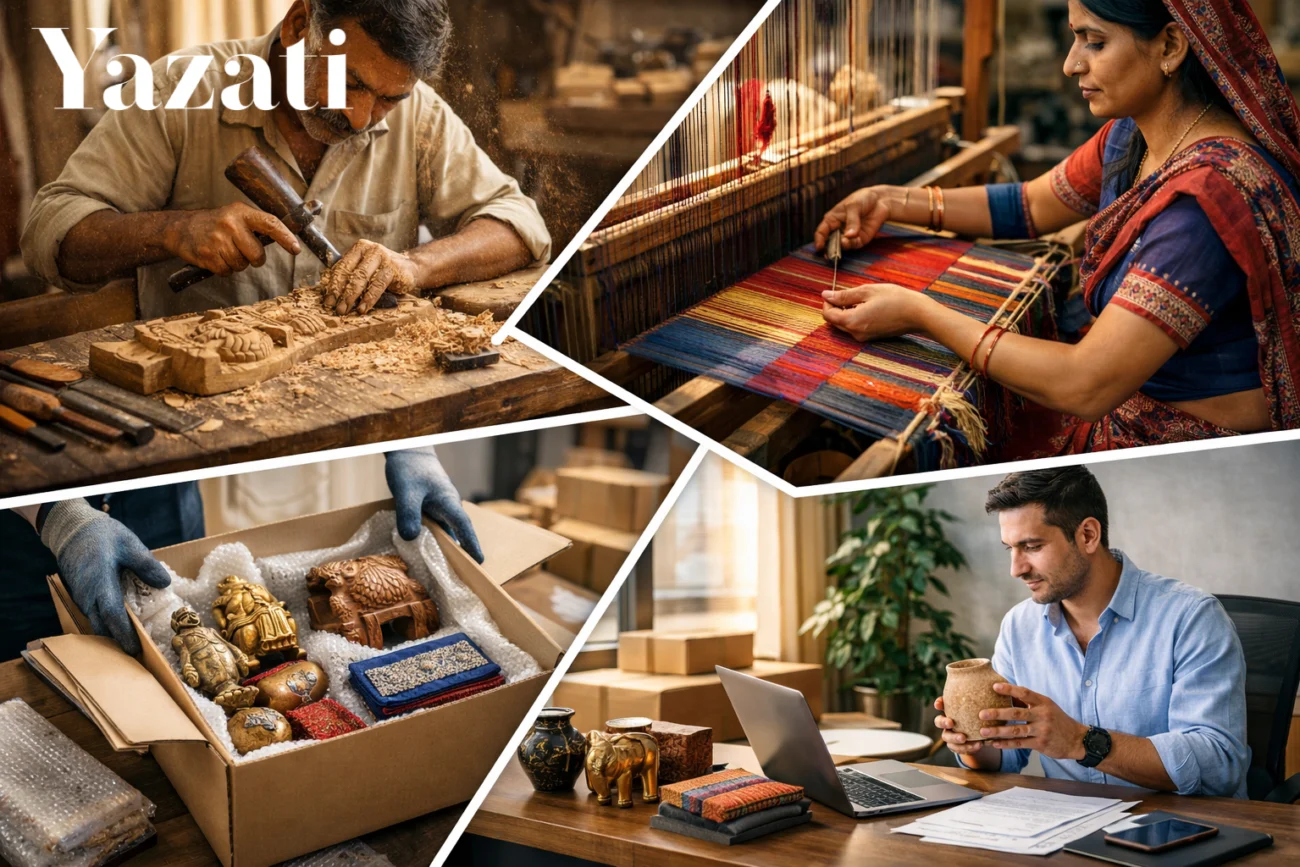
Understanding the Indian Handicrafts Industry
India’s handicraft sector is deeply rooted in tradition and cultural heritage. Millions of artisans across rural and urban areas produce handmade items using techniques passed down through generations.
The industry includes products such as:
- Wooden handicrafts
- Handwoven textiles
- Pottery and ceramics
- Jewelry and metal crafts
- Bamboo and cane products
- Carpets and rugs
- Stone carvings
Major handicraft-producing states include:
| State | Famous Handicrafts |
|---|---|
| Rajasthan | Blue pottery, block printing |
| Kashmir | Pashmina shawls, wood carving |
| Gujarat | Bandhani textiles, embroidery |
| Uttar Pradesh | Brassware, carpets |
| West Bengal | Terracotta, kantha embroidery |
| Tamil Nadu | Tanjore paintings, bronze statues |
Because each state specializes in different crafts, importers often need to source from multiple regions.
Why Import Handicrafts from Multiple Indian States
Importing from several states allows businesses to diversify product collections and appeal to broader markets.
Benefits include:
Greater Product Variety
Each region offers distinct designs, materials, and craftsmanship styles. By sourcing from different states, importers can build a unique and diverse catalog.
Better Pricing Opportunities
Prices vary depending on location, artisan clusters, and production costs. Importers can compare suppliers across states and choose the most cost-effective options.
Reduced Supply Risk
If one supplier faces production delays, other suppliers from different states can maintain inventory flow.
Access to Authentic Craftsmanship
Many authentic handicrafts are only produced in specific regions. Sourcing directly from those areas ensures originality and cultural authenticity.
Key Challenges When Importing from Multiple States
While importing handicrafts offers great opportunities, managing suppliers across different states comes with several challenges.
Logistics Complexity
Products must often be collected from different locations and consolidated before international shipping.
Quality Variations
Since handicrafts are handmade, product quality can vary between artisans and regions.
Communication Barriers
Some artisans may have limited experience with international buyers.
Documentation and Export Compliance
Export paperwork must be properly prepared for customs clearance.
Understanding these challenges helps importers create better strategies for efficient sourcing.
Researching Handicraft Clusters in India
Before starting imports, it is important to research major handicraft clusters across India.
Handicraft clusters are areas where groups of artisans specialize in particular crafts.
Examples include:
- Jaipur – block printing and blue pottery
- Moradabad – brass handicrafts
- Saharanpur – wooden handicrafts
- Bhuj – embroidery and textiles
- Srinagar – wool and shawls
Working directly with cluster-based artisans can reduce costs and improve product authenticity.
Finding Reliable Handicraft Suppliers
Choosing the right suppliers is one of the most important steps in the importing process.
Trade Fairs
India hosts several handicraft exhibitions where international buyers can meet suppliers.
These events allow buyers to compare multiple vendors in one place.
Export Promotion Councils
Government organizations often maintain databases of registered handicraft exporters.
Online B2B Platforms
Many suppliers list products on wholesale marketplaces, making it easier to discover manufacturers from different states.
Local Agents
Hiring a sourcing agent can simplify communication and supplier verification.
Building Strong Relationships with Artisans
Long-term relationships with artisans and suppliers can improve reliability and product quality.
Helpful practices include:
- Clear communication about product specifications
- Fair pricing negotiations
- Regular orders for consistent income
- Providing feedback to improve craftsmanship
When artisans trust buyers, they are more likely to prioritize production schedules and maintain quality standards.
Standardizing Product Quality Across States
Since handicrafts are handmade, quality can vary widely.
To maintain consistent standards, importers should:
- Request product samples before placing bulk orders
- Create detailed product specifications
- Use quality inspection services
- Provide visual reference guides for artisans
Establishing a clear quality control system ensures that products from different states meet the same standards.
Efficient Order Consolidation Strategies
When sourcing from multiple states, shipping each order separately can be expensive.
A better solution is order consolidation.
Central Warehouse Consolidation
Products from various suppliers are shipped to a central warehouse where they are packed together for export.
Benefits include:
- Lower shipping costs
- Simplified documentation
- Easier quality inspection
Freight Forwarder Consolidation
Many freight forwarders offer cargo consolidation services for exporters.
They combine shipments from multiple suppliers into a single container.
Managing Logistics Across Different Regions
India’s size means that transportation between states can take time.
Efficient logistics planning is essential.
Important considerations include:
- Domestic transport from artisan clusters to consolidation hubs
- Choosing reliable freight forwarders
- Scheduling shipments based on production timelines
- Proper packaging to protect fragile items
Common export ports include:
- Mumbai
- Chennai
- Kolkata
- Nhava Sheva
Selecting the closest port to supplier locations can reduce transportation costs.
Understanding Export Documentation
Proper documentation is required for exporting handicrafts.
Common export documents include:
- Commercial invoice
- Packing list
- Bill of lading or airway bill
- Certificate of origin
- Export license (if required)
Ensuring accurate documentation prevents customs delays.
Cost Optimization Strategies
Importers can reduce costs by optimizing several aspects of the supply chain.
Bulk Ordering
Larger orders often receive better pricing from suppliers.
Shared Shipping Containers
Combining shipments with other importers reduces freight expenses.
Seasonal Purchasing
Buying during off-peak production seasons may result in lower prices.
Direct Artisan Sourcing
Working directly with artisans can eliminate middlemen costs.
Using Technology to Manage Multi-State Imports
Technology tools can simplify sourcing from multiple locations.
Useful tools include:
- Inventory management software
- Supplier communication platforms
- Digital quality inspection apps
- Shipment tracking systems
These tools help importers coordinate suppliers across different regions efficiently.
Legal and Compliance Considerations
Importers must comply with both Indian export regulations and their own country’s import laws.
Key considerations include:
- Product safety standards
- Labeling requirements
- Import duties and taxes
- Intellectual property rights
Understanding legal requirements prevents costly delays or penalties.
Sustainable and Ethical Sourcing
Many consumers prefer ethically sourced handicrafts.
Importers can support sustainable practices by:
- Working with artisan cooperatives
- Ensuring fair wages
- Avoiding exploitative labor practices
- Promoting eco-friendly materials
Ethical sourcing also enhances brand reputation in international markets.
Marketing Imported Indian Handicrafts
Once products are imported, effective marketing is crucial.
Strategies include:
- Highlighting cultural stories behind each craft
- Promoting handmade authenticity
- Showcasing artisan craftsmanship
- Using storytelling in product descriptions
Consumers often value the history and tradition behind handcrafted items.
How to Import Handicrafts from Multiple Indian States Efficiently: Practical Workflow
A structured workflow simplifies the importing process.
Step-by-step approach:
- Research handicraft clusters across India
- Identify reliable suppliers in different states
- Request product samples and verify quality
- Negotiate pricing and order quantities
- Arrange domestic transport to consolidation centers
- Conduct quality inspections
- Prepare export documentation
- Consolidate shipments into containers
- Ship internationally through freight forwarders
- Clear customs and distribute products
Following this workflow helps importers manage complex multi-state sourcing operations smoothly.
Frequently Asked Questions (FAQs)
1. Is importing handicrafts from India profitable?
Yes. Indian handicrafts often have high international demand due to their cultural value and unique handmade designs. Profit margins can be strong when sourcing directly from artisans.
2. Which Indian state produces the most handicrafts?
Several states are known for handicrafts, including Rajasthan, Uttar Pradesh, Gujarat, West Bengal, and Kashmir. Each state specializes in different crafts.
3. Do I need a sourcing agent to import handicrafts?
A sourcing agent is not mandatory but can help verify suppliers, manage logistics, and handle communication with artisans.
4. What is the best way to manage shipments from multiple states?
Using a central warehouse or freight forwarder consolidation service is the most efficient way to combine shipments from different suppliers.
5. How can I ensure handicraft quality before shipping?
Request product samples, create detailed specifications, and conduct third-party quality inspections before shipment.
6. What are common shipping methods for handicrafts?
Handicrafts are typically shipped by sea freight for bulk orders or air freight for smaller shipments.
Conclusion
Understanding How to Import Handicrafts from Multiple Indian States Efficiently requires careful planning, strong supplier relationships, and well-organized logistics. By sourcing from artisan clusters, consolidating shipments, and maintaining strict quality control, importers can build a reliable and profitable supply chain.
India’s diverse handicraft traditions provide endless opportunities for businesses worldwide. With the right strategies and systems in place, importing from multiple states can become a streamlined process that benefits both buyers and artisans.
✨ Discover Global Sourcing Excellence with Netyex ✨
Netyex is your trusted B2B sourcing partner, connecting international buyers with India’s finest manufacturers and curated product lines—from handicrafts and home décor to kitchenware, textiles, hospitality essentials, and more. With verified suppliers and end-to-end support, we make global procurement seamless, reliable, and efficient.
👉 Elevate your sourcing experience—explore Netyex today.
📦 Bulk orders & customisation | 🌍 Worldwide delivery | 🤝 Trusted by global buyers
Visit Netyex to source premium Indian products with confidence.