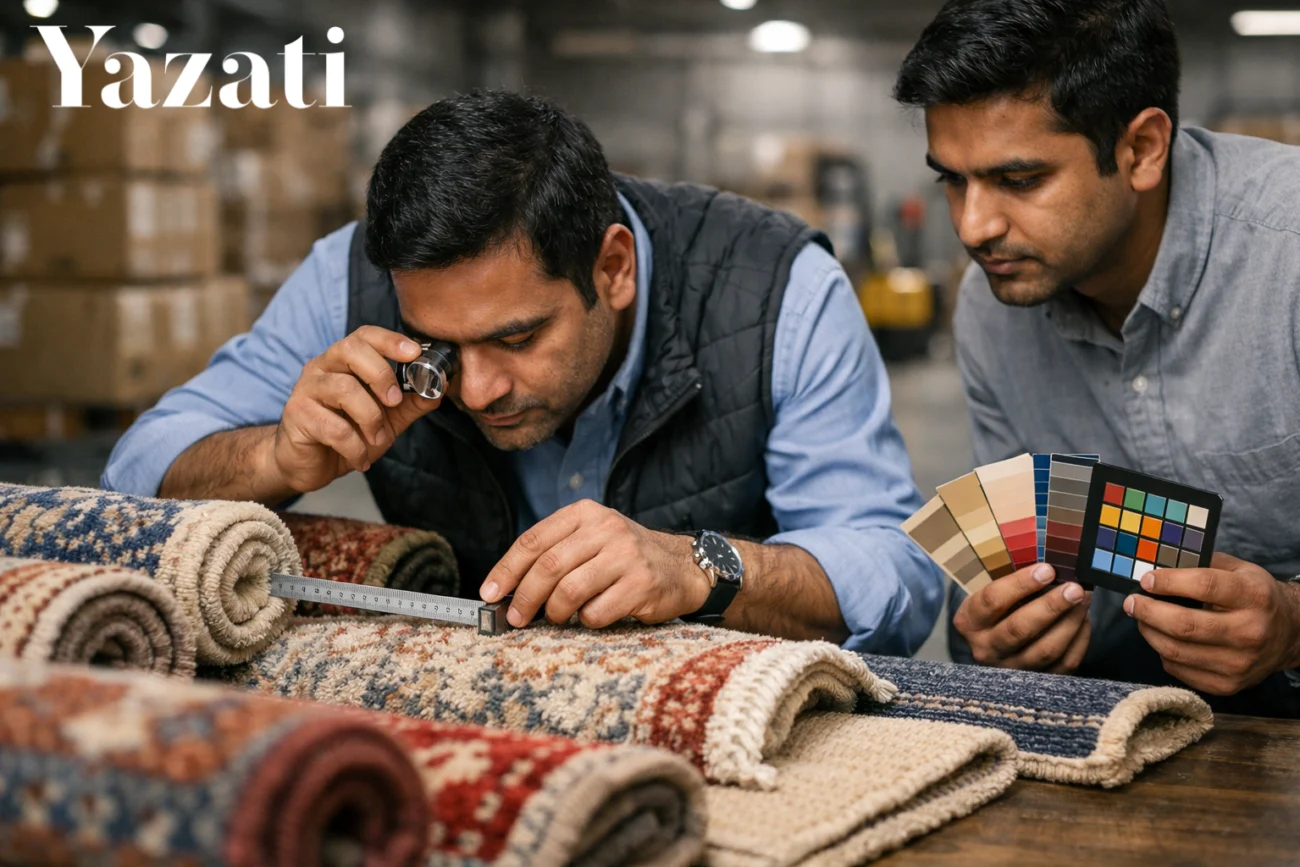
Why Quality Consistency Matters in Bulk Rug Imports
Quality consistency directly affects your brand reputation and profitability. When customers receive rugs that differ from product descriptions or previous orders, trust is lost quickly.
Key reasons quality consistency matters include:
- Customer satisfaction: Buyers expect the same color, size, and material every time.
- Reduced return rates: Consistent products mean fewer refunds and replacements.
- Brand credibility: Retailers rely on dependable suppliers.
- Cost control: Poor quality leads to wasted shipping and inventory losses.
- Long-term supplier relationships: Clear standards reduce disputes with manufacturers.
Without a strong quality control process, importers often face unexpected defects, inconsistent dye colors, uneven weaving, and poor finishing.
Understanding Common Quality Issues in Imported Rugs
Before solving the problem, importers must understand the most common quality defects that occur in bulk rug imports.
1. Color Variations
Rugs often use dyed yarn or fibers. Small differences in dye batches can produce noticeable color changes.
2. Inconsistent Dimensions
Handwoven rugs frequently vary in size due to manual weaving processes.
3. Fiber Quality Differences
Manufacturers may substitute lower-grade wool, cotton, or synthetic fibers without informing buyers.
4. Uneven Weaving or Tufting
Irregular weaving tension can lead to loose or uneven patterns.
5. Poor Backing or Finishing
Low-quality backing materials or weak adhesives can reduce durability.
Understanding these risks allows importers to set measurable quality standards.
Create Detailed Product Specifications
The most effective way to maintain quality consistency is to create clear product specifications before production begins.
A detailed specification sheet should include:
| Specification Area | Details to Include |
|---|---|
| Material | Wool, cotton, polyester, jute, etc. |
| Pile height | Exact measurement in millimeters |
| Rug size | Length, width, tolerance limits |
| Weaving method | Handwoven, tufted, machine-made |
| Color codes | Pantone or dye references |
| Backing material | Latex, cotton, or synthetic |
| Edge finishing | Serged, fringed, or bound |
Providing precise instructions reduces misunderstandings and ensures factories produce rugs that match your expectations.
Select Reliable Rug Manufacturers
Your supplier plays the biggest role in product consistency.
When selecting manufacturers, evaluate:
- Production experience with your rug type
- Manufacturing capacity
- Quality control procedures
- Certifications and compliance standards
- Previous export experience
- Factory audit reports
A factory that already produces rugs for international brands is usually more familiar with consistent production standards.
Request Pre-Production Samples
Never begin large-scale production without approving samples.
Why Sampling Matters
Samples help verify:
- Material quality
- Color accuracy
- Pattern design
- Texture and pile density
- Overall craftsmanship
Types of Samples to Request
- Material samples
- Strike-off color samples
- Prototype rug samples
- Pre-production samples
These samples become your reference standard for future inspections.
Implement Standardized Quality Control Procedures
Quality control should occur throughout the production cycle, not only at the end.
A typical rug import inspection process includes:
1. Pre-Production Inspection
This verifies that raw materials match the approved samples.
2. During Production Inspection
Random checks ensure weaving, dyeing, and assembly meet specifications.
3. Pre-Shipment Inspection
Final inspections confirm the finished rugs match your quality requirements before shipment.
These inspections should examine:
- Dimensions
- Color consistency
- Pattern accuracy
- Stitching and edging
- Backing durability
- Packaging standards
Define Acceptable Quality Limits (AQL)
Professional importers use AQL (Acceptable Quality Limit) to define acceptable defect levels.
AQL categorizes defects into:
| Defect Type | Example |
|---|---|
| Critical | Hazardous materials or severe defects |
| Major | Incorrect size, severe color mismatch |
| Minor | Slight weaving irregularities |
By defining acceptable defect levels, importers avoid disputes and ensure consistent expectations between buyers and suppliers.
Monitor Dye Lot Consistency
Color variations are one of the most frequent problems in bulk rug imports.
To prevent color inconsistencies:
- Require dye lot tracking
- Request Pantone color references
- Approve lab dip samples
- Ensure factories use consistent dye batches
Factories should also maintain dye process documentation for repeat orders.
Use Third-Party Inspection Services
Independent inspection agencies provide unbiased quality verification.
Third-party inspections typically check:
- Product quality
- Packaging integrity
- Quantity verification
- Labeling compliance
- Shipping readiness
This step is especially important when importing rugs from overseas factories where direct supervision is difficult.
Establish Clear Communication with Suppliers
Communication gaps often lead to quality issues.
To maintain quality consistency:
- Provide written specifications
- Use visual references
- Confirm production timelines
- Request progress photos
- Conduct regular production updates
Clear communication reduces misunderstandings and ensures factories follow instructions accurately.
Standardize Packaging and Handling
Improper packaging can damage rugs during transport.
Standard packaging should include:
- Moisture-resistant wrapping
- Protective plastic covering
- Strong outer cartons
- Clear product labels
- Barcodes or SKU identification
Consistent packaging ensures rugs arrive in the same condition they left the factory.
Track Supplier Performance Over Time
Maintaining a supplier performance record helps identify reliable manufacturers.
Important performance indicators include:
- Defect rates
- On-time delivery
- Communication efficiency
- Compliance with specifications
- Response to quality issues
Tracking these metrics helps importers decide whether to continue or replace suppliers.
Develop Long-Term Supplier Partnerships
Instead of constantly switching manufacturers, successful importers build long-term relationships with trusted suppliers.
Benefits include:
- Better pricing
- Priority production scheduling
- Improved quality consistency
- Faster issue resolution
- Shared commitment to product standards
Suppliers who understand your brand expectations are more likely to deliver consistent rugs.
Train Your Team on Rug Quality Standards
Your sourcing and inspection teams must understand how to evaluate rug quality.
Training should cover:
- Fiber identification
- Weaving techniques
- Dye consistency evaluation
- Size measurement methods
- Defect classification
Well-trained teams can detect problems early before products are shipped.
Use Technology for Quality Tracking
Modern importers use digital tools to track production and inspections.
Useful technologies include:
- Quality management software
- Digital inspection reports
- Supply chain tracking platforms
- Production monitoring systems
These tools help businesses maintain transparency and improve supplier accountability.
Frequently Asked Questions (FAQs)
1. Why do imported rugs sometimes have inconsistent colors?
Color inconsistencies usually occur due to differences in dye batches, fiber materials, or dyeing temperatures during production. Proper dye lot control and sample approvals help prevent these issues.
2. What is the most common defect in imported rugs?
The most common issues include uneven weaving, incorrect dimensions, and color variations between production batches.
3. How can importers reduce defect rates in bulk rug orders?
Importers can reduce defects by creating detailed specifications, approving samples, conducting inspections, and working with reliable manufacturers.
4. Should importers use third-party inspections for rug imports?
Yes. Third-party inspections provide independent quality verification and help detect defects before products are shipped internationally.
5. How important are product specifications in rug manufacturing?
Specifications are essential. They define materials, dimensions, colors, and finishing details that factories must follow to maintain product consistency.
6. Can handmade rugs maintain consistent quality in bulk orders?
Yes, but it requires strict quality control procedures, skilled artisans, and clear production guidelines to maintain consistency.
Conclusion
Maintaining quality consistency in bulk rug imports requires a structured approach that combines supplier management, product specifications, inspections, and clear communication.
Successful importers treat quality control as a continuous process rather than a one-time check. By implementing standardized specifications, monitoring production, and partnering with reliable manufacturers, businesses can significantly reduce defects and ensure customers receive rugs that meet expectations every time.
Consistency not only protects your brand reputation but also strengthens your supply chain and builds long-term customer trust. When done correctly, quality control transforms rug importing from a risky operation into a predictable and profitable business strategy.
✨ Discover Global Sourcing Excellence with Netyex ✨
Netyex is your trusted B2B sourcing partner, connecting international buyers with India’s finest manufacturers and curated product lines—from handicrafts and home décor to kitchenware, textiles, hospitality essentials, and more. With verified suppliers and end-to-end support, we make global procurement seamless, reliable, and efficient.
👉 Elevate your sourcing experience—explore Netyex today.
📦 Bulk orders & customisation | 🌍 Worldwide delivery | 🤝 Trusted by global buyers
Visit Netyex to source premium Indian products with confidence.