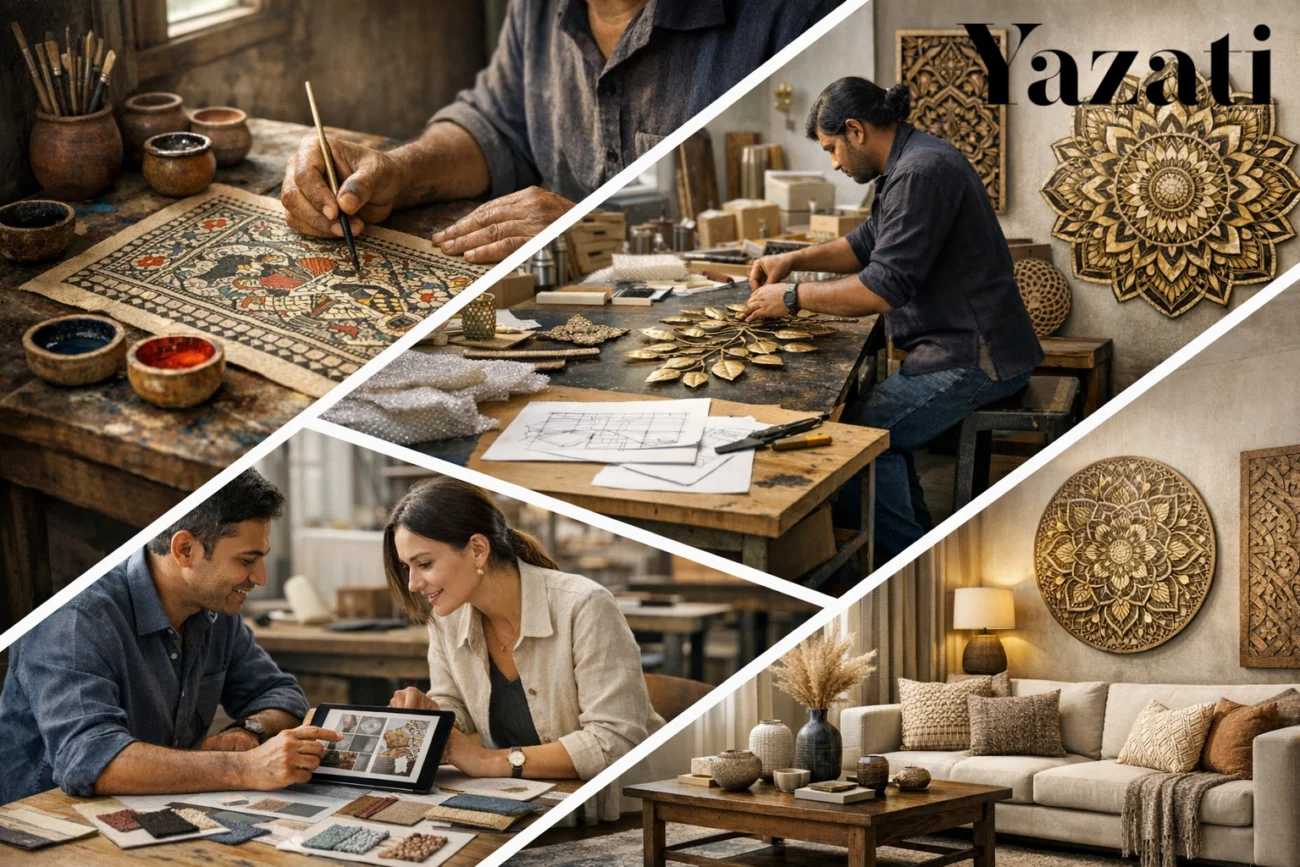
Introduction: Understanding The Evolution of Indian Wall Art for Global Markets
Indian wall art has traveled a long and fascinating journey. What once decorated temple walls, village homes, and royal palaces is now admired in living rooms, galleries, and design studios across the world. The evolution of Indian wall art for global markets reflects how traditional craftsmanship can adapt to changing tastes while still preserving cultural roots.
India has always been a hub of artistic expression. From vibrant folk paintings to intricate murals and contemporary canvas art, the country’s wall art traditions showcase centuries of creativity. Over time, globalization, technology, and changing design preferences have helped Indian artists and artisans reach audiences far beyond their local communities.
Today, Indian wall art is not only a cultural symbol but also an important part of the global home décor industry. Designers, collectors, and homeowners around the world appreciate its rich colors, detailed patterns, and deep storytelling.
This article explores how Indian wall art evolved from traditional village art to a globally admired décor style. We will examine historical influences, modern innovations, export trends, and the future of Indian wall art in international markets.
Historical Roots of Indian Wall Art
Indian wall art traditions date back thousands of years. Ancient civilizations in the Indian subcontinent used walls as a canvas for storytelling, spiritual symbolism, and decorative beauty.
Ancient Cave and Temple Paintings
Some of the earliest examples of Indian wall art can be seen in ancient caves and temples. These artworks were often created to depict religious stories, cultural events, and everyday life.
Key features included:
- Natural pigments made from minerals and plants
- Detailed human and animal figures
- Mythological narratives and symbolic imagery
These early paintings laid the foundation for many later art styles.
Royal Patronage and Palace Murals
During medieval and early modern periods, Indian rulers supported artists who created elaborate wall paintings in palaces and forts.
Characteristics of palace murals included:
- Fine detailing and elaborate designs
- Use of gold and rich pigments
- Depictions of royal life, festivals, and mythology
Royal patronage helped elevate wall art into a respected cultural craft.
Regional Folk Art Traditions
One of the most important aspects of the evolution of Indian wall art for global markets is the diversity of regional styles. Different communities developed unique forms of wall art based on local traditions and beliefs.
Madhubani Art
Originating from the Mithila region, Madhubani paintings are known for:
- Bold colors and intricate patterns
- Mythological themes
- Decorative borders and symmetrical designs
Initially created on mud walls, these paintings are now widely exported on canvas and paper.
Warli Art
Warli art comes from tribal communities in western India. Its distinctive style uses simple geometric figures to represent everyday life.
Typical Warli elements include:
- Stick-like human figures
- Scenes of farming, dancing, and festivals
- Minimalist white-on-earth backgrounds
The simplicity of Warli art has made it highly appealing to modern international audiences.
Pattachitra and Other Folk Styles
Many other regional art forms have also contributed to the growth of Indian wall art globally. These include:
- Pattachitra from Odisha and West Bengal
- Gond art from central India
- Kalamkari from southern India
Each style reflects local culture, stories, and spiritual traditions.
Transition from Local Craft to Global Art
For centuries, Indian wall art was primarily created for local communities. However, the late twentieth century marked a turning point when these artworks began reaching international markets.
Several factors influenced this transition.
Growing Global Interest in Handmade Art
As mass-produced décor became common, many consumers began seeking authentic handmade pieces. Indian wall art, with its rich cultural background and handcrafted quality, quickly attracted attention.
Support from Cultural Organizations
Art institutions, museums, and cultural organizations started promoting Indian folk art globally. Exhibitions and cultural festivals introduced international audiences to these unique traditions.
Artisans Adapting to New Mediums
Artists began creating their traditional designs on new surfaces such as:
- Canvas
- Paper
- Wood panels
- Textile-based wall hangings
These changes made the art easier to transport and sell internationally.
Influence of Modern Design Trends
Another important stage in the evolution of Indian wall art for global markets is the integration of modern design principles.
Minimalist Interpretations
Many designers now reinterpret traditional art styles in a minimalist way. This includes:
- Neutral color palettes
- Simplified motifs
- Clean geometric layouts
These designs appeal to contemporary interiors while preserving traditional elements.
Fusion of Traditional and Modern Styles
Artists are also blending folk techniques with modern artistic approaches.
Examples include:
- Madhubani combined with abstract backgrounds
- Warli figures integrated into urban scenes
- Digital adaptations of traditional motifs
This fusion helps Indian wall art stay relevant in global markets.
Role of Digital Platforms in Global Expansion
Digital technology has played a major role in bringing Indian wall art to international audiences.
Online Marketplaces
Online platforms allow artists and small businesses to sell their artwork directly to buyers around the world. This has helped many artisans gain financial independence and global visibility.
Social Media Promotion
Social media platforms allow artists to showcase their creative process and connect with collectors.
Benefits include:
- Increased brand visibility
- Direct communication with customers
- Opportunities for collaborations with designers and influencers
Digital exposure has significantly accelerated the international growth of Indian wall art.
Demand from Interior Designers Worldwide
Interior designers across the globe are increasingly incorporating Indian wall art into their projects.
Why Designers Love Indian Wall Art
Design professionals often choose Indian wall art because it offers:
- Rich cultural storytelling
- Vibrant colors and textures
- Unique handmade character
These qualities help create distinctive and memorable interior spaces.
Popular Global Interior Styles Featuring Indian Art
Indian wall art fits well with many design trends, including:
- Bohemian interiors
- Eclectic décor styles
- Cultural fusion designs
- Contemporary minimalist homes
Because of its versatility, it can complement both traditional and modern spaces.
Economic Impact on Artisan Communities
The global demand for Indian wall art has also created new economic opportunities for artisans.
Employment and Skill Preservation
Many traditional artists now earn sustainable incomes by selling their work internationally. This helps preserve cultural heritage while improving livelihoods.
Women Empowerment through Art
In many rural communities, women play a key role in creating traditional wall art. International demand has allowed them to become entrepreneurs and independent earners.
This empowerment has strengthened local economies and social development.
Sustainability and Ethical Art Production
Sustainability has become an important factor in global art markets. Many buyers prefer eco-friendly products with authentic cultural origins.
Natural Materials and Eco-Friendly Techniques
Traditional Indian wall art often uses:
- Natural pigments
- Handmade paper
- Organic fabrics
These materials make the art environmentally friendly compared to synthetic alternatives.
Fair Trade and Artisan Support
Ethical trade practices ensure that artisans receive fair payment for their work. Many organizations now support direct partnerships with artist communities.
Challenges Facing Indian Wall Art in Global Markets
Despite its popularity, Indian wall art also faces several challenges.
Mass Production and Imitations
Machine-printed copies of traditional designs are sometimes sold at lower prices. These imitations can reduce the value of authentic handmade art.
Lack of Artist Recognition
Many traditional artists do not receive proper credit for their work. Efforts are needed to highlight individual creators and protect their intellectual property.
Maintaining Authenticity
Balancing traditional techniques with modern trends can sometimes dilute cultural meaning. Artists must find ways to innovate without losing authenticity.
Future Trends in The Evolution of Indian Wall Art for Global Markets
The future of Indian wall art looks promising as new trends continue to shape its development.
Customization and Personalization
Buyers increasingly prefer custom artwork that reflects personal stories or design preferences. Artists are responding by offering personalized pieces.
Large-Scale Statement Art
Large murals and oversized canvas paintings inspired by Indian folk art are becoming popular in hotels, offices, and luxury homes.
Collaborations with Global Designers
Collaborations between Indian artisans and international designers are leading to innovative new collections that combine cultural authenticity with modern aesthetics.
Frequently Asked Questions (FAQs)
1. What is Indian wall art?
Indian wall art refers to decorative artwork created for walls using traditional or modern artistic techniques. It includes folk paintings, murals, canvas art, and textile-based wall décor inspired by Indian culture.
2. Why is Indian wall art popular globally?
Indian wall art is popular because of its vibrant colors, cultural storytelling, handcrafted nature, and ability to complement both traditional and modern interiors.
3. Which Indian wall art styles are most famous internationally?
Some of the most recognized styles include Madhubani, Warli, Gond, Pattachitra, and Kalamkari. These styles are widely admired for their distinctive patterns and cultural significance.
4. How has globalization influenced Indian wall art?
Globalization has expanded the reach of Indian wall art through digital platforms, international exhibitions, and global home décor markets. Artists now adapt their work to suit international tastes.
5. Is Indian wall art sustainable?
Many traditional forms use natural pigments and handmade materials, making them environmentally friendly compared to mass-produced decorative items.
6. Can Indian wall art fit modern interior design?
Yes. Many contemporary designers incorporate Indian wall art into minimalist, bohemian, and eclectic interiors because it adds character and cultural depth to spaces.
Conclusion
The evolution of Indian wall art for global markets highlights how cultural traditions can thrive in a rapidly changing world. What began as local expressions of spirituality and community life has grown into a globally celebrated form of artistic décor.
Through innovation, digital connectivity, and growing appreciation for handmade crafts, Indian wall art continues to expand its international presence. At the same time, preserving authenticity and supporting artisan communities remain essential for its sustainable growth.
As global audiences increasingly seek meaningful and culturally rich décor, Indian wall art is well positioned to remain a powerful influence in the world of interior design and artistic expression.
✨ Discover Global Sourcing Excellence with Netyex ✨
Netyex is your trusted B2B sourcing partner, connecting international buyers with India’s finest manufacturers and curated product lines—from handicrafts and home décor to kitchenware, textiles, hospitality essentials, and more. With verified suppliers and end-to-end support, we make global procurement seamless, reliable, and efficient.
👉 Elevate your sourcing experience—explore Netyex today.
📦 Bulk orders & customisation | 🌍 Worldwide delivery | 🤝 Trusted by global buyers
Visit Netyex to source premium Indian products with confidence.