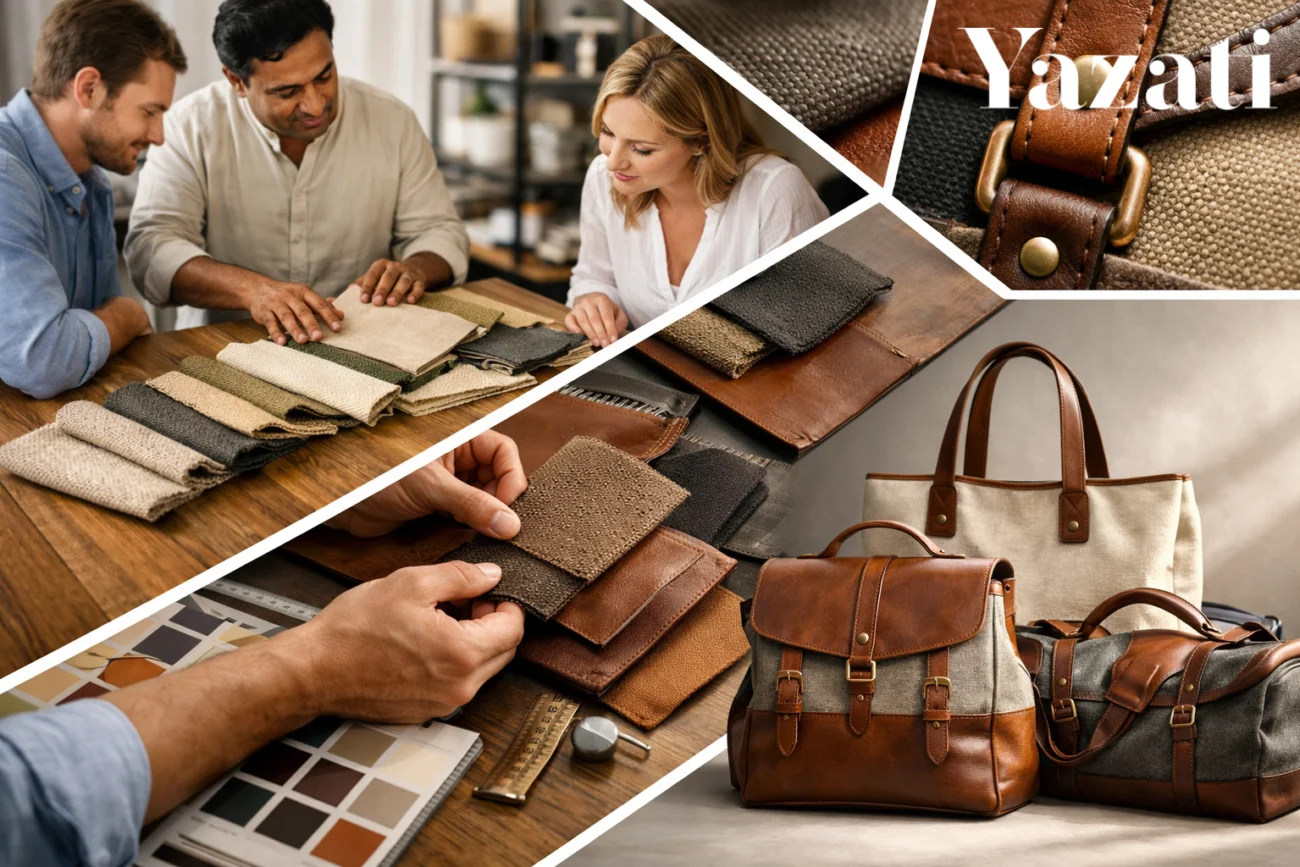
Understanding the Demand for Fabric and Leather Combination Products
The combination of fabric and leather has become increasingly popular in fashion and accessory design. This trend reflects consumer demand for products that are both stylish and functional.
Fabric elements often add color, texture, and pattern to a product. Leather, on the other hand, brings durability, structure, and a premium look. When combined properly, these materials create products that are visually striking and highly practical.
Brands around the world are now developing products such as:
- Canvas and leather backpacks
- Fabric tote bags with leather handles
- Travel accessories with leather reinforcements
- Wallets and organizers featuring mixed materials
However, designing these products requires careful planning. Material compatibility, color coordination, stitching methods, and durability all need to be considered. This is where expert manufacturers like Yazati support buyers through every stage of development.
Why Blending Fabric Collections with Leather Goods is Challenging
Creating mixed-material products may sound simple, but it involves several technical and design challenges.
Material Compatibility
Different fabrics behave differently when stitched with leather. Some fabrics stretch, while others remain rigid. If the materials are not compatible, the final product may lose its shape or durability.
Color Coordination
Leather tones must complement fabric patterns. Even small color mismatches can make a product look unbalanced.
Durability Balance
Leather is strong, but certain fabrics may wear out faster. Designers must select materials that age well together.
Manufacturing Techniques
Leather requires different cutting, stitching, and finishing techniques compared to fabric. Manufacturers must have expertise in both materials to ensure quality.
Because of these challenges, many buyers rely on experienced partners like Yazati to guide the design and production process.
Yazati’s Expertise in Leather Craftsmanship
One of the main reasons buyers trust Yazati is its strong expertise in leather craftsmanship.
Leather goods require precise cutting, stitching, and finishing techniques. Yazati’s manufacturing process ensures that leather components maintain their strength and visual appeal while integrating smoothly with fabric materials.
Their production teams focus on:
- Selecting high-quality leather grades
- Ensuring consistent thickness and texture
- Using reinforced stitching for durability
- Maintaining premium finishing standards
This expertise ensures that when leather is combined with fabric, the final product remains strong, stylish, and long-lasting.
Curating Compatible Fabric Collections
A major factor in successful mixed-material design is choosing the right fabric.
Yazati helps buyers curate fabric collections that complement leather goods. Instead of randomly pairing materials, they evaluate fabrics based on several important factors.
Texture Matching
Textures must work together visually and physically. For example:
- Smooth leather pairs well with structured canvas
- Soft leather blends nicely with woven fabrics
Color Harmony
Yazati helps buyers develop coordinated color palettes so fabric patterns enhance the leather rather than overpower it.
Performance and Durability
Fabric must withstand daily wear alongside leather. Durable materials such as canvas, nylon, and denim are often recommended.
Through careful fabric selection, Yazati helps buyers build collections that are cohesive and attractive.
Design Collaboration with Buyers
Successful product design often involves collaboration between buyers and manufacturers.
Yazati works closely with buyers to refine product concepts, ensuring that the integration of fabric and leather feels intentional and balanced.
During this process, buyers receive support in areas such as:
- Product concept development
- Material selection
- Structural design
- Functional features
This collaborative approach ensures that the final product matches the buyer’s brand identity while maintaining manufacturing efficiency.
Creating Balanced Product Aesthetics
When combining fabric and leather, visual balance is essential.
If one material dominates too much, the product may look uneven or poorly designed. Yazati helps achieve balanced aesthetics through thoughtful placement of materials.
Common design approaches include:
- Leather handles with fabric bodies
- Leather trims and corners for reinforcement
- Fabric panels with leather accents
- Leather bases for added structure
These design strategies create products that look premium while maintaining lightweight comfort.
Ensuring Structural Strength in Mixed-Material Products
Blending materials requires careful structural engineering.
Fabric alone may not provide enough structure for certain products. Leather components often add reinforcement to maintain shape and strength.
Yazati ensures structural stability through techniques such as:
- Reinforced seams
- Double-layer stitching
- Leather base panels
- Interior support layers
These construction methods help mixed-material products maintain their shape even after long-term use.
Customization Opportunities for Brands
Another advantage of working with Yazati is the level of customization available to buyers.
Brands can create unique collections by combining various fabrics, leather types, and design features.
Customization options may include:
- Multiple fabric patterns
- Different leather finishes
- Custom hardware elements
- Personalized branding
This flexibility allows brands to create distinctive products that reflect their identity and attract their target customers.
Efficient Sampling and Product Development
Before mass production begins, buyers usually need samples to evaluate design and quality.
Yazati provides an efficient sampling process that allows buyers to test combinations of fabrics and leather before finalizing their collections.
This stage helps identify potential improvements such as:
- Adjusting color combinations
- Improving material compatibility
- Enhancing functionality
By refining products early in development, buyers can avoid costly production mistakes.
Quality Control for Fabric and Leather Integration
Quality control is critical when combining different materials.
Yazati uses strict inspection procedures to ensure that both fabric and leather components meet high standards.
Quality checks typically include:
- Stitch strength testing
- Material durability evaluation
- Color consistency verification
- Structural stability testing
These processes ensure that finished products are reliable, durable, and ready for global markets.
Sustainable Material Choices
Sustainability has become an important factor in modern manufacturing.
Yazati supports buyers who want to develop environmentally responsible products by offering sustainable material options.
These may include:
- Eco-friendly leather processing methods
- Recycled or organic fabrics
- Reduced-waste production techniques
By choosing sustainable materials, brands can create products that appeal to environmentally conscious consumers.
Supporting Diverse Product Categories
Fabric and leather combinations can be used in a wide range of products.
Yazati helps buyers develop collections across many categories, including:
- Backpacks
- Travel bags
- Tote bags
- Laptop bags
- Wallets
- Organizers
Each category requires different design approaches to ensure the best blend of materials.
Adapting Designs to Market Trends
Fashion trends change quickly, and successful brands must stay ahead of market preferences.
Yazati helps buyers track emerging design trends, color palettes, and material innovations. This allows brands to create products that align with consumer demand.
For example, recent trends include:
- Minimalist mixed-material bags
- Vintage-style canvas and leather backpacks
- Sustainable fabric-leather accessories
By adapting designs to market trends, buyers can keep their collections relevant and competitive.
FAQs
1. Why combine fabric collections with leather goods?
Combining fabric and leather creates products that are stylish, lightweight, and durable. Fabric adds color and flexibility, while leather provides structure and a premium appearance.
2. What types of fabrics work best with leather goods?
Durable fabrics such as canvas, denim, nylon, and woven textiles work well with leather because they maintain their structure and withstand regular use.
3. How does Yazati help with product design?
Yazati collaborates with buyers during product development by assisting with material selection, design balance, structural strength, and manufacturing feasibility.
4. Are mixed-material products durable?
Yes, when designed properly. Reinforced stitching and strong material combinations ensure that fabric and leather products remain durable for everyday use.
5. Can brands customize fabric and leather combinations?
Absolutely. Buyers can customize fabrics, leather finishes, colors, hardware, and branding elements to create unique product collections.
6. Why is sampling important in product development?
Sampling allows buyers to test designs, materials, and functionality before full production. This helps identify improvements and ensures product quality.
Conclusion
Blending fabric collections with leather goods offers brands an exciting opportunity to create innovative and stylish accessories. However, achieving the perfect balance between materials requires expertise in design, manufacturing, and quality control.
Understanding how Yazati helps buyers blend fabric collections with leather goods reveals the value of working with an experienced production partner. From selecting compatible fabrics to ensuring structural durability, Yazati supports buyers throughout the entire development process.
By combining craftsmanship, material expertise, and collaborative design, Yazati helps brands create mixed-material collections that are both visually appealing and built to last.
✨ Discover Global Sourcing Excellence with Netyex ✨
Netyex is your trusted B2B sourcing partner, connecting international buyers with India’s finest manufacturers and curated product lines—from handicrafts and home décor to kitchenware, textiles, hospitality essentials, and more. With verified suppliers and end-to-end support, we make global procurement seamless, reliable, and efficient.
👉 Elevate your sourcing experience—explore Netyex today.
📦 Bulk orders & customisation | 🌍 Worldwide delivery | 🤝 Trusted by global buyers
Visit Netyex to source premium Indian products with confidence.