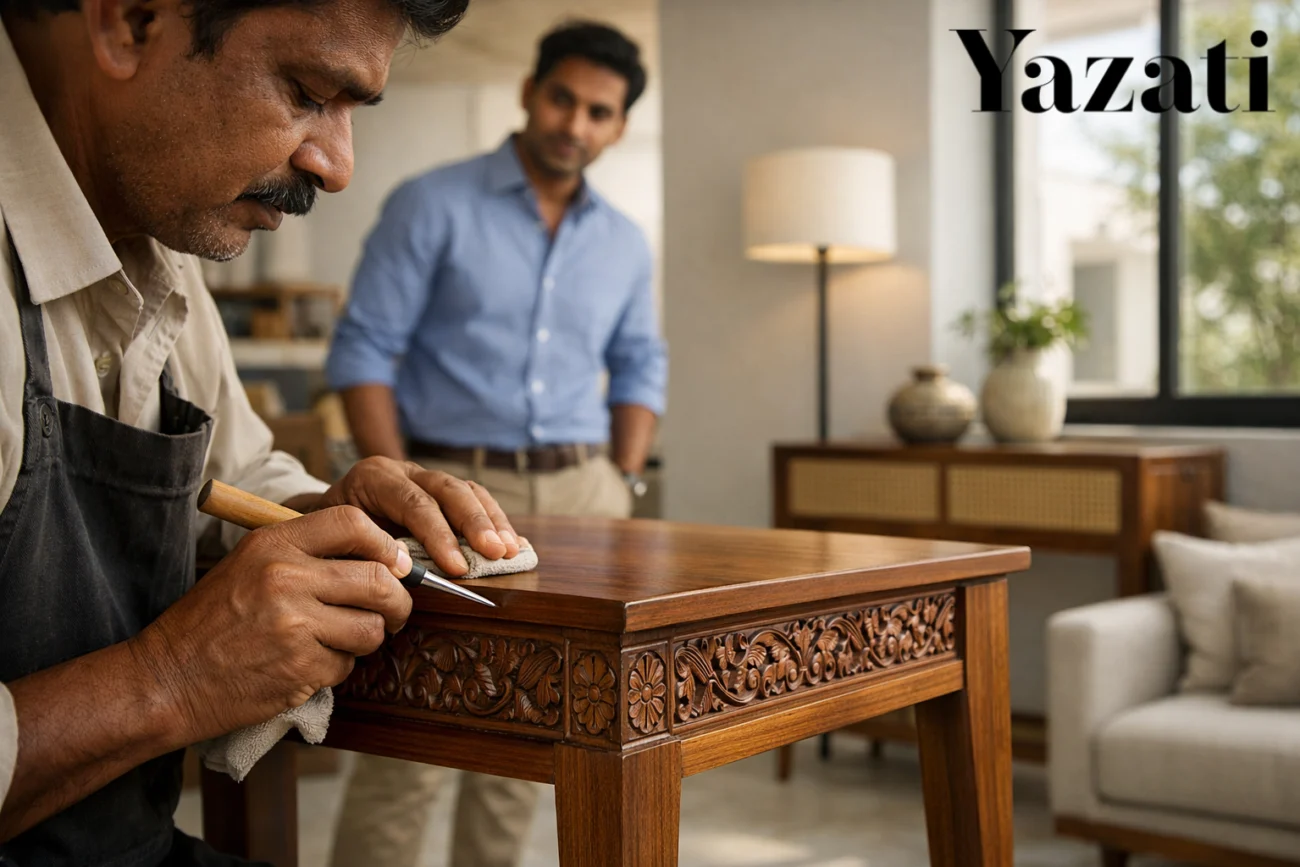
Introduction: The Harmony of Tradition and Modern Living
Indian furniture has always carried a story. Each carved pattern, wooden texture, and handcrafted joint reflects centuries of culture and craftsmanship. In today’s fast-paced world, however, furniture is not only about beauty—it must also be practical, durable, and suited to modern lifestyles.
This is where the beauty of Indian furniture truly shines. It successfully blends artisan craftsmanship with modern functionality, creating pieces that feel timeless yet practical. From handcrafted wooden beds to multifunctional storage units, Indian furniture represents a unique balance between heritage and contemporary design.
Traditional artisans bring generations of skills to every piece, while modern designers adapt those skills to create furniture that fits urban homes, compact spaces, and modern tastes. The result is furniture that is not only aesthetically pleasing but also highly functional.
In this article, we’ll explore how Indian furniture combines traditional artistry with modern utility, why this approach is gaining global popularity, and how it continues to evolve while preserving its roots.
The Rich Heritage of Indian Furniture Craftsmanship
India has a long history of woodworking and furniture making. Ancient temples, palaces, and homes featured intricate wooden designs that demonstrated exceptional skill and artistic expression.
Many traditional furniture styles originated in royal courts where artisans were encouraged to create elaborate pieces for kings and nobles. These pieces often included detailed carvings, decorative patterns, and symbolic motifs.
Over time, these crafts spread across regions and evolved into different styles. Today, furniture makers continue to preserve these techniques while adapting them for contemporary living.
Traditional Indian craftsmanship focuses on:
- Hand carving
- Natural wood finishing
- Traditional joinery techniques
- Decorative patterns inspired by nature and culture
These methods ensure that each piece of furniture is unique and carries a sense of authenticity.
Traditional Materials That Define Indian Furniture
One of the reasons Indian furniture is admired worldwide is the use of strong and durable natural materials.
1. Solid Wood
Wood has always been the primary material used in Indian furniture. Common types include:
- Sheesham (Indian Rosewood)
- Teak Wood
- Mango Wood
- Acacia Wood
These woods are known for their durability, rich grain patterns, and long lifespan.
2. Natural Finishes
Unlike many mass-produced furniture items, traditional Indian furniture often uses natural finishes such as oils, waxes, and hand polishing. These finishes enhance the wood’s natural beauty while protecting it.
3. Handwoven Elements
Some furniture pieces also include woven materials like cane, jute, or rattan. These materials add texture and improve comfort while maintaining a traditional look.
The use of natural materials not only makes furniture durable but also environmentally friendly.
Handcrafted Details That Tell a Story
What truly distinguishes Indian furniture is the attention to detail. Skilled artisans spend hours carving patterns and shaping wood to create visually stunning designs.
Common handcrafted elements include:
- Floral and geometric carvings
- Decorative lattice patterns
- Brass or metal inlays
- Hand-turned wooden legs
Each of these details adds personality and cultural meaning to the furniture.
Because these designs are created by hand, no two pieces are exactly the same. This uniqueness makes handcrafted furniture highly valued in both traditional and modern homes.
Adapting Traditional Designs for Modern Homes
Modern homes often require furniture that is more compact, versatile, and minimalistic. Indian designers have successfully adapted traditional styles to meet these needs.
Instead of overly ornate designs, many contemporary pieces feature:
- Simplified carvings
- Sleek shapes
- Neutral wood finishes
- Clean lines
This approach allows traditional craftsmanship to fit seamlessly into modern interiors.
For example, a traditional carved wooden cabinet may now include a simpler design with hidden storage and smoother surfaces. The essence of craftsmanship remains while the style becomes more adaptable.
Multifunctional Furniture for Practical Living
Modern living spaces, especially in urban areas, often require furniture that serves more than one purpose.
Indian furniture makers have embraced this idea by creating multifunctional pieces that combine beauty with practicality.
Examples include:
- Beds with built-in storage drawers
- Foldable dining tables
- Storage benches
- Expandable coffee tables
- Modular seating systems
These designs help homeowners save space without compromising style.
By integrating smart storage and flexible designs, Indian furniture continues to evolve while maintaining its traditional appeal.
Balancing Aesthetic Appeal with Everyday Function
One of the key strengths of Indian furniture design is its ability to balance beauty and practicality.
Traditional artisans focused heavily on aesthetics, but modern furniture also needs to meet everyday functional requirements.
Designers now consider factors such as:
- Ergonomic comfort
- Space efficiency
- Durability for daily use
- Ease of maintenance
For instance, modern Indian sofas combine traditional wooden frames with comfortable cushions and modern upholstery fabrics. This creates furniture that is both visually appealing and comfortable.
The Role of Regional Craft Traditions
India’s diverse culture has led to many regional furniture styles, each with its own distinct identity.
Some well-known regional styles include:
Rajasthani Carved Furniture
Known for intricate carvings and royal designs.
South Indian Teak Furniture
Recognized for durability and elegant simplicity.
Gujarati Painted Furniture
Features bright colors and decorative patterns.
Kashmiri Walnut Wood Furniture
Famous for extremely detailed hand carving.
These regional traditions contribute to the richness of Indian furniture design and continue to inspire modern interpretations.
Sustainability and Eco-Friendly Practices
Another important aspect of modern Indian furniture is sustainability.
Many manufacturers now focus on environmentally responsible practices such as:
- Using sustainably sourced wood
- Recycling old furniture materials
- Reducing chemical finishes
- Supporting local artisan communities
Handcrafted furniture also tends to last longer than mass-produced alternatives, reducing waste and promoting sustainable living.
Why Indian Furniture Appeals to Global Markets
Indian furniture has gained popularity around the world for several reasons.
Authenticity
Handcrafted furniture offers a level of authenticity that machine-made products often lack.
Unique Designs
Traditional carvings and natural wood textures create distinctive pieces that stand out in modern homes.
Durability
Solid wood furniture can last for decades with proper care.
Cultural Value
Each piece reflects the rich cultural heritage of Indian craftsmanship.
Because of these qualities, Indian furniture is now exported to many countries and is appreciated by designers and homeowners alike.
How Modern Designers Collaborate with Artisans
One of the most exciting developments in the furniture industry is the collaboration between modern designers and traditional artisans.
Designers bring new ideas, while artisans contribute their deep knowledge of traditional techniques. Together, they create innovative furniture that respects heritage while meeting modern expectations.
This collaboration helps:
- Preserve traditional skills
- Support local craft communities
- Introduce new design concepts
- Expand global appreciation for handcrafted furniture
The Future of Indian Furniture Design
The future of Indian furniture lies in continuing to merge tradition with innovation.
Trends shaping the industry include:
- Minimalist interpretations of traditional designs
- Smart furniture with integrated technology
- Sustainable materials and eco-friendly production
- Custom furniture tailored to individual homes
Despite these changes, the essence of Indian furniture remains rooted in craftsmanship and cultural heritage.
Frequently Asked Questions (FAQs)
1. What makes Indian furniture unique?
Indian furniture is unique because it combines traditional craftsmanship, hand carving, natural materials, and cultural design elements that reflect centuries of artistic heritage.
2. Which wood is commonly used in Indian furniture?
Common woods used include sheesham (Indian rosewood), teak, mango wood, and acacia. These woods are known for durability and beautiful natural grain patterns.
3. Is handcrafted furniture better than machine-made furniture?
Handcrafted furniture often offers better uniqueness, attention to detail, and durability. However, it may take longer to produce compared to mass-manufactured furniture.
4. How does Indian furniture fit into modern interior design?
Modern Indian furniture often features simplified carvings, sleek lines, and multifunctional designs that blend well with contemporary interiors.
5. Is Indian furniture sustainable?
Many manufacturers now focus on sustainable wood sourcing, eco-friendly finishes, and long-lasting craftsmanship, making Indian furniture a sustainable choice.
6. Why is solid wood furniture preferred?
Solid wood furniture is preferred because it is durable, long-lasting, and develops character over time while maintaining structural strength.
Conclusion
Indian furniture stands as a beautiful example of how tradition and innovation can coexist. By blending artisan craftsmanship with modern functionality, it offers furniture that is both meaningful and practical.
Each piece tells a story of heritage, skill, and cultural identity while adapting to the needs of contemporary living. Whether it is a carved wooden cabinet, a multifunctional storage bed, or a handcrafted dining table, Indian furniture brings warmth, authenticity, and lasting value to modern homes.
As designers continue to collaborate with artisans and explore new ideas, the future of Indian furniture looks bright. It will continue to honor its roots while evolving to meet the demands of modern lifestyles—ensuring that the art of craftsmanship remains alive for generations to come.
✨ Discover Global Sourcing Excellence with Netyex ✨
Netyex is your trusted B2B sourcing partner, connecting international buyers with India’s finest manufacturers and curated product lines—from handicrafts and home décor to kitchenware, textiles, hospitality essentials, and more. With verified suppliers and end-to-end support, we make global procurement seamless, reliable, and efficient.
👉 Elevate your sourcing experience—explore Netyex today.
📦 Bulk orders & customisation | 🌍 Worldwide delivery | 🤝 Trusted by global buyers
Visit Netyex to source premium Indian products with confidence.