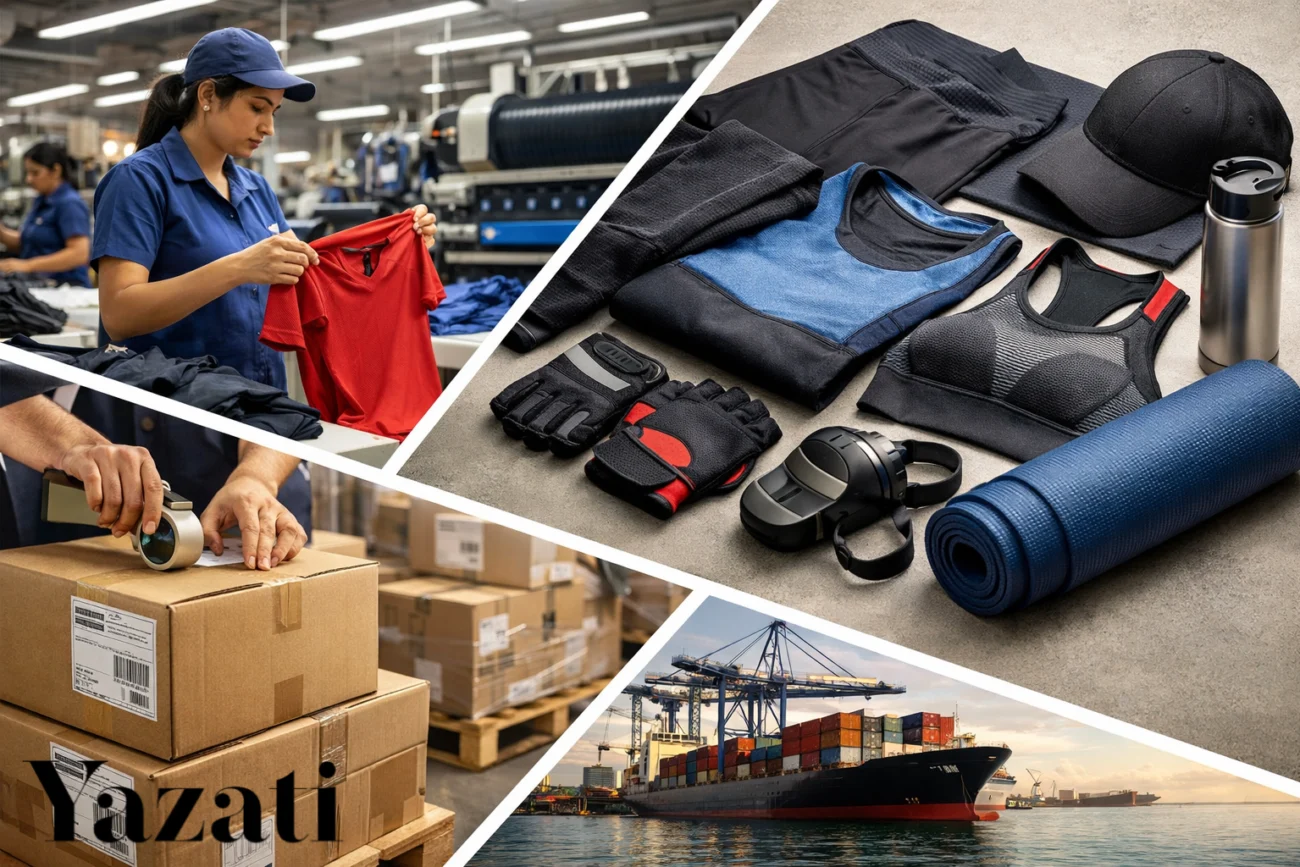
Introduction to Importing Sportswear & Accessories from India
Importing sportswear & accessories from India has become a smart move for businesses looking to balance quality and affordability. India is known for its strong textile industry, skilled workforce, and competitive pricing, making it a preferred sourcing destination worldwide.
If you’re planning to import sportswear & accessories from India efficiently, understanding the entire process—from supplier selection to shipping—is essential. Done right, it can significantly boost your profit margins and product quality.
Why India is a Global Hub for Sportswear Manufacturing
India stands out due to its:
- Advanced textile infrastructure
- Cost-effective labor
- Wide range of materials (cotton, polyester blends, performance fabrics)
- Skilled craftsmanship
Manufacturers in India produce everything from gym wear and yoga apparel to sports accessories like gloves, caps, and bags.
Overview of the Import Process
The import process typically includes:
- Market research
- Supplier sourcing
- Negotiation
- Quality checks
- Shipping and customs clearance
Understanding each step ensures smoother operations and fewer costly mistakes.
Understanding the Sportswear & Accessories Market in India
Before diving into importing, it’s important to understand what India offers in this sector.
Popular Product Categories
India exports a wide range of sportswear and accessories, including:
- Activewear (leggings, shorts, t-shirts)
- Team uniforms
- Yoga wear
- Sports bags
- Caps and headbands
- Fitness accessories
These products are often customizable, which is great for branding.
Key Manufacturing Regions in India
Major production hubs include:
- Tirupur – Knitwear capital
- Ludhiana – Woolen and sportswear
- Delhi NCR – Accessories and export houses
- Mumbai – Fashion-forward sportswear
Each region specializes in different product types, so choosing the right location matters.
Researching Reliable Suppliers
Finding trustworthy suppliers is one of the most critical steps.
Online and Offline Supplier Sources
You can find suppliers through:
- B2B marketplaces
- Industry directories
- Export promotion councils
Trade Shows and B2B Platforms
Attending trade fairs helps you:
- Meet suppliers face-to-face
- Inspect product quality
- Negotiate better deals
Evaluating Supplier Credibility
Always check:
- Certifications
- Client reviews
- Export history
- Production capacity
Request samples before placing bulk orders.
Legal Requirements and Documentation
Importing involves compliance with both Indian export laws and your country’s import regulations.
Import Licenses and Regulations
Depending on your country, you may need:
- Import Export Code (IEC)
- Business registration
- Tax identification
Required Shipping and Customs Documents
Essential documents include:
- Commercial invoice
- Packing list
- Bill of lading
- Certificate of origin
Missing documents can delay shipments.
Pricing, Negotiation, and Payment Terms
Understanding costs is key to profitability.
Cost Breakdown and Hidden Charges
Typical costs include:
- Product cost
- Shipping fees
- Import duties
- Insurance
- Handling charges
Watch out for hidden fees like port charges and currency fluctuations.
Negotiation Strategies for Better Deals
To get the best price:
- Order in bulk
- Build long-term relationships
- Compare multiple suppliers
Negotiation is expected in international trade, so don’t hesitate.
Quality Control and Product Inspection
Quality assurance protects your brand reputation.
Pre-Production and Post-Production Checks
Ensure:
- Materials meet standards
- Designs match specifications
- Final products are defect-free
Hiring Third-Party Inspection Services
Third-party inspectors can:
- Verify product quality
- Check packaging
- Ensure compliance
This adds an extra layer of security.
Shipping and Logistics Management
Efficient logistics can save both time and money.
Choosing Between Air and Sea Freight
| Mode | Pros | Cons |
|---|---|---|
| Air Freight | Fast delivery | Expensive |
| Sea Freight | Cost-effective | Slower |
Choose based on urgency and budget.
Freight Forwarders and Customs Clearance
Freight forwarders handle:
- Documentation
- Shipping coordination
- Customs clearance
They simplify the entire logistics process.
Managing Duties, Taxes, and Compliance
Ignoring compliance can lead to penalties.
Understanding Import Duties
Duties vary depending on:
- Product category
- Country of import
- Trade agreements
Check tariff codes before importing.
Compliance with International Standards
Ensure products meet:
- Safety regulations
- Labeling requirements
- Environmental standards
Non-compliance can result in rejected shipments.
Building Long-Term Supplier Relationships
Strong relationships lead to better deals and smoother transactions.
Communication and Trust Building
Maintain:
- Clear communication
- Timely payments
- Mutual respect
Consistency builds trust over time.
Scaling Your Import Business
Once stable, you can:
- Increase order volumes
- Expand product range
- Develop private labels
This helps grow your business sustainably.
Common Challenges and How to Overcome Them
Importing isn’t without hurdles.
Delays, Quality Issues, and Miscommunication
Common problems include:
- Shipping delays
- Poor product quality
- Language barriers
Solutions:
- Work with reliable partners
- Use clear contracts
- Plan for buffer time
FAQs About Importing Sportswear & Accessories from India
1. Is importing sportswear from India profitable?
Yes, due to low production costs and high-quality manufacturing, it can be highly profitable.
2. What is the minimum order quantity (MOQ)?
MOQs vary by supplier but typically range from 100 to 1000 units.
3. How long does shipping take?
Sea freight takes 3–6 weeks, while air freight takes 5–10 days.
4. Do I need a license to import?
Yes, most countries require import licenses or business registration.
5. How can I ensure product quality?
Request samples and hire third-party inspection services.
6. What payment methods are commonly used?
Common methods include bank transfers, letters of credit, and secure payment platforms.
Conclusion and Final Tips
To import sportswear & accessories from India efficiently, you need a well-planned strategy that covers sourcing, quality control, logistics, and compliance. India offers immense opportunities, but success depends on careful execution.
Start small, build reliable partnerships, and scale gradually. With the right approach, importing from India can become a highly profitable and sustainable business venture.
✨ Discover Global Sourcing Excellence with Netyex ✨
Netyex is your trusted B2B sourcing partner, connecting international buyers with India’s finest manufacturers and curated product lines—from handicrafts and home décor to kitchenware, textiles, hospitality essentials, and more. With verified suppliers and end-to-end support, we make global procurement seamless, reliable, and efficient.
👉 Elevate your sourcing experience—explore Netyex today.
📦 Bulk orders & customisation | 🌍 Worldwide delivery | 🤝 Trusted by global buyers
Visit Netyex to source premium Indian products with confidence.