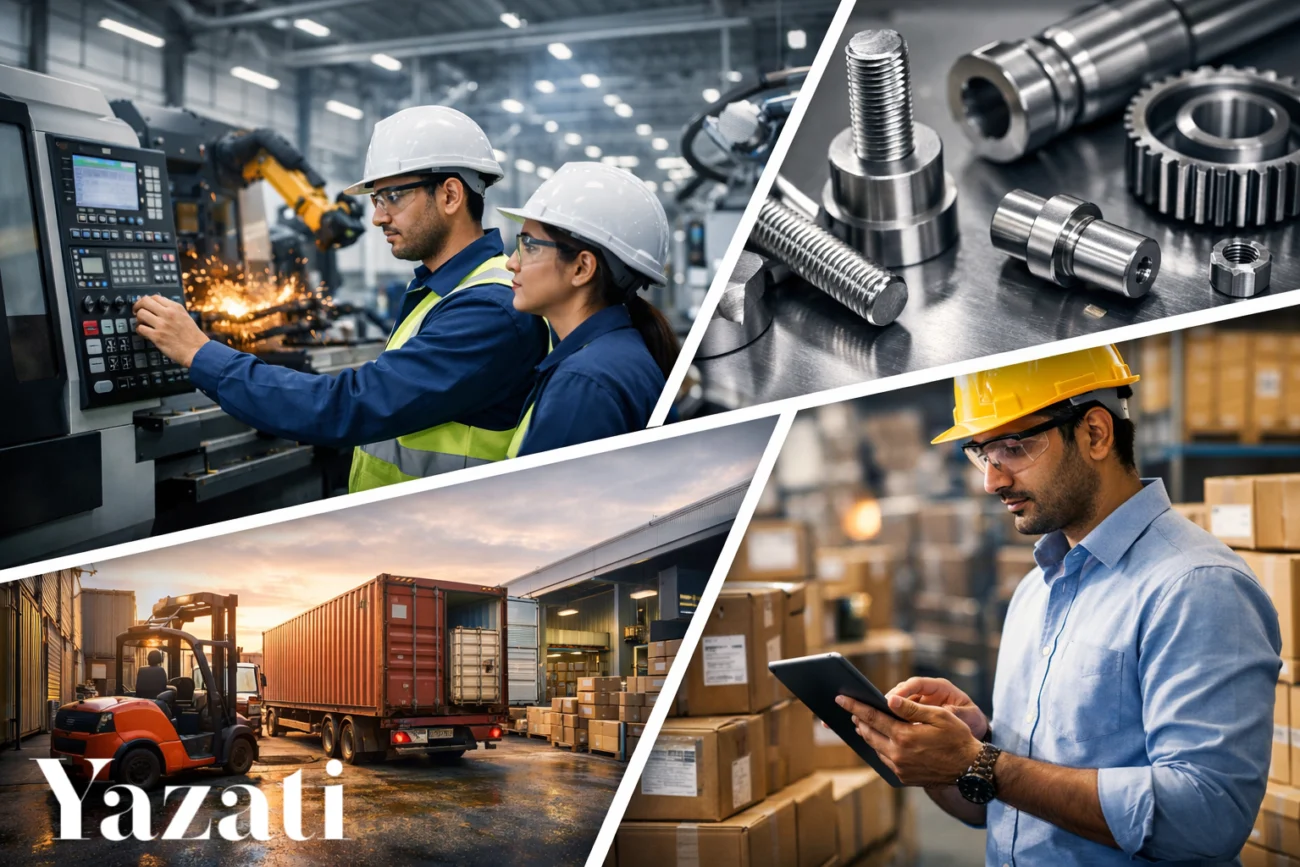
Introduction to Indian Hardware Manufacturing
India’s hardware manufacturing sector has undergone a dramatic transformation over the past two decades. Once considered a low-cost outsourcing destination, it has now evolved into a competitive global manufacturing hub. Indian factories are no longer just supporting players; they are increasingly taking center stage in the global supply chain.
This shift didn’t happen overnight. It is the result of consistent investments in infrastructure, policy reforms, and technological upgrades. Today, Indian hardware factories produce everything from precision components to advanced electronics, serving industries such as automotive, aerospace, and consumer electronics.
One of the key reasons behind this growth is India’s ability to balance cost efficiency with quality. While global OEMs (Original Equipment Manufacturers) have traditionally dominated the market, Indian manufacturers are closing the gap rapidly. They are leveraging their strengths—such as a large talent pool and flexible production systems—to compete effectively.
Moreover, globalization has opened new doors. Indian manufacturers are exporting products to North America, Europe, and Asia, proving their ability to meet international standards. This growing presence in global markets highlights their competitiveness and adaptability.
Understanding Global OEM Competition
To understand how Indian hardware factories compete, it’s important to first look at what global OEMs bring to the table. OEMs are companies that design and manufacture products or components that are then marketed by another company. They are known for their strong R&D capabilities, advanced technologies, and established global networks.
Global OEMs often have decades of experience, massive capital investments, and highly automated production facilities. They set high benchmarks in terms of quality, precision, and scalability. Competing against such giants is no small feat.
However, Indian manufacturers are finding ways to carve out their own space. Instead of directly competing on all fronts, they focus on areas where they have an advantage. This includes cost efficiency, customization, and faster turnaround times.
Another important factor is agility. While large OEMs may take time to adapt to market changes, Indian factories are often more flexible. This allows them to respond quickly to customer needs and industry trends.
Cost Advantage as a Key Competitive Edge
Affordable Workforce
One of the biggest strengths of Indian hardware factories is their access to a large and affordable workforce. India produces thousands of engineers and technicians every year, many of whom are highly skilled and industry-ready.
Despite their skills, labor costs in India remain significantly lower than in developed countries. This gives Indian manufacturers a clear cost advantage. They can produce high-quality goods at a fraction of the cost compared to global OEMs.
This doesn’t mean compromising on quality. In fact, many Indian factories invest heavily in training programs to ensure their workforce meets global standards. The combination of skill and affordability creates a powerful competitive edge.
Lower Operational Costs
In addition to labor, operational costs in India are relatively low. Expenses related to utilities, land, and logistics are often more affordable compared to Western countries.
For example, manufacturing facilities in industrial zones benefit from government support and infrastructure development. This helps reduce overhead costs and improves overall efficiency.
Lower costs allow Indian factories to offer competitive pricing without sacrificing profit margins. This is especially important in industries where price sensitivity plays a major role.
Government Support and Policies
Tax Benefits and Subsidies
The Indian government has introduced several initiatives to boost manufacturing. Programs like “Make in India” encourage both domestic and foreign investments in the sector.
Manufacturers can benefit from tax reductions, subsidies, and financial incentives. These policies are designed to make India an attractive manufacturing destination and to support local industries.
Export Promotion Schemes
To promote global competitiveness, the government also offers export incentives. These include duty drawbacks, export credits, and simplified procedures.
Such initiatives make it easier for Indian hardware factories to enter international markets and compete with established OEMs.
Technological Advancements in Indian Factories
Adoption of Industry 4.0
Indian manufacturers are increasingly adopting advanced technologies such as Artificial Intelligence (AI), the Internet of Things (IoT), and automation. These technologies improve efficiency, reduce errors, and enhance productivity.
Smart factories equipped with sensors and data analytics can monitor production in real-time. This leads to better decision-making and improved quality control.
CNC and Precision Engineering
Computer Numerical Control (CNC) machines have revolutionized manufacturing in India. These machines enable high precision and consistency, which are critical for competing with global OEMs.
By investing in modern equipment, Indian factories can produce complex components with tight tolerances, meeting international standards.
Skilled Workforce and Engineering Talent
India’s education system produces a large number of engineers every year. Many of them specialize in mechanical, electrical, and industrial engineering, making them well-suited for hardware manufacturing.
In addition to formal education, vocational training programs help workers develop practical skills. This ensures that the workforce is not only knowledgeable but also capable of handling real-world challenges.
The availability of skilled talent allows Indian factories to innovate and improve continuously. It also reduces dependency on external expertise, making operations more efficient.
Flexibility and Customization Capabilities
Unlike large OEMs that often focus on mass production, Indian hardware factories excel in customization. They can handle small batch orders and tailor products to specific customer requirements.
This flexibility is particularly valuable in industries where unique designs and specifications are needed. Customers appreciate the ability to get customized solutions without long lead times.
Indian manufacturers are also known for their willingness to adapt. They work closely with clients to understand their needs and deliver solutions that meet exact specifications.
Supply Chain Efficiency
A strong supply chain is essential for any manufacturing operation. Indian hardware factories benefit from a well-developed network of suppliers and vendors.
Local sourcing reduces dependency on imports and shortens lead times. It also helps control costs and improve reliability.
In addition, advancements in logistics and transportation have made it easier to move goods across the country and beyond. Efficient supply chains enable Indian manufacturers to deliver products quickly and consistently.
Quality Standards and Certifications
To compete globally, Indian hardware factories adhere to strict quality standards. Many have obtained certifications such as ISO, which demonstrate their commitment to quality and reliability.
Regular audits and inspections ensure that products meet international requirements. This builds trust with global clients and enhances the reputation of Indian manufacturers.
Quality is no longer a differentiator—it’s a necessity. Indian factories understand this and invest in quality control systems to maintain high standards.
Strategic Partnerships and Collaborations
Collaborations with international companies have played a significant role in the growth of Indian manufacturing. Joint ventures and partnerships provide access to advanced technologies and global markets.
These collaborations also facilitate knowledge transfer, helping Indian manufacturers improve their processes and capabilities.
By working with global partners, Indian factories can enhance their competitiveness and expand their reach.
Export Market Expansion
Indian hardware factories are increasingly focusing on exports. They are exploring new markets and building relationships with international clients.
Participation in trade shows and exhibitions helps showcase their capabilities and attract potential buyers. Over time, this has led to increased recognition and demand for Indian products.
Export growth is a clear indicator of competitiveness. It shows that Indian manufacturers can meet global expectations and deliver value.
Sustainability and Eco-Friendly Practices
Sustainability is becoming a key focus in manufacturing. Indian factories are adopting eco-friendly practices such as waste reduction, energy efficiency, and recycling.
Green manufacturing not only benefits the environment but also enhances brand reputation. Many global clients prefer to work with environmentally responsible suppliers.
Challenges Faced by Indian Hardware Factories
Despite their strengths, Indian manufacturers face several challenges. Infrastructure limitations, regulatory complexities, and intense competition can impact growth.
However, these challenges also present opportunities for improvement. By addressing these issues, Indian factories can further strengthen their position in the global market.
Future Trends in Indian Hardware Manufacturing
The future looks promising for Indian hardware factories. Trends such as digitalization, robotics, and smart manufacturing are expected to drive growth.
As technology continues to evolve, Indian manufacturers will need to stay ahead of the curve. Continuous innovation and investment will be key to maintaining competitiveness.
Case Studies of Successful Indian Manufacturers
Several Indian companies have successfully competed with global OEMs. They have leveraged innovation, quality, and customer focus to achieve global recognition.
These success stories serve as inspiration and demonstrate the potential of Indian manufacturing.
FAQs
1. What makes Indian hardware factories competitive globally?
Their cost efficiency, skilled workforce, and flexibility make them highly competitive.
2. Do Indian manufacturers meet international quality standards?
Yes, many factories are ISO-certified and follow strict quality control processes.
3. How does government support help manufacturers?
Policies like tax benefits and export incentives reduce costs and encourage growth.
4. Are Indian factories adopting advanced technologies?
Yes, many are implementing AI, IoT, and automation to improve efficiency.
5. What industries do Indian hardware factories serve?
They serve automotive, aerospace, electronics, and more.
6. What challenges do they face?
Infrastructure issues and global competition are the main challenges.
Conclusion
Indian hardware factories have come a long way from being low-cost alternatives to becoming serious global competitors. Through a combination of cost advantages, skilled labor, technological advancements, and government support, they are successfully challenging established OEMs.
Their ability to adapt, innovate, and deliver high-quality products has positioned them as key players in the global manufacturing landscape. As they continue to evolve, Indian manufacturers are set to play an even bigger role in shaping the future of the industry.
✨ Discover Global Sourcing Excellence with Netyex ✨
Netyex is your trusted B2B sourcing partner, connecting international buyers with India’s finest manufacturers and curated product lines—from handicrafts and home décor to kitchenware, textiles, hospitality essentials, and more. With verified suppliers and end-to-end support, we make global procurement seamless, reliable, and efficient.
👉 Elevate your sourcing experience—explore Netyex today.
📦 Bulk orders & customisation | 🌍 Worldwide delivery | 🤝 Trusted by global buyers
Visit Netyex to source premium Indian products with confidence.