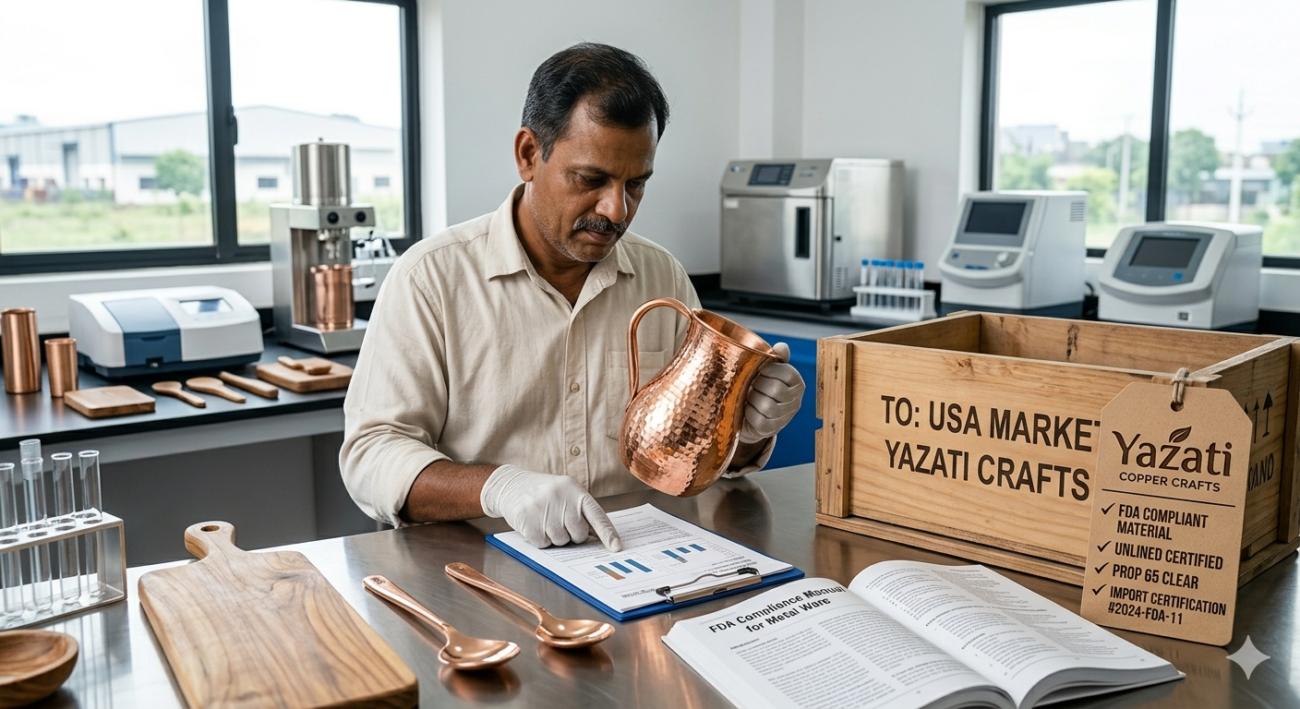
Copper utensils have become increasingly popular in American kitchens due to their elegant appearance, excellent heat conductivity, and traditional craftsmanship. From copper water bottles and serving bowls to premium cookware and kitchen accessories, the U.S. market for copper products continues to expand rapidly. However, importing these products into the United States is not as simple as shipping goods overseas. Businesses must understand FDA & Import Compliance for Copper Utensils in the USA to avoid shipment delays, customs penalties, product recalls, and legal risks.
Whether you are a manufacturer, importer, wholesaler, Amazon seller, or retail distributor, compliance is essential for long-term success. This guide explains everything you need to know about FDA regulations, customs requirements, testing standards, labeling obligations, and best practices for importing copper utensils legally and safely into the United States.
Understanding the Growing Demand for Copper Utensils in America
Copper kitchenware has gained attention because consumers increasingly prefer premium cookware and aesthetically pleasing kitchen accessories. Restaurants, hotels, and home chefs often choose copper products for their durability and thermal efficiency.
Several factors are driving this demand:
- Rising interest in traditional cooking methods
- Increased popularity of Ayurvedic and wellness products
- Growth of luxury kitchenware markets
- Expansion of e-commerce platforms
- Social media influence on cookware trends
Despite the growth opportunity, importers must follow strict compliance standards before products can legally enter the U.S. market.
Why FDA & Import Compliance for Copper Utensils in the USA Matters
Import compliance is not just about paperwork. It protects consumers, businesses, and supply chains.
Consumer Safety Concerns
Copper can react with acidic foods and beverages. Excessive copper exposure may create health risks if products are poorly manufactured or improperly lined.
The FDA monitors food-contact products to ensure they do not release unsafe chemical levels into food.
Legal Risks for Importers
Non-compliant products may face:
- Customs detention
- Product seizure
- FDA import alerts
- Financial penalties
- Forced recalls
- Import bans
Businesses that ignore compliance standards may also face lawsuits or marketplace suspension.
Product Recalls and Brand Reputation
One safety incident can severely damage a brand’s reputation. Consumers today expect transparency, safety, and certified quality.
A compliance-focused business model builds customer trust and reduces operational risk.
FDA Regulations for Copper Utensils
The U.S. Food and Drug Administration regulates materials that come into contact with food under food-contact substance regulations.
Food Contact Substance Requirements
Copper utensils used for serving, cooking, or storing food must comply with FDA food-contact safety standards.
The FDA focuses on:
- Chemical migration into food
- Surface coatings
- Protective linings
- Material purity
- Manufacturing safety
You can review official FDA guidance here:
https://www.fda.gov/food
Heavy Metal Restrictions
Copper utensils must not contain excessive amounts of harmful substances such as:
- Lead
- Cadmium
- Mercury
- Arsenic
Heavy metal contamination is one of the most common reasons imported kitchenware is rejected at U.S. ports.
Copper Leaching Standards
Pure copper can leach into acidic foods such as:
- Lemon juice
- Tomato sauce
- Vinegar-based foods
Because of this, many cookware items require protective linings such as stainless steel or tin.
Materials Allowed for Copper Cookware and Utensils
Different copper products follow different compliance expectations depending on their intended use.
Pure Copper
Pure copper is often used for decorative serving items or water bottles. Importers must prove the products are safe for repeated food contact.
Tin-Lined Copper
Traditional copper cookware may use tin lining to prevent copper leaching. The lining must be food-safe and durable.
Stainless Steel-Lined Copper
This is one of the most common options for modern cookware because stainless steel creates a stable food-contact barrier.
FDA Food Contact Compliance Testing
Testing is one of the most important parts of FDA & Import Compliance for Copper Utensils in the USA.
Laboratory Testing Requirements
Importers should work with accredited laboratories to conduct:
- Heavy metal testing
- Material composition analysis
- Food-contact safety testing
- Surface coating evaluation
Migration Testing
Migration testing determines whether chemicals transfer from utensils into food under normal usage conditions.
Testing may simulate:
- Hot food exposure
- Acidic food contact
- Long-term usage
- Dishwasher cleaning
Third-Party Certifications
Third-party testing certificates help demonstrate due diligence and may reduce customs complications.
Common testing providers include:
- SGS
- Intertek
- TÜV Rheinland
- Bureau Veritas
Import Documentation Needed for Copper Utensils
Accurate documentation is essential for customs clearance.
Commercial Invoice
The invoice should clearly describe:
- Product type
- Material composition
- Unit value
- Quantity
- Country of origin
Packing List
The packing list must match shipment contents exactly.
Bill of Lading
This transport document confirms shipment ownership and movement.
FDA Prior Notice
FDA Prior Notice may be required depending on the product category and intended use.
Failure to submit proper notices can delay customs clearance.
U.S. Customs and Border Protection Requirements
U.S. Customs and Border Protection (CBP) enforces import regulations at ports of entry.
HTS Codes for Copper Kitchenware
Correct Harmonized Tariff Schedule (HTS) codes determine:
- Import duties
- Trade eligibility
- Regulatory requirements
Incorrect classification can result in penalties.
Customs Duties and Tariffs
Import duty rates vary based on:
- Product type
- Country of manufacture
- Trade agreements
- Section 301 tariffs
Importers should verify current tariff schedules before shipping.
Country of Origin Marking
Every imported copper utensil must display its country of origin clearly and permanently.
Examples include:
- Made in India
- Made in Turkey
- Made in Mexico
Labeling Requirements for Copper Utensils
Product labels are a critical compliance area.
Product Safety Labels
Labels may include:
- Food-safe declarations
- Usage restrictions
- Heating limitations
- Care warnings
Usage Instructions
Clear instructions reduce misuse and liability risks.
For example:
- Not suitable for microwave use
- Avoid acidic food storage
- Hand wash recommended
Care and Maintenance Guidance
Copper products require proper maintenance to preserve safety and appearance.
Care instructions may cover:
- Polishing methods
- Cleaning agents
- Dry storage recommendations
California Proposition 65 and Copper Products
California has additional compliance requirements under Proposition 65.
Lead and Cadmium Warnings
If products contain trace levels of regulated chemicals, warning labels may be necessary.
This rule often impacts:
- Decorative coatings
- Paints
- Metal alloys
Packaging Compliance
Packaging materials must also comply with chemical safety requirements.
Importers selling through Amazon or large retailers often face stricter Prop 65 screening.
Packaging Rules for Imported Copper Utensils
Packaging compliance is frequently overlooked.
Safe Packaging Materials
Food-contact packaging should avoid:
- Toxic inks
- Harmful adhesives
- Unsafe plastics
ISPM-15 Wood Packaging Compliance
Wood pallets and crates used for international shipping must meet ISPM-15 treatment standards.
Non-compliant wood packaging can cause shipment rejection.
Common Compliance Mistakes Importers Make
Many import problems are preventable.
Missing FDA Documentation
Incomplete records may trigger customs examinations or shipment holds.
Incorrect Product Testing
Using outdated or irrelevant testing standards can invalidate compliance claims.
Improper Labeling
Small labeling mistakes can create major import issues.
Examples include:
- Missing country-of-origin labels
- False food-safe claims
- Incorrect material descriptions
Best Practices for Importing Copper Utensils into the USA
Strong compliance systems reduce operational risks.
Work with Certified Manufacturers
Choose factories with:
- ISO certifications
- Quality control systems
- Export experience
- Food-contact compliance knowledge
Maintain Compliance Records
Keep organized files for:
- Test reports
- Supplier certifications
- Shipping records
- Customs documentation
Conduct Pre-Shipment Inspections
Independent inspections help identify issues before products leave the factory.
How to Choose a Reliable Copper Utensil Supplier
Supplier selection directly impacts compliance success.
Supplier Certifications
Look for suppliers with:
- ISO 9001 certification
- FDA compliance experience
- BSCI audits
- Sedex membership
Factory Audits
Audits evaluate:
- Production quality
- Material sourcing
- Worker safety
- Manufacturing consistency
Product Sample Verification
Always test production samples before placing large orders.
Never rely solely on digital photos or online catalogs.
Cost Factors in FDA & Import Compliance for Copper Utensils in the USA
Compliance creates additional costs, but these expenses help prevent larger financial losses later.
Testing Costs
Laboratory testing may cost anywhere from several hundred to several thousand dollars depending on product complexity.
Customs Broker Fees
Licensed customs brokers assist with:
- HTS classification
- Customs filing
- Import clearance
- Duty calculations
Inspection Expenses
Third-party inspections add security and reduce defective shipments.
Future Trends in Copper Utensil Imports
The market is evolving quickly.
Sustainable Manufacturing
Consumers increasingly demand eco-friendly kitchenware and ethical sourcing practices.
Manufacturers are investing in:
- Recycled copper
- Eco-safe coatings
- Sustainable packaging
Smart Traceability Systems
Digital tracking technologies improve supply chain transparency.
Future compliance systems may include:
- QR code traceability
- Blockchain verification
- Real-time compliance monitoring
Frequently Asked Questions
1. Does the FDA approve copper utensils?
The FDA does not individually approve every copper utensil product. However, products must comply with FDA food-contact safety regulations.
2. Are pure copper utensils legal in the USA?
Yes, but they must meet safety standards and should not expose consumers to unsafe copper levels.
3. Do copper utensils require FDA testing?
Testing is strongly recommended to demonstrate compliance with food-contact safety standards.
4. What happens if imported copper utensils fail customs inspection?
Products may be detained, rejected, destroyed, or returned to the exporter.
5. Is stainless steel lining safer than tin lining?
Both can be safe when manufactured correctly, though stainless steel generally offers greater durability.
6. Do Amazon sellers need FDA compliance documents for copper cookware?
Yes. Online marketplaces may request safety reports, testing certificates, and compliance documentation.
Conclusion
Understanding FDA & Import Compliance for Copper Utensils in the USA is essential for businesses that want to import safely, legally, and profitably. From FDA food-contact regulations to customs documentation and product testing, every step matters in ensuring consumer safety and avoiding costly import problems.
Importers who invest in compliance gain several advantages:
- Faster customs clearance
- Reduced legal risks
- Better retailer acceptance
- Improved consumer trust
- Long-term brand protection
As demand for copper kitchenware continues to grow, businesses that prioritize regulatory compliance will stand out in the competitive U.S. market.
By working with qualified suppliers, conducting proper testing, and maintaining accurate documentation, importers can confidently build a successful copper utensil business in the United States.
✨ Discover Global Sourcing Excellence with Netyex ✨
Netyex is your trusted B2B sourcing partner, connecting international buyers with India’s finest manufacturers and curated product lines—from handicrafts and home décor to kitchenware, textiles, hospitality essentials, and more. With verified suppliers and end-to-end support, we make global procurement seamless, reliable, and efficient.
👉 Elevate your sourcing experience—explore Netyex today.
📦 Bulk orders & customisation | 🌍 Worldwide delivery | 🤝 Trusted by global buyers
Visit Netyex to source premium Indian products with confidence.