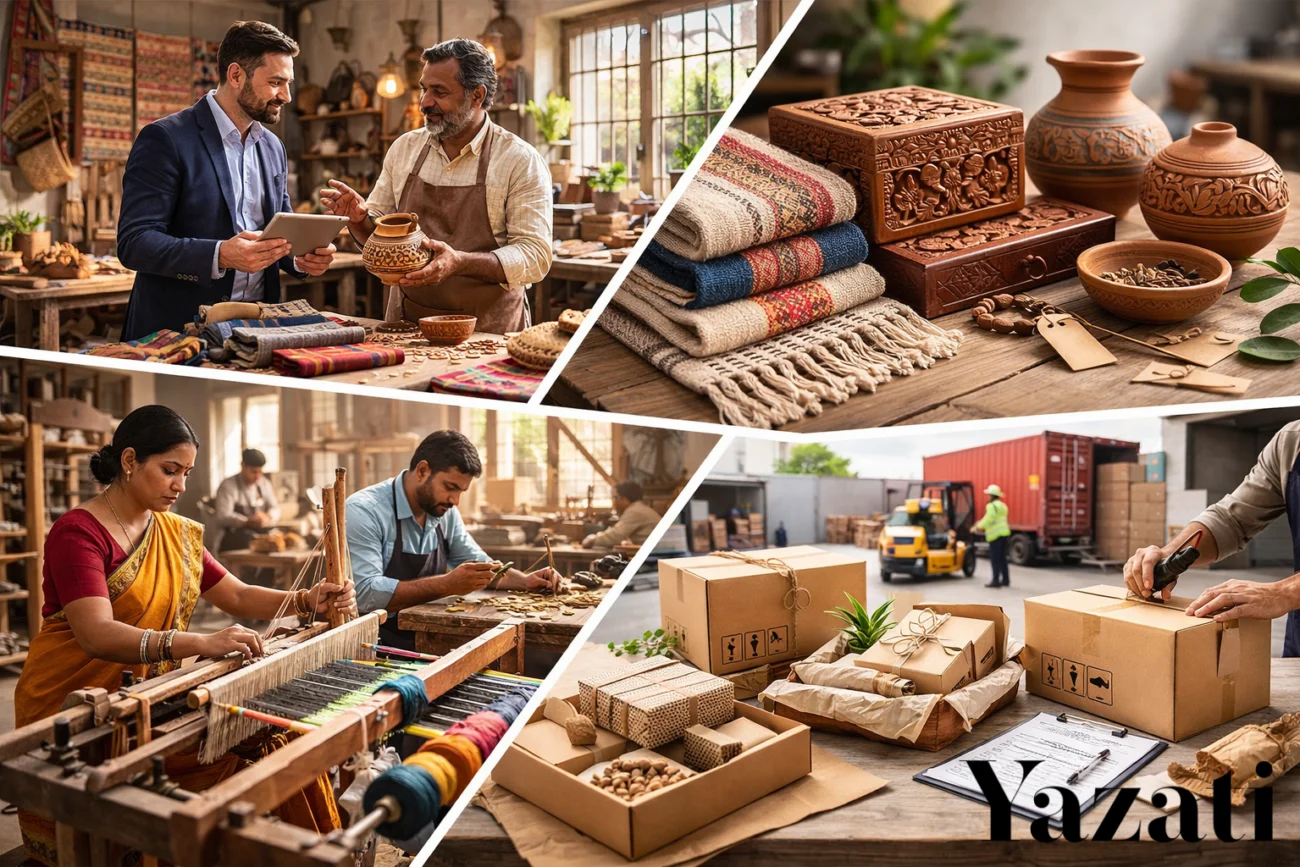
Introduction to Direct-from-Artisan Sourcing
What Is Artisan Sourcing?
Direct-from-artisan sourcing refers to the process where importers purchase goods directly from skilled craftspeople instead of going through multiple intermediaries like wholesalers, distributors, or agents. These artisans often create handmade, culturally rich, and unique products that carry a story and authenticity.
In today’s competitive global market, businesses are constantly searching for ways to improve profitability. One proven strategy is understanding why direct-from-artisan sourcing gives importers better margins. By removing unnecessary layers in the supply chain, importers can significantly reduce costs while increasing product value.
How Traditional Supply Chains Work
In a traditional supply chain, products pass through several stages before reaching the importer:
- Artisan or manufacturer
- Local aggregator
- Export agent
- Distributor
- Importer
Each step adds markup costs, making the final product more expensive. These added costs directly reduce the importer’s profit margin. This inefficiency is exactly why many businesses are shifting toward direct sourcing models.
Understanding Profit Margins in Import Business
What Are Importer Margins?
Profit margin is the difference between the cost of acquiring a product and the price at which it is sold. For importers, this includes:
- Product cost
- Shipping and logistics
- Duties and taxes
- Operational expenses
The higher the margin, the more profitable the business.
Key Factors Affecting Profitability
Several factors influence margins:
- Supplier pricing
- Supply chain efficiency
- Product uniqueness
- Market demand
- Branding and positioning
Direct sourcing positively impacts nearly all these factors, making it a highly attractive strategy.
Why Direct-from-Artisan Sourcing Gives Importers Better Margins
Eliminating Middlemen Costs
One of the biggest advantages is the removal of intermediaries. Each middleman typically adds a markup ranging from 10% to 50%.
By sourcing directly:
- Importers avoid multiple markups
- Gain access to base-level pricing
- Increase overall profit margins
For example, a product costing $10 at the artisan level may reach $25 after passing through intermediaries. Direct sourcing allows importers to buy closer to the original cost.
Better Price Negotiation Power
When working directly with artisans, importers have stronger negotiation leverage. This includes:
- Bulk order discounts
- Flexible pricing agreements
- Long-term contract benefits
Artisans are often willing to offer competitive pricing because they earn more without intermediaries taking a cut.
Reduced Overhead Expenses
Direct sourcing reduces operational complexity:
- Fewer contracts to manage
- Lower administrative costs
- Simplified communication channels
This leads to leaner operations and higher net profits.
Improved Product Quality and Value
Authentic Craftsmanship Advantage
Artisan products are typically handmade, ensuring high attention to detail and superior quality. This authenticity allows importers to:
- Charge premium prices
- Target niche markets
- Build brand credibility
Customers today value originality, and artisan goods deliver exactly that.
Higher Perceived Value in Markets
Products with a story sell better. When consumers know an item is handmade by skilled artisans, its perceived value increases significantly.
This means:
- Higher retail pricing
- Better customer loyalty
- Increased brand differentiation
Stronger Supplier Relationships
Direct Communication Benefits
Working directly with artisans improves communication:
- Clear expectations
- Faster issue resolution
- Better collaboration
This reduces misunderstandings and improves efficiency.
Long-Term Partnerships
Direct relationships often evolve into strong partnerships. Over time, this leads to:
- Consistent quality
- Priority production
- Exclusive deals
These benefits directly contribute to better margins.
Customization and Product Differentiation
Tailored Designs for Target Markets
Direct sourcing allows importers to request custom designs that suit their audience. This includes:
- Unique colors
- Specific materials
- Cultural adaptations
Customized products often sell at higher prices.
Exclusive Product Lines
Importers can create exclusive collections that competitors cannot replicate. This exclusivity:
- Reduces price competition
- Increases brand identity
- Boosts customer retention
Faster Supply Chain and Flexibility
Reduced Lead Times
Without intermediaries, production and delivery timelines improve:
- Faster order processing
- Shorter communication cycles
- Quicker shipping arrangements
Agile Production Adjustments
Importers can quickly adapt to market trends by working directly with artisans. This flexibility helps:
- Reduce unsold inventory
- Respond to customer demand
- Maximize sales opportunities
Ethical and Sustainable Sourcing Benefits
Supporting Local Communities
Direct sourcing supports artisans financially, improving their livelihoods. This ethical approach:
- Enhances brand reputation
- Attracts conscious consumers
- Builds long-term goodwill
Eco-Friendly Production Practices
Many artisans use sustainable methods such as:
- Natural materials
- Low-energy processes
- Minimal waste production
This aligns with modern consumer preferences.
Risk Reduction in Importing
Transparency in Production
Direct relationships provide visibility into:
- Production methods
- Material sourcing
- Labor practices
This reduces risks related to compliance and quality issues.
Quality Control Improvements
Importers can directly monitor production standards, ensuring:
- Consistency
- Reduced defects
- Higher customer satisfaction
Cost Breakdown Comparison Table
| Cost Component | Traditional Sourcing | Direct Artisan Sourcing |
|---|---|---|
| Base Product Cost | High | Low |
| Middlemen Fees | Multiple layers | None |
| Communication Costs | High | Low |
| Customization Costs | Limited | Flexible |
| Profit Margin | Moderate | High |
Challenges in Direct-from-Artisan Sourcing
Communication Barriers
Working with artisans from different regions may involve:
- Language differences
- Cultural misunderstandings
- Time zone challenges
Logistics and Scaling Issues
Artisans may face limitations in:
- Production capacity
- Infrastructure
- Export experience
However, these challenges can be managed with proper planning.
Best Practices for Importers
Building Trust with Artisans
Trust is essential for successful partnerships:
- Visit workshops when possible
- Maintain clear agreements
- Ensure fair payments
Using Technology for Coordination
Digital tools can simplify operations:
- Messaging apps for communication
- Inventory tracking systems
- Payment platforms
These tools help streamline the sourcing process.
Future Trends in Artisan Sourcing
Digital Marketplaces Growth
Online platforms are making it easier to connect with artisans globally. This trend is:
- Expanding sourcing options
- Increasing transparency
- Reducing barriers to entry
Consumer Demand for Authentic Goods
Modern consumers prefer:
- Handmade products
- Ethical sourcing
- Unique designs
This growing demand will continue to drive artisan sourcing.
FAQs
1. Why direct-from-artisan sourcing gives importers better margins?
It reduces costs by eliminating intermediaries, allowing importers to buy at lower prices and sell at higher margins.
2. Is direct sourcing suitable for small businesses?
Yes, it is especially beneficial for small businesses looking to differentiate and maximize profits.
3. Are artisan products scalable for large orders?
Scaling can be challenging, but with proper planning and multiple artisan partnerships, it is possible.
4. How can importers ensure quality when sourcing directly?
By maintaining close communication, setting clear standards, and conducting inspections.
5. What types of products are best for artisan sourcing?
Handmade goods such as textiles, jewelry, home decor, and crafts.
6. Is direct sourcing more risky than traditional sourcing?
Not necessarily. With proper due diligence and relationship management, risks can be minimized.
Conclusion
Understanding why direct-from-artisan sourcing gives importers better margins reveals a powerful strategy for modern businesses. By cutting out middlemen, improving product quality, and building strong supplier relationships, importers can significantly boost profitability.
While challenges exist, the long-term benefits far outweigh the risks. As consumer demand shifts toward authenticity and sustainability, direct sourcing is not just a trend—it’s the future of global trade.
✨ Discover Global Sourcing Excellence with Netyex ✨
Netyex is your trusted B2B sourcing partner, connecting international buyers with India’s finest manufacturers and curated product lines—from handicrafts and home décor to kitchenware, textiles, hospitality essentials, and more. With verified suppliers and end-to-end support, we make global procurement seamless, reliable, and efficient.
👉 Elevate your sourcing experience—explore Netyex today.
📦 Bulk orders & customisation | 🌍 Worldwide delivery | 🤝 Trusted by global buyers
Visit Netyex to source premium Indian products with confidence.