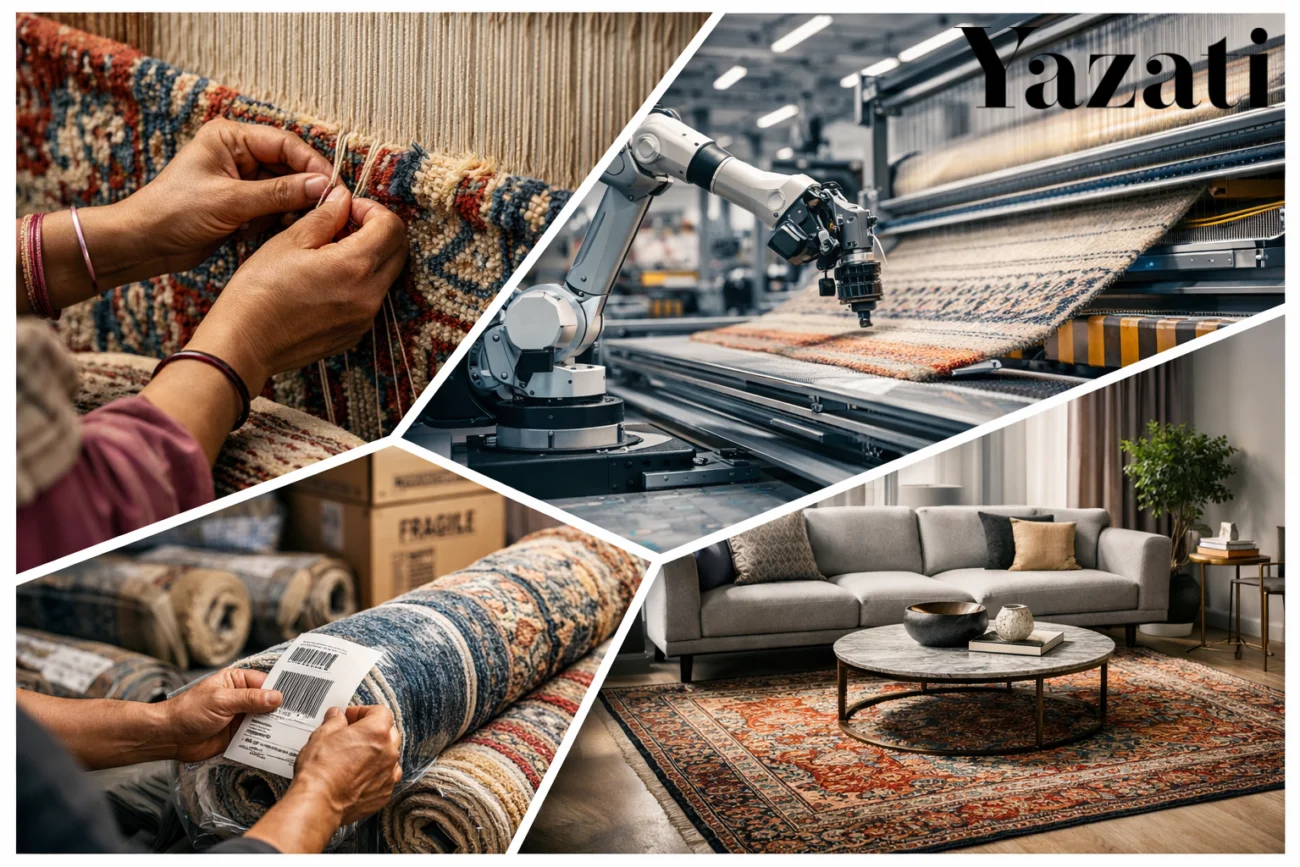
Introduction to India’s Rug Export Industry
India has long been a global leader in the rug and carpet industry. Known for its intricate designs and skilled craftsmanship, the country exports rugs to major markets like the United States, Europe, and the Middle East. Today, The Future of Rug Exports: Automation Meets Artistry in India is becoming a defining narrative as technology reshapes the industry.
Historical Significance of Indian Rug Weaving
Indian rug weaving dates back centuries, rooted in royal patronage during the Mughal era. Regions like Bhadohi, Jaipur, and Kashmir became famous for their unique styles and weaving traditions. These rugs were not just decorative pieces but symbols of heritage, culture, and identity.
India’s Position in the Global Rug Market
India is one of the largest exporters of handmade carpets in the world. The country’s ability to blend tradition with innovation has helped it maintain a strong foothold in international markets despite growing competition from machine-made products.
Understanding Automation in Rug Manufacturing
Automation is revolutionizing industries worldwide, and rug manufacturing is no exception. It introduces efficiency, precision, and scalability.
What is Automation in Textile Production
Automation refers to the use of machines and software to perform tasks with minimal human intervention. In rug manufacturing, it includes computerized looms, digital design systems, and robotic processes.
Key Technologies Used in Rug Manufacturing
- Computer-aided design (CAD) software
- Automated looms
- Digital dyeing systems
- Quality inspection tools
Role of AI and Robotics
Artificial intelligence helps predict design trends and optimize production, while robotics enhances speed and reduces manual errors. Together, they ensure high-quality output at scale.
The Artistry Behind Indian Rugs
Despite technological advancements, artistry remains the soul of Indian rugs.
Traditional Weaving Techniques
Hand-knotting, hand-tufting, and flat weaving are some of the most popular techniques. Each method requires precision, patience, and years of training.
Cultural Heritage and Regional Styles
- Kashmiri rugs: Known for silk and intricate floral designs
- Jaipur rugs: Bright colors and geometric patterns
- Bhadohi carpets: Durable and export-focused
Role of Skilled Artisans
Artisans are the backbone of the industry. Their craftsmanship brings life to designs that machines alone cannot replicate.
Automation vs Handcrafted Rugs: A Comparative Insight
Speed and Efficiency
Automation significantly increases production speed, enabling manufacturers to meet large-scale demands.
Quality and Customization
Handmade rugs offer unmatched uniqueness, while automated systems ensure consistency in patterns and finishes.
Cost Implications
Machine-made rugs are more cost-effective, but handcrafted rugs command premium prices due to their exclusivity.
How Automation is Transforming Rug Exports
Automation is not replacing tradition—it is enhancing it.
Increased Production Capacity
Manufacturers can now produce larger quantities in less time, meeting global demand more efficiently.
Consistency in Quality
Automation ensures uniformity in size, color, and design, which is crucial for international buyers.
Meeting Global Demand
With rising demand for affordable rugs, automation helps Indian exporters compete with other countries.
Preserving Artistry in the Age of Machines
Hybrid Production Models
Many manufacturers are adopting a hybrid approach—combining machine efficiency with human creativity. For example, machines handle base production, while artisans add finishing touches.
Supporting Artisan Communities
Efforts are being made to train artisans in new technologies, ensuring they remain relevant in a changing industry.
Sustainability in Modern Rug Production
Sustainability is becoming a key focus area.
Eco-Friendly Materials
Natural fibers like wool, cotton, and jute are gaining popularity due to their environmental benefits.
Waste Reduction through Automation
Automation minimizes material waste and optimizes resource usage, making production more sustainable.
Challenges in Integrating Automation
Skill Gap and Workforce Transition
Workers need training to operate advanced machinery, which can be a challenge in rural areas.
Investment Costs
Setting up automated systems requires significant capital investment, which may not be feasible for small manufacturers.
Government Policies and Export Support
Make in India Initiative
This initiative encourages manufacturing and innovation, boosting the rug export sector.
Export Promotion Schemes
Government schemes provide financial support, incentives, and global exposure to exporters.
Future Trends in the Rug Export Industry
Smart Manufacturing
The integration of IoT and AI will lead to smarter factories and better production management.
Customization through Technology
Customers can now design their own rugs using digital tools, creating personalized products.
Rise of E-commerce in Rug Exports
Online platforms are opening new avenues for exporters to reach global customers directly.
Opportunities for Indian Exporters
Expanding into New Markets
Emerging markets in Asia and Africa present new growth opportunities.
Branding and Storytelling
Highlighting the story behind each rug—its origin, artisan, and technique—can add significant value.
FAQs on The Future of Rug Exports: Automation Meets Artistry in India
1. What is driving automation in the rug industry?
Growing global demand, cost efficiency, and the need for consistent quality are key drivers.
2. Will automation replace artisans in India?
No, automation complements artisans rather than replacing them, especially in high-end rug production.
3. Are handmade rugs still in demand?
Yes, handmade rugs are highly valued for their uniqueness and craftsmanship.
4. How does automation improve exports?
It increases production speed, ensures quality consistency, and reduces costs.
5. What are hybrid production models?
They combine machine efficiency with human craftsmanship for optimal results.
6. Is the rug industry in India sustainable?
Yes, especially with the adoption of eco-friendly materials and waste-reducing technologies.
Conclusion
The Future of Rug Exports: Automation Meets Artistry in India represents a harmonious blend of tradition and innovation. While automation is transforming production processes, the essence of Indian rugs—the artistry and cultural richness—remains intact.
India stands at a unique crossroads where it can leverage technology without losing its heritage. By adopting hybrid models, investing in sustainability, and empowering artisans, the country is well-positioned to lead the global rug market for years to come.
The journey ahead is not about choosing between machines and humans—it’s about creating a future where both coexist and thrive.
✨ Discover Global Sourcing Excellence with Netyex ✨
Netyex is your trusted B2B sourcing partner, connecting international buyers with India’s finest manufacturers and curated product lines—from handicrafts and home décor to kitchenware, textiles, hospitality essentials, and more. With verified suppliers and end-to-end support, we make global procurement seamless, reliable, and efficient.
👉 Elevate your sourcing experience—explore Netyex today.
📦 Bulk orders & customisation | 🌍 Worldwide delivery | 🤝 Trusted by global buyers
Visit Netyex to source premium Indian products with confidence.